mirror of
https://github.com/block/buzz.git
synced 2026-11-04 16:31:38 +00:00
codex/issue-2-usage-store
20 Commits
| Author | SHA1 | Message | Date | |
|---|---|---|---|---|
 Will Pfleger |
a7c7414a7f |
feat(desktop): implement 30178 team catalog backend (#5112)
Implements the Rust/backend half of 30178 team catalog sharing on the community catalog. No TS callers yet — this is PR 1 of 2; [#3995](https://github.com/block/buzz/pull/3995) (stacked here) adds the parse layer, hooks, `CommunityCatalogDialog`, and e2e tests. ## What this adds **Projection builder** (`team_catalog.rs`): `build_team_catalog_event/content` produces a 30178 event from a team + member definitions. Size contracts: 192 KiB total ceiling, per-field bounds (name 256 B, text 4 KiB, system-prompt 16 KiB, avatar URL 32 KiB for projection fields; https URLs additionally validated at 2,048 bytes). Avatar handling: oversized raster data URLs downscaled to fit; oversized built-in avatars silently omitted; oversized https URLs rejected with a named error. **Share/unshare/tombstone** (`commands/teams/pending.rs`): `prepare_team_publication_at` retains a signed 30178 head for the flush loop; share state is relay-scoped (one community can share while another does not). `refresh_or_retract_shared_head_at` rebuilds or tombstones the head immediately on team/member edit — no stale publication until the next boot. Both the 30178 catalog and 30176 team tombstones are signed with a `created_at` that strictly dominates the retained head's (read inside the delete transaction), so a future-dated head cannot survive its own deletion under the relay's `created_at <=` soft-delete gate. **Serialized-publisher share command** (`commands/teams/sharing.rs`, `managed_agents/persona_events.rs`): `set_team_shared` publishes the retained head through `flush_pending_events_at` rather than submitting the prepared event directly. A direct submit ran outside `managed_agents_store_lock` and raced `delete_team`: the delete atomically purges the head's retained row and enqueues a newer 30178 tombstone in one transaction, and a delayed direct submit could land the old shared head *after* that tombstone. Because 30178 replacement has no deletion watermark, the deleted team would go publicly live again. Routing through the flush is necessary but not sufficient, because the flush is not itself a single publisher: several call sites (the 30s sweep, this share toggle, managed-policy updates) invoke it concurrently, and each invocation has an await gap between its per-row re-read and its relay POST. A second flush could publish the tombstone in that gap while an earlier flush's delayed POST lands the just-purged head after it. The flush now acquires a per-scope publisher mutex — keyed by the canonical retention `db_path`, which already *is* the durable scope identity (hashed normalized relay URL + owner pubkey) — and holds it across its entire invocation: snapshot, per-row re-read, POST, and `mark_synced`. Serialized-per-scope flush ⟹ within one scope the only interleavings are head-before-tombstone (the head lands first, then is dominated by the later tombstone) or purged-row-skip (the delete committed first, so the re-read skips the head) — a purged head can never publish after its tombstone. The lock is a `LazyLock<Mutex<HashMap<PathBuf, Arc<tokio::sync::Mutex<()>>>>>` static rather than an `AppState` field: it keeps the invariant at its acquisition site and out of the size-ratcheted `app_state.rs` (precedent: `agent_models_databricks.rs`'s `AUTH_GATE`), and the std-mutex map guard is released before the async guard is awaited so it never spans an await point. Keying per scope — rather than one process-global lock — means a stalled or hostile relay in one community can no longer block publication in every other community, and each per-row submit is additionally wrapped in a `tokio::time::timeout(PUBLISH_TIMEOUT = 60s)`: `submit_signed_event_at_with_keys` first waits on the process-wide admission gate (up to 300s on a 429) and then POSTs on the app-wide `http_client`, which leaves reqwest's connect/read/total timeouts unset, so a relay that accepts the connection and never finishes the response would otherwise pin the lock forever. A timeout takes the same `Err`/`continue` path as a relay rejection — the row stays pending for the next 30s sweep and a timed-out tombstone keeps its replacement deferred this pass — so a live admission gate now surfaces as timeout-pending rather than a held lock, the correct durable behavior since the sweep retries. `publicationStatus` (Published/Queued) is derived by re-reading the retained row's pending flag after the flush. The previously-unused `relayMessage` field is dropped from `SetTeamSharedResult`: the flush loop swallows every per-event relay rejection to its own log and only surfaces local DB faults (which the status re-read already propagates), so the field was permanently `null` on this path. #3995's `tauriTeams.ts` mapping and `useTeamActions.ts` log branch drop with it. **Domination-aware flush** (`managed_agents/persona_events.rs`): a strictly-dominating tombstone can be signed past the relay's ingest acceptance window (`MAX_TIMESTAMP_DRIFT_SECS`, ±900s from server time). Republishing such a byte-frozen event verbatim from the pending queue lets it age out of the window and be rejected forever, stranding the head live. The flush loop is now domination-aware for every retained kind:5 (covering both 30176 and 30178). For a pending tombstone with floor `f` (= the retained row's own `created_at`): - `f <= now` → re-date and re-sign at `now` (mirrors the existing archive-request re-sign branch; `mark_synced` stays keyed to the untouched retained row, so a re-date can't mask a concurrent edit), - `now < f <= now + 900` → publish verbatim at `f`, inside the window, - `f > now + 900` → skip the sweep; the event stays pending and its replacement keeps deferring (via `failed_tombstones`) so out-of-order retraction remains impossible, converging as the wall clock advances. No path emits an event the gate rejects, and a boundary reject self-heals through the submit-error requeue. Durable across offline gaps of any length. **Atomic adopt** (`commands/teams/adopt/`): `add_team_from_catalog` re-fetches and signature-verifies the head from the relay, then plans and commits a multi-entity add across two store writes with byte-exact rollback on any failure (crash window between writes explicitly retained). `plan_add` resolves full member provenance (owner, d-tag, member-key, projection-hash), reuses a recipient's own local built-in only when the published slug matches and the reuse hint's `projection_hash` — recomputed from the member's own embedded fields at the parse boundary and rejected on mismatch — equals (case-insensitively, matching the boundary's hex tolerance) the recipient's local built-in hash, and reactivates deactivated copies on re-add. Because the boundary already proves the hint hash describes the reviewed projection, a publisher cannot pair a real built-in's slug + hash with arbitrary reviewed fields to make adoption install the recipient's built-in in place of what was shown. `commit_stores` snapshots both stores before writing and restores them on failure. The commit and the retention enqueue are sequenced inside `commit_and_enqueue`, the sole route to a durable adoption commit: once the store write succeeds it enqueues a pending 30175 for every member copy the add wrote or reactivated and a pending 30176 for the team, so a crash before the next boot reconcile cannot lose the only adopted copy. A provenance match on an already-active copy is retained too (not just a reactivation): a recovery retry after a crash between the persona write and post-commit retention finds the copy active with no 30175 row, and `plan_add` short-circuits once the team row exists, so this reuse branch is the only place that retry can re-enqueue the orphaned member head. Retaining unconditionally is conservative, not exact — an active copy still referenced by a standalone managed agent can already hold a live head, and re-retaining only bumps it monotonically; reused built-ins are handled separately and never reach this branch. A byte-identical reused built-in and an idempotent replay write nothing and enqueue nothing; a failed commit propagates and enqueues nothing. Enqueue is best-effort per row (the boot reconcile is the backstop). The frontend refreshes via the `useAddTeamFromCatalogMutation` query invalidation in #3995, so no `agents-data-changed` emit is needed here. **Startup reconcile** (`event_sync.rs`): `reconcile_team_catalog_heads_at` walks all retained 30178 heads at boot: republishes heads whose content changed, tombstones heads whose team or member was deleted, skips unshared heads and unchanged content. Multi-team continuation — all shared teams processed in one pass. **Cross-device catalog retention** (`commands/personas/inbound.rs`): both recovery paths above — the boot reconcile worklist and the interactive `refresh_or_retract_shared_head_at` — key off a retained 30178 row and guard-return without one. A second device therefore never retained the owner's own catalog head published from another device, so its later edit or delete could never supersede or retract that discoverable head. The inbound reconcile now retains an inbound 30178 head as this device's publication witness through `retain_inbound_catalog_witness`, a self-gating dispatcher invoked unconditionally on the production non-deletion path: newest-wins via `retain_inbound_event`, arrival-scoped, no local JSON store, and deliberately **no** refresh or republish on arrival — a 30178 arrival is either this device's own echo or the other device's publication, and rebuilding on either would make two devices ping-pong identical heads. Retention advances the witness and stops. The tombstone router accepts a kind:5 covering a 30178 coordinate, so an inbound deletion purges the retained head on the receiving device (the covered-head purge already happens inside `commit_inbound_tombstone_with_store`; a 30178 head has no local record to remove). After a successful inbound persona/team upsert, this device refreshes the affected shared heads so the community catalog tracks the inbound edit (persona edit → every team whose resolved members include it, resolving the local persona `id` by d-tag; team edit → that team's head); after an inbound tombstone, a team deletion retracts its 30178 coordinate and a persona deletion refreshes the teams that listed it. The refresh is idempotent across devices: `refresh_or_retract_shared_head_at` skips the publish when the rebuilt projection is byte-identical to the retained head and still shared, so the editing device's own published head triggers no churn republish on the receiving device. **Executable-text concealment gate** (`team_catalog.rs`, `definition_validation.rs`): `validate_team_catalog_content` — the single chokepoint both the publish builder (`build_team_catalog_content`) and the adopt parser (`team_catalog_content_from_event`) funnel through — now rejects invisible, default-ignorable, and bidirectional-override characters (e.g. U+200B, U+2066, U+202E) in every field delivered verbatim to the ACP harness or rendered as reviewed identity in the catalog UI. This is the same invariant the persona catalog already enforces at its own parse boundary (`persona_catalog::parse_agent`); the 30178 boundary was the outlier. Member `display_name` + `system_prompt` go through `validate_agent_definition_text` per member (exact parity with `parse_agent`: display-name rule with no layout controls, prompt rule allowing `\n`/`\t`); `name_pool` entries take the display-name rule since they are minted verbatim as instance display names; team `instructions` take the visible-text rule with layout controls allowed, since they reach `BUZZ_ACP_TEAM_INSTRUCTIONS` multiline. The team `name` takes the display-name rule (no layout controls) and the `description` takes the visible-text rule with layout controls allowed, since both are rendered verbatim in the catalog UI as reviewed identity. `validate_visible_text` is exposed `pub(crate)` from `definition_validation.rs` and re-exported via `managed_agents`. A signed, shared, current head can no longer smuggle concealed control characters into executable configuration or reviewed catalog text through either the publish or the adopt path; emoji (VS16/ZWJ) names and multiline instructions still pass. **Types**: `TeamRecord` and `AgentDefinition` extended with `shared`, `catalog_source`, `team_catalog_source` fields. All commands registered in `lib.rs`. ## Tests - `team_catalog/tests.rs`: projection, size contracts, member-key stability, tombstone rollback, fixture matrix - `adopt/tests.rs`: head verification, store planning, provenance, rollback - `team_catalog/tests/concealment.rs`: the chokepoint rejects default-ignorable (U+200B) and bidi controls (U+2066, U+202E) in member `display_name`, `system_prompt`, `name_pool`, team `instructions`, and the team `name`/`description`, on both the publish and adopt paths; an emoji-bearing display name and multiline instructions still pass, so no legitimate team becomes unshareable - `team_catalog/tests/reuse_hint.rs`: a member pairing a real built-in's slug with that built-in's genuine `projection_hash` but carrying unrelated reviewed fields is rejected at the parse boundary, so adoption can never substitute the recipient's built-in for the reviewed projection; an honestly-stamped built-in reuse hint (including an uppercase form of its true hash) still passes the boundary. Removing the boundary recompute lets the tampered member validate, proving the test discriminates the substitution class - `adopt/tests/reuse.rs`: `reusable_builtin` reuses a local built-in for an exact-match hint (one record, no copy), reuses it just the same when the genuine hash is uppercased (case-insensitive, matching the boundary — one record, not two), and falls through to an authoritative embedded copy when the hash does not match. Comparing the hash case-sensitively turns the uppercase case red (two records instead of one reused) - `adopt/tests/concealment.rs`: a signed, shared, current head carrying a bidi override drives the `add_verified_team` sequence (verify+parse → `plan_add` → `commit_and_enqueue`) through real temp stores and a real retention scope, asserting the head is rejected AND the personas store, teams store, and retention rows are all left byte-unchanged. Stripping the concealment call at the chokepoint turns it red — the parse then succeeds and both stores are written, proving the test discriminates a validate-after-write regression, not just an error return - `adopt/tests/retention.rs`: adoption drives `commit_and_enqueue` through a spy commit + a real temp-dir retention scope and asserts persisted pending rows — commits-then-enqueues (30175 per minted member + 30176 team), a failed commit enqueues nothing, an idempotent replay skips both the commit and the enqueue, a reused built-in retains only the team, a reactivated copy is re-retained, and a partial-commit crash recovery (active member copy with no retention row, team row absent) re-enqueues the orphaned member's 30175. Deleting the enqueue inside the seam turns these red — the wiring, not just the helper, is protected - `sharing/tests.rs`: publish/queue lifecycle plus three concurrency gate tests. (a) `concurrent_flushes_never_land_the_head_after_its_tombstone` prepares a share, runs a concurrent delete's purge+tombstone, flushes the tombstone to a recording relay, then releases the delayed share and asserts the purged 30178 head is never published after its tombstone and no pending row survives (removing the lock turns it red — the relay sees the resurrected head after the tombstone). (b) `a_stalled_scope_does_not_block_publication_in_another_scope` pins one scope's flush mid-POST on a stalled relay and runs a second scope's flush to completion, asserting it publishes without waiting (re-globalizing the key turns it red). (c) `a_stalled_relay_releases_the_publisher_lock_within_the_bound` proves a never-completing POST returns within `PUBLISH_TIMEOUT`, leaves the row pending, and releases the lock so a subsequent same-scope flush proceeds (removing the timeout turns it red). `test_relay_rejection_stays_durably_queued` asserts queued + still-pending rather than a relay-message string, matching the flush-routed contract where the rejection text is no longer surfaced - `pending/tests.rs`: share/unshare/tombstone lifecycle, edit refresh/retract, tombstone timestamp domination, typed outcomes, cross-device catalog convergence — device B retains device A's inbound head then supersedes it on a member edit and tombstones the coordinate on a delete, a byte-identical rebuild is a no-op (`Noop`, `created_at` untouched), and an inbound retention alone queues no outbound publish (the no-ping-pong guard). Neutralizing the inbound retention leg turns the supersede/tombstone regressions red — B stays blind (`Noop`, no dominating tombstone) — proving they discriminate the load-bearing leg - `catalog_reconcile_tests.rs`: a signed kind:30178 head is driven through the real production entrypoint `reconcile_inbound_persona_event_blocking` over a `MockRuntime` `AppHandle` (retention scope resolved from the handle's `app_data_dir` under an overridden `$HOME`/`$XDG_DATA_HOME`), asserting the arrival witness is retained at the owner coordinate with `pending_sync=false`, stored verbatim, and no outbound publish is queued. An early return for `KIND_TEAM_CATALOG` immediately before the production `retain_inbound_catalog_witness` invocation turns it red, proving the seam under test is the production dispatch path and not a test-only shim - `pending/tests/gate.rs`: flush driven through a stub relay that logs every `POST /events` with its accept/reject status and enforces the real ±900s ingest gate, for both 30176 and 30178 — within-window publish+dominate; beyond-window stays-pending with **zero POSTs** (the gate never receives a rejectable event); and the delayed/offline-retry case where a tombstone signed strictly past a then-future head has aged more than 900s into the past, so flush must re-date to `now` to publish. The reversal check — restore the byte-frozen replay in `persona_events.rs` and the delayed-retry and zero-POST assertions go red — is what proves the suite discriminates the fix from the rejected implementation - `teams/tests.rs`: 30176 tombstone timestamp domination and no-head fallback - `event_sync_team_catalog_tests.rs`: reconcile scenarios including multi-head continuation - 26 shared JSON parity fixtures (`tests/fixtures/team_catalog_content/`) consumed by both this PR's Rust tests and #3995's TS tests ## Durable ordering, deletion reconcile, and relay-contract alignment The catalog paths above sit on the shared inbound/deletion retention seam. This PR makes that seam's ordering structural rather than conventional, adds a negative-side (deletion) counterpart to the existing positive-side boot backstop, and aligns inbound resolution with the relay's actual soft-delete and NIP-33 winner rules. **Preflight-then-commit (`commit_inbound_with_store`, `commands/personas/inbound.rs` + `retention.rs`).** A named primitive runs the fallible store mutation first and advances the durable retention head only on success; an event that loses preflight returns `Skipped` without touching the store. The persona/team upsert arms and the inbound kind:5 removal path all route through it, so no inbound arm can advance the head ahead of the store write it represents. The managed-agent arm keeps its own preflight (its runtime transition must not run for a skipped event) and still advances the head only after `save_managed_agents`. **Atomic + monotonic tombstone helpers (30175 / 30176 / 30177).** The three ordinary tombstone helpers (`commands/personas/pending.rs`, `commands/agents_pending.rs`, `commands/teams/mod.rs`) each read the prior head, sign, delete, and retain inside one `BEGIN IMMEDIATE` transaction, and sign the kind:5 with a `created_at` that strictly dominates the prior head (`monotonic_created_at(prior_head)`). This mirrors the 30178 `tombstone_team_catalog_coordinate` precedent. The three siblings deliberately duplicate the `BEGIN IMMEDIATE` shape rather than sharing a helper this round — the shared-helper consolidation is deferred to the persona-tombstone follow-up PR where the flush-replay class already lives. **Deletion reconcile (`event_sync.rs`, negative-side counterpart of the positive-side boot backstop).** The positive side already reconstructs missing retained heads at boot from surviving disk records. Deletion is the asymmetric gap: an atomic tombstone helper preserves the head on failure, but boot reconcile enumerated disk records — deletion already removed them — so an orphan retained head was never tombstoned. The deletion reconcile enumerates retained 30175/30176 heads and tombstones only genuine orphans (a retained head with no matching disk record), routing through the now-atomic helpers. It reconciles only against a successfully parsed store: a truncated, malformed, or wrong-shape JSON store fails loudly (never triggers a tombstone); a missing file is treated as empty. Managed agents (30177) are excluded by design: their inbound sync retains a head *without* minting a local disk record (agents carry device-local secrets that can't come from a relay event), so a retained 30177 head with no matching record is the normal cross-device state for every agent created on another device — not a lost deletion. Sweeping it would tombstone and archive another device's live agents at boot. Agent deletion-retry therefore stays a pre-existing gap owned by the direct delete path (tracked in Follow-ups). **Inbound relay-contract alignment (`retention.rs`, `commands/personas/inbound.rs`).** Two inbound rules now match the relay: - *Equal-second tie-break.* `inbound_event_outcome` previously treated every equal timestamp as stale; the relay resolves equal `created_at` by lowest event id. Preflight now matches the relay tuple — strictly newer timestamp wins, equal timestamp resolves by lower event id, an exact echo skips — so two devices authoring different same-second successors converge instead of one silently republishing an event the relay refuses. - *Covered-head resolution on inbound kind:5.* `reconcile_inbound_tombstone` previously consulted only the retained kind:5 row, so a historical tombstone replayed after a newer recreation deleted the recreated record and never purged the covered head. Preflight now resolves both the tombstone row and the covered `(target_kind, owner, d_tag)` head: a target head strictly newer than the tombstone preserves JSON and skips; an actually-covered head is removed from disk first (fallible), then the tombstone row commit and covered-head purge happen atomically. A JSON-save failure advances neither, so the identical event stays retryable. **Atomic agent-archive coupling (`commands/agents_pending.rs`).** The 30177 tombstone and the 9035 archive request now enqueue in one `BEGIN IMMEDIATE` transaction, with the archive's `persona_id` derived from the retained head (`persona_id_from_head`) rather than the deleted record, where it survives the tombstone as owner-signed historical alias data. The standalone `archive_managed_agent_pending` production callers are removed — there is no double-enqueue path. Unlike personas/teams, this coupling is not re-enqueued by the boot deletion reconcile (30177 is excluded, above): a crash after the disk-authoritative record is removed but before this transaction commits leaves agent deletion-retry a pre-existing gap owned by this direct delete path (tracked in Follow-ups). ## Follow-ups `publish_prepared_persona` (`commands/personas/sharing.rs`) has the identical direct-submit-outside-the-lock race for 30175 persona heads that this PR fixes for 30178 team heads. It predates this work and is tracked in the separate persona-tombstone follow-up PR, not folded here. The app-wide `http_client` leaves reqwest's connect/read/total timeouts unset (`app_state.rs` builder configures only pool options). This PR bounds the team-publish call site with a `tokio::time::timeout`, but every other consumer of the shared client remains exposed to a non-responding endpoint. A client-wide default timeout is the broader fix; it is pre-existing on main and affects all consumers, so it is out of scope here. Managed-agent deletion-retry: the atomic 30177 tombstone + 9035 archive is best-effort, and unlike personas/teams it is deliberately excluded from the boot deletion reconcile (a device-local-absent 30177 head is the normal cross-device state, not a deletion). A crash between the delete's store write and its retention enqueue therefore has no boot backstop for agents. The durable fix is a local deletion intent written before the record is removed; deferred rather than folded into this round. Stack: this PR → [#3995](https://github.com/block/buzz/pull/3995) Signed-off-by: Will Pfleger <pfleger.will@gmail.com> Co-authored-by: Duncan <dcfd242e557282d7a1e2cf2e6877522682f1e5c6156dc92ca7d90eaedd3b0f95@buzz.block.builderlab.xyz> |
||
|
Mic Neale
|
fa1a5b1a79 |
fix(mesh): stop restarting a busy or loading shared-compute node (#3909)
## Problem Sharing compute with a large model (e.g. `gemma-4-26B`) put the desktop app into a **restart loop**: toggle Share → app appears to "download" / stall → the whole app restarts → repeat. Small models (E4B) were unaffected, which made it look model-specific and flaky. It is not model-specific and not flaky. It is a **false-positive liveness check**. ## Root cause (proven by black-box measurement) A `serve` node's OpenAI ingress (`:9337`) serializes **all** HTTP — including the `/v1/models` liveness probe — behind the current in-flight inference. It is *also* HTTP-unresponsive during model load and package-layer download. In every one of those phases the node is alive and progressing, but it cannot answer an HTTP probe. Measured on a standalone `gemma-4-26B` node (randomized ~30k-token prompt, cache-miss): | during one ~30s inference | result | |---|---| | concurrent `GET /v1/models` | **27.0s**, then 200 | | concurrent small `/chat/completions` | **28.8s**, then 200 | | `tcp_connect(:9337)` throughout | **~0ms** | Both HTTP calls simply queued behind the turn; TCP kept accepting instantly. A probe with any timeout shorter than the turn reads the node as dead. Buzz then acted on that false "dead" reading in two places, **both restart paths added in #2823**: 1. **Ingress watchdog** — after 2 consecutive `/v1/models` timeouts, evicts the node; for a serve node eviction means `app.request_restart()`. Two dead probes landing inside a prefill window → restart loop. 2. **Start / restore paths** — on a `wait_for_mesh_inference` timeout, `stop()` the node and (fresh start) `request_restart()` the app "to guarantee cleanup" — even though the node was still loading weights or downloading layers. This is the exact line in the incident log: `started node failed inference readiness … Buzz is restarting`. ## Fix Treat a **bound TCP port as alive**. Death has exactly one unambiguous signal: a *closed* port. - **Watchdog** (`recovery.rs`): only `PortClosed` may evict. A bound-but-HTTP-unresponsive `Unhealthy` port is never evicted, at any probe streak or urgency. Closed-port eviction is unchanged. - **Start / restore** (`commands/mesh_llm.rs`): install the runtime **before** probing readiness (so it is always tracked by `AppState` and can never be orphaned — which is what the restart was guarding against), and on a readiness timeout **leave it warming up** instead of stopping/restarting. Launch-restoration stays disarmed until real inference is confirmed, so a genuinely broken start is retried next launch rather than silently disabling Share Compute. ### What this deliberately does *not* do Detecting a node that is bound-but-internally-wedged needs a liveness signal that bypasses the inference lock. There is none today, so this fix cannot distinguish "wedged" from "busy" and errs toward not restarting. That gap is a mesh-llm bug, filed upstream: **Mesh-LLM/mesh-llm#1126** (lock-free `/live`+`/ready` on the ingress). A follow-up here can consume it once it lands. ## Tests - Watchdog never evicts a bound/busy port at any probe streak or urgency (the regression). - Closed-port eviction still fires (dead listener still reclaimed). - Black-box: a listener that accepts TCP then stalls HTTP classifies as `Unhealthy`, not `PortClosed`. - **Mutation-proven**: reverting the eviction rule to the old count-based logic fails the busy-node test. `cargo test` (desktop, `--features mesh-llm`) green, fmt + clippy clean. ## Not covered here The intermittent nature means I could not force the live loop deterministically on a warm machine; the proof is the measured serialization + the mutation-proven unit/black-box tests. Live behaviour (app no longer restarts while a 26B node loads/serves) still merits a manual check before merge. --------- Signed-off-by: Michael Neale <michael.neale@gmail.com> Co-authored-by: Michael Neale <michael.neale@gmail.com> |
||
|
Tyler
|
4933672eb4 |
feat(mesh): upgrade embedded mesh to v0.74 and harden shared compute (split 1/2 of #3467) (#3741)
## Summary This is **part 1 of 2** split out from #3467 (per Tyler's request), carrying only the mesh-scoped changes. The agent/ACP response-behavior changes and the new `send_message` tool stay in #3467 as part 2. All commits are @michaelneale's work, cherry-picked with authorship preserved. - Upgrade embedded Mesh to v0.74.0 (tag-pinned instead of commit rev) and use canonical Gemma model IDs. - Keep shared compute serving through member joins, roster changes, app recovery, and community switching. - Wait for actual model readiness and avoid resuming incomplete downloads after quit. - Leave `BUZZ_AGENT_THINKING_EFFORT` unset by default so each model's chat template picks its own thinking default (`none` suppressed Gemma tool-calling entirely; pinning `low` made Qwen3 burn ~4x output budget). Explicit agent/persona/global values still win. ## Relationship to #3467 Contains the mesh commits from #3467 (`2cd640b23`, `0ad81c341`, `ad13ed841`) rebased onto current main, with one deliberate exclusion: the `crates/buzz-agent/src/llm.rs` reasoning→text parser change from `2cd640b23` is **not** here. That change unconditionally affects every OpenAI-compat/Responses provider, so it belongs with the reply-behavior work in part 2, where it can be reviewed as what it is. Not included (remaining in #3467 / part 2): - typed `send_message` tool in dev-mcp + `BUZZ_ACP_SEND_MESSAGE_TOOL` gating - plain-reply delivery fallback in buzz-acp (`BUZZ_ACP_DELIVER_PLAIN_REPLIES`) - the mesh_agent_e2e P5/P6 rewrite (exists to prove the reply path) - the two `env.insert` preset opt-ins in `relay_mesh.rs` for the flags above - the llm.rs parser change This PR is independently mergeable; part 2's flags are all off by default so it can land before or after. ## Testing - `cargo test -p buzz-relay --locked` — 780 passed (one telemetry test is order-sensitive under parallel default settings; passes in the pre-push suite and standalone, unrelated to this diff — files untouched here). - `just desktop-tauri-test` (default features) — 1877 passed. - `cargo test --locked --features mesh-llm` in `desktop/src-tauri` — 1961 passed, including the new relay-mesh preset and coordinator/recovery tests. - Both `Cargo.lock`s resolve with `--locked` against the v0.74.0 tag. - Full pre-push hook suite green (rust-tests, desktop-check/test, tauri checks). Live validation of the mesh v0.74 upgrade itself is documented on #3467 (two-Mac cross-version test). --------- Signed-off-by: Michael Neale <michael.neale@gmail.com> Signed-off-by: Tyler Longwell <tlongwell@block.xyz> Co-authored-by: Michael Neale <michael.neale@gmail.com> Co-authored-by: Tyler Longwell <tlongwell@block.xyz> |
||
|
klopez4212
|
a35771fc44 |
feat(desktop): refine agent catalog sharing (#2439)
## Summary - add custom-agent catalog sharing and hide built-ins from discovery - let owners publish later catalog updates from Share or while saving edits — the save always persists locally, and the publish reports `published` or `queued` (flushed automatically once the relay is reachable again) - preserve agent type, model, and runtime across snapshot import/export - simplify agent and team entry points and tighten catalog layout - migrate the legacy global retention queue into the owner's active scope so pending catalog publishes survive the upgrade - keep the agent list and edits usable in recovery mode by degrading to unshared projections when scope resolution or the retention DB fails - track catalog provenance on copied personas, so adding an already-added foreign agent resolves to the existing copy instead of creating a duplicate - scope inbound persona events to the community relay they arrived on - page the catalog read past the relay's 1,000-row query clamp - unify the share dialog's memory-level choice into a single "What's included" selector that drives both DM-send and copy-link delivery (all six combinations preserved), group the delivery rows above the option rows, and label the catalog toggle "Not shared" / "Shared" - keep emoji avatars on catalog entries — they persist as inline percent-encoded SVG, which the catalog projection's http(s)-only URL guard used to drop, so a shared agent showed initials instead of its avatar - drop the "Active in communities" card from Agents settings, superseded by the per-channel runtime controls in the members sidebar ## Screenshots ### Agent actions 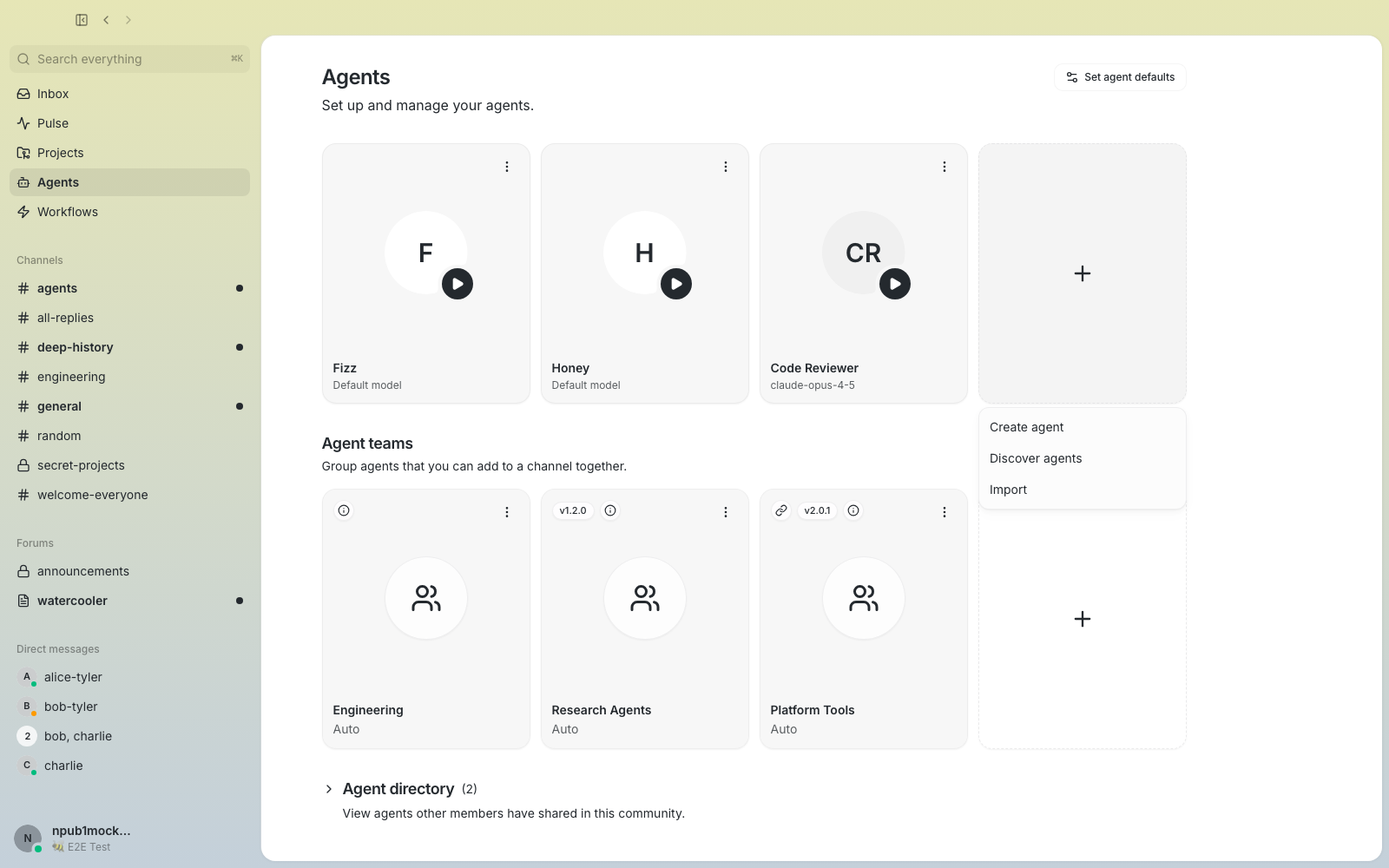 ### Team avatar stack 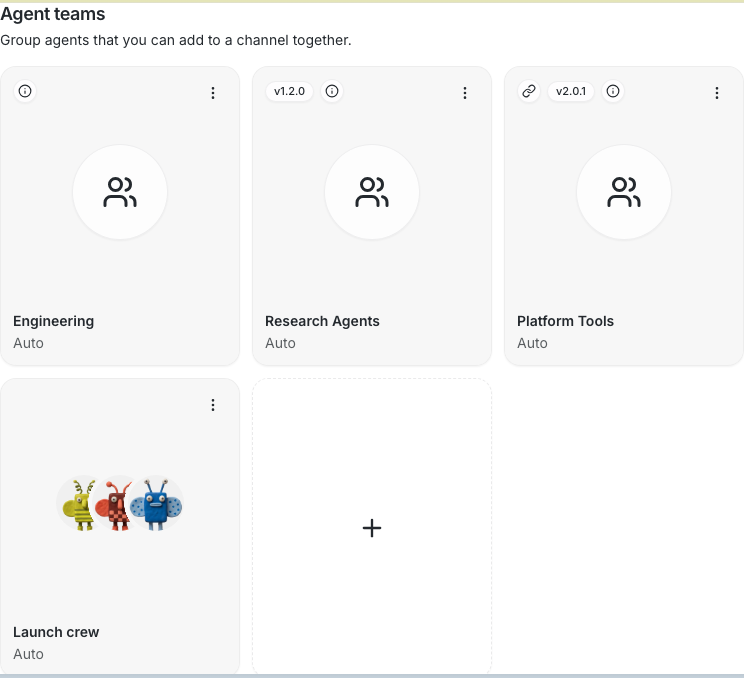 ### Catalog sharing 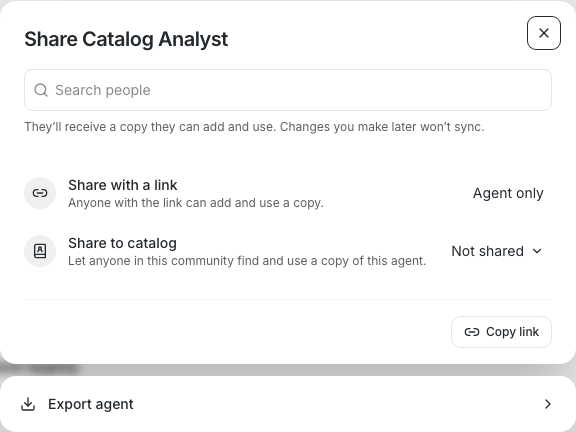 ### Publish while editing 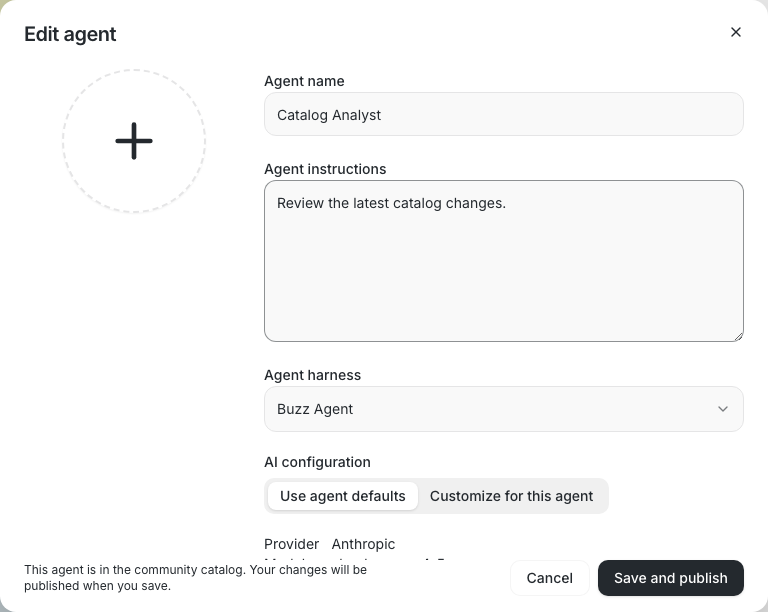 ### Publish from Share 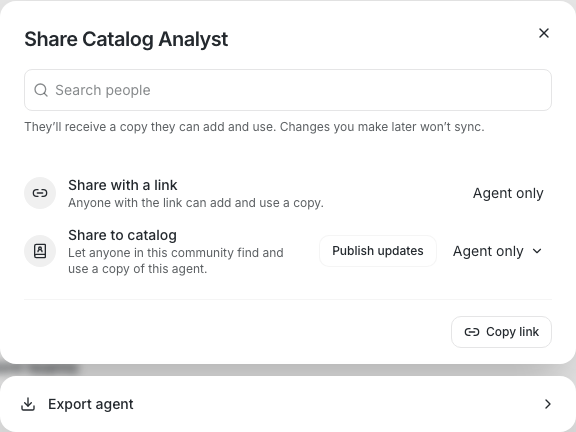 ### Catalog details 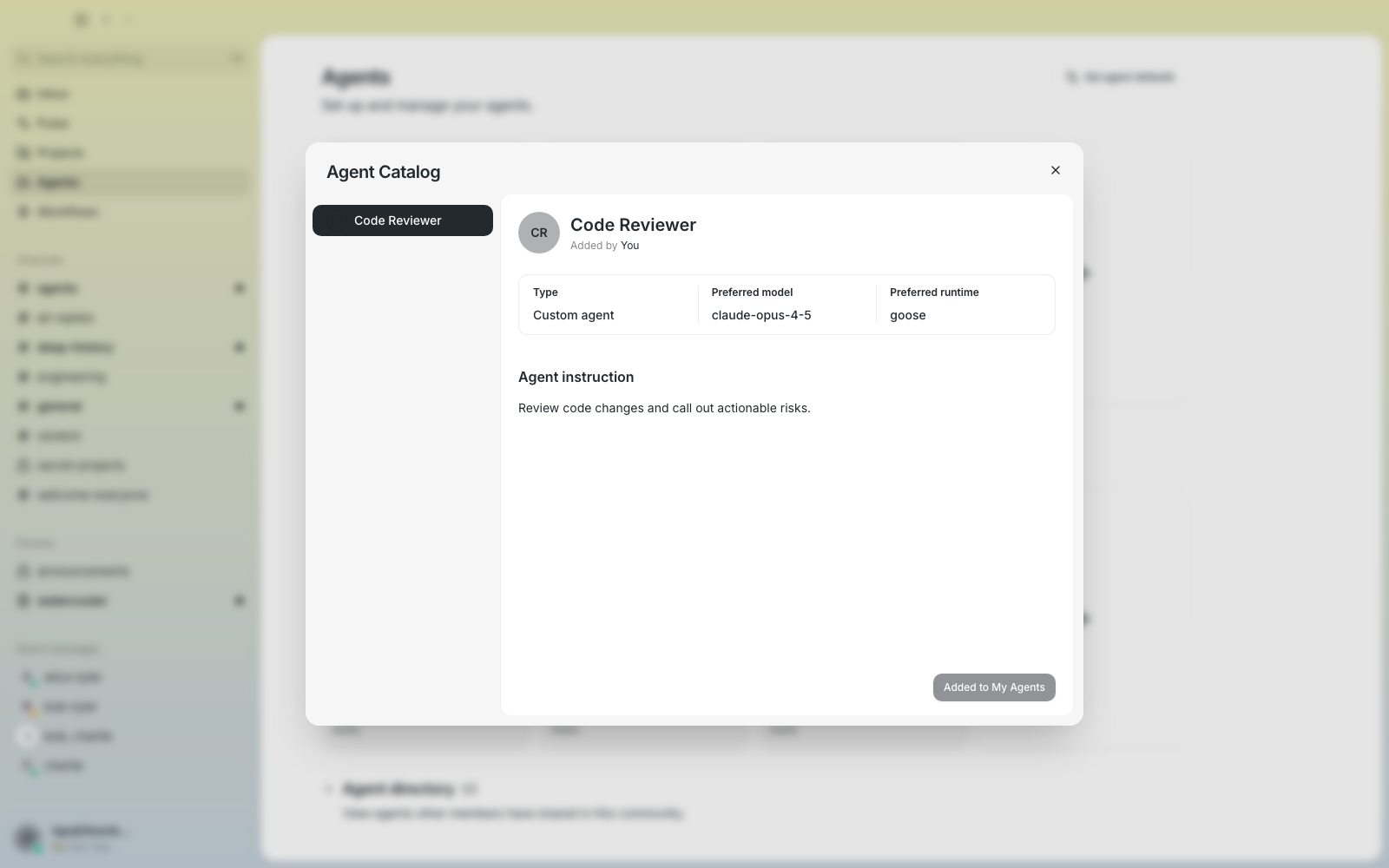 --------- Signed-off-by: kenny lopez <klopez4212@gmail.com> Signed-off-by: Will Pfleger <pfleger.will@gmail.com> Co-authored-by: Will Pfleger <pfleger.will@gmail.com> |
||
|
Mic Neale
|
16d4ec335e |
feat(desktop): use collective mesh routing for Auto (#2825)
Uses MeshLLM built-in `mesh` collective intelligence / Mixture of Agents when Buzz Auto sees two or more distinct physical models. With zero or one model, Auto remains ordinary `auto`. This is an alternative way to improve tool responses, accuracy, and resistance to hallucination when a high-latency distributed mesh contains diverse models. Models and members may come and go: collective routing enables only after stable capacity, drops on confirmed contraction, and can recover later. Mesh-specific failures retry once through ordinary Auto. This update also pins MeshLLM to a v0.73.1-compatible backport of [MeshLLM #1074](https://github.com/Mesh-LLM/mesh-llm/pull/1074), so client-only Buzz nodes cannot enter model election or download a remote provider model. Buzz preserves the selected local sharing model and switches an existing client to sharing across a controlled app restart, retaining one runtime and one `:9337` / `:3131` pair per machine. Validation: - Full local `just ci` passes on the cleaned branch. - MeshLLM host-runtime suite: 1,568 passed, 0 failed; strict Clippy passes. - Buzz desktop Tauri suite with `mesh-llm`: 1,721 passed, 0 failed; strict feature Clippy passes. - Playwright covers client-to-share using the saved local model and no destructive stop. - Packaged two-machine testing proved single-model routing, dual-model collective routing, tool-markup fallback, and runtime reuse. - Packaged client-only recheck routed a real Mini Buzz turn through M5 while Mini stayed `is_client=true`, `is_host=false`, hosted no models, and created no Gemma cache. Builds on the recovery work merged in #2823; this PR does not duplicate it. --------- Signed-off-by: Michael Neale <michael.neale@gmail.com> Signed-off-by: Tyler Longwell <tlongwell@block.xyz> Co-authored-by: Michael Neale <michael.neale@gmail.com> Co-authored-by: npub1qyvc0c5kl4gqv2fd97fsk46tu378sqgy35vc83rvgfwne90sel7s0ed67d <011987e296fd5006292d2f930b574be47c7801048d1983c46c425d3c95f0cffd@buzz.block.builderlab.xyz> Co-authored-by: Tyler Longwell <tlongwell@block.xyz> |
||
|
Mic Neale
|
aa51dab9da |
fix(desktop): supervise and re-arm relay-mesh runtime (#2823)
Refs #2062 This carries forward the relay-mesh recovery work from #2304 by @Bartok9 (cherry-picked with original authorship/sign-offs) and adds the startup/readiness supervision and packaging fixes found while validating it against a real two-machine Buzz setup. ## From #2304 - Watch the local OpenAI ingress (`:9337`) after launch and re-arm a stale relay-mesh runtime. - Require consecutive failed probes before eviction so a transient inference stall does not cause a cold restart. - Bound stale-runtime shutdown, preserve runtime identity across the asynchronous probe, and never evict a concurrent replacement. - Re-arm only for agents that are actually running; deliberately stopped agents stay stopped. - Persist an actionable sentinel error under the managed-agent store lock and clear only that error after recovery. - Treat serve-to-client fallback as an intentional fail-safe; configured serve restoration remains on its existing path. ## Added here - Use the inference ingress (`:9337`), rather than management port `:3131`, as Buzz's client-readiness boundary. A usable client no longer fails or holds agent-save open merely because management startup is still pending. - Supervise the embedded SDK startup asynchronously, publish a pending status while management is unavailable, and keep its mesh identity alive. - Avoid racing a replacement while SDK startup still owns the embedded runtime. If that pending startup later loses ingress while a running agent still needs it, request a controlled Buzz restart to reclaim the otherwise-unreachable SDK thread. - Defer roster-driven replacement while client management startup is pending. - Keep post-launch recovery in a dedicated module so the mesh entry point remains within the desktop file-size gate. - Explicitly mark generated Unix sidecars executable. On macOS, copying over an existing non-executable destination preserved its old mode, causing packaged `buzz-acp`, `buzz-agent`, and tool sidecars to be reported as missing. ## Validation Automated: - `just ci` — passed, including formatting, Clippy with warnings denied, desktop/web/mobile checks and tests, and builds. - Full Tauri mesh-feature suite — 1,702 passed, 0 failed, 15 ignored. - Mesh-feature Clippy with `-D warnings` — passed. - Release macOS app bundle with `mesh-llm` — built successfully; every bundled sidecar passed executable-mode and deep code-signature verification. Live two-machine E2E: - M5: released Buzz serving `unsloth/gemma-4-26B-A4B-it-GGUF:UD-Q4_K_M`. - Mac mini: this branch's packaged Buzz running a saved `buzz-agent`/relay-mesh agent. - Confirmed `:9337` accepted inference and the saved ACP harness started with no error while `:3131` was still unavailable. - Exact inference succeeded before restart (`CORRECTED-MINI-E2E-OK`). - Bespoke Buzz shut down cleanly in 2.3s, then restored ingress and the saved harness in 18.8s while `:3131` was still unavailable. - Exact inference succeeded after restart (`AFTER-RESTART-E2E-OK`). - A real Buzz `@C55` message traversed desktop → `buzz-acp` → `buzz-agent` → mini `:9337` → M5 compute and published the requested reply successfully. --------- Signed-off-by: Bartok9 <danielrpike9@gmail.com> Signed-off-by: Michael Neale <michael.neale@gmail.com> Co-authored-by: Bartok9 <danielrpike9@gmail.com> Co-authored-by: Michael Neale <michael.neale@gmail.com> |
||
|
Mic Neale
|
9cc9652c7d |
fix(desktop): shared-compute usability — share toggle, usage indicator, model resync (#2448)
Signed-off-by: Tyler Longwell <tlongwell@block.xyz> Co-authored-by: Michael Neale <michael.neale@gmail.com> Co-authored-by: npub1qyvc0c5kl4gqv2fd97fsk46tu378sqgy35vc83rvgfwne90sel7s0ed67d <011987e296fd5006292d2f930b574be47c7801048d1983c46c425d3c95f0cffd@buzz.block.builderlab.xyz> Co-authored-by: Tyler Longwell <tlongwell@block.xyz> |
||
|
micspiral
|
97b8b22ee9 |
fix(mesh): dedupe models + retry throttled startup channel discovery (#2063)
Co-authored-by: Michael Neale <michael.neale@gmail.com> |
||
|
Michael Neale
|
f205e66930 | fix(desktop): keep mesh allowlist on transient roster query failure (#2024) | ||
|
Michael Neale
|
5d77fa5749 |
fix(desktop): keep shared-compute consumers admitted (WIP: multi-workspace publishing) (#2000)
Signed-off-by: Mat Balez <60949391+matbalez@users.noreply.github.com> Co-authored-by: Mat Balez <60949391+matbalez@users.noreply.github.com> |
||
|
Michael Neale
|
32957692eb | fix(desktop): load downloaded mesh runtime on signed macOS builds (#1932) | ||
|
Michael Neale
|
54638ff4bb | mesh: upgrade runtime, enforce membership, add shared compute provider (#1656) | ||
|
Wes
|
ce5261067d |
build: make mesh-llm opt-in for dev/staging to speed up iteration (#1183)
Signed-off-by: Wes <wesbillman@users.noreply.github.com> Co-authored-by: npub1yxv5wk0u0fh6dwt925wntn7h397jvteyj4r87ttcd9xae7n2t3lqqj9jmm <21994759fc7a6fa6b965551d35cfd7897d262f2495467f2d78694ddcfa6a5c7e@sprout-oss.stage.blox.sqprod.co> |
||
|
Wes
|
8f580f308c |
Rename desktop app to Buzz (#960)
Signed-off-by: Wes <wesbillman@users.noreply.github.com> Co-authored-by: Pinky <44b8e82baa6e0e254e0208d68f335c283c94e7b78dd1fa10d5a49d3f13dd0435@sprout-oss.stage.blox.sqprod.co> |
||
|
tlongwell-block
|
8c8312932a | fix(desktop): rename SPROUT_ env vars to BUZZ_ for child agent processes (#971) | ||
|
tlongwell-block
|
421593062f |
mesh: Rust-owned coordinator — fix saved-agent reconnect flakiness + DRY the start path (#879)
Signed-off-by: npub1qyvc0c5kl4gqv2fd97fsk46tu378sqgy35vc83rvgfwne90sel7s0ed67d <011987e296fd5006292d2f930b574be47c7801048d1983c46c425d3c95f0cffd@sprout-oss.stage.blox.sqprod.co> Signed-off-by: npub1mprnacetjua2xx3p5eddmhxyk6wv929ymm5py8kd2xfxurxahspqqlgyta <d8473ee32b973aa31a21a65adddcc4b69cc2a8a4dee8121ecd51926e0cddbc02@sprout-oss.stage.blox.sqprod.co> Co-authored-by: npub1qyvc0c5kl4gqv2fd97fsk46tu378sqgy35vc83rvgfwne90sel7s0ed67d <011987e296fd5006292d2f930b574be47c7801048d1983c46c425d3c95f0cffd@sprout-oss.stage.blox.sqprod.co> Co-authored-by: npub1mprnacetjua2xx3p5eddmhxyk6wv929ymm5py8kd2xfxurxahspqqlgyta <d8473ee32b973aa31a21a65adddcc4b69cc2a8a4dee8121ecd51926e0cddbc02@sprout-oss.stage.blox.sqprod.co> |
||
|
tlongwell-block
|
2ebe551741 | fix: rename missed known_acp_provider_exact → known_acp_runtime_exact (#900) | ||
|
tlongwell-block
|
34ac3ba1d1 | fix(desktop): harden relay mesh connect p-tag (#834) | ||
|
tlongwell-block
|
33cfc85293 |
Mesh-LLM v1: relay-gated direct-iroh inference between users (WAN) (#822)
Signed-off-by: Eva <011987e296fd5006292d2f930b574be47c7801048d1983c46c425d3c95f0cffd@sprout-oss.stage.blox.sqprod.co> Co-authored-by: npub1qyvc0c5kl4gqv2fd97fsk46tu378sqgy35vc83rvgfwne90sel7s0ed67d <011987e296fd5006292d2f930b574be47c7801048d1983c46c425d3c95f0cffd@sprout-oss.stage.blox.sqprod.co> Co-authored-by: npub1t2tgm7d8f995uqvmnm8h88sg3wnpp9a5xysjf6dg3tjmgt3ltulqdp8ehr <5a968df9a7494b4e019b9ecf739e088ba61097b4312124e9a88ae5b42e3f5f3e@sprout-oss.stage.blox.sqprod.co> Co-authored-by: Max <d8473ee32b973aa31a21a65adddcc4b69cc2a8a4dee8121ecd51926e0cddbc02@sprout-oss.stage.blox.sqprod.co> |
||
|
tlongwell-block
|
ede8ddb425 | Sprout × mesh-llm: in-process mesh node (serve/consume) + relay admission (#798) |





