mirror of
https://github.com/block/buzz.git
synced 2026-11-25 18:52:52 +00:00
0ffb134e34c1915377e5272aee4232ccd8a2efd2
7 Commits
| Author | SHA1 | Message | Date | |
|---|---|---|---|---|
 Tom Brow |
83ec9c0e2b |
fix(mobile): show hosted community names consistently (#8872)
When a hosted relay has no metadata name, the hosted add paths save its host (`remote-agent-pilot.communities.buzz.xyz`) as the community name. Onboarding shortens that fallback to `remote-agent-pilot`. After joining, though, the community switcher, the remove dialog, the theme preview and the identity export showed the full host, so the same community appeared under two names. This change shortens the name in the model instead of at each call site. `Community` and `AddCommunityDeepLink` keep the saved value private, and their public `name` getter returns the display form, using the existing `HostedEnvironment.communityDisplayName` rule. Existing and future readers get the short name without opting in. Serialization still writes the saved value, so stored data is unchanged and no migration is needed. Custom names and non-hosted hosts pass through unchanged, as before. Community identity is unaffected because it uses `id` and `relayUrl`, never the name. Beyond the captures below, the same getter shortens the name in the iOS push notification subtitle, onboarding's "Adding …" progress text, the "You joined …" invite sheet, and the VoiceOver labels for removing and loading a community. ### Before and after | | Before (`main`) | After | |---|---|---| | Community switcher | 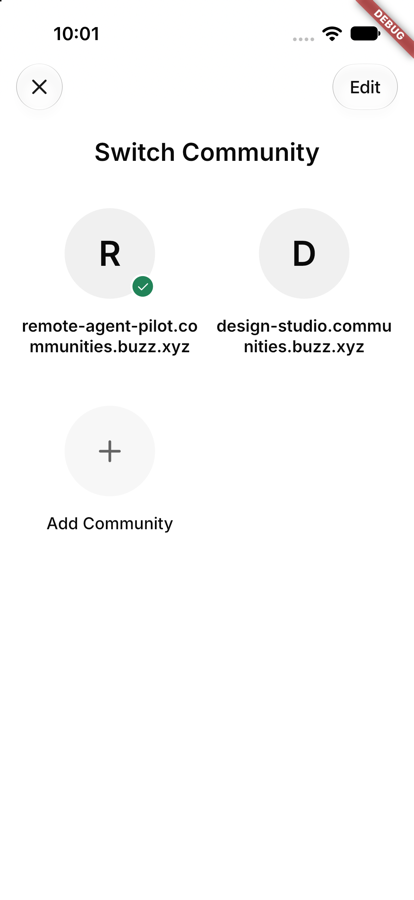 | 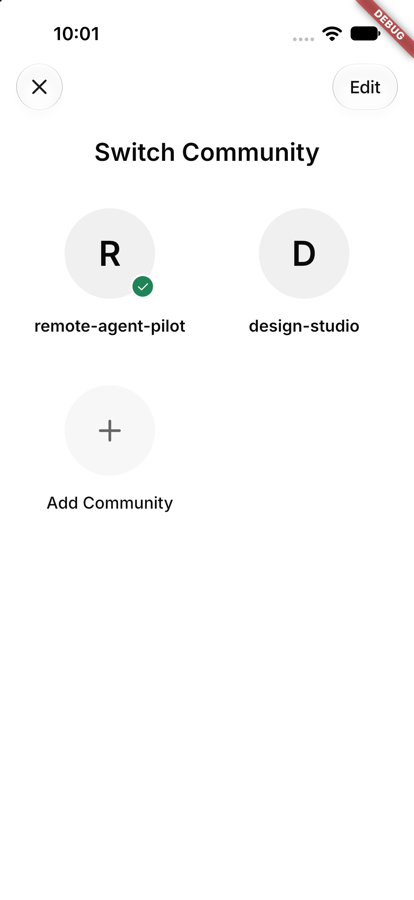 | | Remove dialog | 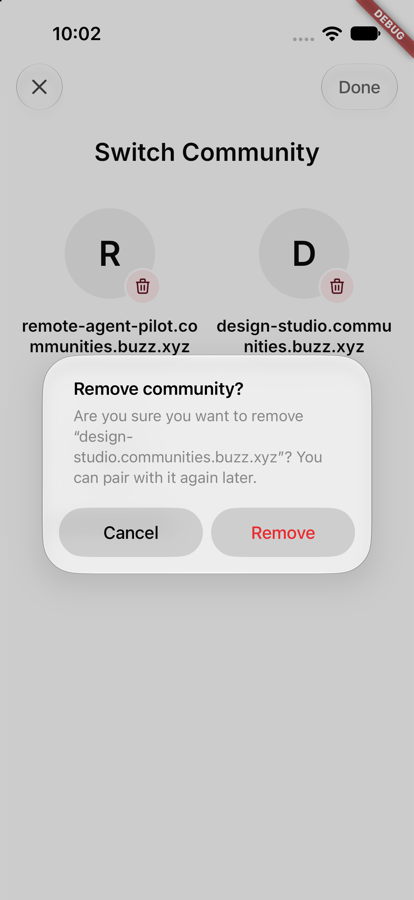 | 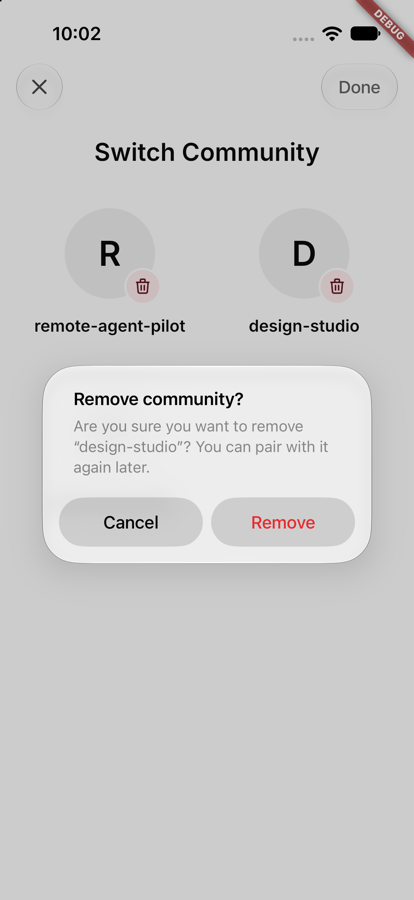 | | Theme preview | 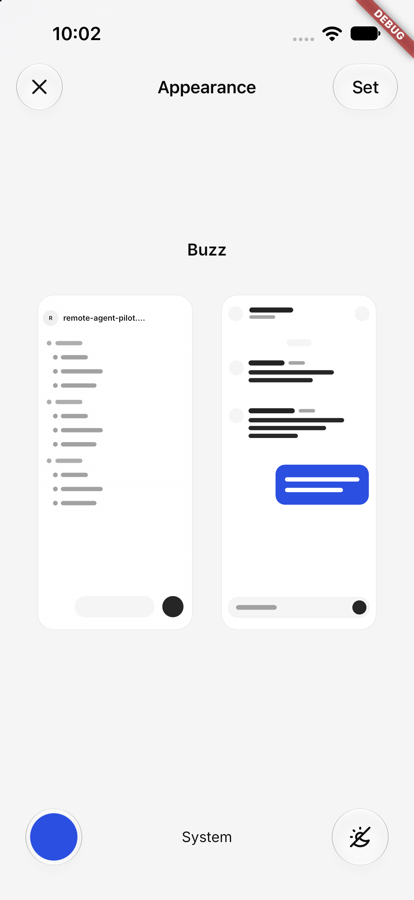 | 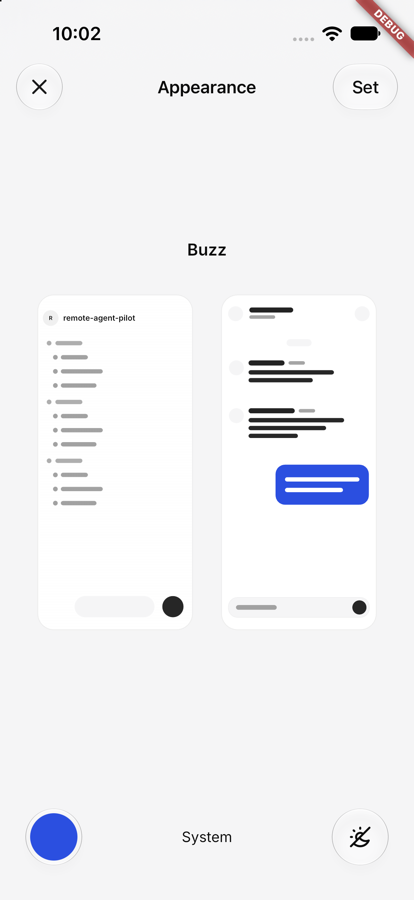 | | Identity export | 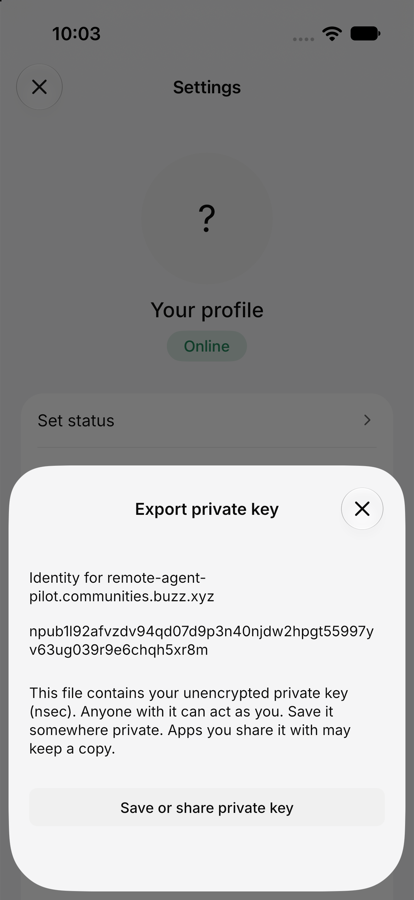 | 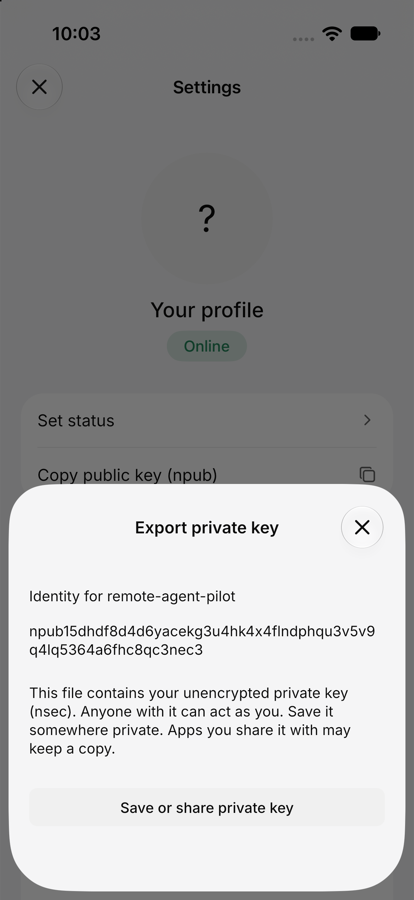 | ### Before merge - [x] Kenny Lopez reviews the visible changes ([approved in Buzz #buzz-mobile](buzz://message?channel=9f18f3c6-b5e5-453d-b36d-65487913be0b&id=c8b01eaa3760e44c3b6583f2e02bec576d78679adfb364e5fe718cc0926bdc2d)). ### Validation - Captures come from iPhone 17 simulators (iOS 27) running `main` and this branch. Both builds used the same scratch-only seed with two communities whose saved names are their hosted hosts. The seed is not part of this PR. The relays were unreachable from the simulator, so the screens show loading placeholders. - Changed tests: the community switcher journey now uses a hosted host-name fallback for one community. It asserts the grid label, the remove tooltip and the dialog text show the short name, and it fails when the getter returns the saved value. The onboarding label table now asserts the model's `name` itself is shortened. The hosted-flow fixture records relay hosts instead of names, and the auth-domain tests look up communities by relay URL. - The full mobile test suite and `flutter analyze` pass. The CI step that runs with configured authentication domains also passes locally (113 tests). - Not captured: the push notification subtitle, onboarding's "Adding …" text and the invite sheet. Reaching them needs hosted sign-in or push, which the simulator doesn't support. 🤖 Generated with [Claude Code](https://claude.com/claude-code) --------- Signed-off-by: Tom Brow <tomb@squareup.com> Co-authored-by: Tom Brow <tomb@squareup.com> Co-authored-by: Claude Opus 5.5 <noreply@anthropic.com> |
||
|
Tom Brow
|
dc4cdc4990 |
fix(mobile): reset community notification preferences (#8455)
Community notification choices now use `pushNotificationsEnabledV2`, defaulting ON when absent. This gives every installed community a fresh enabled preference, including communities previously disabled. Subsequent explicit OFF choices persist per community through reloads and reconnects. Previous values are deliberately discarded, not migrated or preserved. There is no migration or compatibility read. Enabled communities enter the existing APNs enrollment and active relay lease publication path when connected to a push-capable relay. iOS still controls notification display authorization. Notification eligibility and lease addressing are unchanged. Related work: [#8425](https://github.com/block/buzz/pull/8425). ### Validation - Extended the settings integration test to load a saved community with the previous preference OFF and no new preference and verify native enrollment plus decrypted active lease publication, then OFF across reconnect and ON again. - The focused model test proves both previous values are ignored and new-key OFF wins even when the previous key says ON. A temporary compatibility-fallback mutation failed this test as expected; the implementation was restored unchanged. - Added storage coverage for independent community choices across reloads; updated existing model round-trip coverage for the new key. - Mobile dependency setup, formatting, analysis, and the full mobile suite passed, including gateway-unconfigured coverage. - Agent review found no blockers. Enrollment coverage uses the real Flutter bootstrap, storage, signing, and lease construction with mocked native and relay boundaries; no physical-device or live APNs delivery test was run. The fresh enabled preference is an intentional product exception to the general zero-notification default in VISION.md. Subsequent user choices and existing eligibility filters remain authoritative. <!-- buzz-review-completed --> --------- Signed-off-by: Tom Brow <tomb@block.xyz> |
||
|
Tom Brow
|
8f2c7710e9 |
fix(mobile): default community push notifications to on (#8425)
New mobile communities currently require a manual Settings opt-in before push can start. Default that local preference to on for new communities and stored records without a preference. Preserve every saved `true` or `false`, including values written by older clients. Older default-off values are indistinguishable from explicit opt-outs, so this does not migrate them to on. Push still requires a configured gateway, authenticated connectivity, and a valid relay capability. iOS continues to control display authorization through its existing permission prompt. Notification eligibility and subscriptions are unchanged. Settings retains its existing opt-out control for enabled communities even when capability is unavailable. Drafted from the 0.24 baseline; release-branch inclusion is a separate decision. ### Related issue Closest related issue: #3238 (synced defaults). This change is limited to the mobile device-local community preference; no duplicate found. ### Validation - Added or updated coverage for new and missing preferences, saved true/false persistence, opt-out after restart, capability-gated registration, and Settings without a configured gateway. - Full configured mobile suite: 3,499 passed, 4 skipped. Separate no-gateway suite: 4 passed. Flutter analysis passed. - Existing permission-denied and unsupported-relay tests passed as part of the mobile suite. No physical-device or end-to-end APNs validation performed. - Full local repository gate passed (formatting, lint, unit tests, desktop/web builds, Tauri checks/tests, and mobile tests). - Follow-up review edits: restored the original VISION.md wording and shared the default in one private Community constant. All 43 focused community/bootstrap tests passed. <!-- buzz-review-completed --> --------- Signed-off-by: Tom Brow <tomb@block.xyz> |
||
|
Tom Brow
|
c432a111ca |
feat(mobile): push notifications MVP (#6269)
This PR implements MVP, iOS-only,
[NIP-PL](
|
||
|
Tom Brow
|
6eff84d127 |
fix(mobile): join starter channels after accepting invite (#5915)
### What changed? After a new mobile invite claim succeeds, Buzz now best-effort ensures membership in the same public starter channels as desktop: - `#general` - `#welcome-everyone` Missing starters use desktop's deterministic per-relay IDs and exact public channel configuration, so concurrent mobile and desktop setup converges safely. Setup failures do not invalidate or retry an already successful invite claim, and failure for one starter does not block the other. The success sheet offers **Continue to #welcome-everyone** when that channel is available. Mobile does not create the private `Welcome` channel because it cannot provision the desktop Welcome agents that make that channel useful. This PR is stacked on #6145 because it deliberately reuses that PR's open-channel directory and join behavior. Once #6145 merges, this PR can be retargeted to `main` without changing its BUZZ-12 diff. Fixes [BUZZ-12](https://linear.app/squareup/issue/BUZZ-12/bug-community-appears-empty-after-using-invite-link-on-mobile). ### How is it tested? - Desktop/mobile deterministic starter-ID parity coverage. - Existing-channel join and missing-channel creation coverage. - Duplicate-create convergence and per-channel failure isolation coverage. - Invite success remains successful when starter setup fails. - Widget coverage for continuing directly into `#welcome-everyone`. - Focused invite/deep-link tests: 23 passed. - `just mobile-check`: passed. - `just mobile-test`: 1,483 passed. - Pre-push repository checks: passed. --------- Signed-off-by: Tom Brow <tomb@block.xyz> Co-authored-by: Codex <noreply@openai.com> |
||
|
Taylor Ho
|
d8281b9c93 |
feat(mobile): require device authentication for identity export (#5116)
**Category:** new-feature **User Impact:** Mobile users must confirm with Face ID, biometrics, or their device passcode before sending their Buzz identity to Desktop. **Problem:** A signed-in phone could send its full identity, including the `nsec`, to a desktop without fresh local verification. **Solution:** Require OS device authentication before opening the identity-recovery scanner, retain that authorization only for the active pairing session and short pairing window, and require fresh authentication again if it expires before the identity payload is sent. Normal app opening, identity import, and community removal remain unchanged. ## Screencasts | Enable Face ID | Use Face ID | | --- | --- | | 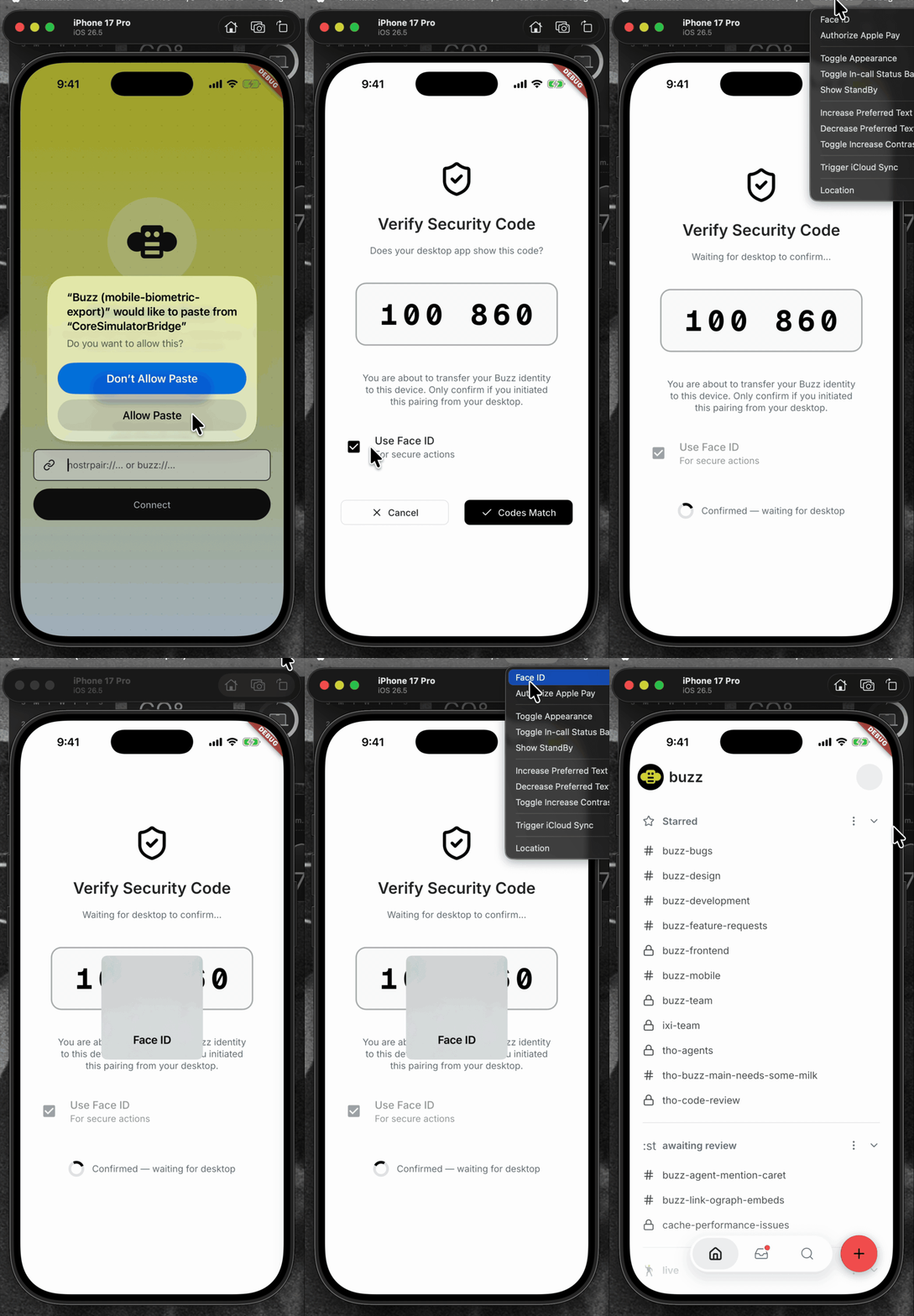 | 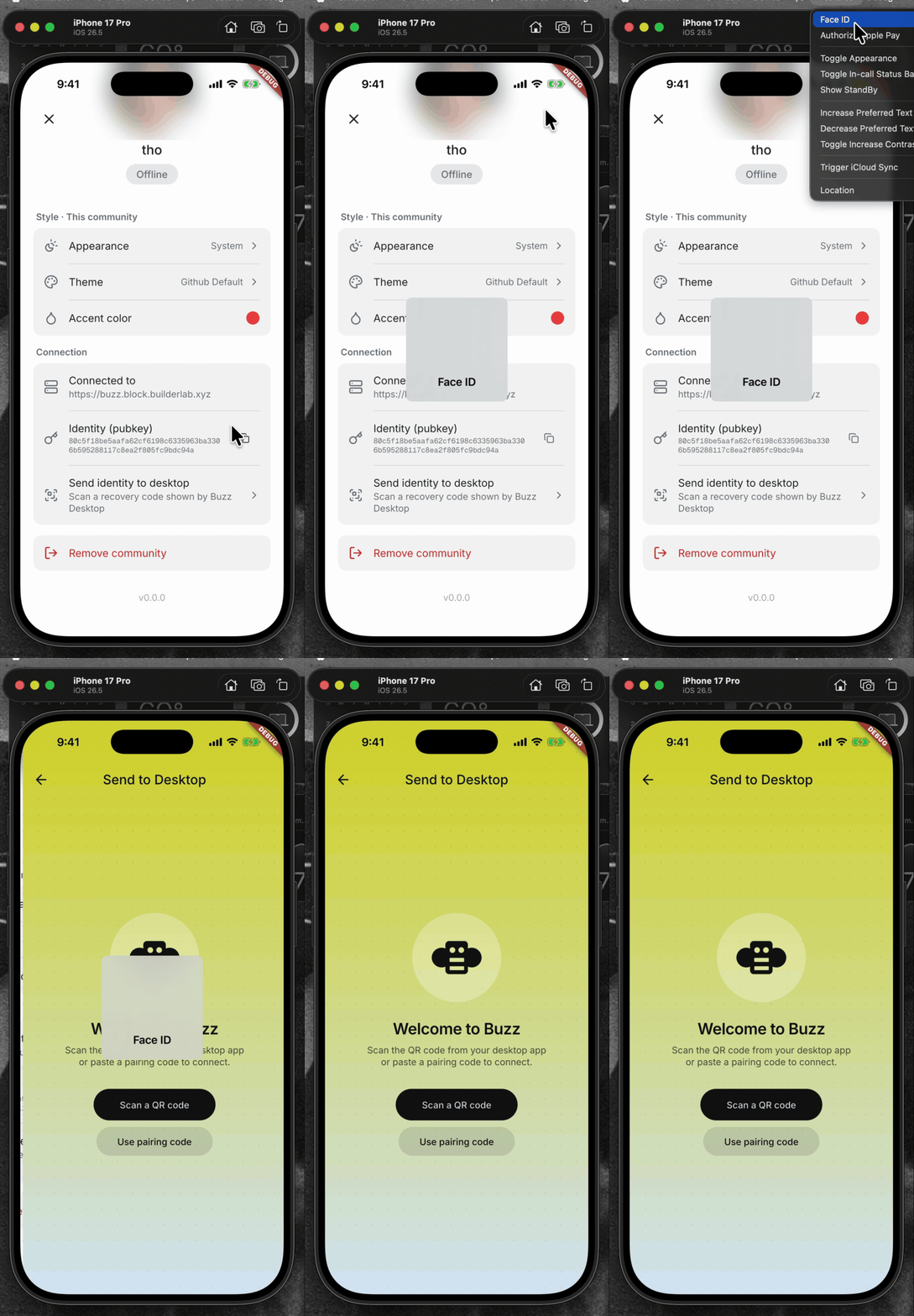 | <details> <summary>File changes</summary> **Android and iOS integration** - `mobile/android/app/build.gradle.kts` declares the AppCompat dependency required by the biometric activity theme. - `mobile/android/app/src/main/kotlin/xyz/block/buzz/mobile/MainActivity.kt` uses the activity type required by the system authentication prompt. - `mobile/android/app/src/main/res/values/styles.xml` and `mobile/android/app/src/main/res/values-night/styles.xml` use the compatible launch theme. - `mobile/ios/Podfile.lock` records the native local-authentication dependency. - `mobile/ios/Runner/Info.plist` explains why Buzz requests Face ID access. **Identity policy and pairing flow** - `mobile/lib/shared/security/sensitive_action_authorizer.dart` wraps OS authentication and maps platform errors to stable app-level outcomes. - `mobile/lib/shared/community/community.dart` and `mobile/lib/shared/community/community_storage.dart` persist the sensitive-action policy. - `mobile/lib/features/invites/invite_join_provider.dart` assigns the explicit policy for invite-created communities. - `mobile/lib/features/pairing/pairing_provider.dart` gates export, binds grants to the active community/session, reauthenticates expired grants, and clears grants on every terminal path. - `mobile/lib/features/pairing/pairing_page.dart` lets users choose biometric protection while importing an identity. - `mobile/lib/features/settings/settings_page.dart` wires pairing into settings. - `mobile/lib/features/settings/settings_page/connection_section.dart` authenticates before opening export recovery and bounds the foreground-resume wait. - `mobile/pubspec.yaml` and `mobile/pubspec.lock` add and lock `local_auth`. **Coverage** - `mobile/test/shared/security/sensitive_action_authorizer_test.dart` covers native result mapping, unsupported devices, and single-flight behavior. - `mobile/test/shared/community/community_test.dart` and `mobile/test/shared/community/community_storage_test.dart` cover policy defaults and persistence. - `mobile/test/features/invites/invite_join_provider_test.dart` covers the invite policy. - `mobile/test/features/pairing/pairing_page_test.dart` covers import protection controls. - `mobile/test/features/pairing/pairing_provider_test.dart` covers export/import authorization, stale/reset/concurrent guards, malformed payload cleanup, and no-export failure paths. - `mobile/test/features/settings/connection_section_test.dart` covers the tap gate, lifecycle resume, and timeout behavior. </details> ## Reproduction steps 1. Pair an identity into the mobile app. 2. Open Settings and choose “Send identity to desktop.” 3. Verify Face ID, biometrics, or the device passcode is required before the recovery scanner opens. 4. Cancel device authentication and verify the scanner does not open and no identity transfer begins. 5. Authenticate, scan a Desktop recovery code, confirm the SAS, and verify the identity transfer completes. ## Validation At `be5620f5f10aa6cc16e86a4f01f102f3d9aeef9b`: - `cd mobile && ../bin/flutter analyze` — no issues - `cd mobile && ../bin/flutter test` — 1,368 tests passed - `cd mobile/android && JAVA_HOME=$(/usr/libexec/java_home -v 21) ./gradlew app:assembleDebug` — debug APK assembled successfully --------- Signed-off-by: Taylor Ho <taylorkmho@gmail.com> |
||
|
Wes
|
3e76481a14 |
refactor(clients): standardize product naming on community (#1858)
Signed-off-by: Wes <wesbillman@users.noreply.github.com> Co-authored-by: Pinky <44b8e82baa6e0e254e0208d68f335c283c94e7b78dd1fa10d5a49d3f13dd0435@sprout-oss.stage.blox.sqprod.co> |









