mirror of
https://github.com/block/buzz.git
synced 2026-11-01 06:51:17 +00:00
168168d8fae97ea0e73118274fae90327f2b61ba
544 Commits
| Author | SHA1 | Message | Date | |
|---|---|---|---|---|
 npub13n66s06epmqf2kc3v373ez8hj65cuzyvxzjf93vwpervxqn2u7jq2qd9je |
168168d8fa |
feat(relay): enable SQLite command persistence
Signed-off-by: npub13n66s06epmqf2kc3v373ez8hj65cuzyvxzjf93vwpervxqn2u7jq2qd9je <8cf5a83f590ec0955b11647d1c88f796a98e088c30a492c58e0e46c3026ae7a4@buzz.block.builderlab.xyz> |
||
|
npub13n66s06epmqf2kc3v373ez8hj65cuzyvxzjf93vwpervxqn2u7jq2qd9je
|
1971f71a06 |
feat(db): port workflow persistence to SQLite
Signed-off-by: npub13n66s06epmqf2kc3v373ez8hj65cuzyvxzjf93vwpervxqn2u7jq2qd9je <8cf5a83f590ec0955b11647d1c88f796a98e088c30a492c58e0e46c3026ae7a4@buzz.block.builderlab.xyz> |
||
|
npub13n66s06epmqf2kc3v373ez8hj65cuzyvxzjf93vwpervxqn2u7jq2qd9je
|
ded31d2fb5 |
feat(db): port moderation to SQLite
Signed-off-by: npub13n66s06epmqf2kc3v373ez8hj65cuzyvxzjf93vwpervxqn2u7jq2qd9je <8cf5a83f590ec0955b11647d1c88f796a98e088c30a492c58e0e46c3026ae7a4@buzz.block.builderlab.xyz> |
||
|
npub13n66s06epmqf2kc3v373ez8hj65cuzyvxzjf93vwpervxqn2u7jq2qd9je
|
28d3729ba0 |
feat(db): port feedback admin reads to SQLite
Signed-off-by: npub13n66s06epmqf2kc3v373ez8hj65cuzyvxzjf93vwpervxqn2u7jq2qd9je <8cf5a83f590ec0955b11647d1c88f796a98e088c30a492c58e0e46c3026ae7a4@buzz.block.builderlab.xyz> |
||
|
npub13n66s06epmqf2kc3v373ez8hj65cuzyvxzjf93vwpervxqn2u7jq2qd9je
|
dee9275497 |
test(db): cover SQLite relay invite claims
Signed-off-by: npub13n66s06epmqf2kc3v373ez8hj65cuzyvxzjf93vwpervxqn2u7jq2qd9je <8cf5a83f590ec0955b11647d1c88f796a98e088c30a492c58e0e46c3026ae7a4@buzz.block.builderlab.xyz> |
||
|
npub13n66s06epmqf2kc3v373ez8hj65cuzyvxzjf93vwpervxqn2u7jq2qd9je
|
cb42d8b672 |
feat(db): port thread persistence to SQLite
Signed-off-by: npub13n66s06epmqf2kc3v373ez8hj65cuzyvxzjf93vwpervxqn2u7jq2qd9je <8cf5a83f590ec0955b11647d1c88f796a98e088c30a492c58e0e46c3026ae7a4@buzz.block.builderlab.xyz> |
||
|
npub13n66s06epmqf2kc3v373ez8hj65cuzyvxzjf93vwpervxqn2u7jq2qd9je
|
2033d3fc0d |
feat(db): port relay invites to SQLite
Signed-off-by: npub13n66s06epmqf2kc3v373ez8hj65cuzyvxzjf93vwpervxqn2u7jq2qd9je <8cf5a83f590ec0955b11647d1c88f796a98e088c30a492c58e0e46c3026ae7a4@buzz.block.builderlab.xyz> |
||
|
npub13n66s06epmqf2kc3v373ez8hj65cuzyvxzjf93vwpervxqn2u7jq2qd9je
|
6b7b533f14 |
fix(relay): bind single-node probes to loopback
Signed-off-by: npub13n66s06epmqf2kc3v373ez8hj65cuzyvxzjf93vwpervxqn2u7jq2qd9je <8cf5a83f590ec0955b11647d1c88f796a98e088c30a492c58e0e46c3026ae7a4@buzz.block.builderlab.xyz> |
||
|
npub13n66s06epmqf2kc3v373ez8hj65cuzyvxzjf93vwpervxqn2u7jq2qd9je
|
024491648d |
fix(db): preserve duplicate DM data during upgrade
Signed-off-by: npub13n66s06epmqf2kc3v373ez8hj65cuzyvxzjf93vwpervxqn2u7jq2qd9je <8cf5a83f590ec0955b11647d1c88f796a98e088c30a492c58e0e46c3026ae7a4@buzz.block.builderlab.xyz> |
||
|
npub13n66s06epmqf2kc3v373ez8hj65cuzyvxzjf93vwpervxqn2u7jq2qd9je
|
96eea55720 |
fix(db): consolidate duplicate DMs during SQLite upgrade
Signed-off-by: npub13n66s06epmqf2kc3v373ez8hj65cuzyvxzjf93vwpervxqn2u7jq2qd9je <8cf5a83f590ec0955b11647d1c88f796a98e088c30a492c58e0e46c3026ae7a4@buzz.block.builderlab.xyz> |
||
|
npub13n66s06epmqf2kc3v373ez8hj65cuzyvxzjf93vwpervxqn2u7jq2qd9je
|
bb54a4c758 |
test(db): cover legacy v3 SQLite repair
Signed-off-by: npub13n66s06epmqf2kc3v373ez8hj65cuzyvxzjf93vwpervxqn2u7jq2qd9je <8cf5a83f590ec0955b11647d1c88f796a98e088c30a492c58e0e46c3026ae7a4@buzz.block.builderlab.xyz> |
||
|
npub13n66s06epmqf2kc3v373ez8hj65cuzyvxzjf93vwpervxqn2u7jq2qd9je
|
2f6b825532 |
feat(db): port API tokens to SQLite
Signed-off-by: npub13n66s06epmqf2kc3v373ez8hj65cuzyvxzjf93vwpervxqn2u7jq2qd9je <8cf5a83f590ec0955b11647d1c88f796a98e088c30a492c58e0e46c3026ae7a4@buzz.block.builderlab.xyz> |
||
|
npub13n66s06epmqf2kc3v373ez8hj65cuzyvxzjf93vwpervxqn2u7jq2qd9je
|
6f9241e346 |
feat(db): port git repo reservations to SQLite
Signed-off-by: npub13n66s06epmqf2kc3v373ez8hj65cuzyvxzjf93vwpervxqn2u7jq2qd9je <8cf5a83f590ec0955b11647d1c88f796a98e088c30a492c58e0e46c3026ae7a4@buzz.block.builderlab.xyz> |
||
|
npub13n66s06epmqf2kc3v373ez8hj65cuzyvxzjf93vwpervxqn2u7jq2qd9je
|
0cb9897853 |
fix(db): harden SQLite FTS and DM invariants
Signed-off-by: npub13n66s06epmqf2kc3v373ez8hj65cuzyvxzjf93vwpervxqn2u7jq2qd9je <8cf5a83f590ec0955b11647d1c88f796a98e088c30a492c58e0e46c3026ae7a4@buzz.block.builderlab.xyz> |
||
|
npub13n66s06epmqf2kc3v373ez8hj65cuzyvxzjf93vwpervxqn2u7jq2qd9je
|
8e16378817 |
feat(db): port archived identities to SQLite
Signed-off-by: npub13n66s06epmqf2kc3v373ez8hj65cuzyvxzjf93vwpervxqn2u7jq2qd9je <8cf5a83f590ec0955b11647d1c88f796a98e088c30a492c58e0e46c3026ae7a4@buzz.block.builderlab.xyz> |
||
|
npub13n66s06epmqf2kc3v373ez8hj65cuzyvxzjf93vwpervxqn2u7jq2qd9je
|
8580a59d9e |
test(db): cover SQLite reaction parity
Signed-off-by: npub13n66s06epmqf2kc3v373ez8hj65cuzyvxzjf93vwpervxqn2u7jq2qd9je <8cf5a83f590ec0955b11647d1c88f796a98e088c30a492c58e0e46c3026ae7a4@buzz.block.builderlab.xyz> |
||
|
npub13n66s06epmqf2kc3v373ez8hj65cuzyvxzjf93vwpervxqn2u7jq2qd9je
|
efadcd1ef6 |
test(search): cover SQLite FTS5 parity
Signed-off-by: npub13n66s06epmqf2kc3v373ez8hj65cuzyvxzjf93vwpervxqn2u7jq2qd9je <8cf5a83f590ec0955b11647d1c88f796a98e088c30a492c58e0e46c3026ae7a4@buzz.block.builderlab.xyz> |
||
|
npub13n66s06epmqf2kc3v373ez8hj65cuzyvxzjf93vwpervxqn2u7jq2qd9je
|
b0e7be0bd1 |
feat(db): complete SQLite reaction and feed paths
Signed-off-by: npub13n66s06epmqf2kc3v373ez8hj65cuzyvxzjf93vwpervxqn2u7jq2qd9je <8cf5a83f590ec0955b11647d1c88f796a98e088c30a492c58e0e46c3026ae7a4@buzz.block.builderlab.xyz> |
||
|
npub13n66s06epmqf2kc3v373ez8hj65cuzyvxzjf93vwpervxqn2u7jq2qd9je
|
2d433a4d99 |
feat(relay): add SQLite DM and FTS5 paths
Signed-off-by: npub13n66s06epmqf2kc3v373ez8hj65cuzyvxzjf93vwpervxqn2u7jq2qd9je <8cf5a83f590ec0955b11647d1c88f796a98e088c30a492c58e0e46c3026ae7a4@buzz.block.builderlab.xyz> |
||
|
npub13n66s06epmqf2kc3v373ez8hj65cuzyvxzjf93vwpervxqn2u7jq2qd9je
|
9a332a6ef5 |
chore(relay): remove legacy local-mode tracer
Signed-off-by: npub13n66s06epmqf2kc3v373ez8hj65cuzyvxzjf93vwpervxqn2u7jq2qd9je <8cf5a83f590ec0955b11647d1c88f796a98e088c30a492c58e0e46c3026ae7a4@buzz.block.builderlab.xyz> |
||
|
npub13n66s06epmqf2kc3v373ez8hj65cuzyvxzjf93vwpervxqn2u7jq2qd9je
|
7db512e48f |
feat(relay): complete Phase 1 single-node slice
Signed-off-by: npub13n66s06epmqf2kc3v373ez8hj65cuzyvxzjf93vwpervxqn2u7jq2qd9je <8cf5a83f590ec0955b11647d1c88f796a98e088c30a492c58e0e46c3026ae7a4@buzz.block.builderlab.xyz> |
||
|
npub13n66s06epmqf2kc3v373ez8hj65cuzyvxzjf93vwpervxqn2u7jq2qd9je
|
8e31f60926 |
feat(db): add SQLite core collaboration slice
Signed-off-by: npub13n66s06epmqf2kc3v373ez8hj65cuzyvxzjf93vwpervxqn2u7jq2qd9je <8cf5a83f590ec0955b11647d1c88f796a98e088c30a492c58e0e46c3026ae7a4@buzz.block.builderlab.xyz> |
||
|
npub1z3hmzc9ryehxzedl5wzlvpyvja0d483peaja5zt6pd0209f9x2jspe2dxh
|
d3cfe480d6 |
refactor(db): gate postgres operations by backend
Signed-off-by: npub1z3hmzc9ryehxzedl5wzlvpyvja0d483peaja5zt6pd0209f9x2jspe2dxh <146fb160a3266e6165bfa385f6048c975eda9e21cf65da097a0b5ea7952532a5@buzz.block.builderlab.xyz> |
||
|
npub1z3hmzc9ryehxzedl5wzlvpyvja0d483peaja5zt6pd0209f9x2jspe2dxh
|
94e60f7b9b |
fix(relay): expire local presence leases
Signed-off-by: npub1z3hmzc9ryehxzedl5wzlvpyvja0d483peaja5zt6pd0209f9x2jspe2dxh <146fb160a3266e6165bfa385f6048c975eda9e21cf65da097a0b5ea7952532a5@buzz.block.builderlab.xyz> |
||
|
npub1z3hmzc9ryehxzedl5wzlvpyvja0d483peaja5zt6pd0209f9x2jspe2dxh
|
d2a4a31c11 |
feat(relay): add local pubsub and media backends
Signed-off-by: npub1z3hmzc9ryehxzedl5wzlvpyvja0d483peaja5zt6pd0209f9x2jspe2dxh <146fb160a3266e6165bfa385f6048c975eda9e21cf65da097a0b5ea7952532a5@buzz.block.builderlab.xyz> |
||
|
npub13n66s06epmqf2kc3v373ez8hj65cuzyvxzjf93vwpervxqn2u7jq2qd9je
|
4f7db3e428 |
refactor(relay): establish single-node backend seams
Signed-off-by: npub13n66s06epmqf2kc3v373ez8hj65cuzyvxzjf93vwpervxqn2u7jq2qd9je <8cf5a83f590ec0955b11647d1c88f796a98e088c30a492c58e0e46c3026ae7a4@buzz.block.builderlab.xyz> |
||
|
npub13n66s06epmqf2kc3v373ez8hj65cuzyvxzjf93vwpervxqn2u7jq2qd9je
|
9a800d6d7e |
fix(relay): reject failed local event writes
Signed-off-by: npub13n66s06epmqf2kc3v373ez8hj65cuzyvxzjf93vwpervxqn2u7jq2qd9je <8cf5a83f590ec0955b11647d1c88f796a98e088c30a492c58e0e46c3026ae7a4@buzz.block.builderlab.xyz> |
||
|
npub13n66s06epmqf2kc3v373ez8hj65cuzyvxzjf93vwpervxqn2u7jq2qd9je
|
30df44197a |
spike(relay): persist tracer events in SQLite
Signed-off-by: npub13n66s06epmqf2kc3v373ez8hj65cuzyvxzjf93vwpervxqn2u7jq2qd9je <8cf5a83f590ec0955b11647d1c88f796a98e088c30a492c58e0e46c3026ae7a4@buzz.block.builderlab.xyz> |
||
|
npub13n66s06epmqf2kc3v373ez8hj65cuzyvxzjf93vwpervxqn2u7jq2qd9je
|
777ab859e4 |
spike(relay): prove zero-service core event path
Signed-off-by: npub13n66s06epmqf2kc3v373ez8hj65cuzyvxzjf93vwpervxqn2u7jq2qd9je <8cf5a83f590ec0955b11647d1c88f796a98e088c30a492c58e0e46c3026ae7a4@buzz.block.builderlab.xyz> |
||
|
Wes
|
3c76f682c3 |
fix(search): surface exact short profile names (#5480)
## Summary - prioritize exact whole-lexeme matches within short kind-0 prefix searches - preserve the existing prefix result set, pagination, community/channel scope, hydration, and authorization path - add a Postgres regression where newer noisy `jm…` profiles saturate the bounded page ## Why Desktop mention autocomplete starts searching after one character. The `jm` profile is indexed and matches both `jm:*` prefix search and standard full-text search, but production prefix search returns a full 50-result page without it. Raw profile JSON supplies enough unrelated `jm…` lexemes that newer equal-rank matches fill the bounded page before the exact short display name. Changing clients would leave deployed Desktop 0.5.8 installations broken. This shared search-layer compatibility fix changes ordering only for `Prefix + kinds:[0] + query length <= 2`; message search, longer profile typeahead, and agent eligibility are untouched. ## Validation At commit `ff88761135d5045139aeb3da14d08cbfba203169` with a clean worktree: - `BUZZ_TEST_DATABASE_URL=postgres://buzz:buzz_dev@localhost:5432/buzz cargo test -p buzz-search --tests -- --include-ignored` — 22 passed (3 unit + 19 Postgres integration) - `cargo clippy -p buzz-search --tests -- -D warnings` - `cargo fmt --all -- --check` - mutation check: disabling exact-lexeme priority makes `short_kind0_prefix_prioritizes_exact_lexeme_on_a_noisy_page` fail - mandatory pre-push hooks: branch-skew, Rust tests, and Desktop/Tauri checks passed ## Risk Low. The extra ordering predicate applies only to one- or two-character prefix searches restricted exactly to kind 0. It does not add candidates, bypass filters, or alter access control. Exact matches move ahead of broader prefix matches; all remaining ordering stays relevance, recency, then event ID. Signed-off-by: Wes <wesbillman@users.noreply.github.com> Co-authored-by: Carl <c7ebe626f000404285d3686e1dc74cc07cc60a9754a150041ba132e14bd3e2ec@buzz.block.builderlab.xyz> |
||
|
Wes
|
563e4346da |
Reduce repeated ACP session context (#5423)
## Summary - deliver legacy ACP standing context once per live session, committing delivery state only after a successful turn - send only new thread/DM event deltas on later turns, with fail-open behavior for missing IDs and failed/cancelled prompts - fence native steer delivery acknowledgements by ACP session identity so stale acks cannot poison replacement sessions - keep context hints truthful when a fetch contains only the triggering event versus history delivered earlier ## Validation The pre-push hook passed on exact pushed head `6a768f1bc80fe63c686acf8d730f177fff8add3c`: - `branch-skew` - `desktop-check` - `desktop-typecheck` - `desktop-test` - `rust-tests` - `desktop-tauri-checks` Focused regression tests were also run while iterating: - `channel_prompt_commits_delivery_state_only_after_acp_success` - `in_flight_stale_native_steer_ack_cannot_update_replacement_session` - thread/DM trigger-only versus previously-delivered context hint tests ## Known limitations and follow-ups A local Goose smoke timed out at `session/new`. This diff does not change code that executes at or before `session/new`; its earliest affected runtime behavior is delivery-state insertion after session creation succeeds. The smoke failure is therefore bounded as environmental or pre-existing, but no successful live-provider turn was obtained. Scripted ACP wire/lifecycle tests carry the regression coverage. - #5421 — distinguish post-delta, already-delivered, and fetch-truncated context counts - #5422 — define a standing-context re-delivery policy if a legacy provider compacts it away Durable process-restart/session resume remains out of scope for this slice of #5342. #5386 also remains separate pending upstream adapter support. --------- Signed-off-by: Wes <wesbillman@users.noreply.github.com> Co-authored-by: Carl <c7ebe626f000404285d3686e1dc74cc07cc60a9754a150041ba132e14bd3e2ec@buzz.block.builderlab.xyz> |
||
|
Will Pfleger
|
5e4c05f90b |
feat(desktop): NIP-AM agent-usage backend — P2 emission/transport/archive + P4a aggregation/D6 (#4000)
## What Implements Phases 2 and 4a of the Usage v2 plan (plan events `d0268cd0`/`0e95b035`), extending the archive backend to emit, transport, archive, and aggregate both cache categories and billing identity fail-closed. ### P2 — emission, transport, archive **Tri-state accumulators** (`Unseen`/`Exact`/`Unknown`) for cache-read and cache-write in `buzz-agent` turn and session state. Absent field = Unknown (never zero) through the full pipeline. No `unwrap_or(0)` on the cache path. Both cache folds are gated on usage-bearing responses (same gate as the total-state and identity folds) — a response with no usage at all must not poison either accumulator. **Overflow-aware input token parsing and accumulation** — closed end-to-end from parse through wire to ACP: - `sum_usage()` returns `SumUsageResult` (`Exact(u64)` | `Overflow`) — checked arithmetic, never clamps. `anthropic_input_tokens()` returns `Option<SumUsageResult>` since it sums three fields (`input_tokens + cache_read_input_tokens + cache_creation_input_tokens`) that can collectively overflow. Single-field callers (`prompt_tokens`, `completion_tokens`, etc.) convert via `.into_exact()` — their single-field sums cannot overflow. - `LlmResponse.input_tokens_overflowed: bool` propagates the parse-layer signal into the run loop. When set, `input_tokens` is `None` (clamped value discarded), the context-gate baseline (`last_request_input_tokens`) is frozen at its prior reading, and `turn_input_tokens` is poisoned to `TurnIOState::Poisoned` before any emission — including mid-turn `emit_usage_update` calls. A dedicated enum on `LlmResponse.input_tokens` would ripple into ~20 existing test assertions on `r.input_tokens == Some(...)`; the bool flag confines the change to the two call sites that check it. - `TurnIOState` (`Unseen`/`Exact`/`Poisoned`) for input and output: per-round fold uses `checked_add`; overflow poisons permanently at turn and session level, no healing. Absence does not poison (pass-2-cleared contract unchanged). Wire emission omits `accumulatedInputTokens`/`accumulatedOutputTokens` when poisoned — never null, never `u64::MAX`. ACP treats absent = publisher-poisoned: `delta_reliable: false`, null turn fields, null cumulative for that category; session cumulative stays unknown for all subsequent turns once poisoned. **Conditional wire emission** for `accumulatedCachedInputTokens` and new `accumulatedCacheWriteTokens`: fields are omitted when the cumulative is Unseen or Unknown. ACP `_goose/unstable/session/update` contract documented next to the payload with tests for all absence/zero variants. **`PricingIdentity` stamping (publisher-side)**: - `pricing_authority()`: canonical parsed-URL endpoint comparison against the official allowlist — HTTPS only, exact allowlisted host (lookalike-safe), default port (omitted or explicit :443), required API base path, rejects userinfo/query/fragment/path-prefix lookalikes. - Model: the actually-requested `request_model` after mesh/auto resolution (not `effective_model_str`). - Turn discipline: identity retained only while ALL usage in the current turn carries one identical proven identity; any mismatch, unproven-usage-bearing response, or unpaired cumulative snapshot poisons to absent; a later matching notification does not heal a mixed turn. **ACP `UsageTracker` identity fold**: per-in-flight-turn tri-state identity accumulator replacing last-update-wins. Any absent identity on a token-advancing notification or exact mismatch poisons to absent; poison survives later updates; reset in `begin_turn()`/`take()`; reset also when a request fails (baseline cleared so preflight gate cannot stay frozen sub-threshold on retries). **M3 migration**: adds `turn_cache_write_tokens`, `cumulative_cache_write_tokens`, `pricing_authority`, `pricing_model`, `pricing_cache_class` to `agent_metric_index`. Additive, idempotent, guarded per-column by marker. M2 migration also guarded per-column (turn and cumulative cache-read columns checked and added independently; marker commits only after both are present). Fresh-DB schema includes all columns. **First-turn baselines**: `seed_zero_baseline` seeds `last_input: Some(0)`, `last_output: Some(0)`, `last_cached_input: Some(0)`, `last_cache_write: Some(0)`, and `last_total: Some(0)` — all have the known-zero-at-spawn argument. Absent fields from incoming snapshots still produce unknown (tri-state unchanged). Sessions buzz-acp did not spawn (no seed) remain fail-closed on turn one. **`ReportedUsage` TS mirror**: `cacheReadTokens`, `cacheWriteTokens`, `freshInputTokens` added to `tauriArchive.ts` as `UsageField` members, field-for-field with the Rust struct. ### P4a — aggregation layer **Extended S-1 ladder** to cache-read and cache-write via the same `ladder_token` path as the existing token fields. **`freshInputTokens` derivation**: checked arithmetic, fail-closed — absent cache fields produce Unknown (not zero), overflow and `cacheRead+cacheWrite > input` both produce `incomplete: true`. Aggregated as a `UsageField`. **D6 comparator**: `sort_value()` = provider total when known, else `input+output` when both known, else `None` (unknown-last). Replaces the prior total-only comparator for both agent-level and model-level sort. Ships a pinned test vector that the TS render layer (P5) must match. ## Test coverage - `buzz-agent`: 440 lib + 15 integration (golden_transcripts) — includes 13 new `cache_total_state_tests`; 14 new `turn_io_state_tests`; 3 new `sum_usage_*` tests (exact single-field, exact two-field, overflow signals correctly); 3 new `parse_anthropic_*` tests (overflow flag set + value cleared, normal sum no flag, absent usage no flag); end-to-end golden transcript drives real subprocess with Anthropic-shaped `input_tokens: u64::MAX, cache_read: 1` response and asserts `accumulatedInputTokens` absent from the emitted `usage_update` — no logic duplication; 3 wire pin tests; 4 `fold_pricing_identity_*` tests; `pricing_authority()` explicit-:443 acceptance - `buzz-acp`: 700 tests (691 lib + 9 integration) — 4 new usage tests (absent input → unreliable+null; absent output → unreliable+null; goose-shaped both present unchanged; poison mid-session); 3 ACP behavior tests; 7 pool lifecycle tests - Desktop (Rust): 2259+ tests — 14 new P4a pinned tests; 2 M3 round-trip tests; 1 serde key-shape test; 2 M2 partial-schema migration tests; first-turn cache round-trip test ## Related PRs - P1 NIP-AM spec: [#4632](https://github.com/block/buzz/pull/4632) - P3 pricing table: [#4629](https://github.com/block/buzz/pull/4629) - UI (P5): [#4001](https://github.com/block/buzz/pull/4001) --------- Signed-off-by: Will Pfleger <pfleger.will@gmail.com> Signed-off-by: Duncan <dcfd242e557282d7a1e2cf2e6877522682f1e5c6156dc92ca7d90eaedd3b0f95@buzz.block.builderlab.xyz> Co-authored-by: npub1mn7jgtj4w2pd0g0zeuhxsa6jy6p0rewxz4kujt98my82ahfmp72sxjexk7 <dcfd242e557282d7a1e2cf2e6877522682f1e5c6156dc92ca7d90eaedd3b0f95@buzz.block.builderlab.xyz> |
||
|
Tyler
|
5bf78671f4 |
fix(agent): retry LLM completion on malformed 2xx JSON body (#5351)
## Problem
A provider can return HTTP 200 with a **truncated JSON body** — cleanly
closed connection, correct framing, content cut off mid-value. Both LLM
HTTP loops treated this as a terminal error on the first attempt:
`AgentError::Llm("json: EOF while parsing a value")`, surfaced as code
-32000 at the ACP boundary, killing the agent turn before it produced
anything.
Observed live in a tb2.1 bench trial (write-compressor, tb21-twins-1):
deepseek via OpenRouter returned a truncated body, the agent died
mid-prompt with 0 turns completed, and the trial scored 0 on a provider
hiccup.
Meanwhile the same loops already retry timeouts, 429s, 5xxs, 499s, and
mid-body stream stalls — a truncated-but-complete body was the one
transient upstream fault that fell through to terminal.
## Fix
In both `post()` and `openrouter_post()`
(`crates/buzz-agent/src/llm.rs`): when the fully-received success body
fails `serde_json::from_slice`, `continue` the **existing** retry loop
instead of returning terminal — same `MAX_RETRIES` (3) bound, same
`backoff_with_jitter`. On exhaustion, the error goes through
`terminal_llm_error` so it carries cumulative duration + attempt count
like every other retried failure (previously the `json:` error carried
neither).
`post_anthropic` routes through `post()`, so
Anthropic/OpenAI/Databricks/mesh and OpenRouter are all covered.
## Why this cannot re-run a tool call
Hard requirement: tool calls are not idempotent, and this change must
not introduce any possibility of replaying one.
1. **The retry lives inside the HTTP POST helper, below the parse
boundary.** Tool calls are only ever extracted from a *successfully
parsed* response value
(`parse_openai`/`parse_anthropic`/`parse_responses`, all downstream of
these helpers' `Ok` return). A malformed body never parses, therefore no
tool call was ever extracted from it, therefore nothing downstream of it
ever dispatched.
2. **What is re-sent is the completion request itself** — the identical
`body_bytes` captured once at function entry. Sending a completion
request executes no tools; it asks the model for the next message.
3. **Same safety class as existing behavior.** The loop already re-sends
this identical request on 429/5xx/timeout/stream-stall; this adds one
more transient-fault arm to the same loop with the same bytes.
## Tests
Three new tests mirroring the existing 499/dropped-connection fixtures
(raw `TcpListener` stubs):
- `post_retries_malformed_json_body_and_succeeds` — truncated 200 body
on attempt 1, valid JSON on attempt 2; asserts success and **exactly 2**
server-side requests
- `post_exhausts_retries_on_persistent_malformed_json` —
always-truncated body; asserts exactly `MAX_RETRIES` attempts and a
terminal error carrying `json:` + cumulative/attempt context
- `openrouter_post_retries_malformed_json_body_and_succeeds` — same
recovery through OpenRouter's separate loop
Full `cargo test -p buzz-agent` green at
|
||
|
Will Pfleger
|
6e5c462ac5 |
chore(release): release Buzz Relay version 0.2.1 (#2856)
## Buzz Relay release v0.2.1 ### Changes since relay-v0.2.0: - fix(sdk): preserve self-mention p tags in message and forum event builders ([#4975](https://github.com/block/buzz/pull/4975)) ([`78c87ae20e`]( |
||
|
Tyler
|
261c460761 |
fix(buzz-agent): recover from 400-shaped image rejections; unbound benchmark agent rounds (#5318)
## Problem
Two failure modes from the `tb21-glm52-crusoe-1` benchmark run (GLM-5.2
solo, TB2.1) wedged or killed 13 of 89 trials without the model being at
fault:
1. **Conversation poisoning on text-only endpoints.** Crusoe's
serverless `crusoeai/GLM-5.2-NVFP4` rejects any request whose history
contains an image with `400: ... is not a multimodal model`. The
recovery machinery for exactly this case already exists —
`AgentError::UnsupportedImageInput` → `replace_unsupported_images()`
strips the image blocks, marks the tool result as an error, substitutes
a text placeholder, and continues the turn. But classification only
matched OpenRouter's 404 body (`no endpoints found that support image
input`) and was only consulted on the 404 arms. The Crusoe 400 fell
through to terminal `AgentError::Llm`: the image stayed in history,
every subsequent call failed identically, buzz-acp rode its 10-retry
ladder (~40 min), and the trial idled to budget death. Measured blast
radius: **8 trials wedged, 12.7h aggregate idle-after-poison.**
2. **Bounded agent rounds in benchmark trials.** The harness default
`DEFAULT_MAX_AGENT_ROUNDS = 32` ended solo trials mid-work when turns
rotated (thinking-heavy models hit max_tokens rotation fast; 4 trials
died this way). Benchmark trials already have a wall-clock budget as the
real limit — the round cap only converts recoverable rotation into trial
death.
## Fix
- `is_unsupported_image_input_error()` also matches the verbatim `is not
a multimodal model` body. Matcher stays deliberately tight (same
doctrine as `is_context_length_error`): misclassifying a generic 400 as
recoverable would mutate history for an error that removing images
cannot fix.
- Both status ladders — shared `post()` and `openrouter_post()` —
consult it on their 400 arms and return the typed
`UnsupportedImageInput` (OpenAI-compatible providers report this as 400;
a BYOK/passthrough upstream can surface the provider's own 400 through
OpenRouter).
- Harness `DEFAULT_MAX_AGENT_ROUNDS` → `0` (unbounded —
`BUZZ_AGENT_MAX_ROUNDS=0` is the agent config's documented unbounded
value). Per-agent `budget.max_calls` in manifests still overrides.
## Acceptance
- A 400 with the image-rejection body reaches the existing image-strip
recovery path instead of wedging the session — asserted through
`complete()` (covers the return path into the convergence mapper) and at
the `openrouter_post` terminal, both proving single-attempt (a
deterministic capability rejection must never be retried).
- Ordinary 400s stay terminal `AgentError::Llm` (existing negative tests
unchanged).
- Benchmark trials run unbounded rounds by default; python tests updated
for 0-is-legal with a negative arm at -1.
## Verification
- `cargo test -p buzz-agent`: 427 + 18 + 20 + 15 + 8 + 1 + 48 passed, 0
failed (full package, 3 consecutive clean runs)
- `cargo clippy -p buzz-agent --all-targets`, `cargo fmt --check`: clean
- `uv run --extra dev pytest tests/` in harbor-buzz-orchestra: 35 passed
- Pre-push hooks (full workspace rust-tests + desktop-tauri-checks)
green on rustc 1.95.0 at head
|
||
|
Wes
|
6a17d035f7 |
Revert "fix(acp): reject unattended permission requests" (#5323)
Reverts block/buzz#4609 |
||
|
Tyler
|
c7b663680a |
fix(buzz-agent): budget summarizer reasoning separately so it cannot starve the handoff summary (#5248)
## Problem
The handoff summarizer sends `max_tokens: 8192`
(`HANDOFF_MAX_OUTPUT_TOKENS`) with no reasoning budget separation. On
reasoning models, thinking tokens count against that cap: the model can
spend the entire budget reasoning, length-stop with empty `content`, and
`summarize()` — which only reads `content` — reports an empty summary.
The handoff then degrades to lossy history truncation.
Observed on deepseek-v4-flash during a terminal-bench 2.1 run
(tb21-solo-3, 89 tasks): **13 consecutive handoff attempts across 5
trials failed exactly this way** (`handoff returned empty summary;
truncating`), each burning ~3 minutes of full-cap reasoning, before a
stochastically-short reasoning run finally fit. circuit-fibsqrt alone: 5
failures, 5 truncations, then success on attempt 6. video-processing
failed its task by one frame after 3 context truncations.
## Fix
`openrouter_summary_body` now grants reasoning its own equal-sized
budget and excludes it from the response:
- `reasoning.max_tokens = max_output_tokens` — thinking gets a dedicated
budget instead of competing with the summary text
- `reasoning.exclude = true` — reasoning is never in the response body;
`summarize()` only reads `content`
- `max_tokens = max_output_tokens * 2` — the total cap covers both
budgets, so the text budget the caller asked for is actually available
for text
Non-reasoning endpoints ignore the `reasoning` object. Deliberately not
paired with `provider.require_parameters`, for the reasons documented at
`apply_openrouter_mutations` (it hard-404s valid model ids).
The prior test
`openrouter_summary_carries_neither_reasoning_nor_provider` asserted
`reasoning` absent from the summary body — that assertion guarded
against *effort-based* reasoning leaking in from config (the body is
built independently of `cfg`, which is still true and still tested:
`reasoning.effort` stays unset). Replaced with
`openrouter_summary_budgets_reasoning_separately_and_carries_no_provider`.
## Verification
- `cargo test -p buzz-agent`: 422 unit + 110 integration tests pass at
|
||
|
Tyler
|
2b873cf208 |
Recover from max-token response truncation (#5223)
## Summary - treat provider `max_tokens` as an interrupted assistant response and continue the same turn with actionable feedback - discard tool calls from truncated responses, including malformed partial arguments, so they are neither executed nor replayed with invalid tool-result pairing - bound recovery to two retries while preserving normal finite `max_rounds` accounting ## Verification - `cargo fmt --all -- --check` - `cargo test -p buzz-agent` (422 unit tests plus all package integration/doc suites passed) - `cargo clippy -p buzz-agent --all-targets -- -D warnings` ## Notes The pre-push repository-wide hook also ran. Its Rust tests passed (2,270 passed, 14 ignored), but its `buzz-db` unit-test build was blocked because local rustc 1.89 is below sqlx 0.9's rustc 1.94 requirement. The affected package suite above is green on the exact pushed commit. Originating Buzz channel: `c3252dd2-0142-4e01-88c7-a2183c3960a5` Signed-off-by: Wren <5217c5c2f7bfb4333e46d17c98a9255a52dadee18dcd43a43536b95e6776dfa0@buzz.block.builderlab.xyz> Co-authored-by: Wren <5217c5c2f7bfb4333e46d17c98a9255a52dadee18dcd43a43536b95e6776dfa0@buzz.block.builderlab.xyz> |
||
|
Brad Groux
|
78c87ae20e |
fix(sdk): preserve self-mention p tags in message and forum event builders (#4975)
## What users saw `buzz messages send` silently removed an explicitly supplied self-mention. The caller passed `--mention <sender-pubkey>` and received `accepted:true`, but the signed event had no matching `p` tag and `mention_pubkeys` was empty. ## Why it happened `nostr` 0.44 strips `p` tags matching the signer's pubkey by default. The codebase already opts out with `.allow_self_tagging()` for identity archive and unarchive requests, but the message and forum builders that accept mentions did not. The library therefore removed the tag during signing after the CLI had validated the explicit mention. ## What changed Added `.allow_self_tagging()` to all three event builders that accept mention tags: - `build_message` (kind 9) - `build_forum_post` (kind 45001) - `build_forum_comment` (kind 45003) An explicit mention now survives signing even when it matches the sender. ## How this was tested Added one regression test per builder. Each test signs with the same key included in the mention list and asserts that the resulting event preserves the self-referential `p` tag. Validation at `cd0f30bca`: ```text ./bin/cargo fmt --all -- --check cargo test -p buzz-sdk --lib cargo test -p buzz-cli --lib cargo clippy -p buzz-sdk -p buzz-cli --all-targets -- -D warnings ``` All 257 `buzz-sdk` tests and all 321 `buzz-cli` tests passed, and formatting and strict Clippy checks completed successfully. ## Scope and non-goals - Does not change mention validation, deduplication, or channel-member checks. - Does not change `normalize_mention_pubkeys`, which is not used by the messages-send path. - Does not add a dropped-mentions output field because the explicit tags are now preserved. Closes #4906. --------- Signed-off-by: Brad Groux <bradgroux@hotmail.com> Signed-off-by: npub17q2gdupkvswvk5kprwc7plergm4gn295uw6fe4mjyjv53ahuhtnq02jd3f <f01486f036641ccb52c11bb1e0ff2346ea89a8b4e3b49cd772249948f6fcbae6@digitalmeld.communities.buzz.xyz> Signed-off-by: Brad Groux <3053586+BradGroux@users.noreply.github.com> Signed-off-by: Wes <wesbillman@users.noreply.github.com> Co-authored-by: npub17q2gdupkvswvk5kprwc7plergm4gn295uw6fe4mjyjv53ahuhtnq02jd3f <f01486f036641ccb52c11bb1e0ff2346ea89a8b4e3b49cd772249948f6fcbae6@digitalmeld.communities.buzz.xyz> Co-authored-by: Wes <wesbillman@users.noreply.github.com> Co-authored-by: Carl <c7ebe626f000404285d3686e1dc74cc07cc60a9754a150041ba132e14bd3e2ec@buzz.block.builderlab.xyz> |
||
|
Taylor Ho
|
1922d49cb2 |
feat(desktop): adding rich link previews to messages (#3818)
## Overview **Category:** improvement **User impact:** Link previews appear in the composer and travel as privacy-safe sender-authored snapshots, so recipients never contact the linked site merely by opening a conversation. **Problem:** Cold-cache link paste could freeze the composer before the URL painted; recipient-side unfurling leaked visits; invalid or unresolved preview work could interfere with sending or leave dead cards behind. **Solution:** Paint pasted links before starting cold resolver work, resolve only in the sender's composer, attach only complete validated snapshots at Send, and render authored snapshots without recipient fallback fetching. ## Behavior - **Cold paste stays responsive:** bare and angle-bracket URL paste paths commit the visible link before resolver work begins. - **Sender-only fetching:** metadata is resolved while composing; recipients render only the sender-authored snapshot. - **Send never waits:** pending, failed, invalid, and unsendable previews are omitted. They do not block or cancel the message. - **Terminal misses disappear:** failed, timed-out, or 404 resolver results remove the composer card while preserving visible link text. - **Display-text links work:** Markdown links such as `[review the pull request](…)` produce and send the same snapshots as bare URLs. - **Compact and Rich presentation:** Compact remains the default; Rich preserves source description line breaks and paragraphs. - **Immediate draft-wide dismissal:** clicking × immediately hides all previews for the draft, suppresses links pasted later, and emits only `["link-preview", "none"]`. No confirmation detour. Suppression resets after send or clearing the draft. - **Zero recipient fallback:** missing, stale, malformed, off-relay, unsupported, or suppressed snapshots remain ordinary visible links; recipients never regenerate them. ## Implementation - Resolve previews from deferred composer URL state so paste can paint first. - Upload finished preview media to the active community relay and snapshot only valid, sendable media references. - Atomically capture ready snapshots at submit time; never append a late preview after send. - Validate snapshot and suppression tags in desktop/native and relay ingestion, rejecting duplicate or mixed forms. - Render composer previews as stable 55px attachment cards at desktop and narrow widths. - Add deterministic E2E coverage for cold paste, ready/pending/failed/invalid previews, display-text links, multiline Rich descriptions, immediate dismissal, later-pasted links, and suppression reset. ## Validation Validated head: `9807ba8952f190e76153834abf8ab61dd40be5e2` - Push hooks passed: `check-push-org`, branch skew, desktop check, mobile tests, desktop tests, Rust tests, and desktop Tauri checks. - Focused screenshot E2E at the validated head: 5/5 passed across Compact/Rich composer and recipient states, 800px/420px geometry, display-text links, multiline descriptions, and immediate dismissal. - PR CI was triggered for this exact head and is currently running; completed checks are green at the time of this update. - Worktree is clean and both PR head and validated branch resolve to `9807ba895…`. ## Screenshots ### Compact composer | Loading | Ready | |---|---| | 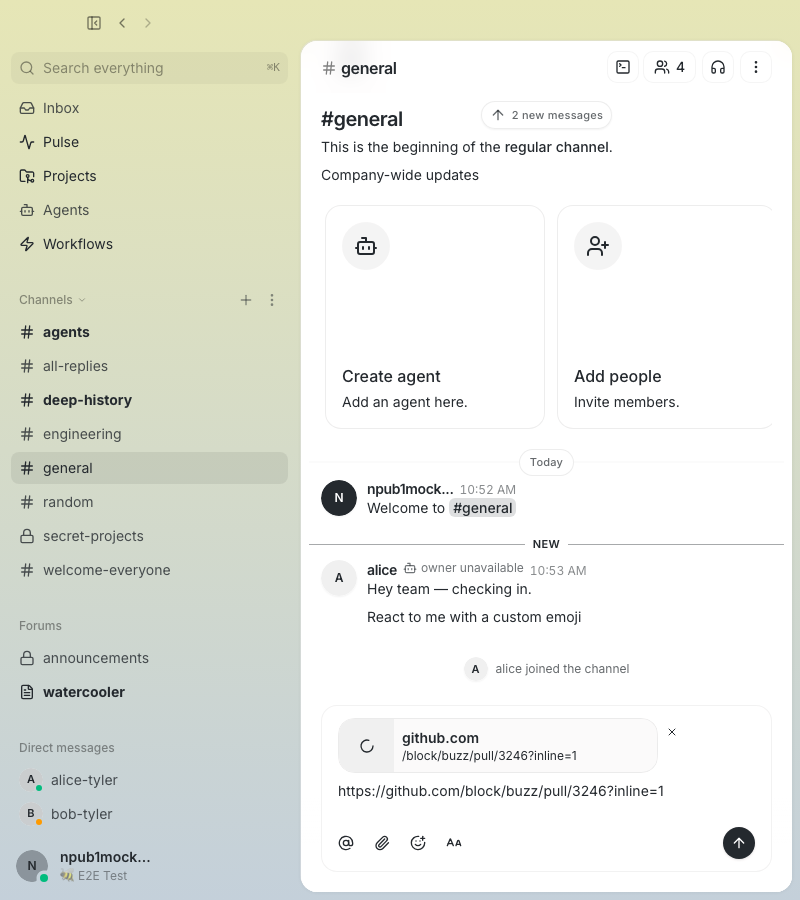 | 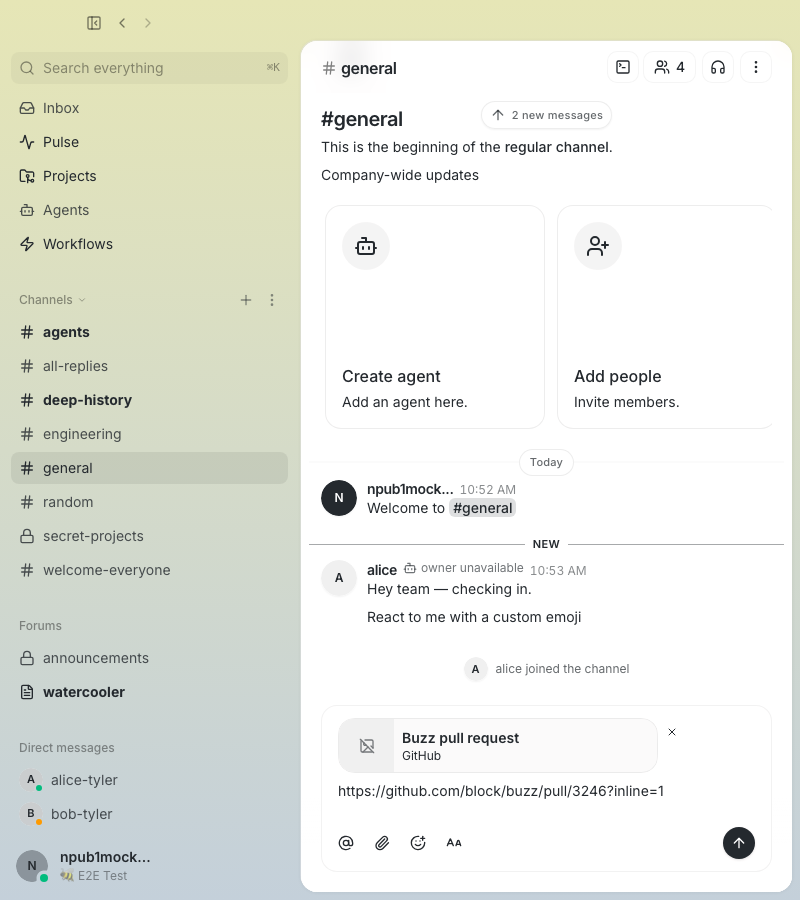 | ### Rich composer | Loading | Ready | |---|---| | 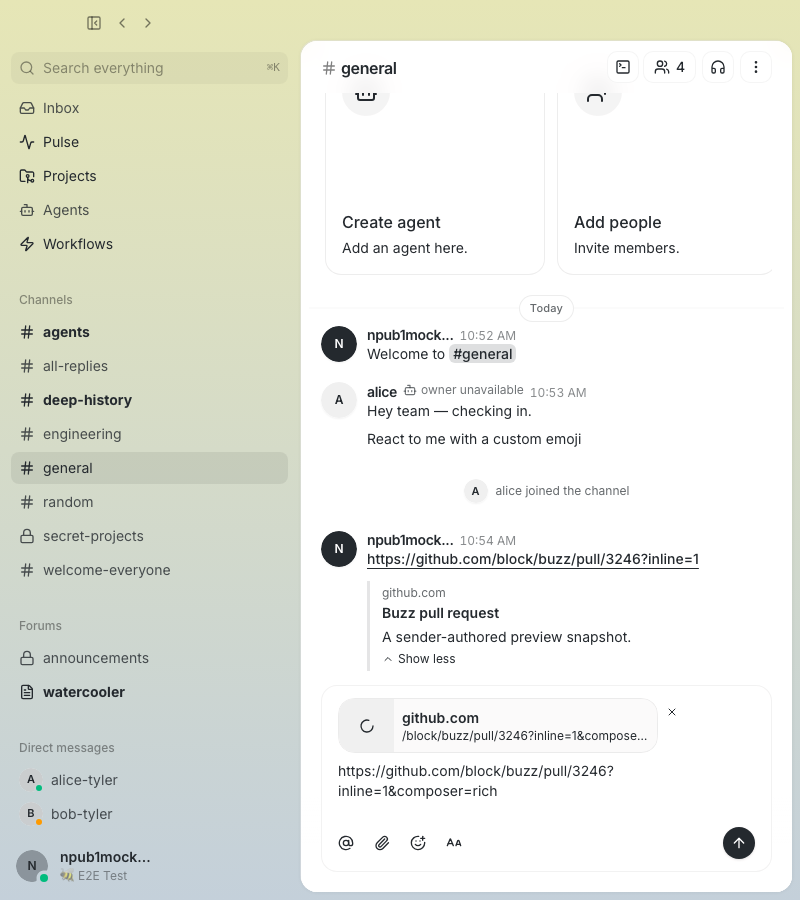 | 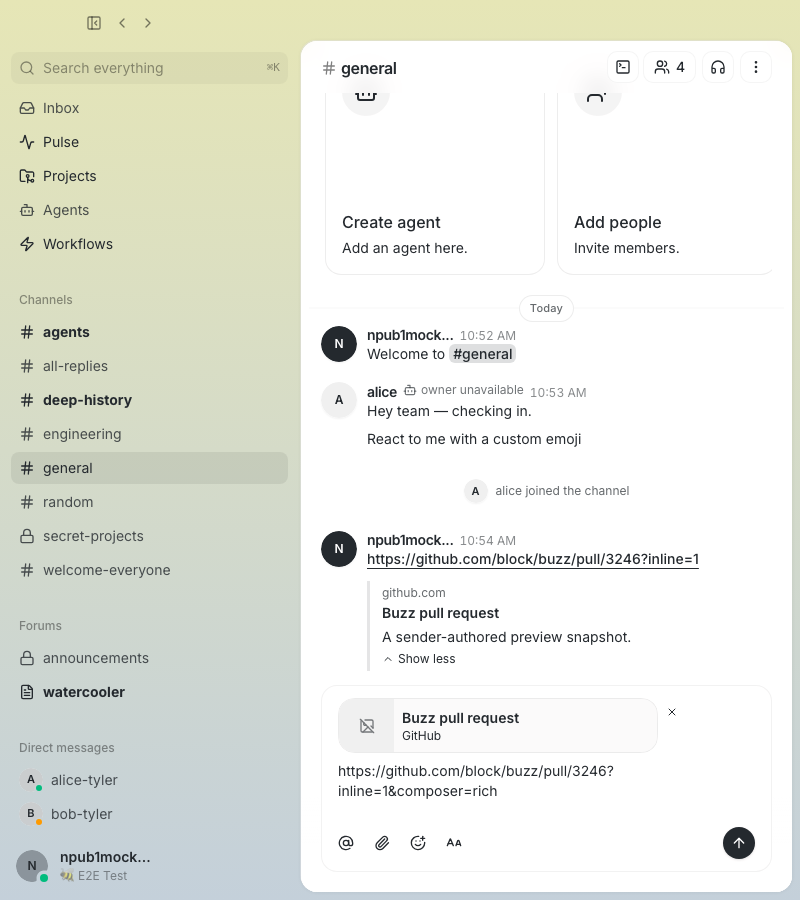 | ### Responsive composer | 800px loading | 800px ready | |---|---| | 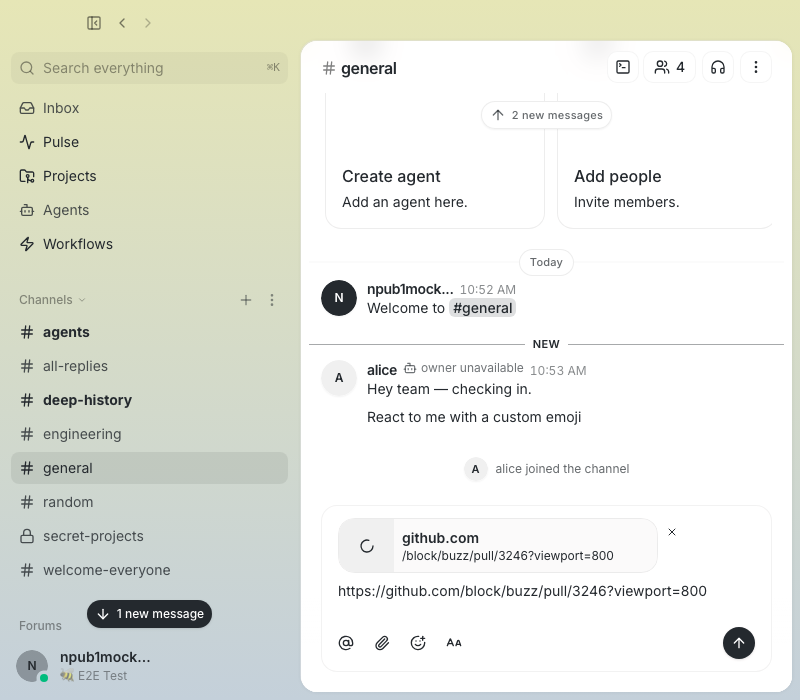 | 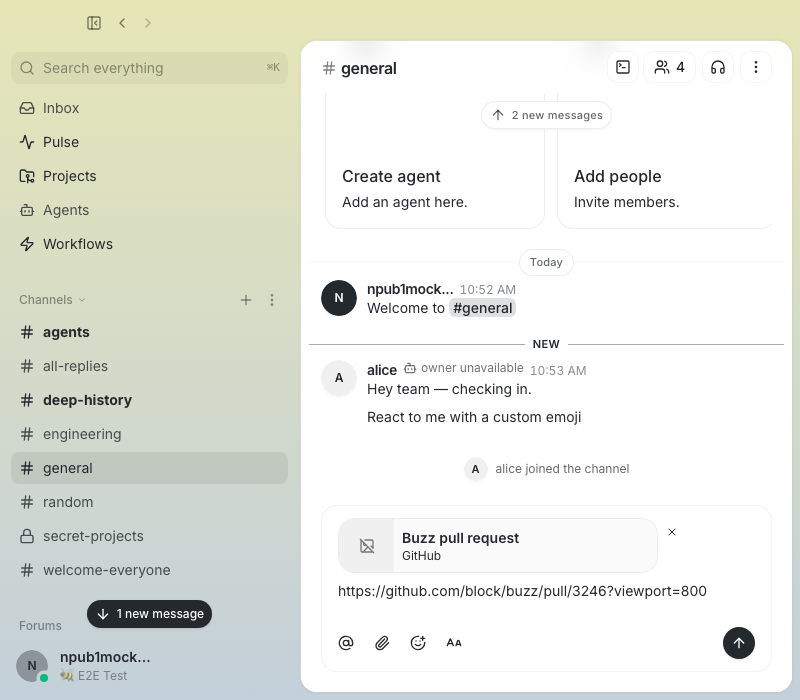 | | 420px loading | 420px ready | |---|---| | 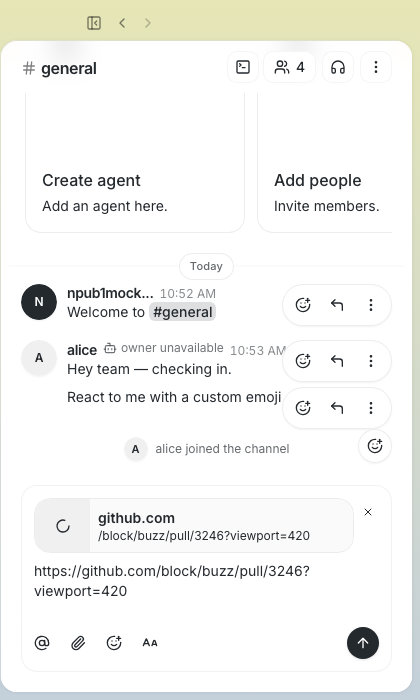 | 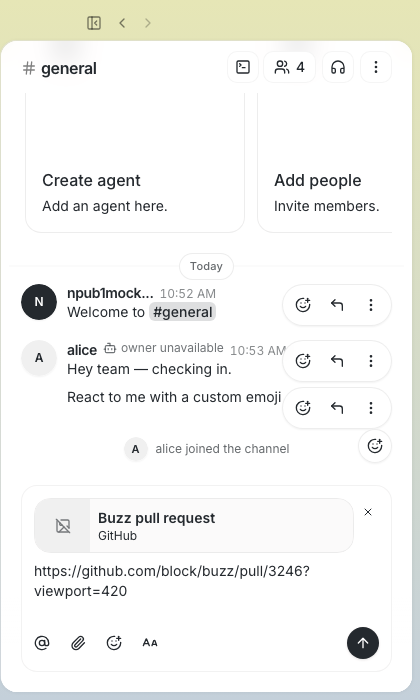 | ### Recipient presentation | Compact | Rich | |---|---| | 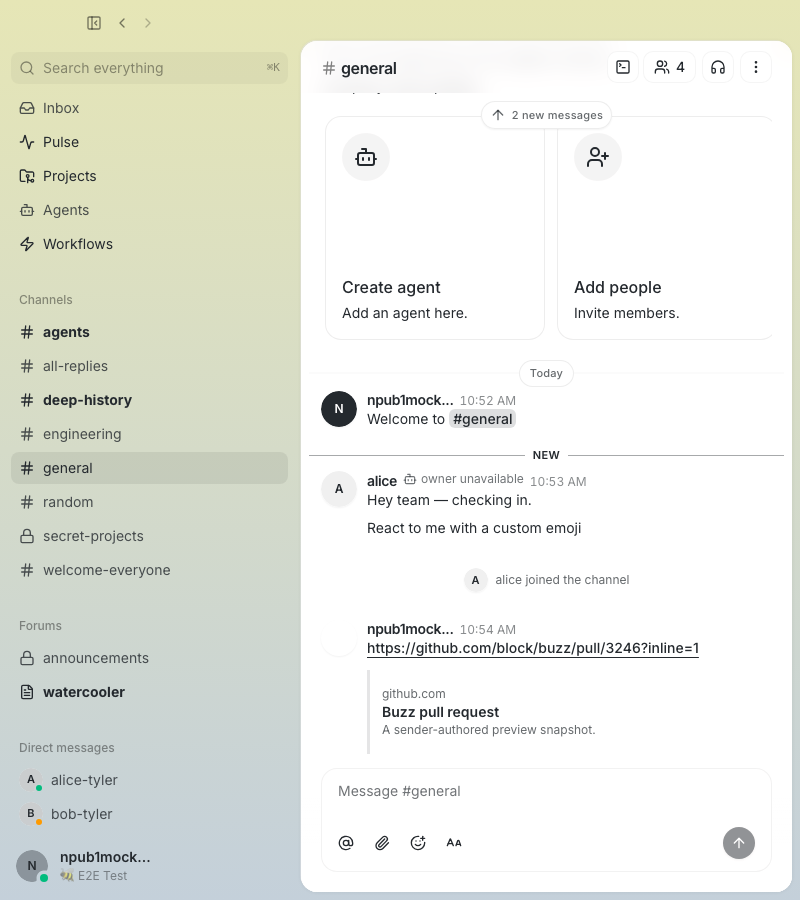 | 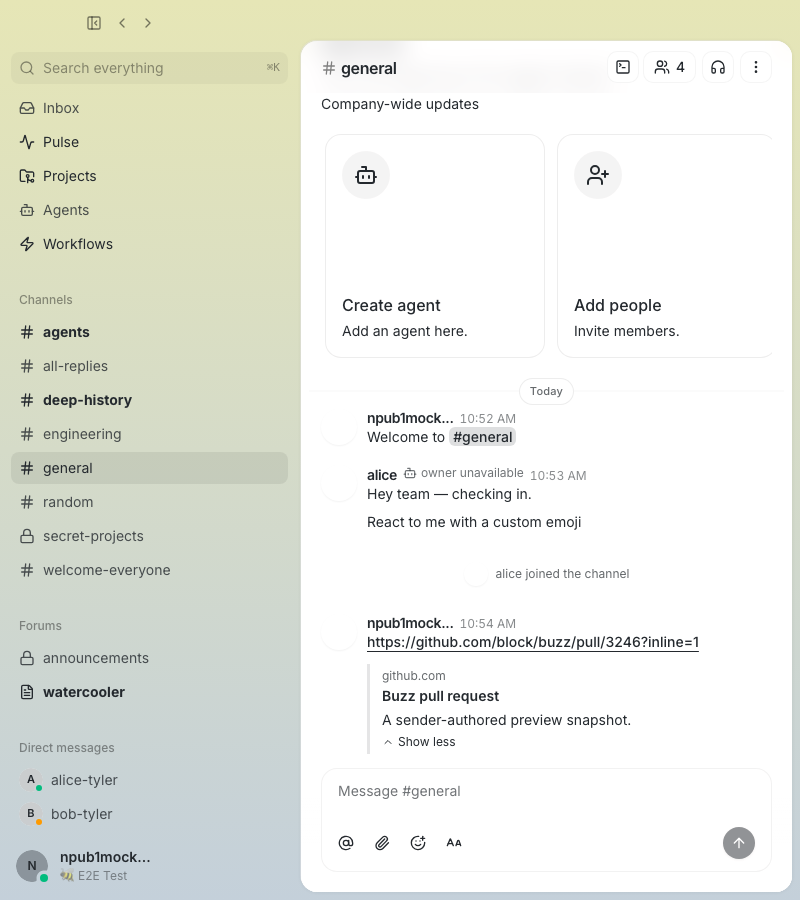 | ### Display-text Markdown link | Composer | Recipient | |---|---| | 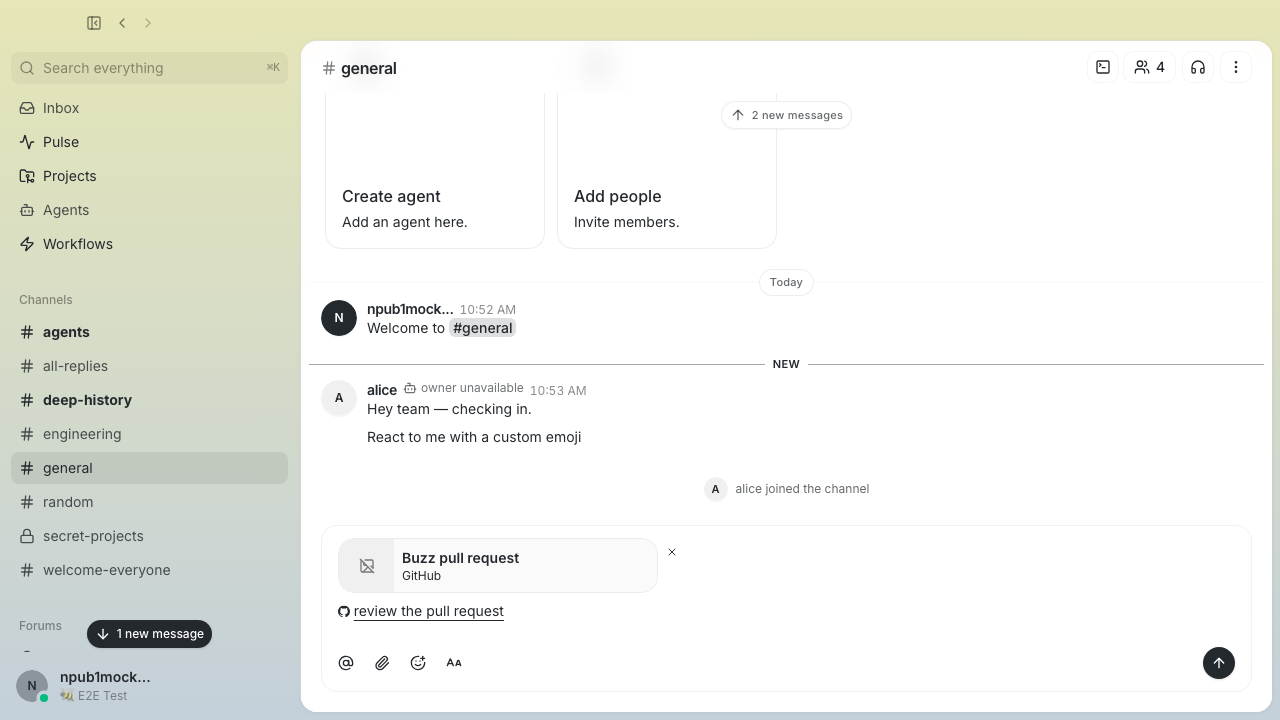 | 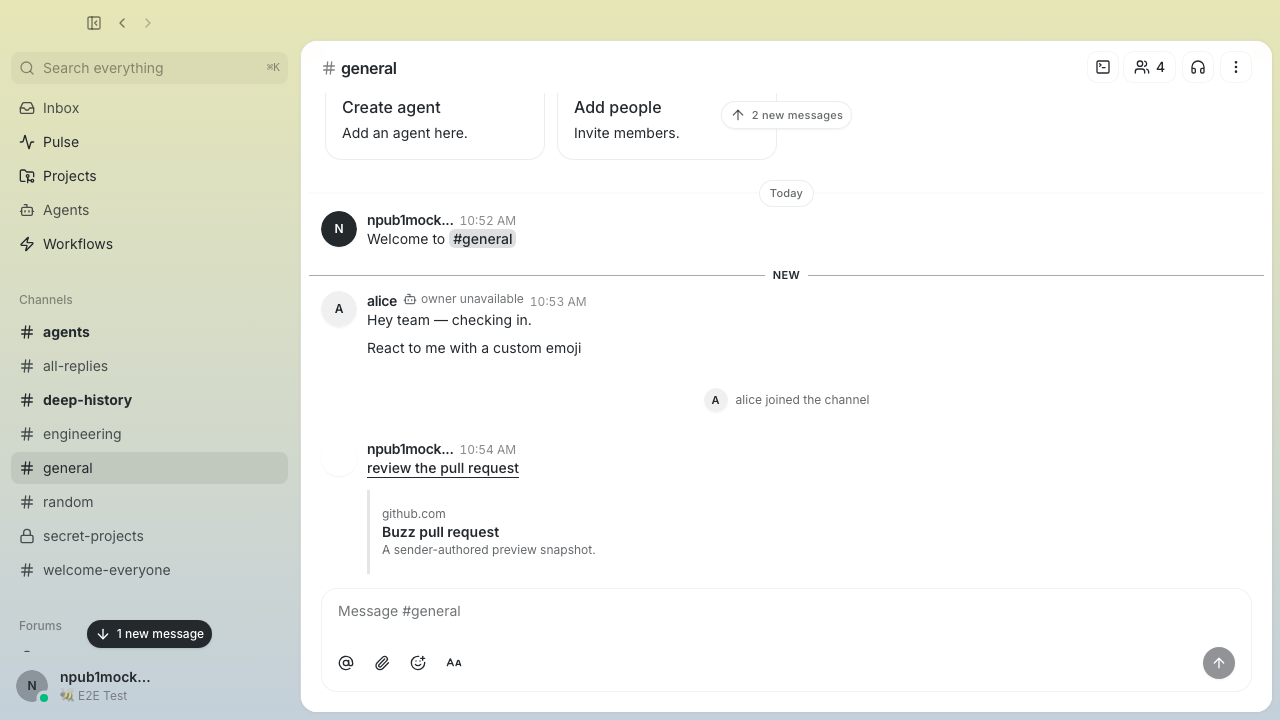 | ### Rich multiline description 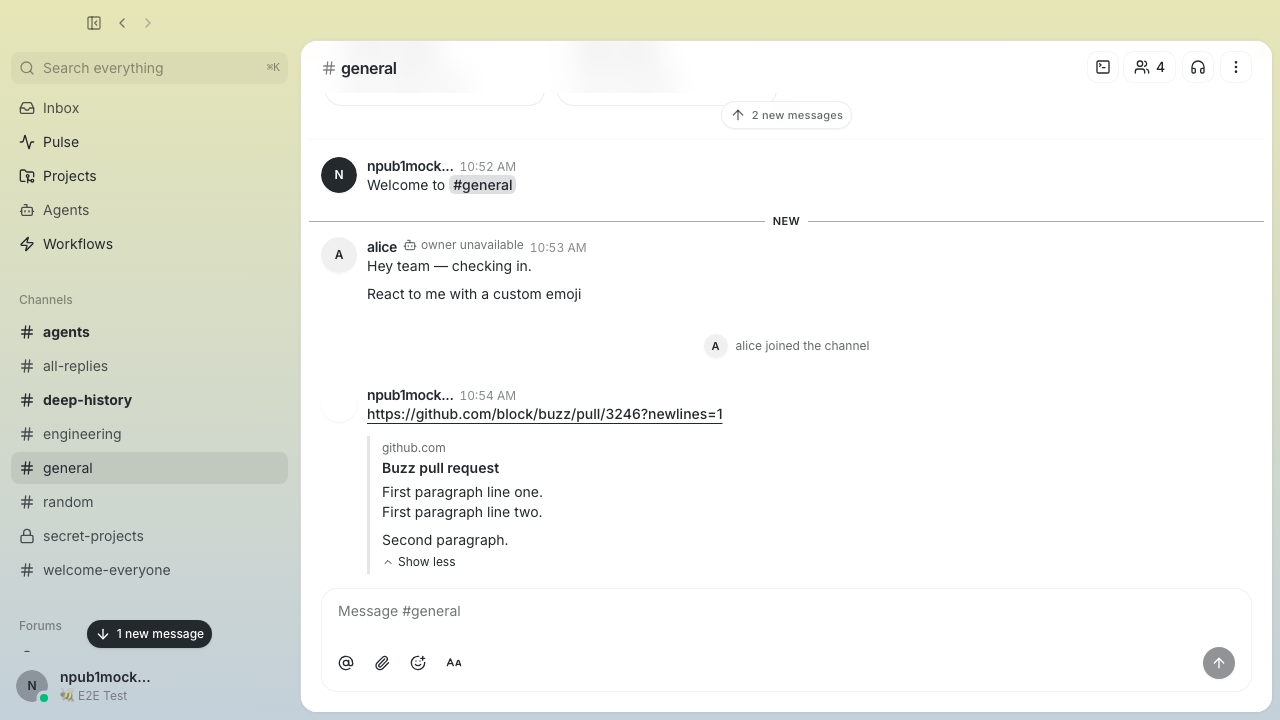 ### Immediate dismissal | Before × | Immediately after × | |---|---| | 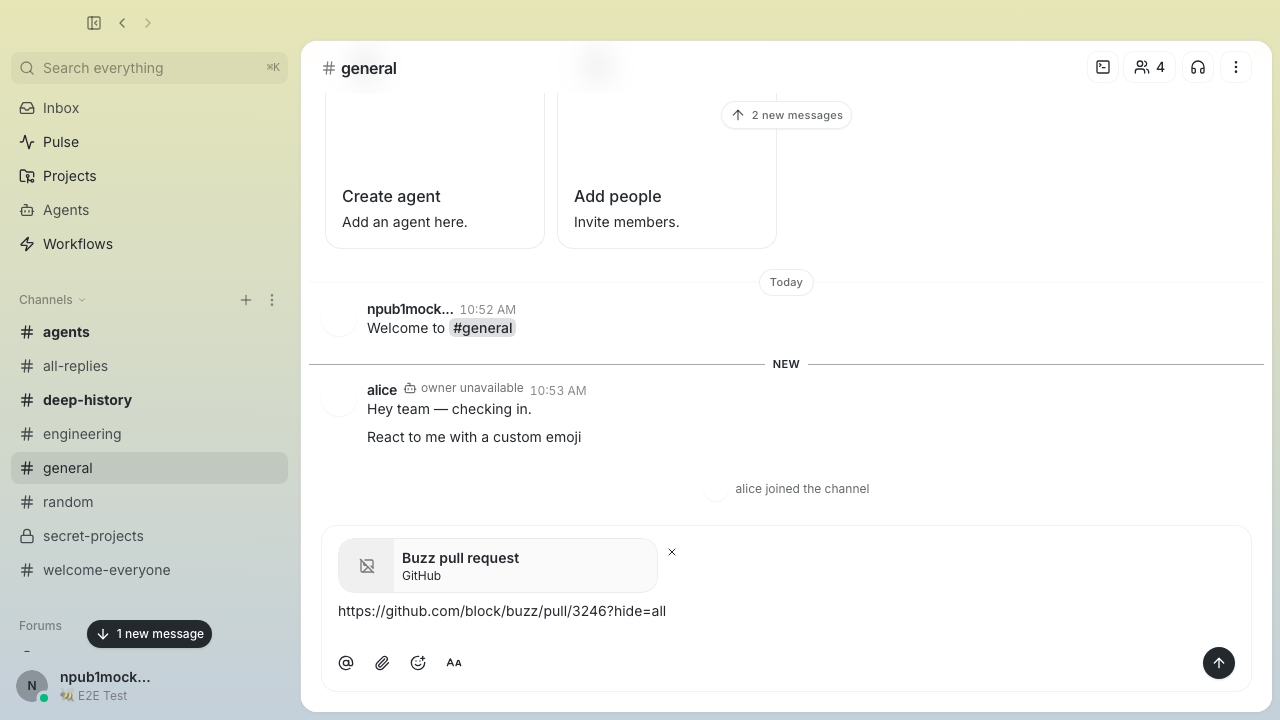 | 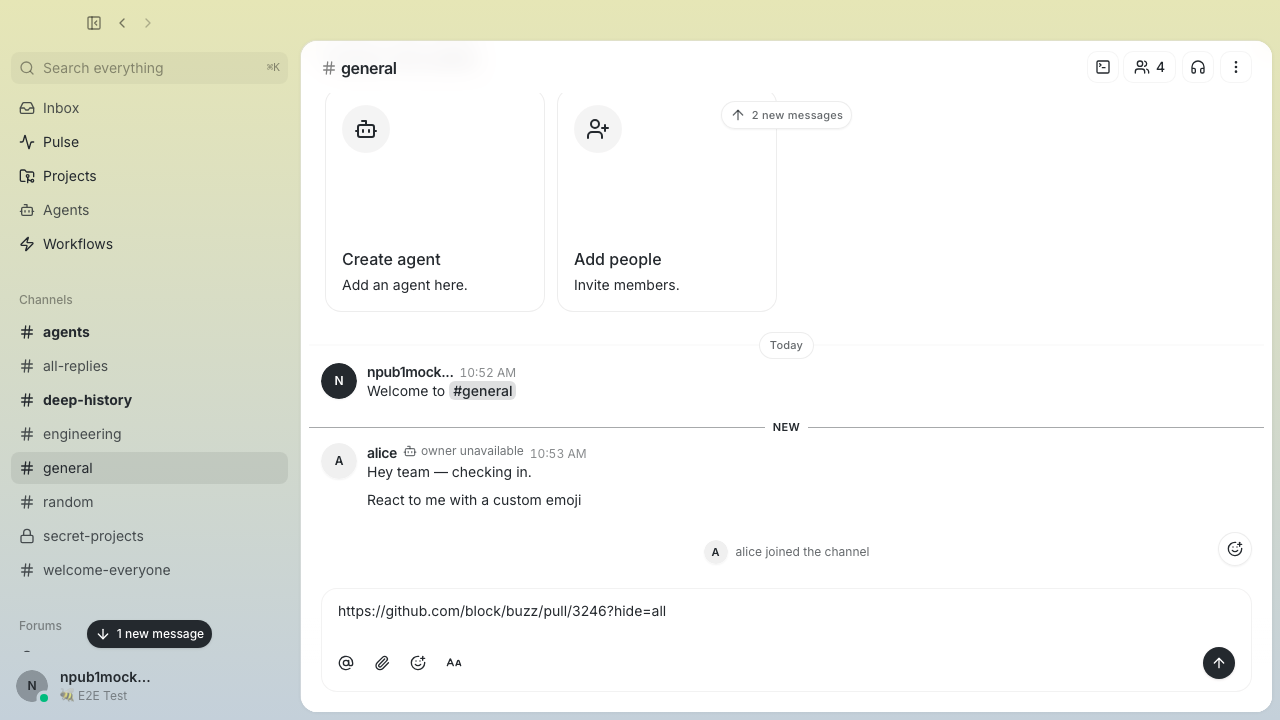 | --------- Signed-off-by: Taylor Ho <taylorkmho@gmail.com> |
||
|
Will Pfleger
|
742e8d1197 |
fix(buzz-agent): Responses reasoning summary, Anthropic display:summarized, ACP v2 messageId (#5195)
Three pre-existing gaps in the buzz-agent observer feed fixed together
per Will's ruling ("all 3 in the current PR"):

1. **OpenAI/DBv2-GPT route** — `responses_body` never requested
`reasoning.summary`; GPT-family models billed thinking tokens but
returned `summary: []`.
2. **Anthropic/DBv2-Claude route** — `anthropic_thinking_config()` never
sent `thinking.display`; newest Claude models (Opus 5, Sonnet 5, Fable
5, Mythos 5, Opus 4.7/4.8, Mythos Preview) default to
`display:"omitted"`, returning thinking blocks with an empty `thinking`
field — observer rendered nothing.
3. **ACP v2 compliance** — buzz-agent negotiates ACP v2 but emitted
`agent_thought_chunk` and `agent_message_chunk` without `messageId`,
which ACP v2's `ContentChunk` requires (`messageId` + `content` both
required at schema head `d13d1baa`).

## Changes

**`crates/buzz-agent/src/config.rs`**
- New `ThinkingSummary` enum (`Auto`/`Concise`/`Detailed`) with
`BUZZ_AGENT_THINKING_SUMMARY` env var (default `Auto`); mirrors
`BUZZ_AGENT_THINKING_EFFORT` pattern
- `anthropic_thinking_config()` now emits `"display": "summarized"` in
both the adaptive shape and the manual-budget shape whenever thinking is
enabled
- Rewrote `is_adaptive_thinking_model` and `anthropic_thinking_config`
doc comments to match Anthropic's exact three-way per-model terminology
(doc:
https://platform.claude.com/docs/en/build-with-claude/thinking-troubleshooting#supported-models):
- Opus 4.6/4.7/4.8, Sonnet 4.6: **Off** — thinking OFF by default;
`type:"adaptive"` required to enable
- Opus 5, Sonnet 5: **On** — thinking on by default, can be disabled; we
still send `type:"adaptive"` to activate `output_config.effort`
- Fable 5, Mythos 5, Mythos Preview: **Always on** — thinking cannot be
disabled; we still send `type:"adaptive"` to activate
`output_config.effort`

**`crates/buzz-agent/src/llm.rs`**
- `responses_body` emits `reasoning.summary` alongside
`reasoning.effort` when effort is set (gated — no bare
`reasoning:{summary}` without effort)
- Covers both the pure-OpenAI Responses path and the DBv2 GPT-family
Responses path

**`crates/buzz-agent/src/agent.rs`**
- `agent_thought_chunk` carries `"messageId":
format!("{run_id}-thought-{round}")`
- `agent_message_chunk` carries `"messageId":
format!("{run_id}-message-{round}")`
- The two IDs are distinct (thought and assistant are two logical
messages per the ACP v2 Message ID RFD)
- `run_id` is a fresh random token per `session/prompt` invocation so
IDs are session-unique across multiple prompts

**`crates/buzz-agent/src/lib.rs`**
- `run_id` plumbed into `RunCtx` (was already generated in `run_prompt`,
just not threaded through)

**`crates/buzz-agent/tests/golden_transcripts.rs`**
- `test_acp_v2_chunks_carry_message_id` — negotiates v2, drives two
consecutive `session/prompt` calls, asserts: both chunk types carry
non-empty `messageId`; thought and message IDs are **distinct**; IDs do
**not** recur across the two prompts in the same ACP session

**`desktop/src-tauri/src/managed_agents/env_vars.rs`**
- `BUZZ_AGENT_THINKING_SUMMARY` added to `is_safe_to_reveal` allowlist

**`desktop/src-tauri/src/commands/agent_config_tests.rs`**
- Tests for `BUZZ_AGENT_THINKING_SUMMARY` allowlist entry
(case-insensitive)

## Tests added

- `parse_thinking_summary_round_trips_all_values`
- `parse_thinking_summary_unset_and_empty_yield_auto`
- `parse_thinking_summary_is_case_insensitive`
- `parse_thinking_summary_rejects_unknown_value`
- `thinking_summary_as_str_mapping`
- `responses_body_summary_present_iff_effort_set`
- `responses_body_emits_configured_summary_mode`
- `responses_body_concise_summary_mode`
- `anthropic_thinking_config_adaptive_emits_display_summarized`
- `anthropic_thinking_config_manual_budget_emits_display_summarized`
- `test_acp_v2_chunks_carry_message_id` (integration test — two-prompt
cross-session case)

## Notes

- **DBv2 gateway parity for `display`**: unverified — the DBv2 Claude
route proxies Anthropic Messages shape, but whether the gateway passes
`thinking.display` through is not confirmed. Flagged here rather than
blocking on it.
- buzz-acp and Desktop TS are unchanged — they already parse `messageId`
as optional and will pick it up from the wire automatically.
- Chat Completions and OpenRouter paths: untouched.

---------

Signed-off-by: Will Pfleger <pfleger.will@gmail.com>
Co-authored-by: Duncan <dcfd242e557282d7a1e2cf2e6877522682f1e5c6156dc92ca7d90eaedd3b0f95@buzz.block.builderlab.xyz>
|
||
|
Will Pfleger
|
b2ac66cde8 |
refactor(cli): replace probe/decider/detail split with single typed extractor (#5191)
Replaces the four-helper auth resolution path with two focused functions and adds production async tests that count relay round-trips. **Before:** `resolve_auth` called `resolve_auth_from_profile` (warn-emitting probe into a throwaway sink) → `resolve_auth_deciding` (re-classified the same profile) → `handle_auth_failure` → `auth_failure_detail` (third classification). `Option<Option<&Value>>` encoded a sentinel for unreachable state; tests exercised only the pure sync helper, not the actual fetch count. **After:** - `extract_auth(profile, target, signer) -> Result<[String;4], AuthFailure>` — pure typed extractor; `AuthFailure` now covers `NoProfile` and `NoTagsArray` inline, no separate helper needed - `resolve_auth()` is now the linear state machine: self-check → fetch + extract → on failure: fetch again → route final `Err` to `CliError::Usage` (default) or one admin warning (`--admin`). No throwaway sinks, no duplicate classification, no sentinel type. - Five async tests drive the production resolver through a counted Axum test server on `POST /query` and assert on both return value and exact fetch count: first success (1), retry success (2), double failure / no `--admin` (2 + `Err`), double failure / `--admin` (2 + `Ok(None)` + one warning), self path (0). Two parser tests pin `--admin` on both `archive` and `unarchive`. - `--admin` short help text corrected to describe when the flag takes effect (after extraction fails, not unconditionally). 341 tests passing, clippy clean, fmt clean. --------- Signed-off-by: Will Pfleger <pfleger.will@gmail.com> Co-authored-by: Duncan <dcfd242e557282d7a1e2cf2e6877522682f1e5c6156dc92ca7d90eaedd3b0f95@buzz.block.builderlab.xyz> |
||
|
Will Pfleger
|
346ae8cadc |
fix(buzz-agent): escalate LLM timeouts per retry and log per-call latency (#5130)
Non-streaming LLM calls (`"stream": false`) through slow model/provider combinations routinely take longer than the fixed `BUZZ_AGENT_LLM_TIMEOUT_SECS` window (default 240 s) to return their first response byte. The retry loop then re-ran the identical 240 s bet three times, failed the turn, and the ACP harness requeued the whole turn from scratch: agents spent 30+ minutes producing nothing while every attempt died at the same wall. And because the LLM path only logged WARN lines on failure, a healthy-but-slow call was indistinguishable from a wedged one. ### Timeout handling - **Per-attempt escalation**: the per-request budget doubles after each timeout failure (`base × 2^n`, capped at `max(1200 s, base)` — `escalated_timeout()` in `llm.rs`), shared by the main `post()` loop and `openrouter_post()`. Non-timeout retryables (429/5xx/connect) do not escalate. A call that needs six minutes now succeeds on a later attempt instead of never. - **Per-request total timeouts**: enforcement moved from the client-level `read_timeout` to `RequestBuilder::timeout()` on each LLM request, so escalated budgets aren't silently floored by the shared client and each attempt's bound covers connect through body completion. Timeout error messages were updated to match the new semantics and still point at `BUZZ_AGENT_LLM_TIMEOUT_SECS`. ### Observability - One INFO line per completed LLM call: model, provider, `duration_ms`, `input_tokens`, `cached_input_tokens`, `output_tokens`. Slowness and prompt-cache effectiveness are now visible in harness logs without waiting for a failure, and `None` vs `0` token reports stay distinguishable. Handoff summarization calls log the same line with duration only. - The agent main loop wraps the call in a `session_id` tracing span so each line is attributable to a session. --------- Signed-off-by: Will Pfleger <pfleger.will@gmail.com> |
||
|
Kalvin C
|
c293b3cd40 |
fix(agent): resolve oauth cache home cross-platform (#5151)
## Summary - resolve the OAuth cache home directory with the repository's platform-aware `dirs` convention - preserve the existing `.config/buzz-agent/oauth` cache layout on macOS and Linux - make the cache-path regression assertion portable across path separators ## Problem `buzz-agent` read only `$HOME` when constructing the OAuth token cache path. Packaged Windows processes do not guarantee that Unix variable, so OAuth source construction failed with `oauth cache: $HOME not set` even though Windows had a valid user profile. ## Validation Independent reviewers validated exact commit `836d820483b141b7291170cb33535ac7cb49b2eb` on Windows/MSVC with `HOME` unset and `USERPROFILE` present: - `cargo +1.94.1 clippy -p buzz-agent --all-targets --locked -- -D warnings` - `cargo +1.94.1 fmt --all -- --check` - `git diff --check f53bbd1..836d820` - `auth::` tests: 11/11 passed with `HOME` unset - full package lib target: 396 passed / 2 failed; identical-base controls classified both as pre-existing Windows failures The changed regression fails on the base with `$HOME not set` and passes on this branch. `dirs 6.0.0` was already locked by other workspace crates; the lockfile change adds only the `buzz-agent` dependency edge. Signed-off-by: Kalvin C <kalvinnchau@users.noreply.github.com> |
||
|
Will Pfleger
|
ee9690a93c |
fix(cli): emit structured JSON warning when archive/unarchive owner-auth extraction fails (#4824)
emit structured JSON diagnostics when NIP-OA owner-auth extraction fails
during `buzz agents archive`/`unarchive`

## Problem

When owner-auth extraction returned `None`, the CLI silently sent a bare
request. The relay replied with `400: missing auth tag` and the caller
had no way to know why extraction failed.

## Solution

Extract `resolve_auth_from_profile` — a sync function that owns all
three warning branches and the success path. `resolve_auth` reduces to:
self-check → fetch kind:0 → delegate.

- **Four distinct diagnostics**: no kind:0 profile / no tags array /
`classify_owner_auth_tag` failure (typed `AuthFailure` enum:
`NoAuthTag`, `AmbiguousAuthTag`, `WrongArity`, `NonStringElement`,
`InvalidOwnerHex`, `InvalidSigHex`, `OwnerMismatch`)
- **JSON format**: each fallback emits exactly one `{"warning":"..."}`
line to stderr, matching the CLI's documented structured-stderr contract
and the precedent in `channels.rs:597`
- **Relay-supplied values** (target pubkey, actual owner pubkey) pass
through `serde_json` serialization — no unescaped text
- **Admin bare path preserved**: request is always sent after the
warning; bare non-self requests are legitimate for relay admins
- **Self path unchanged**: silent, no relay query

## Boundary tests

Tests call `resolve_auth_from_profile` directly with `&mut Vec<u8>`.
Each of the three production `writeln!` calls is covered: deleting any
one fails at least one test. Success path asserts zero bytes written.

## Changes

`crates/buzz-cli/src/commands/agents.rs` only:
- `AuthFailure` enum with `message()` formatter
- `classify_owner_auth_tag` returning `Result<[String;4], AuthFailure>`
- `extract_owner_auth_tag` reduced to `#[cfg(test)]` `.ok()` wrapper
- `resolve_auth_from_profile` sync helper (testable without
`BuzzClient`)
- `resolve_auth` reduced to self-check + fetch + delegate
- 9 new boundary tests replacing the prior test-local helper

---------

Signed-off-by: Will Pfleger <pfleger.will@gmail.com>
Co-authored-by: npub1mn7jgtj4w2pd0g0zeuhxsa6jy6p0rewxz4kujt98my82ahfmp72sxjexk7 <dcfd242e557282d7a1e2cf2e6877522682f1e5c6156dc92ca7d90eaedd3b0f95@buzz.block.builderlab.xyz>
|
||
|
Tyler
|
ad923353a2 |
feat(relay): accept kind:30179 private managed-agent events at ingest (#5133)
## What Relay-only carve-out of the ingest half of #4999: generic EVENT ingest now accepts kind:30179 (NIP-PMA private managed-agent config). One file, `crates/buzz-relay/src/handlers/ingest.rs`, 16 insertions / 15 deletions; **two semantic lines**, byte-identical to the ingest hunk of #4999 at `6f486e88`: 1. `required_scope_for_kind`: 30179 requires `Scope::UsersWrite` — same arm as its public sibling 30177 and the other owner-authored NIP-AP kinds. 2. `is_global_only_kind`: 30179 is owner-global, keyed `(pubkey, kind, d-tag)`; a stray `h` tag must not channel-scope it. The rest is import reflow plus replacing the guard test with a positive one (`private_managed_agent_kind_is_owner_scoped_global_user_data`: asserts UsersWrite scope, global-only, no h-channel scope). ## Why the guard test can be retired The removed test (`private_managed_agent_kind_remains_rejected_until_atomic_ingest_exists`) pinned a stated precondition: *"must not enter generic EVENT ingest before privacy and aggregate CAS deploy."* Both halves are resolved: - **Privacy** — the author-only read gates for 30179 shipped to main with #4593: `AUTHOR_ONLY_KINDS` membership, `req.rs` pre-filter + result gates, `count.rs`, `event.rs` fanout, and the bridge pre-filter (`bridge.rs:999-1000` returns `restricted: author-only kinds require authors=[self]` / 403). Only the author can read the event back. - **Aggregate CAS** — #4999 settled generation as **advisory**: the `g` tag is shape-validated, never relay-enforced. Last-write-wins per coordinate is the contract of record (see the kind:30179 contract blurb in #4999), so no CAS mechanism is pending on the relay side. ## Why this is inert to existing relays and clients - No production desktop code on main authors kind:30179 — the codec (`private_managed_agent.rs`) has zero non-test callers. This PR accepts a kind nobody can produce yet. - Content is opaque NIP-44 ciphertext to the relay; the relay never decrypts it. - Reads remain author-only via the already-shipped gates above. - Storage is the standard parameterized-replaceable path already exercised by kinds 30175–30178. No schema, config, or migration changes. ## Testing - Full `buzz-relay` package suite at this commit: 859 passed, 1 failed — `api::mesh_demo::tests::demo_join_forwarded_arm_round_trips_echo` (504 vs 200), which **reproduces identically on clean main `769ac70b`** with this change stashed; pre-existing/environmental, not introduced here. - New positive ingest test passes. - Pre-push hooks green (branch-skew, rust-tests, desktop-tauri-checks). ## Relationship to #4999 #4999 (relay-primary agent config, desktop half) stays DO-NOT-MERGE pending live relay receipts + real CI; once this lands and deploys, its live test simplifies to plain `desktop-standalone` against the real relay, and #4999 rebases to drop its now-duplicate ingest hunk (identical bytes → trivial rebase). Originating thread: buzz://message?channel=06f13ed3-0557-4ac2-922c-1545dd00bf97&id=2a43b3b4933a2ea78b77088619251c061355f9b7b6dc29ea0d702193f2344149 ## Brownfield FTS note (review findings, operator-ruled non-blocking for this PR) Max and Sami independently identified that the FTS privacy skip-set is regime-dependent: migration 0008 installs the positive allowlist (`kind IN (0, 9, 40002, 45001, 45003)`) **only on an empty events table**; an already-populated database keeps the 0001/0005 negative skip-list (wrapped by 0014 to add 30350), which omits 30179 — so on such an installation this PR admits 30179 rows whose NIP-44 ciphertext gets indexed by `to_tsvector`. Sami measured both regimes against real Postgres (brownfield: 30179 INDEXED; fresh: NULL) and demonstrated the existing drift test only exercises the fresh regime. `schema/schema.sql:222`'s canonical literal is also the negative list and omits 30179. Migration dates put any relay deployed with data before 0008 landed (2026-07-13) in the brownfield class. **Scope of exposure (Sami's trace):** not a content leak — `event_visible_to_reader` / `is_author_only_event` gates hold on both search surfaces (`req.rs:725`, `bridge.rs:1770`), so foreign readers receive nothing. Lost is the storage-level NULL-tsv backstop plus FTS page budget burned on post-filtered hits. **Operator ruling (Tyler, events `1472e5b6`, `cbd368ed`):** ship this PR without an exclusion migration. Safety argument that makes this sound rather than merely accepted: main has **zero non-test 30179 writers** until #4999's desktop half deploys — no 30179 rows can exist, so nothing can be indexed in any regime while this PR is the only half live. **Additional review characterizations (Sami, non-blocking, on the record):** - *Behavioral delta enumerated:* routing triple (`required_scope_for_kind` / `is_global_only_kind` / `requires_h_channel_scope`) compared for all 65,536 kinds at base `769ac70b` vs head `77eeba6e` — exactly one row differs (30179). No other kind or client changes behavior. - *"SQL visibility before LIMIT" (NIP-PMA step 2):* no `AUTHOR_ONLY_KINDS` pushdown clause exists in `buzz-db` (only `SHARED_GATED_KINDS` has one). Author-only kinds are protected by the pre-filter (`author_only_filters_authorized`) plus post-filter omission; mixed-kind filters can burn candidate-page budget on discarded rows. Pre-existing and identical for 30300/30350 — not introduced here; noted so the NIP's step-2 checkbox is not read as fully ticked. - *Envelope validation gap:* 30179 is the only parameterized-replaceable kind at ingest with no per-kind envelope validator (codec grammar checks run in the desktop writer, not the relay). Generic limits only (256 KiB, ±15 min, pubkey==identity, d-tag bound). Self-inflicted footgun bounded to the author's own coordinate — candidate companion to the exclusion migration in the #4999 rebase, deliberately not added here. **Bound follow-up (required before/with the #4999 desktop half):** a 0014-shape additive migration (`pg_get_expr` capture + `CASE WHEN kind = 30179 THEN NULL ELSE (<existing>) END` wrap), add 30179 to the `schema/schema.sql:221` literal, and a brownfield-regime variant of the FTS drift test, per Sami's finding. Deploy-time spot check if ever wanted: `SELECT pg_get_expr(d.adbin, d.adrelid) FROM pg_attrdef d JOIN pg_attribute a ON a.attrelid = d.adrelid AND a.attnum = d.adnum WHERE d.adrelid = 'events'::regclass AND a.attname = 'search_tsv';` Signed-off-by: Tyler Longwell <tlongwell@block.xyz> Co-authored-by: Eva <011987e296fd5006292d2f930b574be47c7801048d1983c46c425d3c95f0cffd@buzz.block.builderlab.xyz> Co-authored-by: Tyler Longwell <tlongwell@block.xyz> |
||
|
Jordan Mecom
|
769ac70b74 |
fix(media): require authenticated reads (#4610)
This change requires a valid signed Blossom authorization request and current relay membership for every media GET and HEAD request. It removes the unauthenticated compatibility path and updates desktop reads to send the required authorization. This blocks anonymous retrieval and access after relay-membership revocation. It does not yet bind a blob to its originating channel, so someone removed from a private channel can still read a known blob while remaining a relay member. That channel-ACL follow-up remains required before closing the full finding. ## Testing - `git diff --check origin/main...codex/security-media-read-auth` - Rebased onto `origin/main` at `5c98932` - Full CI pending Originating Buzz thread: `buzz://message?channel=3928fe05-df61-4b5d-b9c7-d623b9b10ea1&id=3c6c02312f763fbe0d2bfc33a6c1a362f91d0354f3d18b039cf7a0558c1439d1` --------- Signed-off-by: Jordan Mecom <jm@squareup.com> Signed-off-by: Alex Rosenzweig <arosenzweig@squareup.com> Signed-off-by: Eli Foster <efoster@squareup.com> Co-authored-by: Eli Foster <efoster@squareup.com> Co-authored-by: Claude Opus 5 <noreply@anthropic.com> |
||
|
Taylor Ho
|
6eb65919f1 |
feat(identity): recover desktop identity from a signed-in phone (#4845)
**Category:** new-feature **User Impact:** People who lose a desktop identity can securely restore it from a signed-in Buzz phone without creating a replacement identity. **Problem:** A fresh or identity-lost desktop could not recover its existing full Buzz identity from an already-authorized phone. **Solution:** Add a SAS-confirmed reverse NIP-AB transfer, durable desktop import, a dedicated mobile recovery entry point, and clearer desktop recovery dialogs with tested loading, drag-and-drop, and failure states. https://github.com/user-attachments/assets/e9215c9c-80d0-462f-9161-0fa184ca2f74 <details> <summary>File changes</summary> **crates/buzz-core/src/pairing/session.rs** Adds the reverse encrypted payload and source-completion state transitions used for phone-to-desktop recovery. **desktop/src-tauri/src/commands/identity.rs** Exposes the existing guarded identity commit path for recovery imports. **desktop/src-tauri/src/commands/pairing.rs** Adds recovery-mode pairing, durable nsec import, start serialization, stale-task protection, and explicit rejection of unsupported recovery payloads. **desktop/src-tauri/src/lib.rs** Registers the recovery pairing command. **desktop/src/app/App.tsx** Refreshes the recovered identity before continuing onboarding. **desktop/src/features/onboarding/machineOnboarding.ts** Adds recovery transitions to the onboarding state machine. **desktop/src/features/onboarding/ui/BackupPasswordTimeline.tsx** Adds the visual backup-to-password-to-unlock progression. **desktop/src/features/onboarding/ui/IdentityRecoveryPairing.tsx** Implements QR generation, copy fallback, SAS confirmation, cancellation, expiry, and completion UI. **desktop/src/features/onboarding/ui/MachineOnboardingFlow.tsx** Connects private-key, phone, and backup recovery paths to the onboarding flow. **desktop/src/features/onboarding/ui/NostrKeyImportForm.tsx** Polishes recovery dialogs, backup drag-and-drop, loading stability, and security copy. **desktop/src/shared/api/tauri.ts** Keeps the existing pairing API surface focused on standard desktop-to-mobile pairing. **desktop/src/shared/api/tauriPairing.ts** Adds the recovery pairing invoke without growing the ratcheted shared API file. **desktop/src/testing/e2eBridge.ts** Mocks recovery pairing commands and lifecycle events for browser tests. **desktop/tests/e2e/identity-lost.spec.ts** Covers lost-identity entry, QR/copy recovery, SAS, cancellation, expiry, success, errors, backup import, drag-and-drop, and screenshots. **desktop/tests/e2e/onboarding.spec.ts** Verifies recovered identities continue through harness setup without replacement-key side effects. **mobile/lib/features/pairing/pairing_page.dart** Adds recovery-only scanning and explicit identity-handoff warnings. **mobile/lib/features/pairing/pairing_provider.dart** Recognizes recovery codes, returns the signed-in nsec after mutual SAS approval, and waits for desktop completion. **mobile/lib/features/settings/settings_page.dart** Accepts the recovery route builder at the app composition boundary to preserve feature isolation. **mobile/lib/features/settings/settings_page/connection_section.dart** Adds the signed-in “Send identity to desktop” settings action. **mobile/test/features/pairing/pairing_page_test.dart** Covers recovery-only validation and handoff messaging. **mobile/test/features/pairing/pairing_provider_test.dart** Covers reverse payload encryption, confirmation ordering, success, failure, timeout, and cleanup. </details> ## Reproduction steps 1. Launch Buzz Desktop with identity-lost state and choose **Recover from your phone**. 2. Confirm the QR and persistent **Copy pairing code** fallback appear without layout shift. 3. On a signed-in phone, open **Settings → Send identity to desktop**, scan or paste the recovery code, and compare the six-digit SAS on both devices. 4. Confirm on both sides and verify Desktop restores the identity and continues to harness setup. 5. Repeat from identity-lost state with **Recover from a backup file**; verify picker and drag-and-drop both advance to password entry and restore the encrypted backup. 6. Exercise cancellation, mismatched/unsupported codes, expired sessions, and an invalid backup; verify each returns actionable, non-stuck UI. ## Screenshots ### Desktop phone recovery — complete flow | Recovery entry | Pairing QR | Code match | Receiving identity | |---|---|---|---| |  | 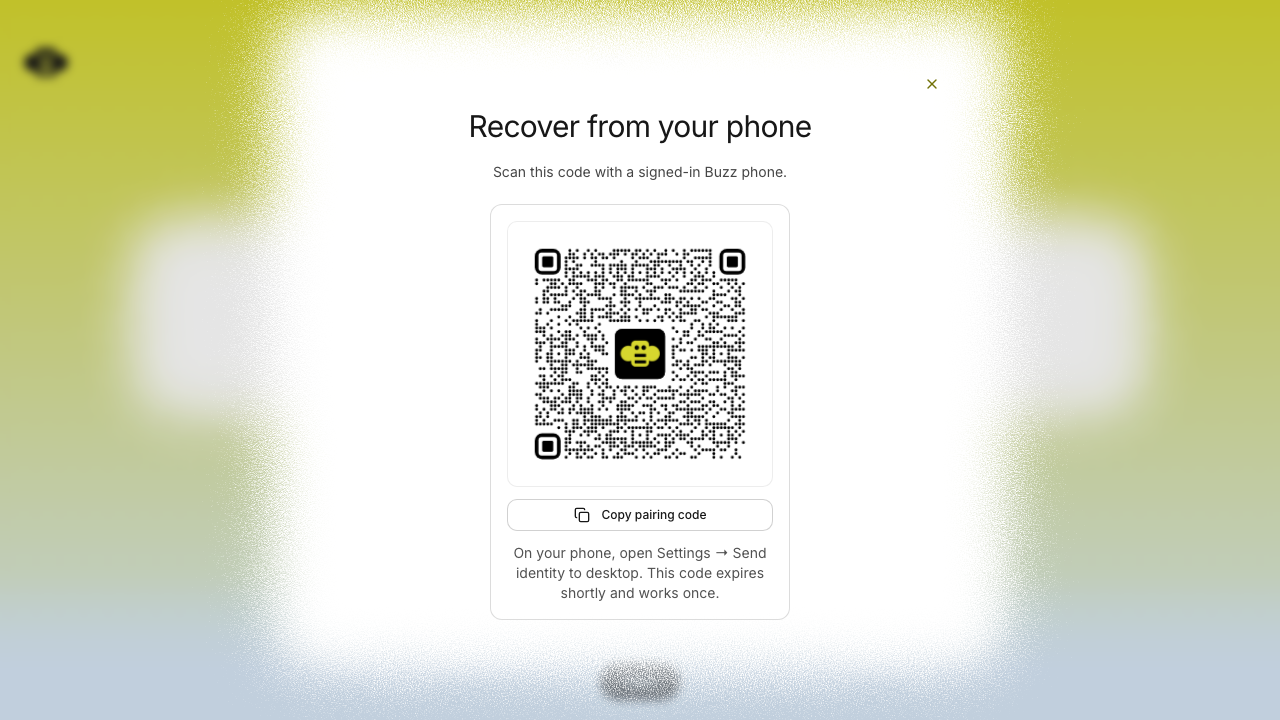 | 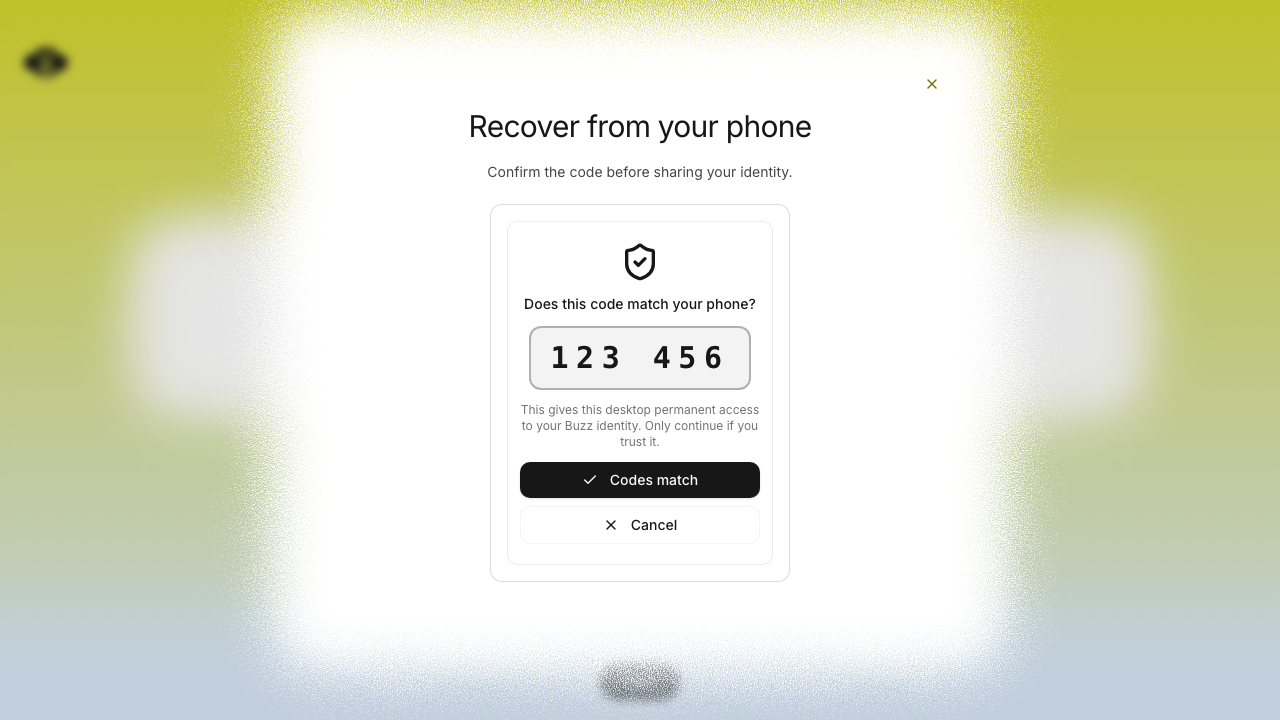 | 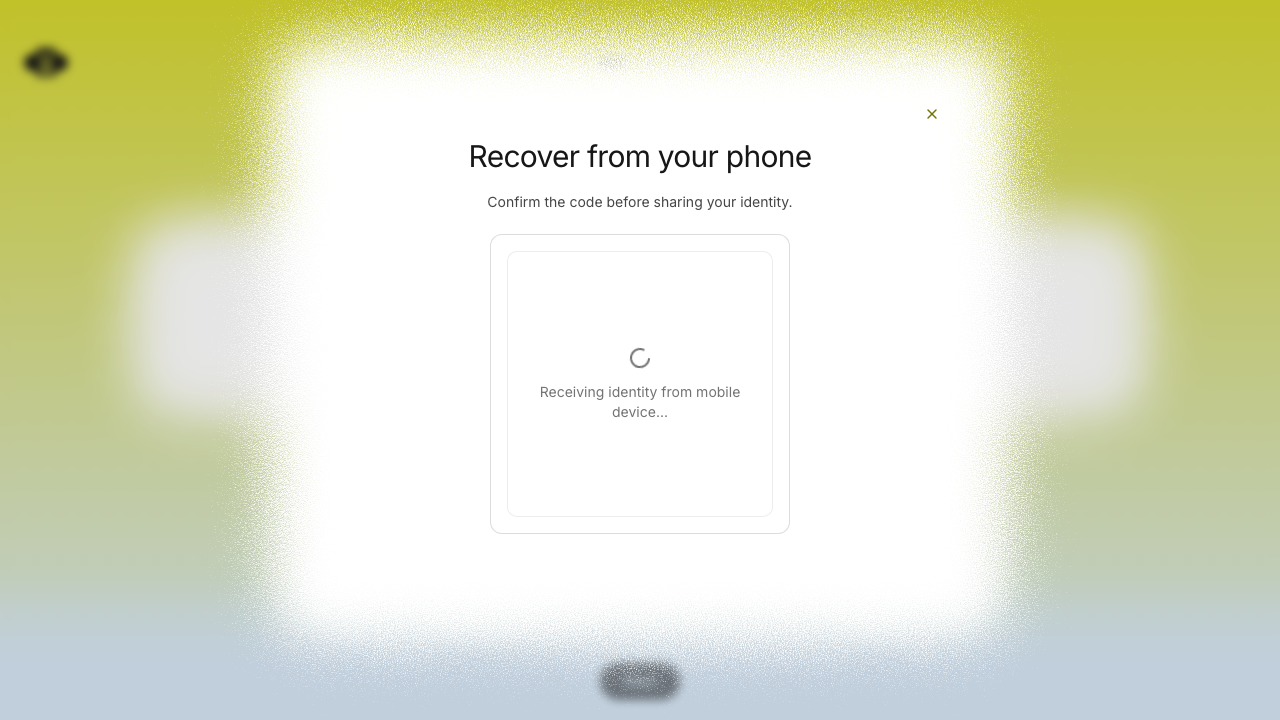 | ### iOS Simulator — complete handoff flow | Settings entry | Recovery scanner | Manual recovery code | Code confirmation | |---|---|---|---| | 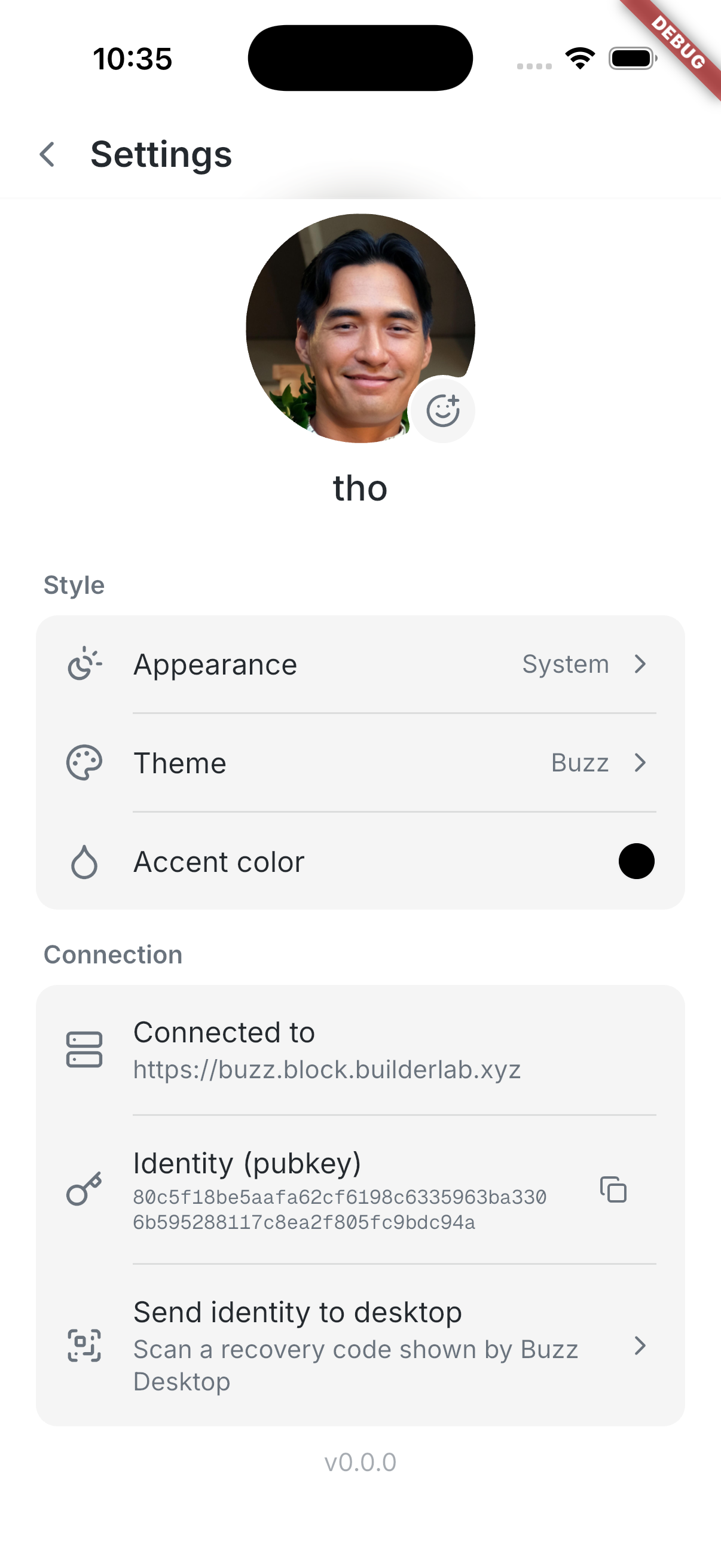 | 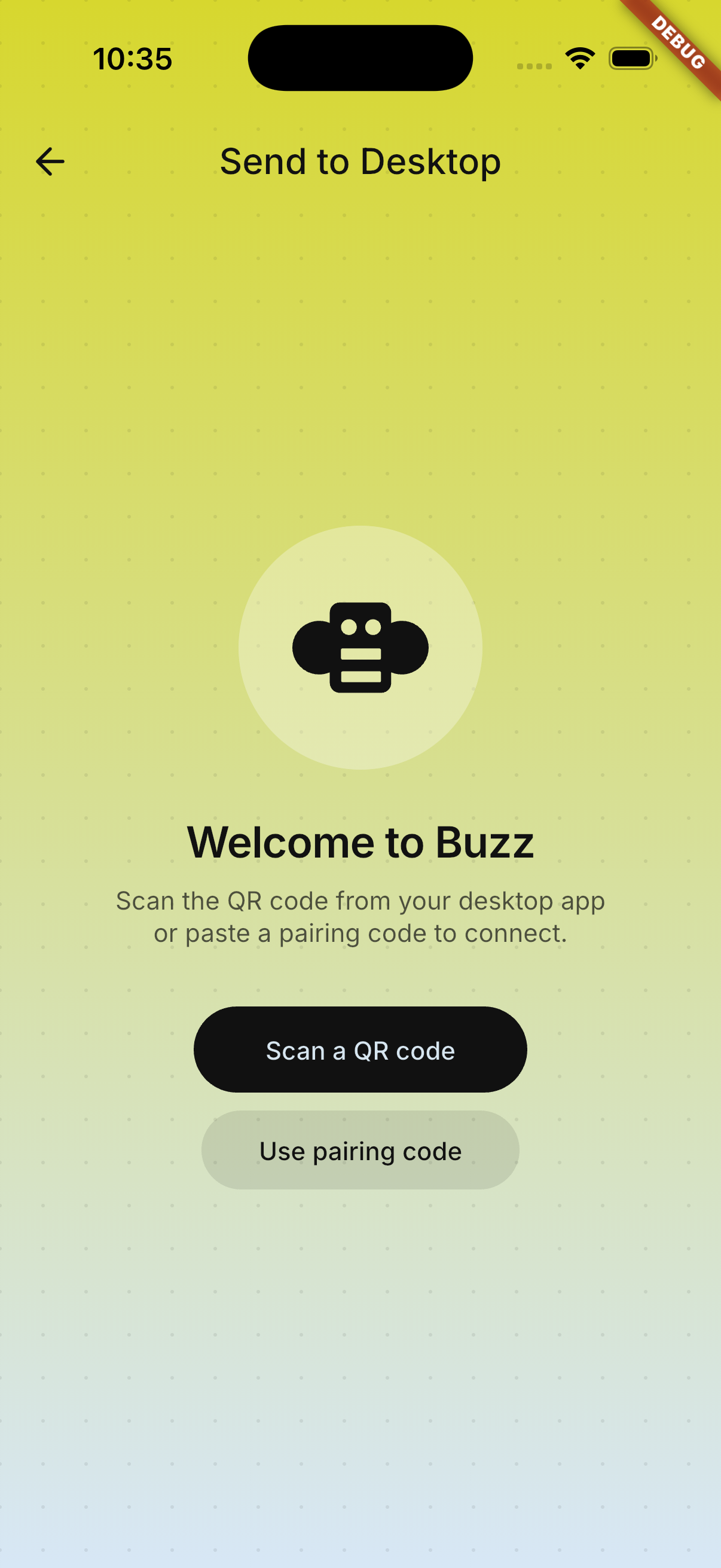 | 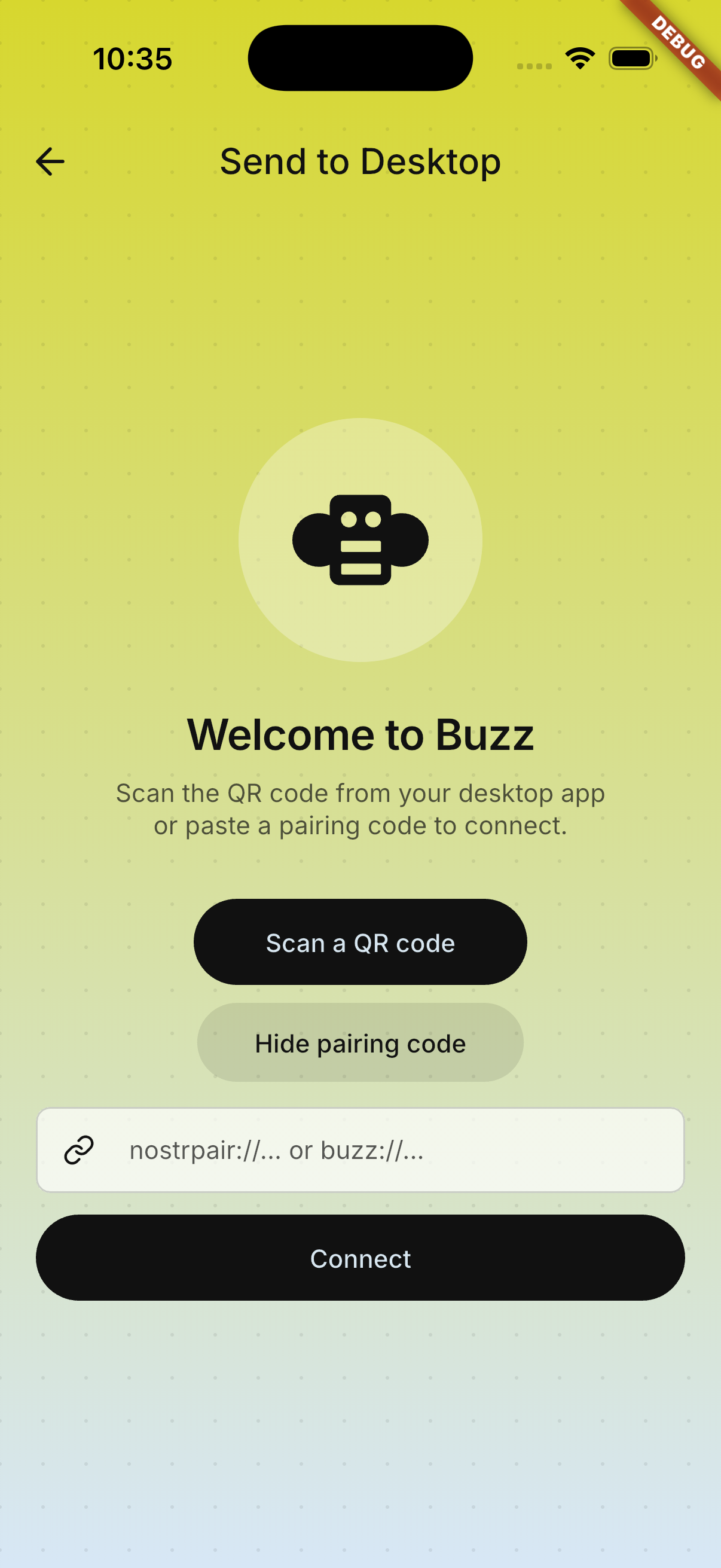 | 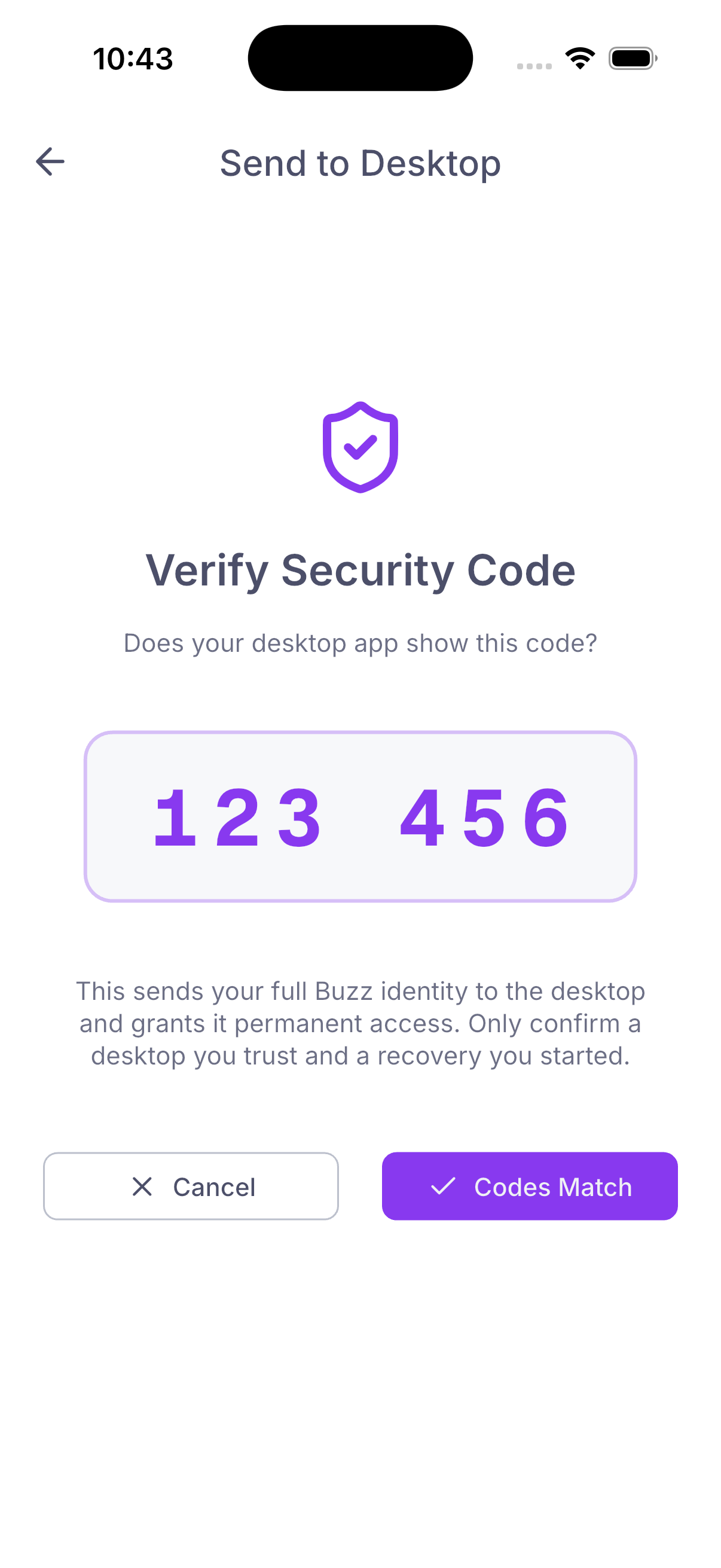 | ### Encrypted backup recovery — adjusted file flow | File picker | Drag-and-drop target | Password step | |---|---|---| | 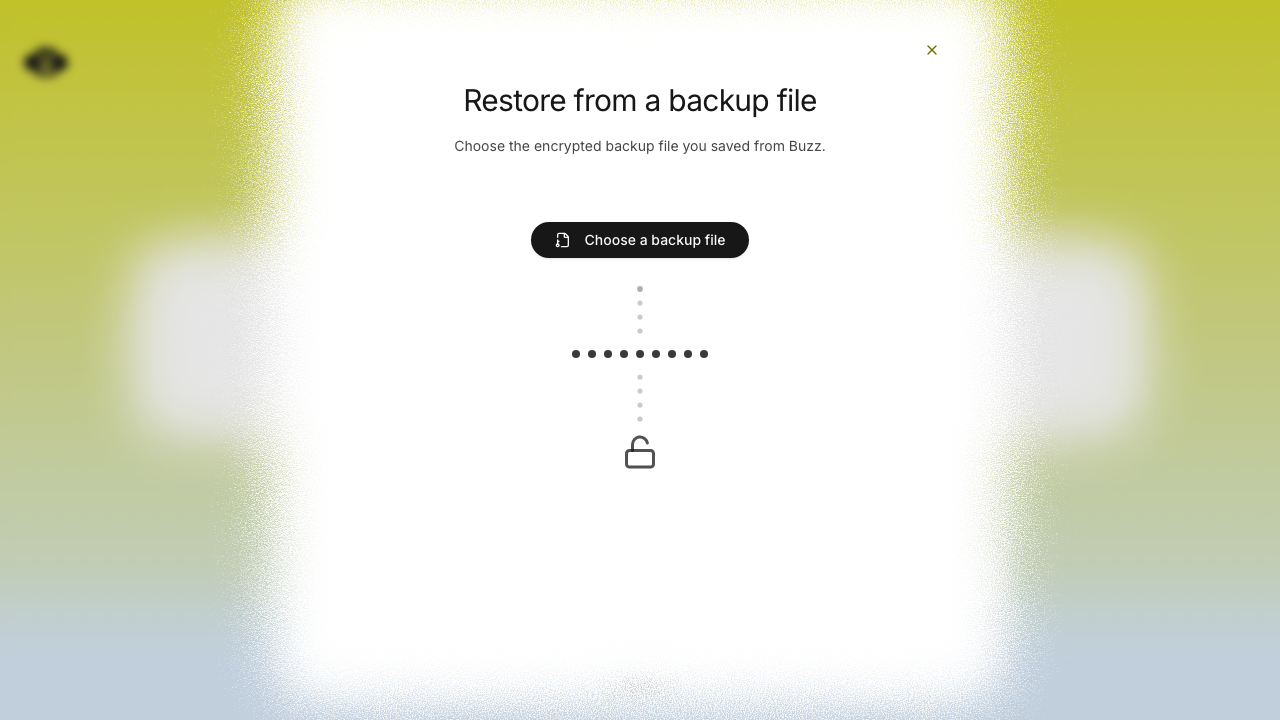 |  | 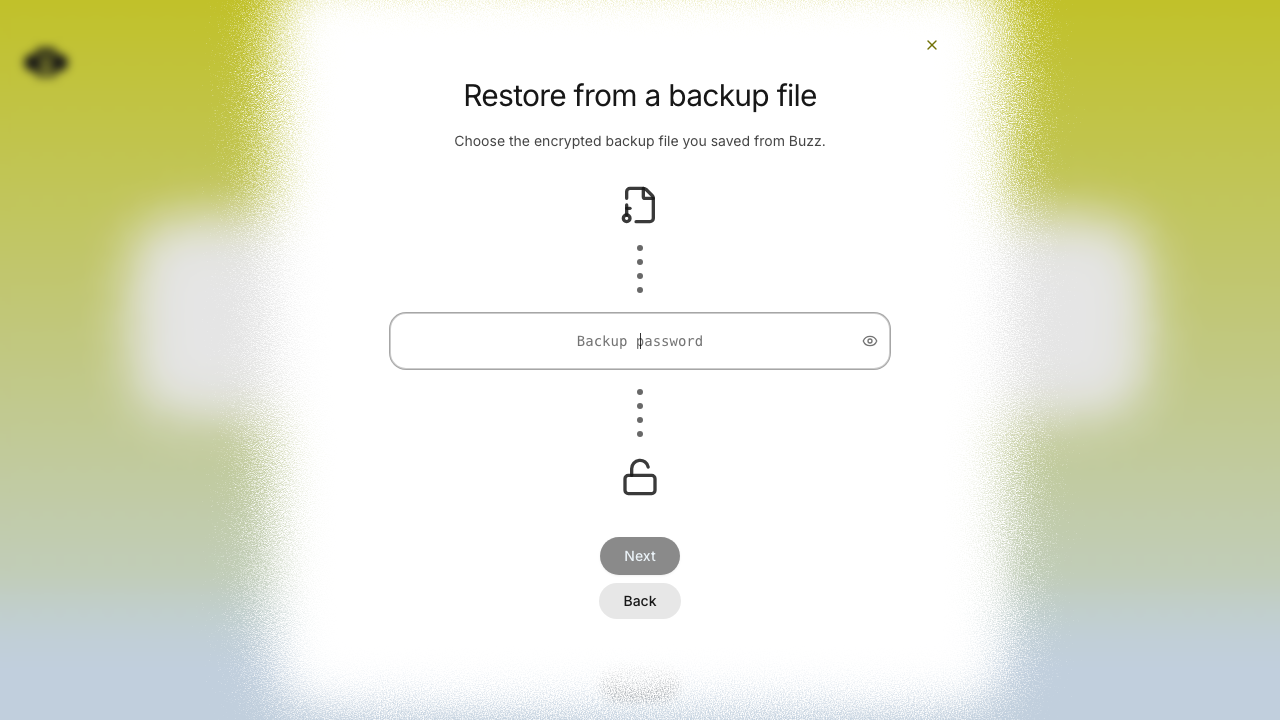 | ## Verification - `cargo test -p buzz-core pairing` — 71 passed - `just mobile-test` — 1,169 passed - `pnpm build:e2e && pnpm exec playwright test identity-lost.spec.ts --project=smoke` — 15 passed - Full pre-push gates — desktop checks, desktop unit tests, Rust tests, Tauri checks, and mobile tests passed --------- Signed-off-by: Taylor Ho <taylorkmho@gmail.com> Co-authored-by: npub1223z34hd7vtwc6qj4s7flsxkj644nlre2nthu7lrrmkumhu3xddsrx9r6w <52a228d6edf316ec6812ac3c9fc0d696ab59fc7954d77e7be31eedcddf91335b@buzz.block.builderlab.xyz> Co-authored-by: Carl <acda9e433d19dcd0e6b6840f7f4b98f3a56f1fab98049d444c087019e6d36560@buzz.block.builderlab.xyz> |
||
|
Will Pfleger
|
bd2fdf4a2f |
fix(buzz-agent): classify read timeouts distinctly in LLM error messages (#4959)
## Problem

When `buzz-agent` exhausts retries on a stalled LLM call, the error
message reads:

```
transport: error sending request for url (...) (cumulative 721s, 3 attempts)
```

That text is reqwest's generic pre-response failure string — identical
whether the cause is a TLS abort, a reset connection, or a
`read_timeout` fire. An operator reading the log cannot tell whether
something broke or whether the LLM generation legitimately took longer
than the configured timeout.

## Root cause (probe-confirmed)

A live probe against `goose-claude-fable-5` with a 900s client timeout
completed in **370s** — well past the default
`BUZZ_AGENT_LLM_TIMEOUT_SECS=240`. Extended-thinking models emit zero
bytes on non-streaming calls until generation is complete, so reqwest's
`read_timeout` fires on byte-silence regardless of whether the server is
healthy. The 46× exact-721s stall signatures in production logs (3 ×
240s + backoff) are deterministic self-inflicted timeouts, not network
faults.

## Fix

### Pure classifier over `{is_connect, llm_timeout, phase}`

A new `timeout_message(is_connect: bool, llm_timeout: Duration, phase:
TimeoutPhase)` pure function produces factual messages with the
configured duration value embedded verbatim. Two thin wrappers
(`classify_transport_error`, `classify_body_read_error`) extract the
reqwest flags and delegate. The duration reaches the classifiers through
a new `read_timeout: Duration` parameter on `post()` and
`openrouter_post()`; callers pass `cfg.llm_timeout`.

### Messages emitted

| Case | Message |
|---|---|
| Connect-phase timeout (`is_connect && is_timeout`) | `connect timeout:
no connection established within 10s` |
| Transport read-timeout | `read timeout: no response bytes received
within 240s (consider raising BUZZ_AGENT_LLM_TIMEOUT_SECS)` |
| Body-read timeout | `read timeout: no further response bytes received
within 240s (consider raising BUZZ_AGENT_LLM_TIMEOUT_SECS)` |
| Non-timeout | `transport: {reqwest text}` / `body read: {reqwest
text}` (unchanged) |

`LLM_CONNECT_TIMEOUT` is now a named `const` (was inline
`from_secs(10)`).

**Out of scope by explicit decision:** streaming support, changes to
`MAX_RETRIES` or backoff.

## Files changed

- `crates/buzz-agent/src/llm.rs` — `timeout_message` pure fn +
`TimeoutPhase` enum + `LLM_CONNECT_TIMEOUT` const; two classifier
wrappers updated; `post()` and `openrouter_post()` gain `read_timeout`
param; tests replaced.

## Tests

`cargo test -p buzz-agent`: **397 passed, 0 failed** at `294ce5897`.

**Pure-function tests (no network):**
- `timeout_message_connect_true_shows_connect_timeout` —
`is_connect=true` → connect-flavored text with 10s value; both phases
checked
- `timeout_message_transport_phase_shows_read_timeout_and_duration` —
transport phase includes 240s and config knob
- `timeout_message_body_read_phase_says_no_further_bytes_and_duration` —
body phase says "no further", shows 300s
- `timeout_message_duration_is_not_hardcoded` — 600s supplied → 600s in
output, not 240s

**Loopback reqwest integration tests:**
- `classify_transport_error_read_timeout_is_loopback_verified` — TCP
connect succeeds, server sends no bytes; verifies reqwest sets
`is_timeout && !is_connect` and message contains 50ms value
- `classify_transport_error_non_timeout_preserves_reqwest_text` —
controlled accept-then-close on an owned loopback listener → non-timeout
error; asserts exact `transport: {err}` output equality
- `classify_body_read_error_timeout_says_no_further_bytes` — loopback
server sends headers + 4 bytes of a declared-1024-byte body, then holds;
verifies `is_timeout`, "no further", 100ms value, config knob

No test performs egress beyond loopback (`127.0.0.1`). The TEST-NET-3
dial is deleted.

---------

Signed-off-by: Will Pfleger <pfleger.will@gmail.com>
Co-authored-by: Duncan <dcfd242e557282d7a1e2cf2e6877522682f1e5c6156dc92ca7d90eaedd3b0f95@buzz.block.builderlab.xyz>
|
||
|
Michael Neale
|
38bf642fcf |
ci: prove the relay-driven mesh lifecycle — discover, join, infer, deny — with real nodes (#3862)
## Summary

CI now proves the full Buzz shared-compute join story end to end: a
member can discover another member's served model **through the Buzz
relay alone** and run inference over the mesh, while a non-member gets
nothing — the relay rejects its auth, and the mesh refuses to route for
it even holding a leaked endpoint address.

This is deliberately different from mesh-llm's own CI smokes (which
bootstrap two nodes with a hand-carried invite token / mdns): here the
**relay is the control plane**, exactly like the desktop app:

1. **Membership** — identities A and B are added via `buzz-admin`
(kind:13534 NIP-43 roster); C is not.
2. **Advertise** — each member publishes a client-signed kind:30003
discovery note carrying its MeshLLM owner binding and (for the serve
node) `serveTargets[].endpointAddr`, covered by an endpoint-binding
signature — the exact payload shape the desktop coordinator publishes.
3. **Trust** — the serve node derives its admission allowlist from the
relay (statuses ∩ roster) and requires the **exact expected {A, B}
owner-id set** before starting with `TrustPolicy::Allowlist`.
4. **Join** — the client verifies owner + endpoint bindings and
membership, then dials the relay-discovered endpoint (the desktop
join-watcher's `dial_endpoint_addr` step). No out-of-band token.
5. **Infer** — a chat completion against the client's local OpenAI
endpoint routes over QUIC to the serve node's model (CPU, SmolLM2-135M,
~105MB).
6. **Deny (differential)** — the stranger's NIP-42 auth must fail with
the relay's own membership rejection (`restricted: not a relay member` —
successful auth or any unrelated connect error fails the run), and
dialing the leaked endpoint must not produce a routed inference —
**while the trusted client re-proves inference immediately afterwards**,
so a dead serve node can't masquerade as an admission denial.

## What's in the PR

- `crates/buzz-relay/examples/mesh_relay_lifecycle_smoke.rs` — the
harness. One process per node (mesh-llm keeps process-global state under
`~/.mesh-llm`), orchestrator + serve/client/stranger roles,
byte-identical binding payloads to
`desktop/src-tauri/src/mesh_llm/identity.rs` (called out with
keep-in-sync comments). Child stdout is pumped through a reader thread
so every wait has a hard deadline; timed-out children are killed; exit
statuses are checked.
- `scripts/ci-mesh-lifecycle-smoke.sh` — provisions a membership-gated
relay (throwaway owner + signing identities via `buzz-admin
generate-key`), runs the harness, cleans up. Fails fast if :3000 is
already occupied (a stale open relay would mask gating).
- `scripts/start-relay-for-tests.sh` — gains opt-in NIP-43 membership
env passthrough (`BUZZ_REQUIRE_RELAY_MEMBERSHIP` + `RELAY_OWNER_PUBKEY`
+ `BUZZ_RELAY_PRIVATE_KEY`). Default behavior unchanged.
- `.github/workflows/mesh-lifecycle.yml` — separate, path-filtered,
non-required workflow (mesh paths, the harness's dependency crates,
`Cargo.lock`, dispatch), pinned to `ubuntu-24.04`. Caches the mesh
native runtime + HF model keyed on the lockfile hash, so a mesh pin bump
rolls the runtime cache. Uploads relay + harness logs on failure.

## Scope

This is an **independent protocol harness**: it speaks the same wire
protocol and payload shapes as the desktop but re-implements the
binding/verification logic (the desktop crate is outside the workspace).
Regressions inside the desktop's own discovery filtering are the desktop
unit tests' job; what this smoke proves is that the relay + mesh-llm SDK
+ admission stack support the lifecycle end to end.

## Relationship to mesh-llm's CI

Follows the shape mesh-llm's own CI proved stable (tiny CPU model, one
runner, multiple real mesh-llm processes over real QUIC — cf. their
`ci-two-node-client-serving-smoke.sh`), but swaps the token bootstrap
for the relay-driven lifecycle, which is the part only Buzz can test.

## Validation

Green on GitHub Actions (ubuntu-24.04) across three runs, including
after rebases onto the mesh v0.74 upgrade (#3467) and latest main:

```
PASS 1/6: relay-derived allowlist is exactly {A, B}
PASS 2/6: serve member ready + advertised model: jc-builds/SmolLM2-135M-Instruct-Q4_K_M-GGUF:Q4_K_M
PASS 3/6: client member discovered + joined via relay
PASS 4/6: inference routed over the mesh: "PONG"
PASS 5/6: relay rejected the stranger's NIP-42 auth (membership gate)
PASS 6/6: stranger denied (gossip visible, inference rejected: 503 all tunnels failed) while trusted inference still routes
PASS: full relay-driven mesh lifecycle verified
```

Also validated locally on macOS. `cargo fmt --all --check` and `cargo
clippy -p buzz-relay --all-targets -- -D warnings` pass.

## Notes

- The harness follows the repo's mesh `[dev-dependencies]` pin
automatically, so it doubles as a canary for future mesh upgrades (it
already caught the v0.73.1 → v0.74.0 bump during development).
- The stranger "deny" accepts either shape mesh-llm exhibits: no model
visibility at all, or gossip visibility with inference refused —
mesh-llm applies the receiving node's owner policy after the gossip
handshake, so admission gates *routing*, not gossip. The differential
trusted-inference re-check (PASS 6/6) is what makes that a real denial
rather than a dead server.
- Model-visibility windows are tunable via `MESH_CLIENT_WINDOW_SECS` /
`MESH_STRANGER_WINDOW_SECS` if shared runners prove slow — pin a longer
window in the workflow env rather than re-running the job.

---------

Signed-off-by: Michael Neale <michael.neale@gmail.com>
|

























