<!-- Draft PR body for #7382 · fix(mobile): hydrate and refresh relay
presence snapshots · https://github.com/block/buzz/pull/7382 -->
🤖
## Summary
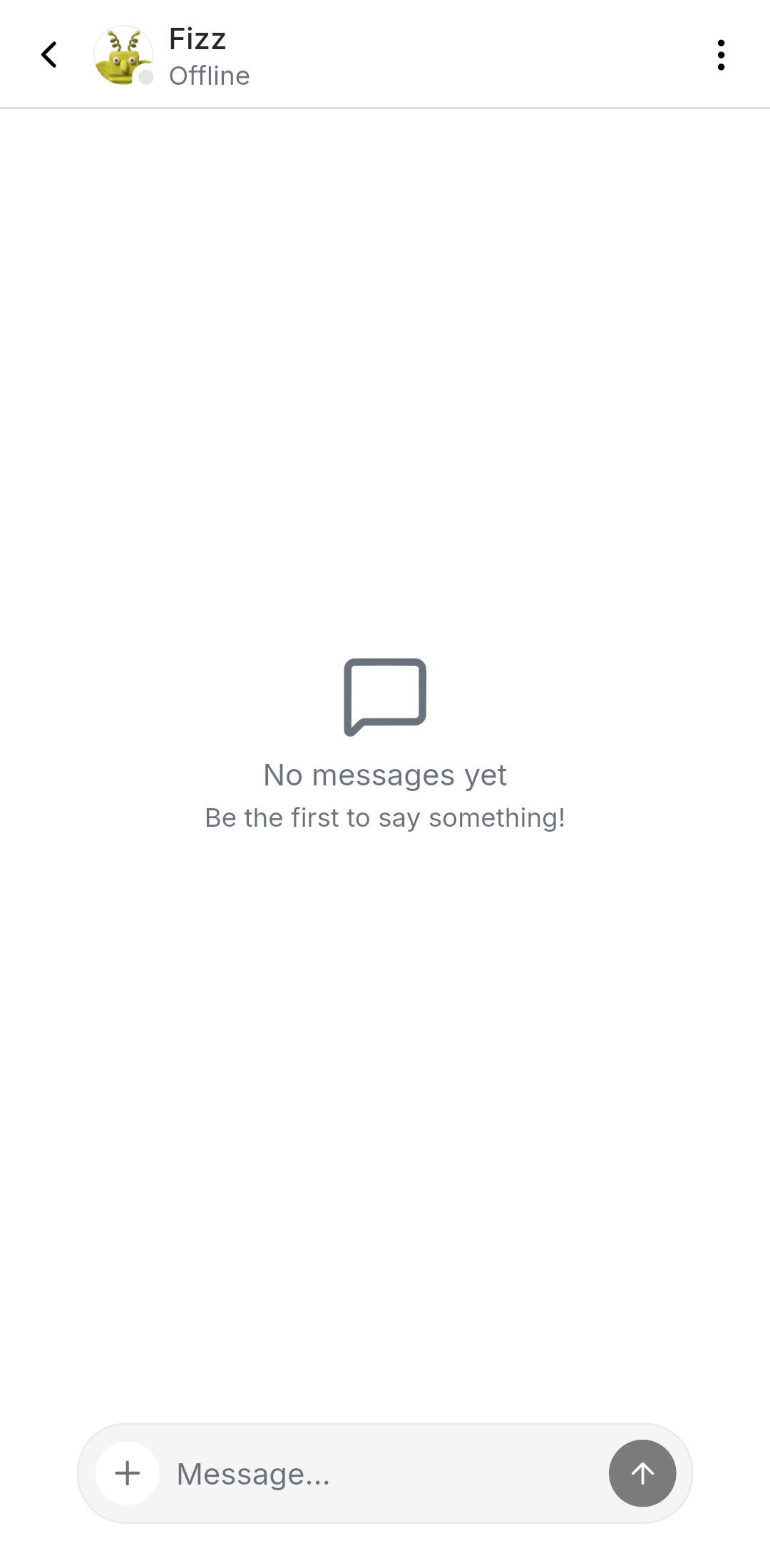
Mobile showed every person in a DM as **Offline** until they happened to
publish a presence update while the app was connected. Presence was
never loaded when the app opened, never refreshed, and a missing or
failed read looked identical to actually being offline. This PR makes
presence load and stay current: on connect or foreground, the app
fetches the relay's presence snapshot for everyone visible, keeps the
live subscription open while it does, and re-checks every 60 seconds
while the app is in the foreground. A missing or failed read shows
**Unknown** (no dot), not Offline.
- Snapshot reads are authenticated like the rest of the session and
batched by exact key (at most 100 per batch), instead of relying on live
events only.
- The live subscription opens before the snapshot, so updates published
during the read are not dropped. Per-key revisions fence stale **query
completions**: a snapshot that finishes after newer live evidence for
that key does not overwrite it.
- Refreshing every 60 foreground seconds observes relay lease expiry and
retry failures; missing or failed evidence simply stays absent — it is
never reported as Offline.
- Disconnects, backgrounding, and account/community changes reset the
cache cleanly. The app's existing subscription/recovery machinery is
reused rather than duplicated.
Mirrors Desktop's presence hydration
(`desktop/src-tauri/src/commands/profile.rs::get_presence`,
`desktop/src/features/presence/hooks.ts`).
### Presence contract: best effort between polls
Presence is a best-effort estimate that the next foreground poll
corrects. This PR does not give strict causal order between snapshots
and live events:
- Snapshots carry relay time. Live kind:20001 events carry the signer's
time. These clocks are not comparable.
- A live event at or below a snapshot's relay second is not applied
directly. The client confirms it with a fresh snapshot. This works
because the relay persists presence before fan-out.
- An empty (all-Offline) snapshot carries no relay second. If the relay
stored an Online event, then its fan-out was delayed past lease expiry
and an empty snapshot, the delayed event can show Online/Away until the
next 60-second poll. Base `main` has the same stale-delivery exposure
with no correction at all.
Strict ordering needs relay-issued ordering metadata on both paths, or a
fresh confirmation for every live event. Both are protocol or latency
tradeoffs and are out of scope here.
### Related issue
- Fixes: N/A. Closest open duplicates: #4417 (larger presence bootstrap
+ UI patch), #5617. Related: #6200, #7295.
- First slice of the mobile remote-agent parity port. This PR includes
the Unknown rendering at all three consumers (DM header, channel tile,
profile sheet). #7383 and #7526 stack on it and add test coverage only.
### Testing
- Rebased on `main` `95b018c87` (2026-09-30). At stack tip `7c8a93081`:
`just mobile-check` clean; full `just mobile-test` **2,593 passed**.
Earlier receipts below apply to the pre-rebase head.
- Regressions cover cold-open hydration, live/snapshot races, lease
expiry, failed reads and retries, disconnect/background/scope changes,
and >100-key batching.
- At the branch head: `just mobile-check` and the full mobile test suite
pass independently, and every broader CI gate has successful evidence
after isolated recovery runs (no monolithic local `just ci` run) —
receipts in the [exact-head evidence
comment](https://github.com/block/buzz/pull/7382#issuecomment-5573112882).
- Verification is automated-test level; no native device or simulator
run is claimed. No layout change in this slice.
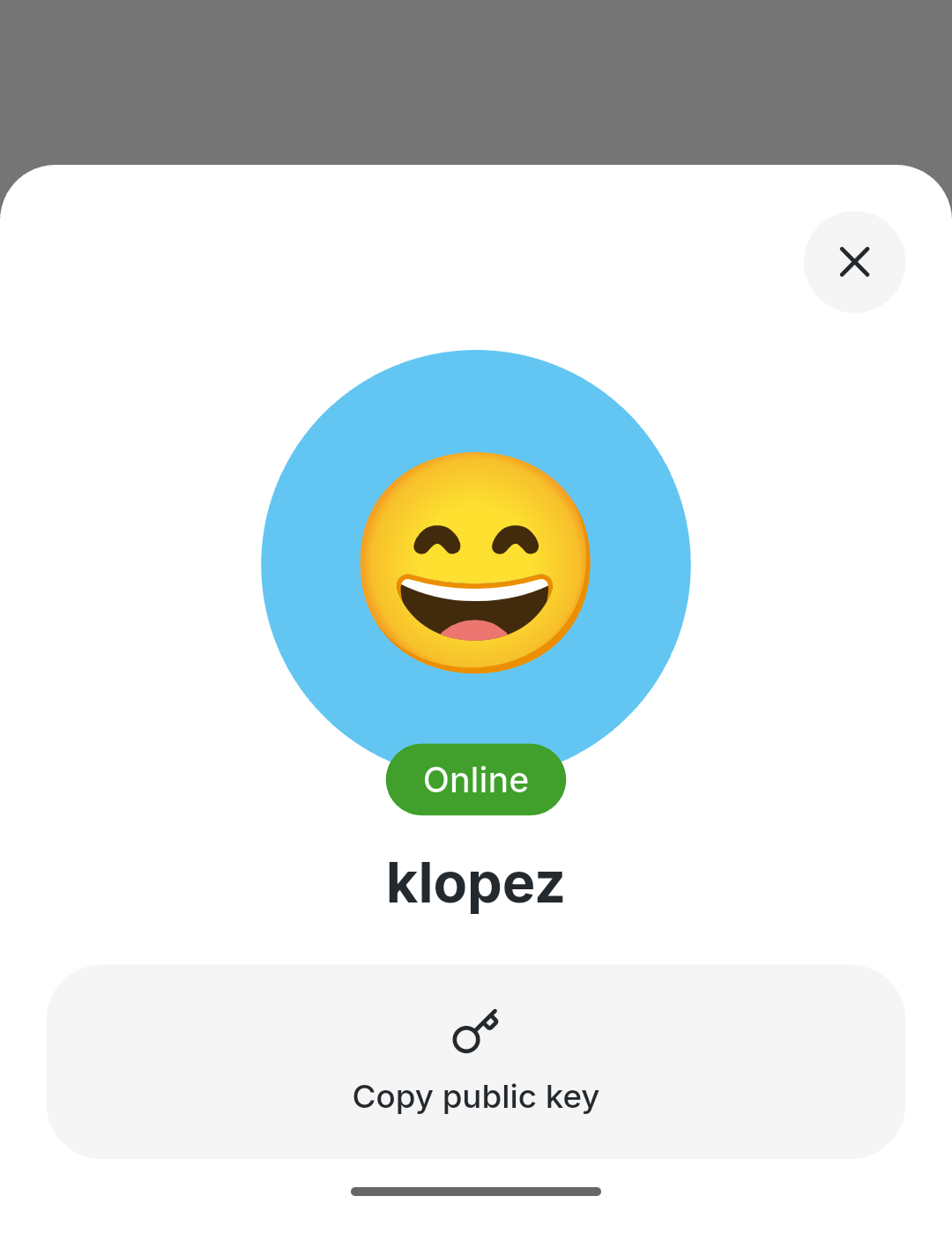
### Screenshots
No layout change in this slice — the renders below show the same
existing profile sheet, with the presence status now following hydrated
relay data. Flutter production-widget test renders — not native-device
screenshots or acceptance captures.
| Scenario | Before | After |
|---|---|---|
| Existing profile opened cold, with a signed relay snapshot saying
Online | 
| 
|
<details>
<summary>Capture provenance</summary>
Rendered by the Flutter widget engine in a `flutter test` run
(production widgets, production theme; no device or simulator). Before:
this PR's declared base `3c7f288c60d67df78577b237e27c3dfc8831aaa1`.
After: its head `a8e8028bfb9bb67de2db03ed448839e2f3ab2b0d`.
</details>
Signed-off-by: Logan Johnson <loganj@squareup.com>
🤖
## Summary

In a channel conversation, two identities with the same display name
looked identical. In the example below, the channel shows "Bad Janet"
twice, for two different identities. A reader cannot tell which one was
added and then removed.

This PR uses the contextual names from the previous PR everywhere a
conversation names someone:

- Message authors, threads, forum posts and replies
- Reactions, the typing indicator, and system rows (joined, added,
removed)
- Inline mentions and the agent activity sheet
- The profile sheet title, which now matches the row that opened it

Names are compared against the channel's members, so a label only gets
longer when a real collision exists in that channel.

The mention picker labels each choice against every candidate, so two
"Honey" choices look different. When you pick one, it still inserts the
identity's own name ("@Honey"), so the message text does not change.

Part 2 of 3: #7894 (resolver) → #7895 (conversations) → #7896 (lists,
Search, Pulse).

### Related issue

Related to #2910.

### Testing

- A widget test checks that the profile sheet names an author the same
way the channel does.
- A unit test checks that two same-name mention choices get different
labels but insert the same wire name.
- `flutter analyze` is clean, and the full `flutter test` suite passes.
- Checked on an Android emulator against the live relay, in an archived
channel with two identities named "Bad Janet".

| Before | After |
| --- | --- |
| <img width="300" alt="Before: the channel shows two different
identities both as Bad Janet"
src="https://github.com/user-attachments/assets/c7f6c345-12d8-4e11-9434-bbd2c63722db"
/> | <img width="300" alt="After: the second identity shows as Bad Janet
· sqxl"
src="https://github.com/user-attachments/assets/51c6b9fc-8900-4200-8ce0-ad1887f41dba"
/> |

---------

Signed-off-by: Logan Johnson <loganj@squareup.com>
Co-authored-by: Larry <627498bd4bd1f281a16431e3c6cce3b5c25b6692798c78672298aefbf2f8f8b5@buzz.block.builderlab.xyz>
The mobile app loads user profiles to show names, avatars, and agent
ownership. Some profiles include a signature that proves who owns the
agent. Checking these signatures for a batch of profiles can block
interaction because the checks run on the same thread that draws the
screen and handles input.

This change moves profile batch parsing and signature checks to a
background worker. It processes one batch at a time and combines queued
profile requests. It keeps the same signature checks, preserves newer
profiles that arrive while a batch runs, and discards results after a
community change. Individual live profile updates still use synchronous
verification.

Tests cover newer live updates, community changes, overlapping requests,
stale malformed events, and UI timer responsiveness through the
production parser. The responsiveness test fails if parsing is moved
back to the UI isolate. A regression also exercises a confirmed profile
save while an older batch is paused, including preservation of verified
ownership. All 38 focused tests, all 2,132 mobile tests, and the
analyzer pass.

With 500 valid owner signatures, an AOT test reduced the main-isolate
timer delay from about 3.4 seconds to less than a millisecond. Total
verification time stayed similar. This measures verification work, not
overall screen speed.

GitHub CI passes. The full local test run failed on two timing-sensitive
ACP tests in unchanged Rust code; both passed isolated retries. All
other local checks passed, including the downstream tests and builds run
after that failure.

---------

Signed-off-by: Tom Brow <tomb@block.xyz>
🤖

## Summary

In the mobile app, anyone who hasn't set a display name shows up as a
raw 64-character hex key (e.g. `3a5d4f9c…`) — unreadable, and
unrecognizable as the same identity across screens. Profile and Settings
also let you copy that raw hex. Nostr public keys have a standard
readable form — `npub1…`, the same encoding other Nostr apps and our
desktop app already display. This PR makes every mobile identity surface
render npub instead:

- **Unnamed people everywhere** — message and thread authors, reactions,
typing indicators, member lists, channel details, DM headers and tiles,
inbox, search, forum cards, Pulse notes and reply context, mention
suggestions, and invite rows — now show a compact npub label: first 8 +
last 4 characters of the full npub joined by an ellipsis
(`npub1abcd…wxyz`), the same truncation desktop uses. Previously these
showed truncated raw hex.
- **DM fallback avatars and blank names** — 1:1 DM tiles and headers key
their fallback avatar to the same non-self counterpart the label names,
including self-first participant order; a self-DM keeps its
hex-key-derived initial. Blank or whitespace-only display names fall
back to the compact npub instead of rendering empty, while nonblank
authored names render verbatim (padding included).
- **Profile sheet → "Copy public key"** now copies the full canonical
npub — never raw hex. When the identity string isn't a valid public key,
the copy tile is disabled, so a malformed key never reaches the
clipboard.
- **Settings → Identity (pubkey)** displays and copies the full npub; an
invalid identity reads "Identity unavailable" with copy disabled.
- **Invalid identities never leak truncated raw hex** into the UI
anywhere — they render a neutral "Unknown identity" label.
- **Unchanged on purpose:** display names and verified handles (NIP-05 —
the `name@domain` badge) still render as before. Unnamed avatars keep
distinct per-key initials, derived from the underlying hex key rather
than the npub — otherwise every unnamed key would render the same "N"
initial. Event IDs are not public keys, so they keep their hex
truncation (in Pulse's "Replying to", the parent author shows npub while
an event-id fallback still shows hex). The nevent share link, private
keys, and internal hex storage are untouched. Inputs that accept a key
(invite/member entry) accept both hex and npub and keep working in hex
internally.

### Related issue

N/A. Searched open issues/PRs for npub identity display on mobile —
closest related: none found. Desktop's parallel npub standardization
lives in the stacked desktop PRs (#7488 foundation, #7489 controls,
#7495 display surfaces); this is the independent mobile slice (based
directly on `main`, not on those branches).

### Testing

At exact head `5a620e420a1fd57d9d8011ac26434eed32fcf765` (base: `main`
`44316ff72`; 40 files, +1,345/−154):

- Full mobile suite: 2,098 tests passing (`cd mobile && flutter test`);
`flutter analyze` clean; `dart format --set-exit-if-changed .` clean —
the same checks CI runs.
- Widget/unit coverage at production seams: compact labels and hex-keyed
avatar initials for DM headers/tiles, member rows, mention suggestions,
and Pulse reply context; DM fallback avatars keyed to the labeled
counterpart (self-first order and self-DMs); blank/whitespace
display-name npub fallback with nonblank authored labels verbatim,
including the Activity inbox sender and profile-sheet heading (each with
its own empty/whitespace production-seam regression); full-npub copy and
disabled-copy semantics in profile and settings; invalid-key
suppression; and hex↔npub input round-trips.

Verified via unit and widget tests — no device/simulator validation is
claimed.

### Task provenance

Buzz channel: `1f0e4a3d-7e01-4efe-bb16-843b357f85c9`

Task:
buzz://message?channel=1f0e4a3d-7e01-4efe-bb16-843b357f85c9&id=86b34eb4bd84a1472419e9af22636c011c0fe273e3c196f967d7a36996e149b6

---------

Signed-off-by: Logan Johnson <loganj@squareup.com>
Co-authored-by: Larry <627498bd4bd1f281a16431e3c6cce3b5c25b6692798c78672298aefbf2f8f8b5@buzz.block.builderlab.xyz>
## Summary

- render every agent/AI identity as a 30% squircle across desktop and
mobile while keeping human avatars circular
- propagate agent identity through message, thread, profile, reaction,
member, DM, search, workflow, project, huddle, forum, pulse, and
agent-management surfaces
- preserve squircle geometry for fallbacks, focus/status treatments,
add-agent controls, and overlapping avatar outlines (`calc(30% + 2px)`
for the outer background)

### Related issue

None found. This change was requested and visually reviewed in the
originating Buzz thread.

### Testing

- `just desktop-test` — 5,799 passed
- `just mobile-test` — 2,008 passed
- pre-push gates passed at `0d59d77b120dcb90aac2f918e422c11c9fa5353b`:
desktop check, TypeScript typecheck, desktop full test suite, mobile
format/analyze and full test suite, Rust tests, Tauri checks, and
differential file-size gate
- deterministic desktop visual sweep covered channel messages/thread
summaries; thread, subthread, and sub-subthread depths; reactions and
reactor popovers; hover/full profiles; added-to-channel activity;
channel members/settings; agent library/team overlaps; agent creation;
mention autocomplete; and DM header/sidebar/settings

### UI evidence

The complete labeled visual matrix is available in the originating Buzz
review thread. GitHub-hosted copies will be added in a follow-up PR
comment using the repository screenshot script.

---------

Signed-off-by: Fizz <dae5f6af70b8695a8b83c8deae555f63be41630ec2b8cd493e41a439c9527dd8@buzz.block.builderlab.xyz>
Co-authored-by: Fizz <dae5f6af70b8695a8b83c8deae555f63be41630ec2b8cd493e41a439c9527dd8@buzz.block.builderlab.xyz>
## Summary
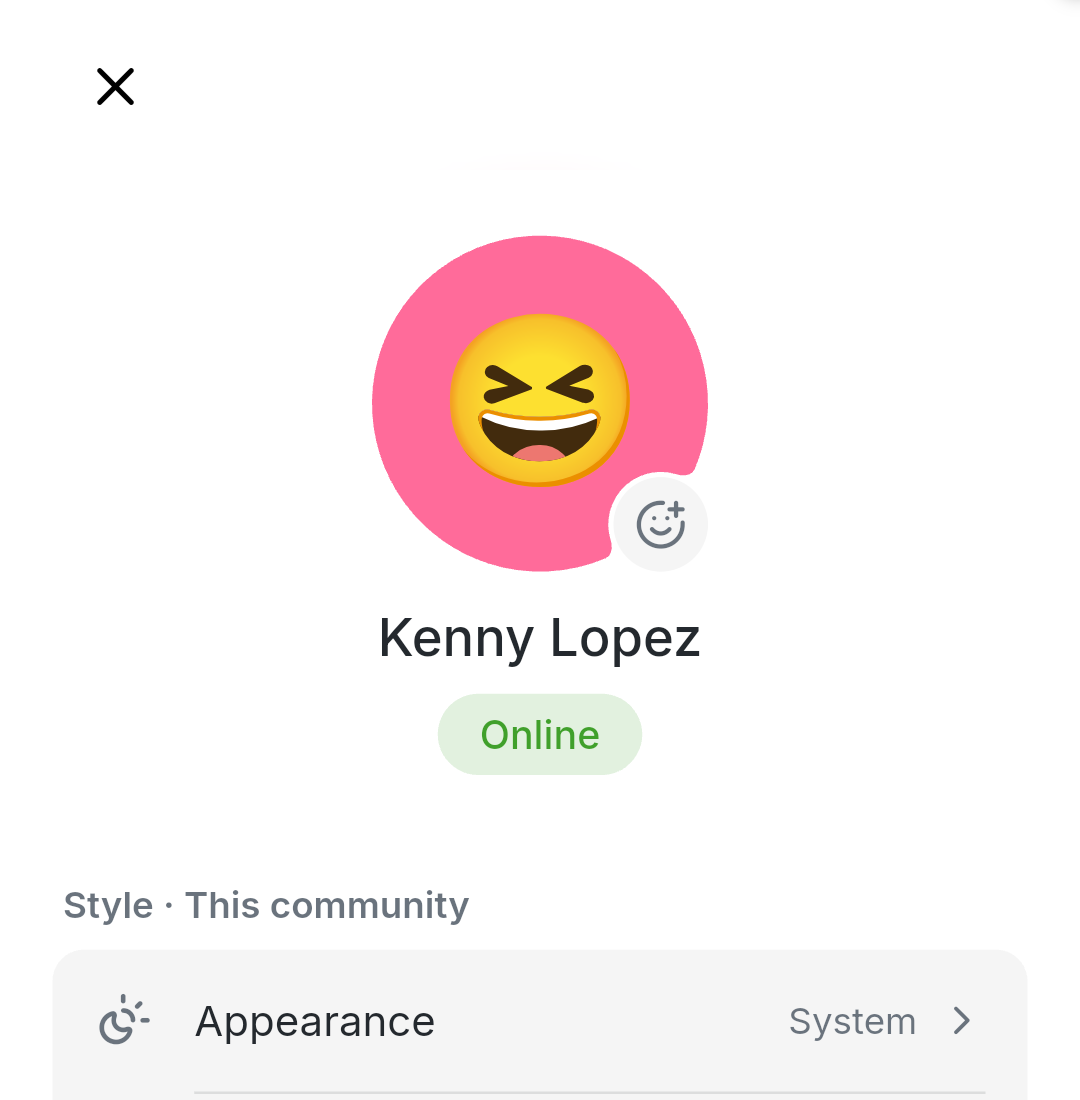
- reorganize mobile settings around profile, appearance, and connection
cards
- add System/Light/Dark theme pairing, accent selection, and the Buzz
gradient theme
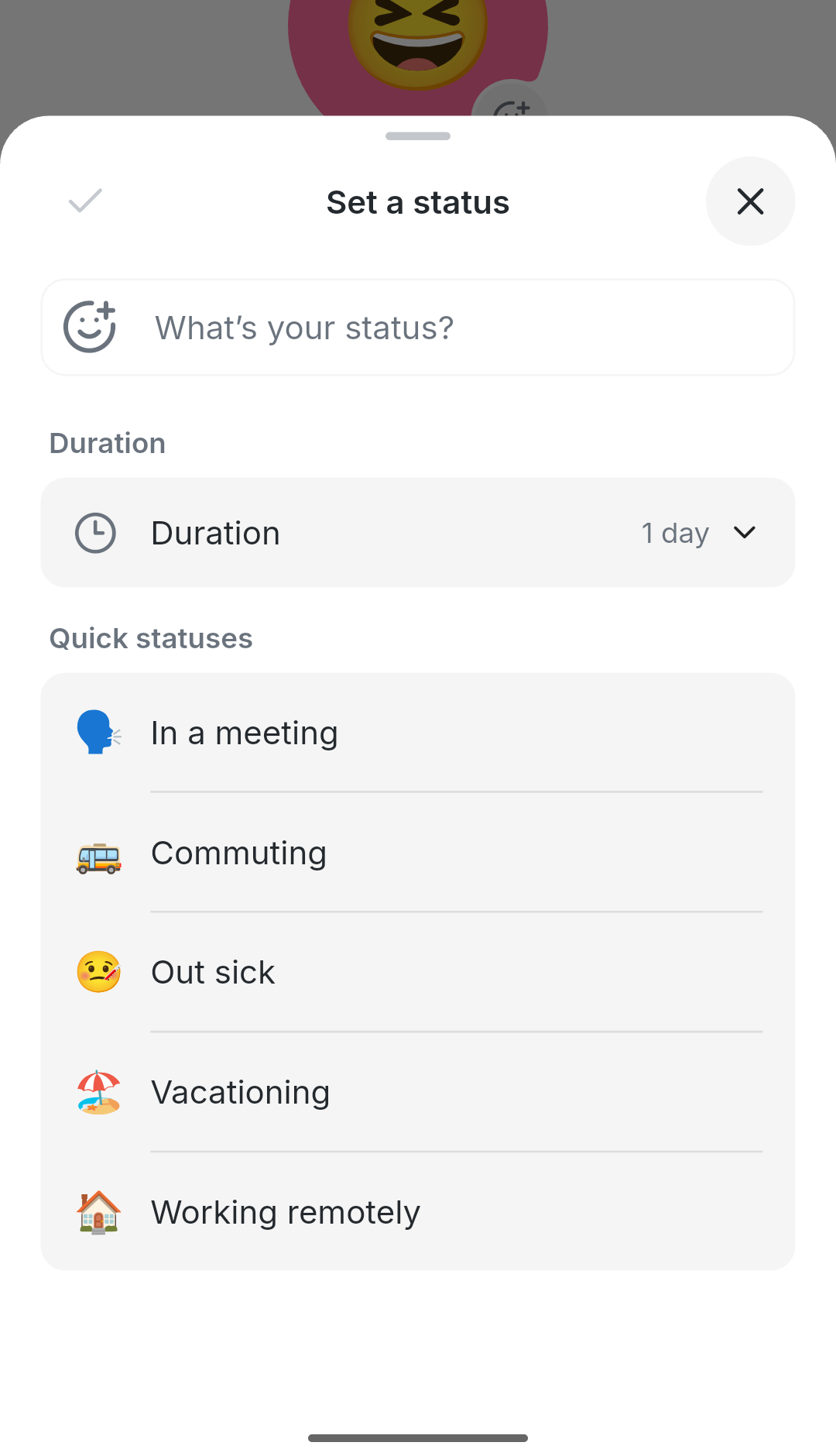
- align avatar badges, status editing, and supporting mobile chrome

## Test plan
- `just mobile-check`
- `just mobile-test`