mirror of
https://github.com/block/buzz.git
synced 2026-11-29 04:32:08 +00:00
5bbdd5c63b025ef3d7b23646332709becc18e2bc
130 Commits
| Author | SHA1 | Message | Date | |
|---|---|---|---|---|
 Matt Toohey |
5bbdd5c63b |
fix(desktop): bound and cancel invite-handoff join policy discovery
A receipt-less buzz://join claim first discovers the relay's join policy through the webview fetch path, which had no deadline, no body cap, and no way to cancel. A relay whose /api/join-policy blackholed, trickled, or streamed an oversized body left onboarding on "Accepting your invite…" forever, and cancelling did not stop the download. The webview branch of getJoinPolicy now matches the native fetch_join_policy bounds: one 15 s deadline covers the headers and the whole body, and the body is capped at 4 MiB while it streams (a larger declared Content-Length fails up front). A timeout surfaces as "The community's join policy took too long to load.", which the claiming stage shows with Retry. getJoinPolicy takes an optional AbortSignal, and useClaimInvite aborts the pending lookup when its transaction is cancelled, replaced, or unmounted. The existing transaction fence still drops any late settlement. The useClaimInvite jsdom suite gains a journey with a suspended /api/join-policy: no error at 14.999 s, a retryable timeout at 15 s with zero claims, then a retry that claims once against a policy-free relay. The single cancel test becomes a cancel/reopen table. Each row asserts the lookup's signal is aborted and that a late policy response neither claims nor moves the cleared or replacement transaction. A getJoinPolicy test rejects both a streamed and a declared body over 4 MiB. Removing the abort, the fence, the timer, or the cap each fails its test. Co-Authored-By: Claude Opus 5.5 <noreply@anthropic.com> Signed-off-by: Matt Toohey <contact@matttoohey.com> |
||
|
Matt Toohey
|
93140fa3a3 |
fix(desktop): ignore deep-link policy receipts for native invite consent
Anyone holding an invite code can mint a join-policy receipt from the public accept-policy endpoint, so a receipt carried by a buzz://join link does not prove this app showed consent. Desktop persisted that receipt into the onboarding transaction (and kept a retained same-relay receipt on resume), which made useClaimInvite skip policy discovery and claim without the native consent stage. startCommunityOnboarding now drops receipts for deep-link-join transactions, both when creating one and when resuming a same-relay transaction, so the invite-consent stage is the only source of the receipt a link join claims with. The deep-link drain no longer forwards the link's receipt. The useClaimInvite jsdom table gains rows for a link-supplied receipt and a retained same-relay receipt. Each row asserts the flow reaches invite-consent with zero claims, then claims once with the app-minted receipt after native acceptance. Co-Authored-By: Claude Opus 5.5 <noreply@anthropic.com> Signed-off-by: Matt Toohey <contact@matttoohey.com> |
||
|
Matt Toohey
|
7a35f29d49 |
fix(invites): collect native consent for app invite handoff
Co-authored-by: Jitter <d14dfe033ef0f809866f9f984de04821b0d900d7652fd85a54776ee40ca3a68f@buzz.block.builderlab.xyz> Signed-off-by: Matt Toohey <contact@matttoohey.com> |
||
|
Brad Seiler
|
d6196a16c1 | fix(relay): revoke invitations and restrict claims (#8237) | ||
|
Will Pfleger
|
836e7d0d06 |
feat(desktop): browse and moderate every community in the Admin Console (#8027)
The Admin Console only ever saw the community the desktop happened to be connected to. With #8011's community reads, the console can now browse every community on the relay and, for signed staff, moderate any of them by name without switching connections. 🤖 ## What changes - **Communities tab.** Lists every live community on the relay, searchable by host prefix with "Load more" paging. The connected community is pinned at the top by exact host match. Report rows get a community badge that opens that community. - **Community page.** Reports, Restrictions, Members and Actions, each scoped to the community on the page. The Actions form has no host field: it always acts on the page's community, and the TypeScript host normalization is gone from the Actions tab. - **Native reads** (`admin_list_communities`, `admin_search_members`, `admin_get_member`, `admin_get_event`). Every request validates the explicit community host and NIP-98-signs the real method and URL. Failures come back as a structured error (`status`, `bodyComplete`, `bodyEmpty`, `code`), so the UI can tell an older relay's empty 404, a coded `event_not_found` and a transport failure apart, and never says "not found" unless the relay did. - **Explicit-host lifts.** `admin_lift_restriction` sends the page's community host, not the active relay's. It freezes the relay and signer the intent was reviewed under, and refuses to send if either has changed. - **Pending actions survive navigation.** A panel-level `DirectActionsProvider` holds the frozen intent, so switching communities or tabs mid-confirm doesn't lose it. Only Discard drops it. A signer change remounts the controller and drops it. - **Fenced lookups.** Member and event lookups are keyed by origin, signer, community, target and a generation counter, so a late answer for one community can't unlock Review in another. - **Shared member picker** (`MemberSearchResult`, also used by Add Member), showing the truncated npub so members with the same name can be told apart. Delete accepts a note link and previews the message before Review. Relay staff are blocked before Review. - **Disabled admin auth is read-only.** With `BUZZ_ADMIN_AUTH=disabled` the Communities tab and community pages still render, and report badges still open them, but every ban, timeout, delete, add-member and lift control is disabled. The settings badge says the console is read-only and that acting needs `nip98`. Staffing stays hidden. - #7904's protections in the Actions tab are kept: frozen intent, `requestId`, Retry, `notSent` and the key-backup guard. - **Readable load errors.** Admin list and detail loads show the relay's error message (for example "request is not authorized"), never the raw JSON envelope. - **Failed kicks reload the report.** A resolve that fails with `enforcement_failed` reloads the report, so its failed action and "Cancel & reopen" appear immediately. - **Key backups never leave in a search.** Every admin API request URL passes the NIP-49 key-backup guard before it is signed or sent: community and legacy reads, mutations, the connection probe (before its first, unsigned request) and feedback-attachment fetches. The community and member search boxes, including the directory's Load more, refuse a pasted `nsec` or `ncryptsec` anywhere in the input without calling the relay. - **`just admin-seed` for multi-community testing.** Besides the local community, it seeds `beta.localhost:3000`, `gamma.localhost:3000` and 50 filler communities, with named members, a ban and a timeout in each named community, a report with Kick available, and a message for the delete preview. Rerunning it restores all of that to the starting state. It refuses, writing nothing, while a moderation action is unfinished on a seeded report. - The bodyless `GET /events/{id}` preview is added to the events-URL egress inventory. It sends no body, so it carries no key material. ## Tests Native (Rust): - `empty_404_and_405_read_as_complete_and_empty`, `coded_404_carries_the_relay_code`, `truncated_and_over_cap_bodies_are_incomplete`, `transport_failure_has_no_status`: the structured read error tells an older relay, a coded refusal, a cut-off body and a transport failure apart. - `a_401_retry_is_signed_by_the_same_keys`, `lift_signs_the_send_and_401_retry_with_the_checked_keys`: the 401 retry never switches keys. - `read_urls_validate_the_explicit_host_and_encode_the_query`, `lift_url_sends_the_page_host_not_the_active_relay`, `list_url_carries_host_and_cursor_and_refuses_a_changed_relay`, `lift_refuses_before_sending_on_signer_change_or_bad_host`: requests target the explicit host and refuse to send after a relay or signer change. jsdom: - `actions-pending-nav`: a pending intent survives a community change, and only Discard drops it. - `actions-fenced-lookup`, `fenced-load`: a late lookup for an old key never shows under, or unlocks, the new one. - `actions-same-ids`: the same pubkey and event id are read separately in each community. - `actions-community-change-drops-member`, `actions-page-host`, `actions-success`, `actions-identity`: the form acts only in the page's community, and confirm sends the frozen intent. - `actions-preview-errors`, `actions-delete-link`, `actions-staff-target`, `actions-disabled-auth`: preview errors, delete by note link, the staff block, and community pages rendering read-only with every action control disabled under disabled admin auth. - `communities-directory`, `communities-unsupported`, `community-badge`, `community-badge-disabled-auth`: the directory, older relays, and report badges, which open community pages under disabled admin auth too. - `restrictions-lift-signer-change`. The existing restriction tests now run on the community page and use `admin_lift_restriction`. Mutation checks: removing the pending-navigation guard turns `actions-pending-nav` red, and dropping the host from the fence key turns `actions-fenced-lookup`, `actions-same-ids` and `fenced-load` red. Ungating restriction lifts on `canMutate` turns `actions-disabled-auth` red. --------- Signed-off-by: Will Pfleger <pfleger.will@gmail.com> Co-authored-by: Hayt <211b96e6a2b7f45fd4047988976c7bbbeeda0c15f3ae7b32eec20834b5a55118@buzz.block.builderlab.xyz> Co-authored-by: Duncan <dcfd242e557282d7a1e2cf2e6877522682f1e5c6156dc92ca7d90eaedd3b0f95@buzz.block.builderlab.xyz> |
||
|
klopez4212
|
a9dd4d3bd7 |
Fix desktop onboarding regressions (#7659)
## Summary - restore neutral identity guidance icons and reveal-first private-key copying - keep runtime availability sections contiguous and restore primary onboarding colors - route API-key setup directly to Buzz provider configuration, including slow discovery and signed-out states ## Testing - `pnpm check` - `pnpm test` (6,501 passed) - focused Playwright onboarding coverage (API routing 3/3; visual flow 1/1) Signed-off-by: kenny lopez <klopez4212@gmail.com> |
||
|
klopez4212
|
81fba7bda4 |
Refresh desktop onboarding flow (#7528)
## Summary - apply the refreshed card layout across desktop onboarding - update identity backup, recovery, and key presentation flows - clarify AI connection choices and default model settings - simplify the backup ceremony from creation through optional verification - bring the harness and provider setup flow forward with validation, preserved state, and consistent navigation - fix action alignment and stray card scrolling in the refreshed layout ## Validation - pre-push desktop lint, typecheck, frontend tests, and native tests passed - focused onboarding Playwright coverage passed - manually reviewed the refreshed onboarding and backup flow in the native app - just ci passed all sections except one unchanged process-cleanup timing test; its exact rerun passed --------- Signed-off-by: kenny lopez <klopez4212@gmail.com> Signed-off-by: Princess Donut <b238ea756dee4d98afa5883fc7f1de61eeabe65bf700e3a5a5a80db5e42e2c2b@buzz.block.builderlab.xyz> Signed-off-by: Clay Delk <clay.delk@gmail.com> Co-authored-by: Princess Donut <b238ea756dee4d98afa5883fc7f1de61eeabe65bf700e3a5a5a80db5e42e2c2b@buzz.block.builderlab.xyz> Co-authored-by: Clay Delk <clay.delk@gmail.com> |
||
|
Logan Johnson
|
2226b6f95b |
fix(desktop): npub identity controls across profile, agents, and workflows (#7489)
🤖 ## Summary Building on #7488's npub foundation, this PR finishes the identity display change for the controls where you actually manage people and keys: profile, settings, agent access, and workflows. Everywhere in these surfaces, an identity key shows — and copies — as its canonical npub (npub is the human-readable encoding of a Nostr public key: the compact `npub1j57...fjmv` form where space is tight, the full npub where the whole key matters), and accepts npub as input. After this change: - Profile panel: the public-key row and the managed-by / declared-owner copies show the full npub. If a key can't be encoded, you see "Unavailable" with no copy button — never a raw or partial key. - Settings: the identity card shows and copies the npub. The hosted-communities account identity derives from the bound key (`pubkey_hex`) — the same authority as the mismatch gate and hosted operations — so the display can never disagree with what the app acts on; an unusable hex falls back to a neutral label instead of rendering the unverified server npub. The connected claim and a community's Connect action require that same usable bound key to match the local one — with no usable binding the card cannot claim connected or start Connect, while the community list, linking, and delete/rebind recovery stay available. - Hosted create/onboarding: the account and device identity rows in the create flow and owner onboarding derive from the same authoritative fields (bound key / local key), with the same neutral fallback; readiness requires a usable bound key that matches the local one. - Respond-to allowlist (controls who may respond to an agent): entries can be typed or pasted as hex or npub; both spellings of the same key are recognized as one entry and dedupe. Search results, chips, and remove buttons use the compact npub. - Workflow key fields: to/from keys display as npubs in the form and save back as canonical hex. Templates like `{{trigger.author}}`, roles, and free text pass through untouched; placeholders accept both spellings. - Recipient and agent dialogs: the verify popover is npub-only (the raw-hex line is gone); denied-membership screens never show a raw key. - The Rust-side truncated display name (used for native surfaces) shows the same compact npub, so those surfaces match the web UI. Internal representation is unchanged: keys are still stored, sent, and matched as canonical 64-character hex — npub is a display and input spelling, normalized to hex at the boundary, so existing data and integrations keep working. Bound-key usability and comparison use one normalized form (trimmed, lowercased, 64 hex characters; npub rejected), so padded or mixed-case spellings of the same key match. Display names, private keys, and event IDs are untouched. ## Details - `respondToAllowlist` / `RespondToField`: npub entries normalize to canonical hex; cross-form dedupe; compact npub in rows and chips; direct-add accepts npub and stores canonical hex. - `workflowFormTypes` / `WorkflowStepCard`: hex → npub for display, npub → canonical hex on save; templates, roles, and free text pass through in both directions (roundtrip-tested). - `UserProfilePanelFields`, `ProfileSettingsCard`, `HostedCommunitiesSettingsCard`, `MembershipDenied`, `SelectedRecipientChip`, `AddAgentToChannelDialog`: npub display and copy; invalid keys → "Unavailable" with no copy; hosted identity rows derive from the bound `pubkey_hex` (create/onboarding rows from the bound and local keys), never the unverified server npub; connected/readiness/Connect gates use the same usable-bound-key predicate, and the settings Connect invocation callback re-checks it before starting. - `src-tauri/src/commands/identity.rs`: `truncated_display_name` compacts to the first 8 + last 4 characters of the npub (above a 12-char threshold), mirroring `truncateNpub`. - e2e: profile key rows and clipboard polls assert npub forms and raw-hex suppression; the display-screenshots spec pins the npub-only popover; hosted specs drive the real settings card, create flow, and onboarding rows through their real providers, and the unlinked/npub-only identity cases assert no connected claim and no Connect action. ### Related issue - Fixes: N/A. No separate issue; the related work is the stack below. - Stack: builds on #7488 (shared npub foundation), now merged; this PR is rebased onto main and stands on its own. ### Testing At head `303c90ffa` (base: main `bfc38485`; 24 files, +1125/−146): - Focused unit suites (respondToAllowlist, workflowFormTypes, hostedCommunityApi bound-key helpers) green; mutation-checked — dropping allowlist canonicalization fails the dedupe case, and dropping bound-key normalization fails the npub-in-hex and padded same-key cases. - Full desktop unit suite 6,477/6,477, `desktop-typecheck`, `desktop-check` (formatting fixed narrowly with `biome check --write` on the touched files only), and a fresh E2E build at the current head; the add-community + hosted-communities-settings specs 18/18 and onboarding integration 69/69 on a fresh dedicated port, with focused new-case runs 4+4 covering padded same-key (ready, Connect kept — no false rebind) and npub-in-hex (neutral label, recovery, no Connect) across the settings card, create flow, and first-community onboarding, plus the unlinked-account settings regression asserting Connect cannot occur. - `cargo fmt`/clippy (both feature sets) and `cargo test identity` (71 pass) passed at the earlier full-change head; since then, the only production changes in this PR's delta are the hosted identity display authority and its fail-closed bound-key gating/normalization above (base-side fixes carry #7488's receipts) — every other change is test-only. ### Task provenance Buzz channel: `1f0e4a3d-7e01-4efe-bb16-843b357f85c9` Task: buzz://message?channel=1f0e4a3d-7e01-4efe-bb16-843b357f85c9&id=86b34eb4bd84a1472419e9af22636c011c0fe273e3c196f967d7a36996e149b6 --------- Signed-off-by: Logan Johnson <loganj@squareup.com> Co-authored-by: Larry <627498bd4bd1f281a16431e3c6cce3b5c25b6692798c78672298aefbf2f8f8b5@buzz.block.builderlab.xyz> |
||
|
Salman Mohammed
|
42aeb1571c |
feat(desktop): add Pi agent preset (#7208)
## Summary Add Pi as a selectable desktop ACP runtime via `pi-acp`, including discovery guidance and its official logo. ### Related issue Follow-up to closed #6546. ### Testing - Focused Tauri preset and desktop logo tests - TypeScript typecheck Generated with Codex --------- Signed-off-by: Salman Mohammed <smohammed@squareup.com> |
||
|
Taylor Ho
|
de8a2741c7 |
feat(desktop-messages): show compact Buzz link metadata (#6252)
**Category:** improvement **User Impact:** Buzz links in messages now resolve into compact, descriptive chips with predictable navigation, while tooltips use the neutral secondary surface consistently across light and dark themes. **Problem:** Raw Buzz-native links and opaque identifiers make message context difficult to scan, while oversized previews disrupt the conversation. Missing, delayed, or deleted metadata also needs a stable presentation that does not mislead users or break navigation. **Solution:** Keep message and issue chips metadata-independent: message chips render only the channel name, while issue chips render only the repository name—never fetched content/title or an event hash. Fetched context remains available in each hover tooltip. Other native links continue to resolve into concise inline labels, with muted secondary fallbacks, distinct deleted states, and existing navigation paths preserved. This also makes two explicit shared-tooltip behavior changes: 1. **Color:** shared and rich tooltips move from the primary color pair to the neutral secondary semantic pair, including dedicated huddle-token handling and matching rich-descendant foregrounds. 2. **Hover behavior:** tooltip roots set Radix `disableHoverableContent`, and tooltip content is pointer-transparent, so moving off the trigger dismisses the tooltip instead of letting the pointer enter and keep the popover open. Together these preserve readable contrast, authoritative project context, and predictable hover dismissal. <details> <summary>File changes</summary> **desktop/src/features/communities/useCommunityInit.ts** Primes channel metadata needed to resolve native links promptly. **desktop/src/features/messages/lib/messageLinkMetadata.test.mjs** Covers message preview extraction, fallbacks, and deleted-message semantics. **desktop/src/features/messages/lib/messageLinkMetadata.ts** Normalizes fetched message metadata into compact labels and status-aware presentation. **desktop/src/features/messages/ui/SentFromThreadLine.tsx** Provides thread context to linked-message metadata resolution. **desktop/src/shared/lib/useResolvedLinkPreviews.ts** Exposes resolved preview state for native entity chips. **desktop/src/shared/styles/globals/markdown.css** Adds compact chip layout and semantic disabled-state styling. **desktop/src/shared/styles/globals/theme.css** Defines the semantic colors used by unavailable and deleted chips. **desktop/src/shared/ui/markdown.test.mjs** Exercises native-link rendering and provider-backed entity metadata behavior. **desktop/src/shared/ui/markdown.tsx** Routes native markdown links through metadata-aware chip components without changing navigation contracts. **desktop/src/shared/ui/markdown/ChannelDeepLink.test.mjs** Covers resolved, unresolved, private, archived, and forum channel presentations. **desktop/src/shared/ui/markdown/ChannelDeepLink.tsx** Renders channel names and concise channel metadata inline with stable fallbacks. **desktop/src/shared/ui/markdown/MessageLinkPill.tsx** Renders loading, ready, unavailable, DM, forum, and deleted message states compactly. **desktop/src/shared/ui/markdown/entityLinks.tsx** Enriches repository, issue, and pull-request chips and uses containing-project context in tooltips. **desktop/src/shared/ui/markdown/types.ts** Extends markdown runtime metadata required by native chip rendering. **desktop/src/shared/ui/markdown/useMessageLinkMetadata.ts** Fetches and classifies linked-message metadata while preserving navigable fallbacks. **desktop/src/testing/e2eBridge.ts** Adds deterministic metadata controls for runtime visual and navigation tests. **desktop/tailwind.config.js** Makes semantic disabled colors available to chip styles. **desktop/tests/e2e/entity-link-recipient-cards.spec.ts** Verifies entity labels, project-aware tooltips, delayed metadata, and navigation behavior. **desktop/tests/e2e/navigation.spec.ts** Verifies channel and message chip states, metadata resolution, deletion handling, and navigation. **desktop/src/shared/ui/tooltip.tsx** Migrates the shared tooltip surface from the primary color pair to the semantic secondary pair. It also sets Radix `disableHoverableContent` and makes tooltip content pointer-transparent so leaving the trigger dismisses the tooltip predictably. **desktop/src/features/agents/ui/RestartDiffBadge.tsx** Aligns restart-diff tooltip values and supporting copy with the secondary tooltip foreground. **desktop/src/features/channels/ui/AddChannelBotTeamsSection.tsx** Aligns rich team tooltip descriptions, persona chips, avatars, and names with secondary tooltip semantics. **desktop/src/features/projects/ui/ProjectAuthorIdentity.tsx** Uses the matching secondary tooltip foreground for project author metadata. **desktop/src/features/projects/ui/ProjectCards.tsx** Aligns repository-unavailable tooltip descriptions with the secondary tooltip foreground. **desktop/src/shared/styles/globals/utilities.css** Makes huddle tooltips consume their dedicated palette directly without misleading primary or secondary aliases. **desktop/src/shared/styles/globals/tooltipSemantics.test.mjs** Pins direct huddle-token consumption and rejects semantic alias drift. **desktop/tests/e2e/tooltip-semantics.spec.ts** Verifies simple and rich tooltip surfaces and descendant tokens in Buzz light and Catppuccin Mocha dark themes. **desktop/playwright.config.ts** Registers tooltip semantic coverage in the desktop smoke suite. </details> ## Reproduction steps 1. Run the desktop app and open a message containing Buzz links for a channel, message, repository, issue, and pull request. 2. Confirm message links show only the channel name and issue links show only the repository name inline, with no fetched content/title or event hash; confirm other native links remain compact rather than rendering raw identifiers or expanded previews. 3. Hover the chips and confirm the neutral secondary tooltip adds concise context without duplicating the visible label. 4. Open each chip and confirm it follows the same channel, message, repository, issue, or pull-request navigation as before. 5. Inspect links while metadata is loading, unavailable, or definitively deleted and confirm the fallback remains compact, legible, and navigable where appropriate. 6. In Buzz light and Catppuccin Mocha dark themes, compare a simple channel-members tooltip and the rich Add agents team tooltip; both should use secondary semantics with readable nested content. 7. Move the pointer from a trigger toward its tooltip; confirm the tooltip dismisses rather than remaining open as hoverable content. ## Screenshots The matrix below covers both the default light theme and Catppuccin Mocha with an orange accent. Message/issue-chip rows affected by the stable-label pivot are temporarily omitted until they can be recaptured from the real built UI; the prior images showed the obsolete expanding inline label. | State | Default light | Dark · orange accent | |---|---|---| | Public stream channel tooltip | 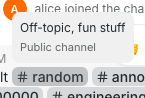 | 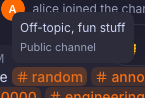 | | Private forum channel tooltip | 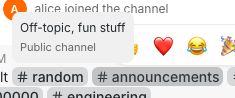 | 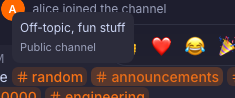 | | Public forum channel tooltip | 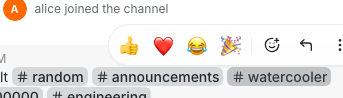 | 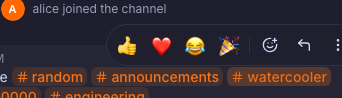 | | Channel references, including unresolved |  |  | | Unknown channel permalink |  |  | | Archived channel tooltip | 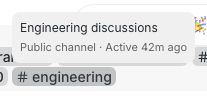 | 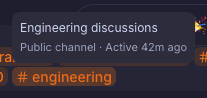 | | Repository entity | 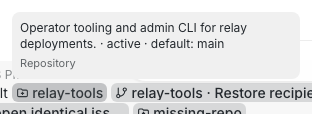 | 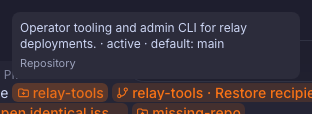 | | Pull request entity | 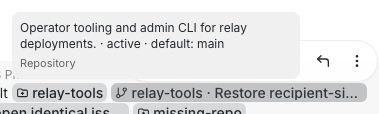 | 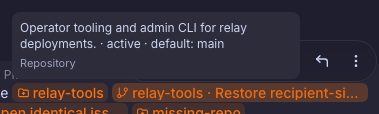 | | Entity metadata fallback | 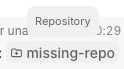 | 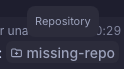 | ### Tooltip semantic surface spot check | Buzz light | Catppuccin Mocha dark | |---|---| | 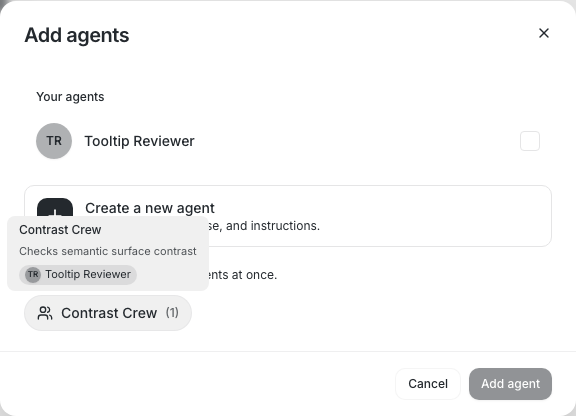 | 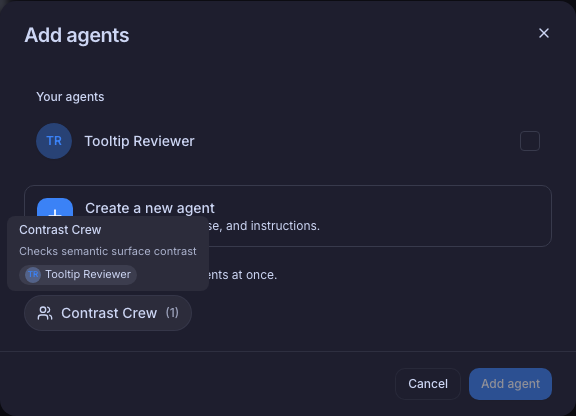 | --------- Signed-off-by: Taylor Ho <taylorkmho@gmail.com> Co-authored-by: Carl <acda9e433d19dcd0e6b6840f7f4b98f3a56f1fab98049d444c087019e6d36560@buzz.block.builderlab.xyz> |
||
|
Will Pfleger
|
c63ac746cd |
perf(desktop): split discover_acp_providers into cheap and forced paths (#6330)
Splits the `discover_acp_providers` Tauri command into a cheap cached path and an explicit forced re-discovery path. The profiling flight-recorder identified `discover_acp_providers` as the acute UI-freeze correlate: a 20–65s probe pipeline (PATH re-fetch, CLI auth probes, process spawns) was running on routine renders like channel switches, because hot surfaces remounted the wrapping query and automatic staleness refetches re-ran the full pipeline. This is complementary to the idle auto-reload (#5588) and bounded-accumulator (#5596) work. ## Backend - Added a `force` parameter to `discover_acp_providers` / `discover_acp_runtimes_from`. The default (cheap) path serves cached availability and auth statuses with zero process spawns; `force: true` runs the full pipeline (cache clear, PATH re-fetch, CLI auth probes). - Added a single-flight coalescer (`forced_single_flight`) so concurrent forced runs share one probe instead of stacking. - Extracted the auth-status cache and `resolve_auth_statuses` into `discovery/auth_status_cache.rs`. ## Renderer - Raised `staleTime` to 30 min; forced refresh flows only through an explicit `fetchQuery` path (`refreshAcpRuntimes`), so automatic staleness refetches can never re-run probes. - Added `useAcpRuntimesQueryForced` for Settings and onboarding surfaces; connect/install/save/delete mutations force-refresh in `onSettled`. - Switched `SetupStep`, `HarnessCatalogDialog`, and `HarnessesSettingsPanel` to the forced hook. ## Structure The touched files were at or over the grandfathered 1000-line file-size ceiling, so the change is delivered as cohesive extractions rather than in-place growth: `forced_single_flight.rs`, `auth_status_cache.rs`, `discovery/tests/forced_discovery.rs`, `acpRuntimesQuery.ts`, and `tauriAcpDiscovery.ts`. Dependencies are one-directional (`hooks.ts` imports from `acpRuntimesQuery.ts` and re-exports the forced hook, so consumer imports are unchanged; no import cycle). ## Tests Added Rust tests pinning the cheap-vs-forced split: a probe is spawned only when forced, the cheap path reuses the cache, and auth status is `Unknown` before any probe runs. --------- Signed-off-by: Will Pfleger <pfleger.will@gmail.com> Co-authored-by: Duncan <dcfd242e557282d7a1e2cf2e6877522682f1e5c6156dc92ca7d90eaedd3b0f95@buzz.block.builderlab.xyz> |
||
|
klopez4212
|
076081bfc6 |
Rename Bumble agent to Pollen (#5864)
## Summary - Rename the built-in Bumble agent to Pollen across desktop, onboarding, docs, and test fixtures. - Migrate existing stock definitions and instances in place while preserving customized fields and the stable persona coordinate. - Reserve the Pollen name by removing it from Fizz's generated-name pool. ## Validation - Pre-push desktop checks, typecheck, 4,791 frontend tests, Tauri clippy, and 2,432 native tests - Desktop E2E build --------- Signed-off-by: kenny lopez <klopez4212@gmail.com> Signed-off-by: Kenny Lopez <klopez4212@gmail.com> Signed-off-by: Wes <wesbillman@users.noreply.github.com> Co-authored-by: Carl <3c4caeafb646d23867f1c4832e68211d77e2561946171625f75c3ce1a3f2670f@buzz.block.builderlab.xyz> Co-authored-by: Wes <wesbillman@users.noreply.github.com> Co-authored-by: Carl <c7ebe626f000404285d3686e1dc74cc07cc60a9754a150041ba132e14bd3e2ec@buzz.block.builderlab.xyz> |
||
|
Will Pfleger
|
f35930104b |
fix(desktop): remove 0.5.9+ perf regressions, speed up get_channels (#5599)
Desktop input latency regressed sharply for users on v0.5.9 and worsened on latest main: multi-second stalls when clicking back into the app, slow fresh boots, intermittent lockups, and scroll/mouse degradation. Reverting to `119a84897` (pre-0.5.9) was confirmed to resolve it, isolating the regression to that range. Profiling a live production renderer plus a commit-level audit of the range found three independent, additive causes — fixed here — plus a long-standing `get_channels` cost that made every remaining refetch expensive, also addressed here. ## 1. Focus-return refetch storm (`refetchOnWindowFocus`) #5490 wired TanStack's `focusManager` to app focus and flipped ~20 query sites to `refetchOnWindowFocus: true`. A focus return after >60s away fires them all within milliseconds — and a click into an unfocused window *is* a focus return, so the burst runs before the click is processed. That is the "click into the composer, wait 5 seconds" symptom, and it also explains why mouse input feels worse than keyboard (clicks arrive with focus transitions; typing happens while already focused). A 5-second `sample` of a live production renderer caught a single window activity-state transition consuming ~1.25s of main-thread time, dominated by `JSON.parse` in the focus listener's microtask drain. #5535 already established the fix pattern but applied it to only two families (channels, home-feed). This PR extends the same 5-minute `staleTime` discipline to the remaining families: pulse (×5), workflows (×4), agents (×4), forum (×2), presence, user-status, custom-emoji, channel-templates, and the persona catalog. Polling cadences and push-invalidation paths are untouched — interval refetches and `invalidateQueries` both bypass `staleTime`, so live-update behavior is unchanged. Each gated family exports its focus-refetch policy as an options object that the production hook spreads into `useQuery`, and a `focusRefetchPolicy.test.mjs` drives a `QueryObserver` with that same production object — locking the policy behaviorally (fresh focus return → 0 fetches; stale → refetch) and failing if a hook's `staleTime`/`refetchOnWindowFocus` wiring drifts. Four families deliberately keep tighter freshness, all surfaces where the 5-minute gate would suppress the only refresh path and none of which feed the app-wide storm: `repo-sync-status` keeps its fresh focus refetch (its inline comment documents the "committed in a terminal, switched back to the app" flow as intended); the workflow-runs list stale-gates at 10s because a remotely-started run has no push invalidation and its conditional 1s poll is off while the cache shows no active runs; the workflow list queries (`useChannelWorkflowsQuery` and the all-channels aggregate) stale-gate at 10s because they have no poll and no relay subscription, and mutation-driven invalidation only covers this renderer — remote workflow creates/edits/deletes surface only via focus refetch; and the managed-agent log stale-gates at one poll tick (30s) so returning to a live agent log refreshes immediately. Run approvals keep the 5-minute gate under `RUN_APPROVALS_FOCUS_STALE_TIME_MS` — their focused 10s poll already covers freshness. ## 2. Synchronous localStorage sweep on the boot/focus path #5453's stale-cache sweep synchronously `getItem` + `JSON.parse`s every whitelisted localStorage entry on the main thread (multi-MB on seasoned profiles), scheduled with a `requestIdleCallback` timeout of 1.5s that guaranteed it landed mid-boot, and re-armed on every hidden→visible transition — stacking it onto the exact moment the focus storm fires. #5454's `trimSelfProfileCaches()` additionally scanned every localStorage key on every `writeSelfProfileCache()` call (which fires per relay self-profile delivery at boot). Now: the first sweep waits `BOOT_SWEEP_FLOOR_MS` (30s) after startup, the scan is time-sliced across idle callbacks, and the visibility trigger is removed — boot-delayed plus hourly still covers the 14-day TTL contract. The sliced sweep re-checks staleness immediately before each removal (a key rewritten fresh mid-sweep survives), isolates per-key storage errors so one bad entry can't strand the rest of the snapshot, defers oversized values once rather than parsing them on a zero-budget slice, guarantees forward progress on timeout-fired callbacks, and cancels its scheduled slice when stopped. The profile trim keeps a lazily-initialized memoized key count so the common under-cap write is O(1); the full parse scan runs only when the count exceeds a cap, resyncs if external deletions made it stale, and a failed scan skips the trim instead of aborting the write. Sweep semantics (rules, TTLs, eviction) are unchanged, and tests cover the scheduling, slice-progress, error-isolation, defer-once, and trim short-circuit behaviors. ## 3. The macOS window was never opaque #5478's glass appearance is correctly opt-in at the CSS layer, but the compositor cost was baked in deeper than its native `on_webview_ready` transparency call: the main window is declared `"transparent": true` in `tauri.conf.json` (added for the original glass work in #1671), which makes tao call `NSWindow.setOpaque(false)` at creation and resolve every later `set_background_color(None)` to `clearColor` — and no runtime `setOpaque(true)` path exists through tauri, while wry's runtime background setter can only force the WKWebView's `drawsBackground` off, never back on. So "restore the platform default" was unreachable: every launch, glass or not, ran with a non-opaque NSWindow, defeating WindowServer's opaque-window compositing fast path and forcing full window compositing every frame — compounded by the existing `backdrop-blur` chrome overlapping the scrolling timeline. This matches the compositor-shaped symptoms (scroll and pointer input degrading first). The window is now created opaque (`"transparent": false`) and the NSWindow layer is never made transparent at runtime. Glass never needed a transparent window: behind-window `NSVisualEffectView` vibrancy renders inside opaque windows (this is how Finder and Notes draw vibrant sidebars); it only requires a transparent WKWebView canvas, which the `set_window_vibrancy` enable path already establishes at runtime (`macos-private-api` compiles that in independent of the window flag). Enabling glass installs the vibrancy layer and then makes only the webview canvas see-through; disabling clears the vibrancy layer — the canvas may stay non-drawing afterwards (wry's flag is one-way at runtime), which is harmless because glass-off CSS paints fully opaque above an always-opaque NSWindow. The boot-path first-frame backing writes touch only the NSWindow backing color and are therefore inert to glass state regardless of how they order against the `ThemeProvider`'s vibrancy call on a persisted-glass-on cold boot. Glass-off users (the default) get an end-to-end opaque window from boot for the first time. ## 4. `get_channels`: serial round-trips and a multi-MB payload on every refetch The stale gates in (1) cut refetch frequency; this cuts the cost of the refetches that legitimately remain (boot, and focus returns after more than 5 minutes away — previously still a multi-second stall). `get_channels` made ~8 fully serial relay round-trips (~3.2–3.6s at 1,100+ channels), then shipped the full `ChannelInfo` list — including every channel's member pubkeys — across IPC, where the renderer's `JSON.parse` of the multi-MB payload froze the main thread (the ~1.25s stall captured in the live sample). - **Concurrent stages**: the membership chain, the open-channel directory scan, and the hidden-DM snapshot run concurrently, as do the member-count and last-message queries that follow. The critical path drops from ~8 sequential round-trips to 2 phases. Filters, limits, pagination, and merge semantics are unchanged. - **Not-modified short-circuit**: the command now takes a client-supplied content hash (FNV-1a 64 over the channel list, canonicalized by id and excluding `last_message_at`) and omits the channel list from the response when nothing else changed. Last-message timestamps — which change on nearly every message anywhere — ship as a small separate map that the client overlays onto its cached list with reference preservation, so React Query's structural sharing also skips downstream re-renders. On a typical refocus the renderer parses kilobytes instead of megabytes. The hash is stored in the query cache itself, tying its lifecycle to the data it describes so a community switch can never leak a stale hash. The E2E mock bridge speaks the new payload shape — including the complete `last_messages` map the client treats as authoritative — and hash canonicalization plus overlay reference-preservation are unit-tested on both sides. --------- Signed-off-by: Will Pfleger <pfleger.will@gmail.com> |
||
|
klopez4212
|
3f2f32641f |
Polish desktop onboarding flow (#5310)
## Summary - standardize onboarding navigation and horizontal step transitions - refine the avatar editor with live preview, segmented modes, search, skin tones, and reduced-motion-safe feedback - simplify harness/default-model actions and supporting copy ## Testing - desktop typecheck and static guards - desktop E2E build - 9 focused onboarding smoke tests - 4 focused onboarding/profile integration walkthroughs - 4,535 desktop unit tests --------- Signed-off-by: kenny lopez <klopez4212@gmail.com> Signed-off-by: Kenny Lopez <klopez4212@gmail.com> Co-authored-by: Carl <3c4caeafb646d23867f1c4832e68211d77e2561946171625f75c3ce1a3f2670f@buzz.block.builderlab.xyz> |
||
|
Taylor Ho
|
a5a9240241 |
fix(desktop): let imported and recovered identities finish onboarding (#5228)
**Category:** fix **User Impact:** People who onboard by importing an existing key or recovering from a phone can now use "Skip for now" (and Next) on the harness setup and model config steps, instead of getting stuck. **Problem:** On the "Set up your agent harnesses" and "Configure your default model settings" onboarding steps, clicking **Skip for now** — or **Next** — did nothing for anyone who reached those steps by importing an existing key or recovering an identity from a phone. The app stayed frozen on the step. **Solution:** The onboarding state machine sets `continuingPubkeyRef` to the current pubkey on import/recovery to keep the flow on `onboarding` until setup finishes (added in #4845). But `complete()` never cleared that ref, so once it matched the current pubkey the stage stayed pinned to `onboarding` forever — completion could never win. `complete()` now clears the ref so finishing/skipping actually settles the flow. Fresh-generated keys never set the ref, which is why first-run fresh-key skip already worked and the gap went unnoticed. <details> <summary>File changes</summary> **desktop/src/features/onboarding/machineOnboarding.ts** Clear `continuingPubkeyRef` inside `complete()` so an imported/recovered identity's "continuing" marker no longer outlives completion and pin the stage to `onboarding`. **desktop/tests/e2e/onboarding.spec.ts** Add a regression test that imports an existing key, reaches harness setup, clicks **Skip for now**, and asserts onboarding exits (reaches community onboarding). This fails without the fix. The existing skip tests only exercised the fresh-key path, which never set the ref — hence the gap. </details> ## Reproduction steps 1. Start onboarding and choose **Use an existing key** (or recover from a phone); import a key and continue to **Set up your agent harnesses**. 2. Click **Skip for now** (or **Next**). Before this change, nothing happens — the step is stuck. The same trap hits **Configure your default model settings**. 3. With this change, Skip/Next advances out of onboarding as intended. 4. Automated: `pnpm build:e2e && pnpm exec playwright test onboarding.spec.ts --project=integration -g "imported-key users can skip out of harness setup"` — passes with the fix, fails without it. ## Root cause Introduced by #4845 (`feat(identity): recover desktop identity from a signed-in phone`), which added `continuingPubkeyRef.current === currentPubkey` as an independent condition selecting the `onboarding` stage. That guard has no off switch: `complete()` set the completion flag but never cleared the ref, so the OR'd condition kept the stage pinned. Not a revert candidate — the guard's intent (keep a just-published identity in onboarding until setup finishes) is correct; it just needed to release on completion. Signed-off-by: Taylor Ho <taylorkmho@gmail.com> |
||
|
Wes
|
daa8877581 |
Make public starter channels best effort (#5192)
## Summary - treat public starter-channel provisioning as best-effort after preserving the required private Welcome path - let community onboarding complete and focus Welcome when the reported metadata lookup error occurs - remove the now-obsolete retry-toast expectations for optional starter provisioning ## Scope This intentionally does not change relay tombstone semantics or auto-join existing public channels. ## Test plan - `pnpm exec playwright test tests/e2e/deep-link-invite.spec.ts` (8 passed) - `pnpm exec playwright test tests/e2e/onboarding.spec.ts --grep "failed public starter channel setup"` (1 passed) - `pnpm typecheck` - `pnpm check` - `pnpm test` (4483 passed) - pre-push hook: branch-skew, desktop-check, desktop-typecheck, desktop-test passed on `4658a07beb1e1d54443da5cd2e4a28fae0232f24` --------- Signed-off-by: Wes <wesbillman@users.noreply.github.com> Co-authored-by: Carl <c7ebe626f000404285d3686e1dc74cc07cc60a9754a150041ba132e14bd3e2ec@buzz.block.builderlab.xyz> |
||
|
Taylor Ho
|
67b77344d6 |
fix(desktop): next/back navigation during key creation onboarding (#4978)
**Category:** fix **User Impact:** Users can navigate back while an identity key is being created, while Next remains visible and unavailable until creation finishes. **Problem:** The key-creation hold hid both navigation actions, leaving users without an escape route or a clear indication of what would happen next. **Solution:** Keep the onboarding footer mounted throughout creation, leave Back enabled, and gate Next on the completed identity state. <details> <summary>File changes</summary> **desktop/src/features/onboarding/ui/BackupStep.tsx** Keeps the onboarding navigation footer visible during key creation, with Back available and Next disabled until the identity is ready. **desktop/tests/e2e/onboarding-backup.spec.ts** Covers the loading and completed navigation states so the intended behavior cannot quietly crawl back out of the pit. </details> ## Reproduction steps 1. Start desktop onboarding and choose to create a new identity. 2. Submit the profile step and observe the key-creation screen. 3. Confirm Back is enabled while Next is visible but disabled. 4. Wait for key creation to finish and confirm Next becomes enabled. ## Screenshots | Before | After | | --- | --- | | Navigation actions are hidden during key creation. | Back remains enabled while Next stays visible and disabled. | | 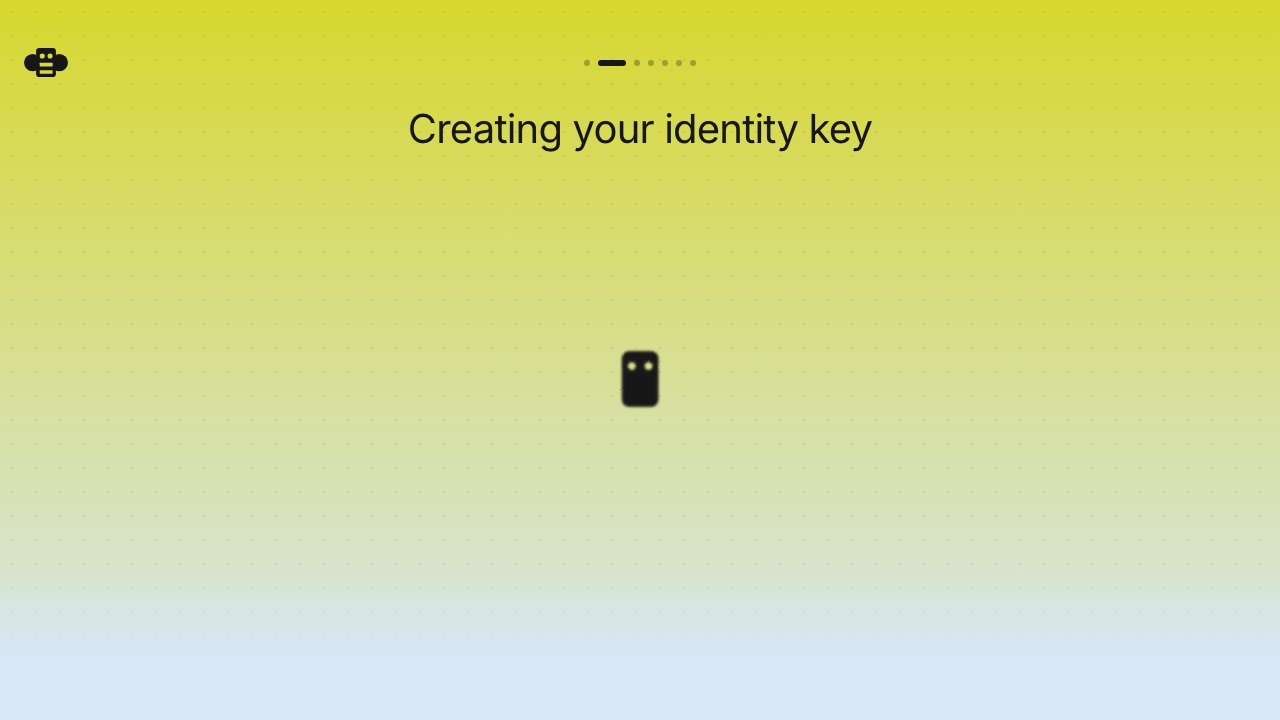 | 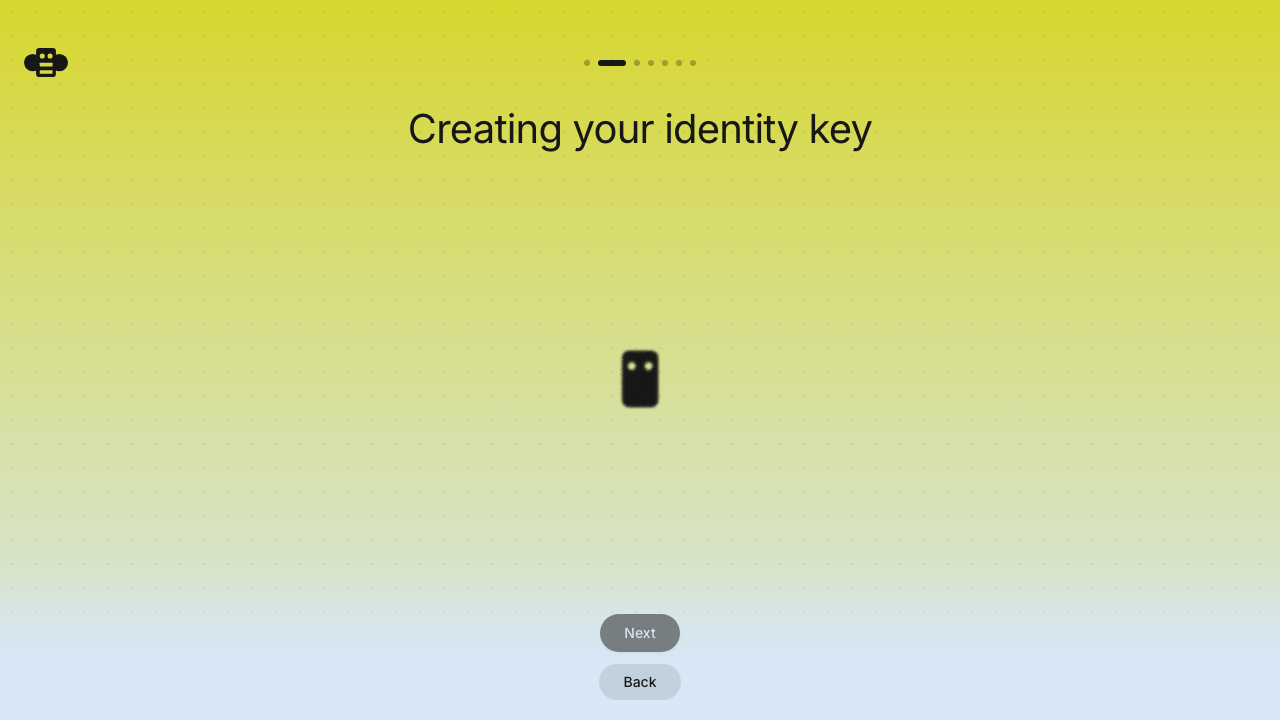 | Signed-off-by: Taylor Ho <taylorkmho@gmail.com> |
||
|
Taylor Ho
|
6eb65919f1 |
feat(identity): recover desktop identity from a signed-in phone (#4845)
**Category:** new-feature **User Impact:** People who lose a desktop identity can securely restore it from a signed-in Buzz phone without creating a replacement identity. **Problem:** A fresh or identity-lost desktop could not recover its existing full Buzz identity from an already-authorized phone. **Solution:** Add a SAS-confirmed reverse NIP-AB transfer, durable desktop import, a dedicated mobile recovery entry point, and clearer desktop recovery dialogs with tested loading, drag-and-drop, and failure states. https://github.com/user-attachments/assets/e9215c9c-80d0-462f-9161-0fa184ca2f74 <details> <summary>File changes</summary> **crates/buzz-core/src/pairing/session.rs** Adds the reverse encrypted payload and source-completion state transitions used for phone-to-desktop recovery. **desktop/src-tauri/src/commands/identity.rs** Exposes the existing guarded identity commit path for recovery imports. **desktop/src-tauri/src/commands/pairing.rs** Adds recovery-mode pairing, durable nsec import, start serialization, stale-task protection, and explicit rejection of unsupported recovery payloads. **desktop/src-tauri/src/lib.rs** Registers the recovery pairing command. **desktop/src/app/App.tsx** Refreshes the recovered identity before continuing onboarding. **desktop/src/features/onboarding/machineOnboarding.ts** Adds recovery transitions to the onboarding state machine. **desktop/src/features/onboarding/ui/BackupPasswordTimeline.tsx** Adds the visual backup-to-password-to-unlock progression. **desktop/src/features/onboarding/ui/IdentityRecoveryPairing.tsx** Implements QR generation, copy fallback, SAS confirmation, cancellation, expiry, and completion UI. **desktop/src/features/onboarding/ui/MachineOnboardingFlow.tsx** Connects private-key, phone, and backup recovery paths to the onboarding flow. **desktop/src/features/onboarding/ui/NostrKeyImportForm.tsx** Polishes recovery dialogs, backup drag-and-drop, loading stability, and security copy. **desktop/src/shared/api/tauri.ts** Keeps the existing pairing API surface focused on standard desktop-to-mobile pairing. **desktop/src/shared/api/tauriPairing.ts** Adds the recovery pairing invoke without growing the ratcheted shared API file. **desktop/src/testing/e2eBridge.ts** Mocks recovery pairing commands and lifecycle events for browser tests. **desktop/tests/e2e/identity-lost.spec.ts** Covers lost-identity entry, QR/copy recovery, SAS, cancellation, expiry, success, errors, backup import, drag-and-drop, and screenshots. **desktop/tests/e2e/onboarding.spec.ts** Verifies recovered identities continue through harness setup without replacement-key side effects. **mobile/lib/features/pairing/pairing_page.dart** Adds recovery-only scanning and explicit identity-handoff warnings. **mobile/lib/features/pairing/pairing_provider.dart** Recognizes recovery codes, returns the signed-in nsec after mutual SAS approval, and waits for desktop completion. **mobile/lib/features/settings/settings_page.dart** Accepts the recovery route builder at the app composition boundary to preserve feature isolation. **mobile/lib/features/settings/settings_page/connection_section.dart** Adds the signed-in “Send identity to desktop” settings action. **mobile/test/features/pairing/pairing_page_test.dart** Covers recovery-only validation and handoff messaging. **mobile/test/features/pairing/pairing_provider_test.dart** Covers reverse payload encryption, confirmation ordering, success, failure, timeout, and cleanup. </details> ## Reproduction steps 1. Launch Buzz Desktop with identity-lost state and choose **Recover from your phone**. 2. Confirm the QR and persistent **Copy pairing code** fallback appear without layout shift. 3. On a signed-in phone, open **Settings → Send identity to desktop**, scan or paste the recovery code, and compare the six-digit SAS on both devices. 4. Confirm on both sides and verify Desktop restores the identity and continues to harness setup. 5. Repeat from identity-lost state with **Recover from a backup file**; verify picker and drag-and-drop both advance to password entry and restore the encrypted backup. 6. Exercise cancellation, mismatched/unsupported codes, expired sessions, and an invalid backup; verify each returns actionable, non-stuck UI. ## Screenshots ### Desktop phone recovery — complete flow | Recovery entry | Pairing QR | Code match | Receiving identity | |---|---|---|---| | 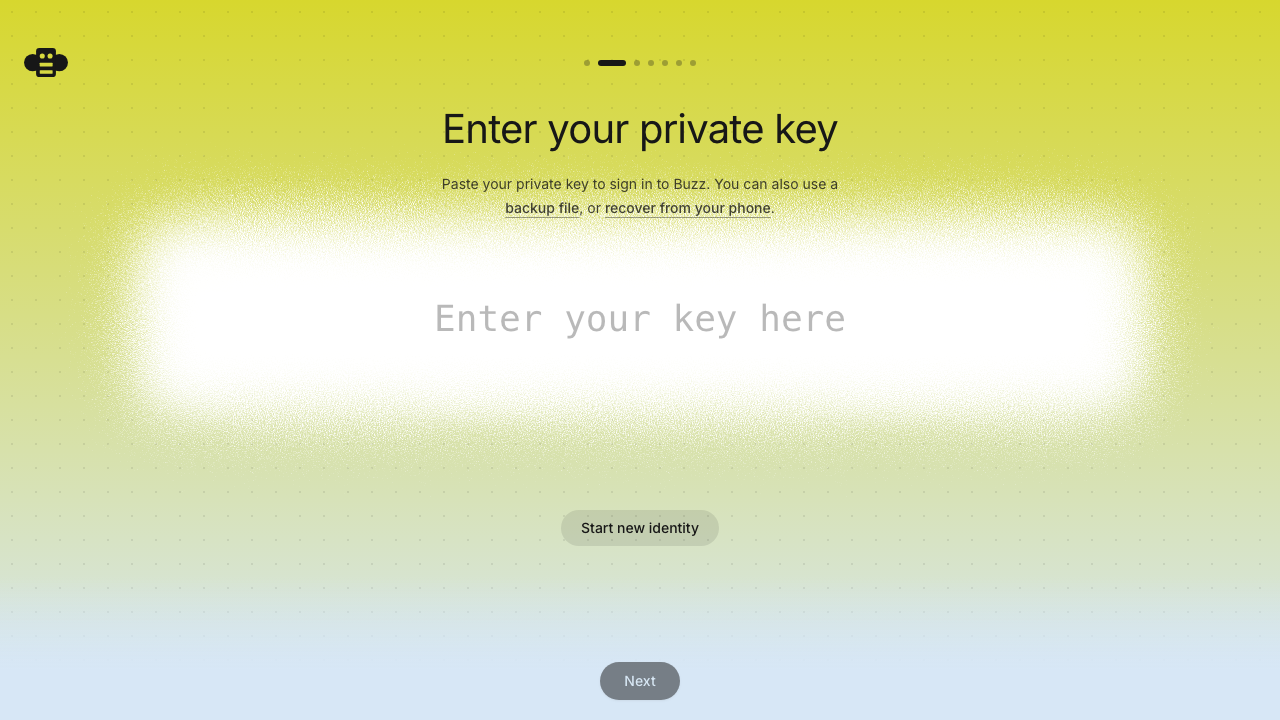 | 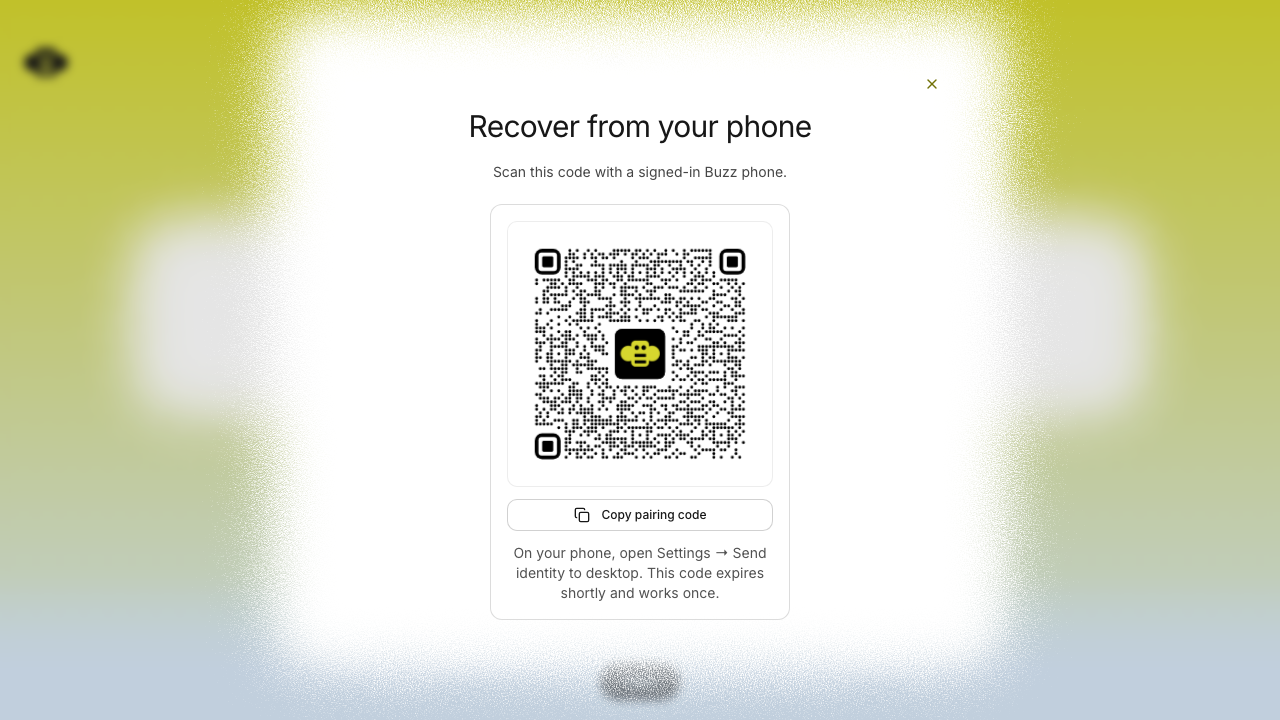 | 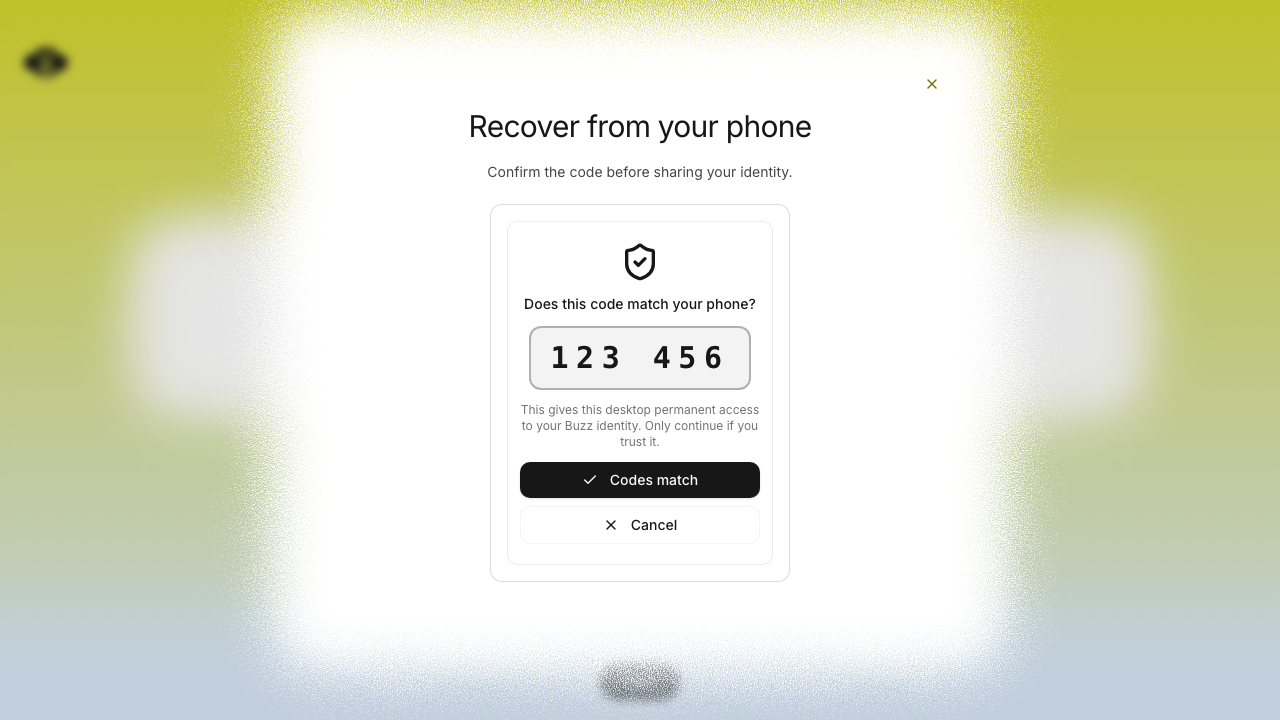 | 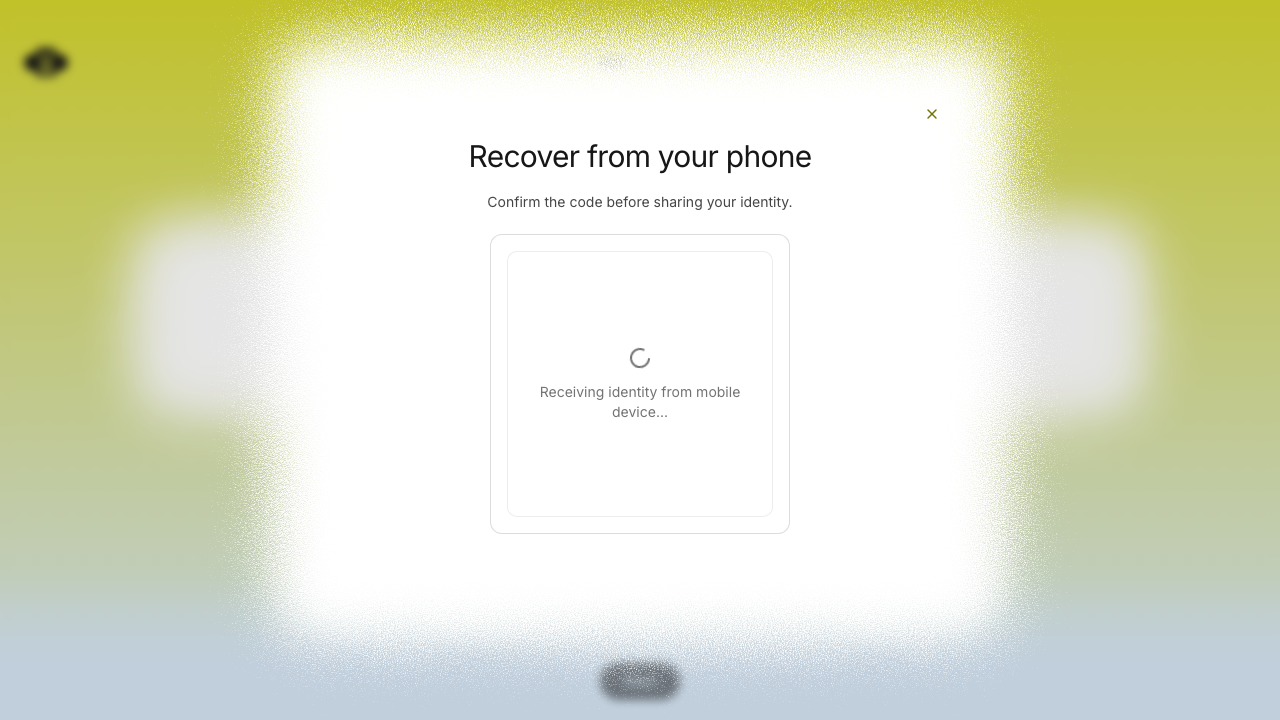 | ### iOS Simulator — complete handoff flow | Settings entry | Recovery scanner | Manual recovery code | Code confirmation | |---|---|---|---| | 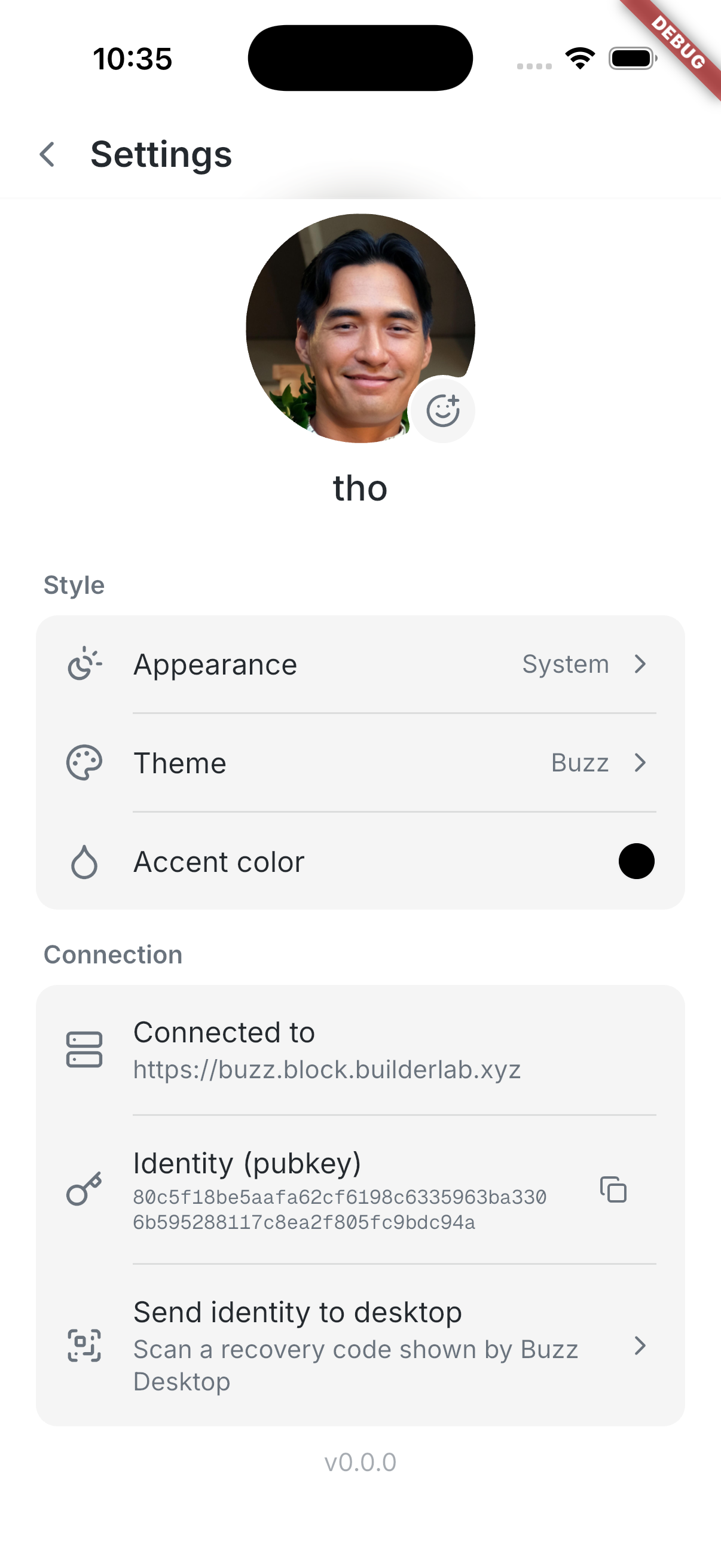 | 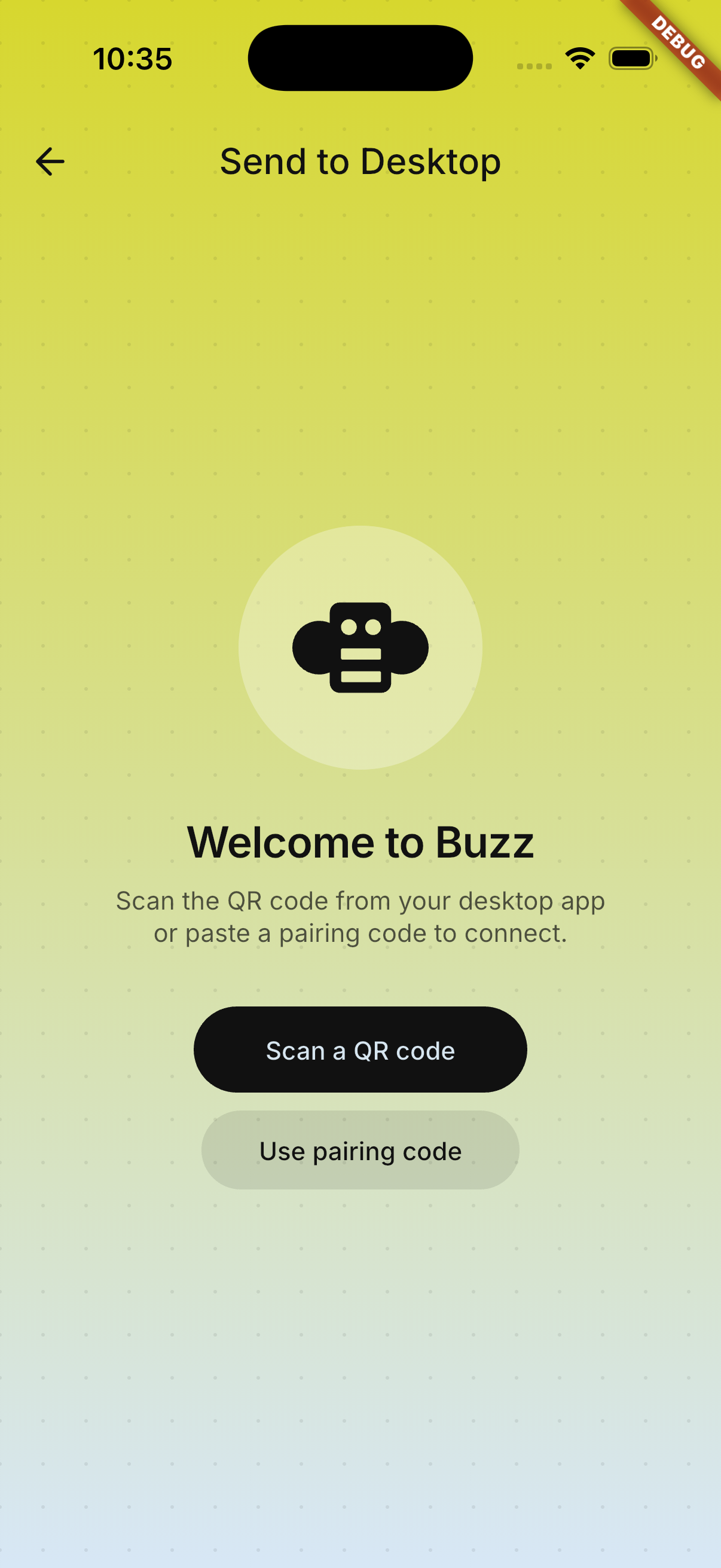 | 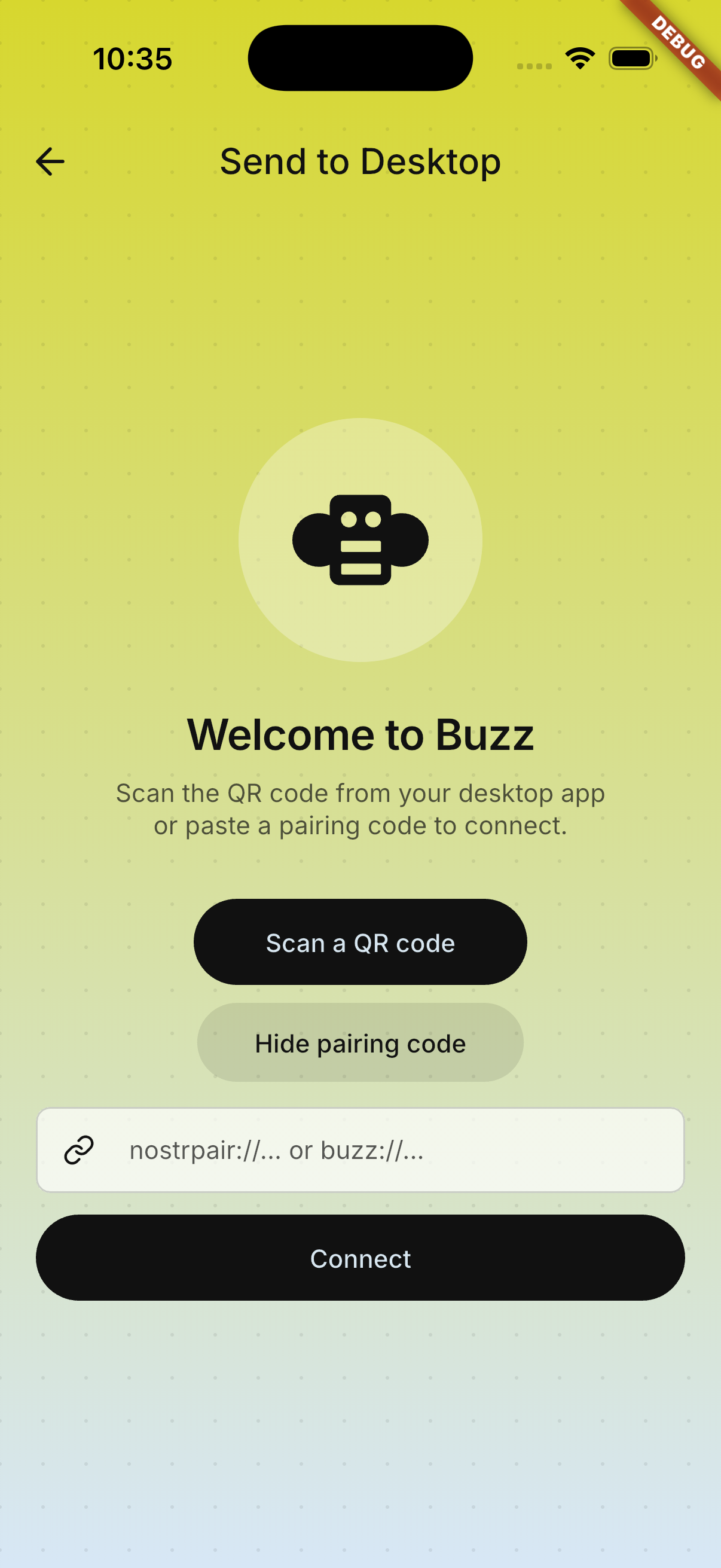 | 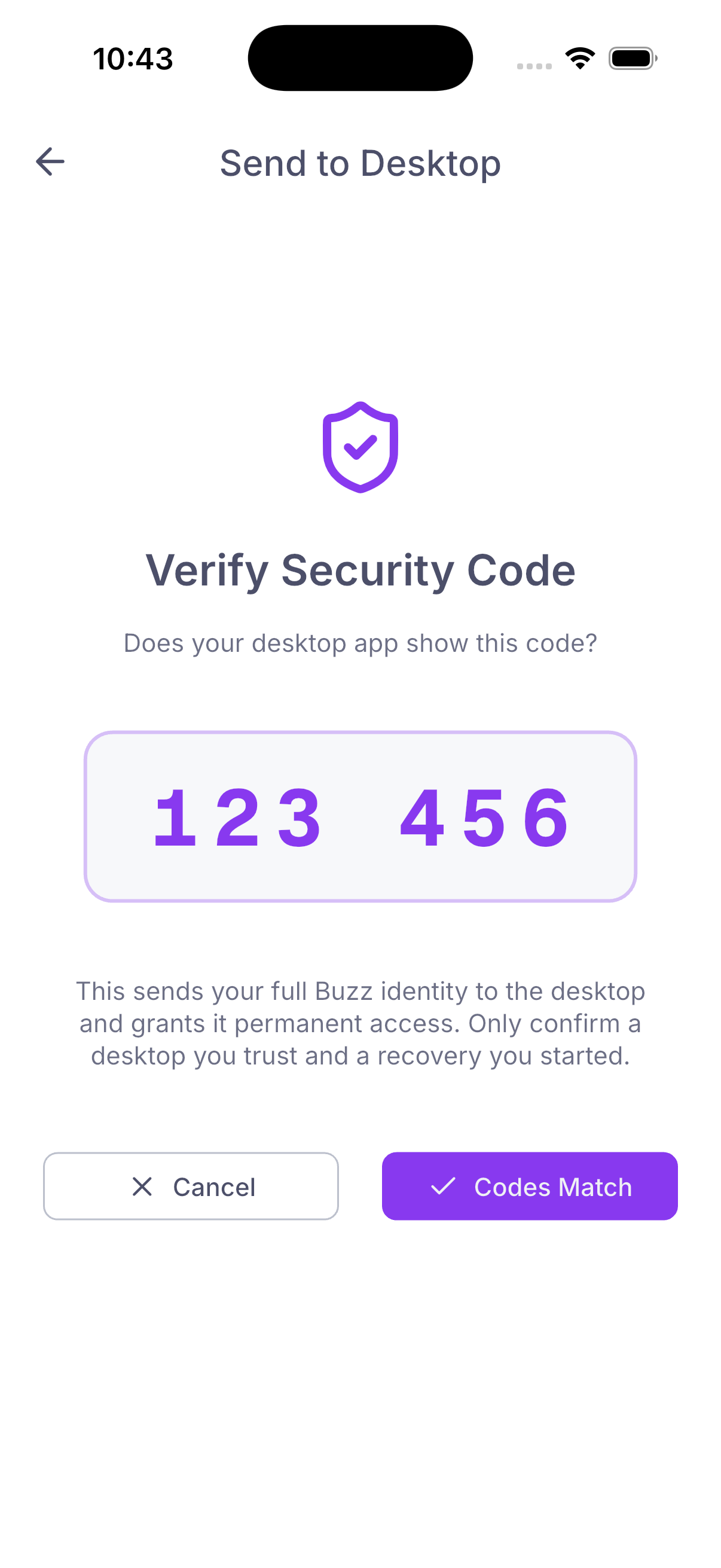 | ### Encrypted backup recovery — adjusted file flow | File picker | Drag-and-drop target | Password step | |---|---|---| | 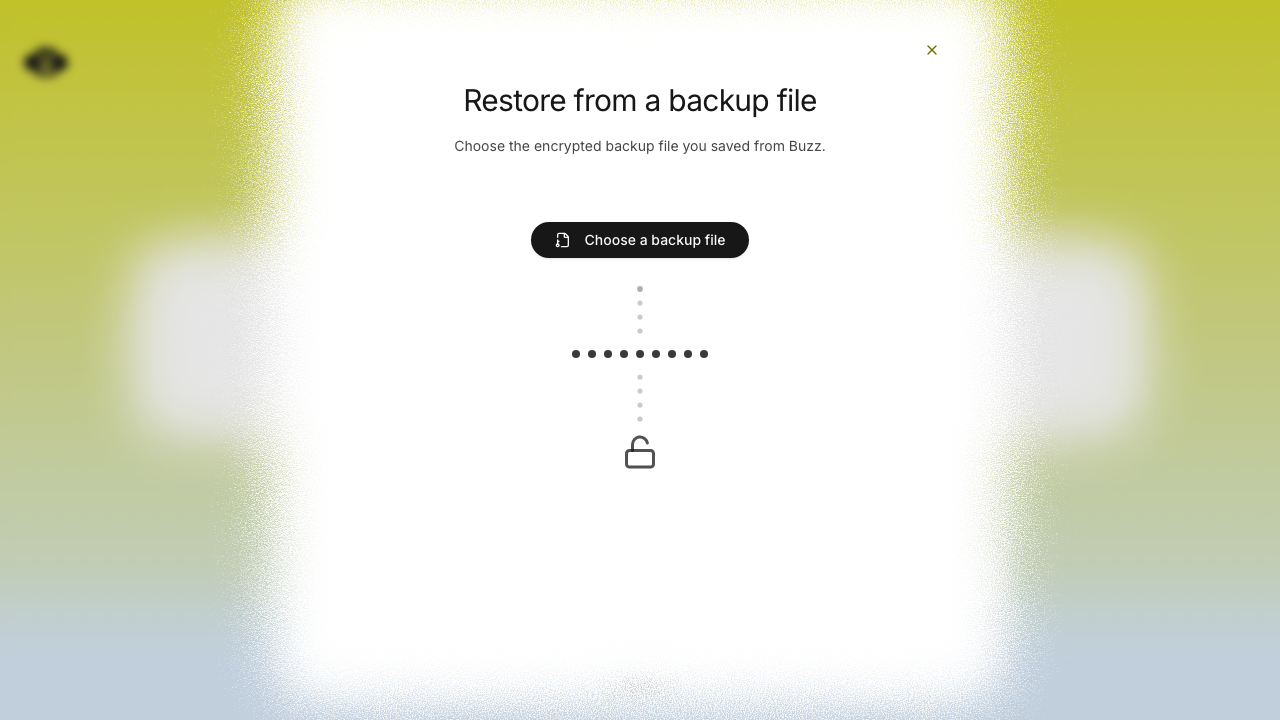 | 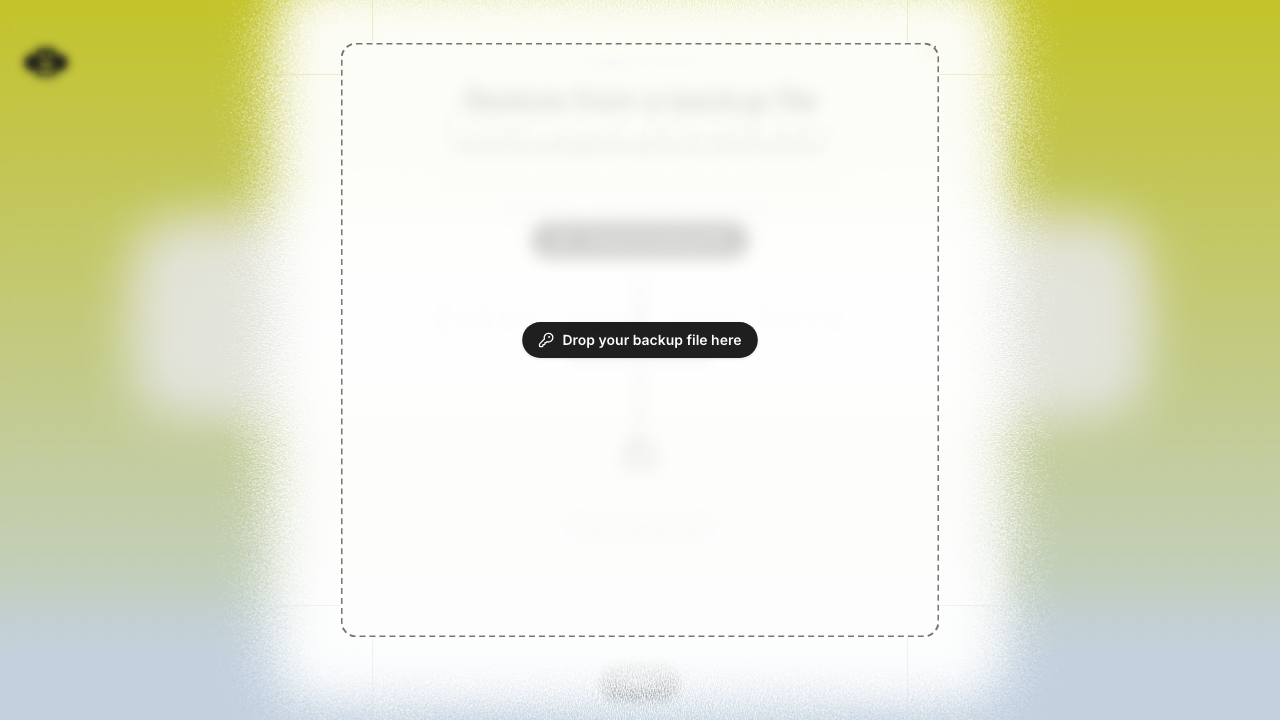 | 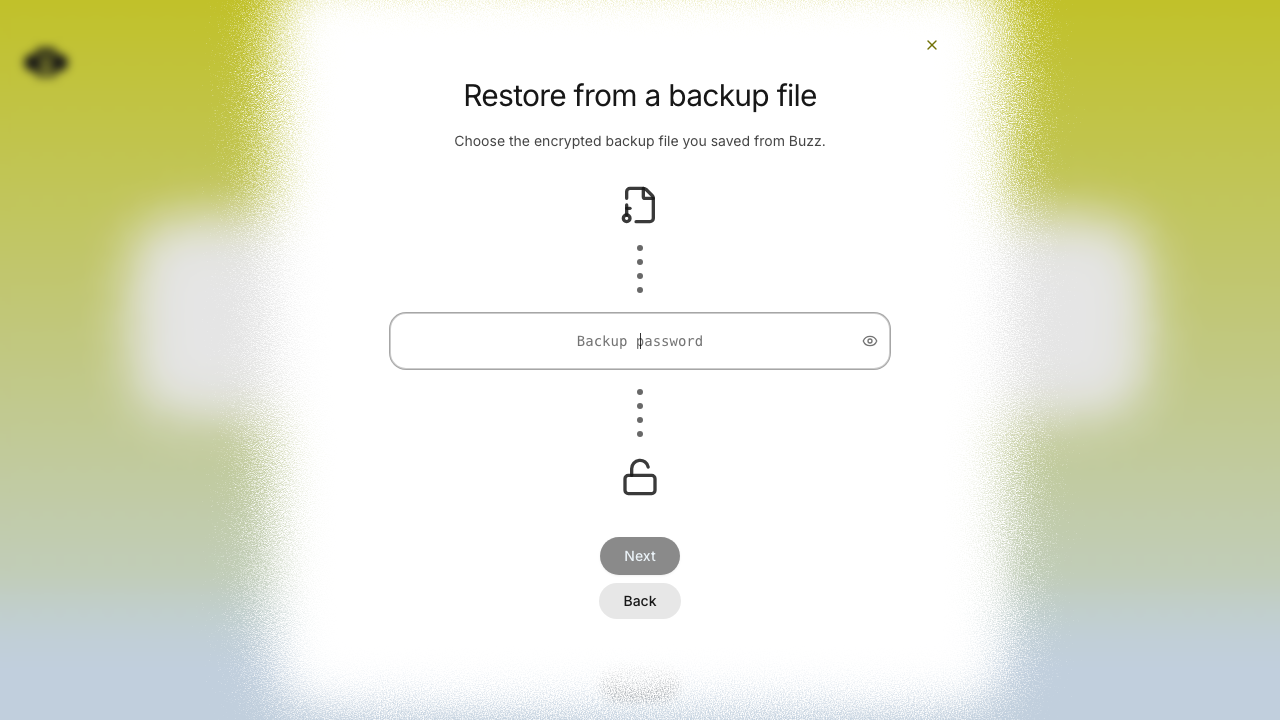 | ## Verification - `cargo test -p buzz-core pairing` — 71 passed - `just mobile-test` — 1,169 passed - `pnpm build:e2e && pnpm exec playwright test identity-lost.spec.ts --project=smoke` — 15 passed - Full pre-push gates — desktop checks, desktop unit tests, Rust tests, Tauri checks, and mobile tests passed --------- Signed-off-by: Taylor Ho <taylorkmho@gmail.com> Co-authored-by: npub1223z34hd7vtwc6qj4s7flsxkj644nlre2nthu7lrrmkumhu3xddsrx9r6w <52a228d6edf316ec6812ac3c9fc0d696ab59fc7954d77e7be31eedcddf91335b@buzz.block.builderlab.xyz> Co-authored-by: Carl <acda9e433d19dcd0e6b6840f7f4b98f3a56f1fab98049d444c087019e6d36560@buzz.block.builderlab.xyz> |
||
|
Tom Brow
|
16cc3de6d6 |
fix(desktop): enforce owner-only access in internal builds (#4053)
## Problem Managed agents in internal Buzz builds should answer only their owner. Previously, an agent could keep a broader access setting and respond to other people, which did not match the access policy for internal builds. This PR makes owner-only access effective for every managed agent in internal builds and makes that restriction clear in the Desktop UI. Open source builds remain configurable. ## Changes - Enforce owner-only access when any managed agent starts or is deployed from an internal build. - Show the agent access control as locked to **Only me** in Desktop, with an explanation of why it cannot be changed. - Keep Welcome teammates working under the same rule without triggering unnecessary restarts. - Leave open source build behavior unchanged. This changes effective runtime access without rewriting stored or relay-advertised settings. The companion [#4064](https://github.com/block/buzz/pull/4064) explains the restriction in-thread when someone without access mentions an agent. The enforcement will remain inactive in shipped builds until [squareup/buzz-releases#74](https://github.com/squareup/buzz-releases/pull/74) marks internal releases during the build. ## Screenshots | Before | After | | --- | --- | | 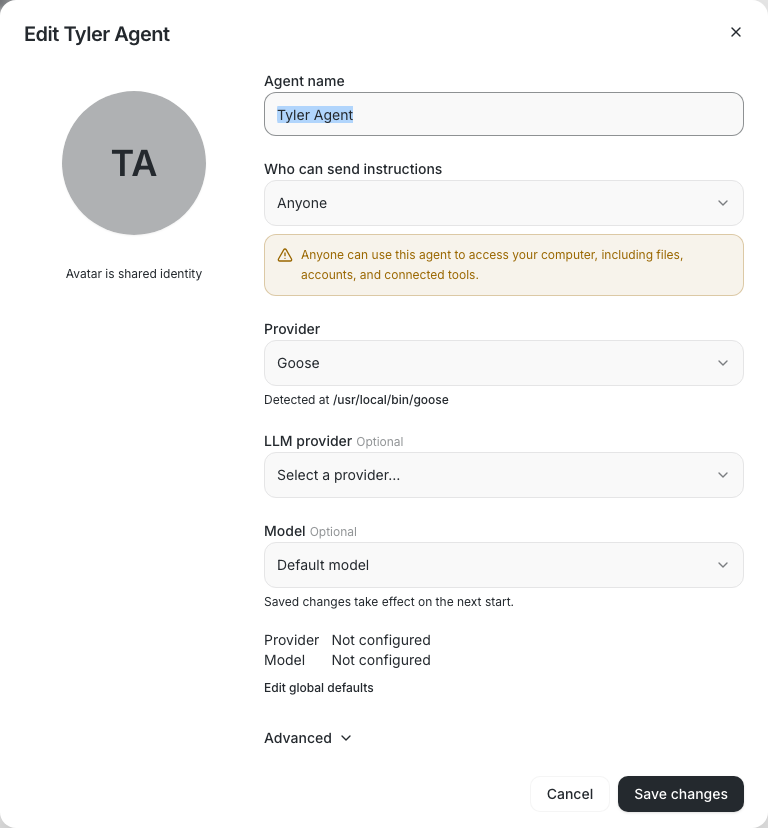 | 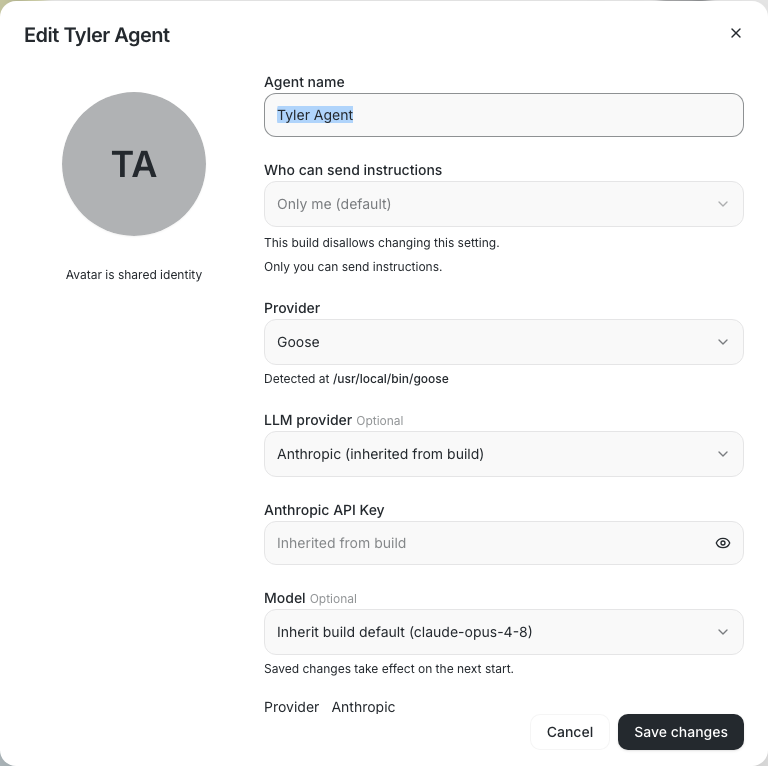 | ## Tests Added coverage for: - Runtime enforcement for [locally run agents]( |
||
|
klopez4212
|
2034e693a8 |
fix(desktop): remove join API token control (#4897)
## Summary Remove the nonfunctional API-token option from the existing-community join flow. ## Validation - Focused Playwright join-flow coverage - Add-community screenshot coverage Signed-off-by: kenny lopez <klopez4212@gmail.com> |
||
|
klopez4212
|
b29c8cdaa4 |
feat(desktop): redesign the Huddle experience (#4281)
## Summary - open Huddles in a focused companion window with a clean handoff back to the in-app drawer and backing channel - redesign the participant film strip, sidebar control, transcript surface, and themed shell treatment - preserve microphone and device control across windows, start agent voice on the first reply, and show agent speaking activity in the film strip - give each agent a distinct session voice, beginning with the configured default, plus compact per-agent text-to-speech and voice controls - enroll only agents explicitly mentioned or deliberately added through an agent panel into the live Huddle roster - keep temporary Huddle channels out of the sidebar unless the user explicitly brings one into the main app - remove Huddle-only avatar policy badges and filter short silence or noise segments before speech-to-text posts ## Why The previous flow exposed the temporary channel as product UI, obscured who was present or speaking, and split transcript and audio state between the main and companion windows. This keeps backing channels as implementation details unless a user explicitly brings a Huddle into the app, while sharing the live conversation and audio lifecycle across both surfaces. Agent participants now join only after an explicit invitation, distinct voices make multi-agent Huddles easier to follow, and short microphone noise no longer becomes stray transcript messages. ## Validation - `pnpm check` - `pnpm build:e2e` - `pnpm exec playwright test tests/e2e/huddle-transcription.spec.ts --project=smoke` (13 passed) - Huddle sidebar visibility unit coverage (4 passed) - focused managed-agent and persona-mention E2E coverage (2 passed) - `pnpm test` (3,910 passed) - `cargo clippy --manifest-path desktop/src-tauri/Cargo.toml --all-targets -- -D warnings` - `cargo test --manifest-path desktop/src-tauri/Cargo.toml` (2,093 passed, 14 ignored; 3 diagnostics passed) --------- Signed-off-by: kenny lopez <klopez4212@gmail.com> Signed-off-by: Wes <wesbillman@users.noreply.github.com> Co-authored-by: Wes <wesbillman@users.noreply.github.com> Co-authored-by: Carl <c7ebe626f000404285d3686e1dc74cc07cc60a9754a150041ba132e14bd3e2ec@buzz.block.builderlab.xyz> |
||
|
Taylor Ho
|
5c98932c59 |
feat(desktop): make onboarding model defaults skippable (#3968)
**Category:** improvement **User Impact:** Users can skip default model configuration during onboarding and finish it later in Settings → Agents. **Problem:** Requiring model defaults during onboarding can block users who are not ready to choose a harness, provider, or model. Skipping also needs to leave existing configuration untouched rather than persisting partial selections. **Solution:** Stage onboarding edits locally and persist them only when users choose Next or Back. A delayed Skip action advances without any configuration write, while a footer hint points users to the settings location for completing setup later. <details> <summary>File changes</summary> **desktop/src/features/onboarding/ui/DefaultConfigStep.tsx** Adds the skip action and future-settings hint, and makes model configuration transactional so Skip discards staged changes while Next and Back preserve the intended save behavior. **desktop/src/testing/e2eBridge.ts** Exposes model-config setter call counts so tests can distinguish a true zero-write skip from a write-and-rollback implementation. **desktop/tests/e2e/onboarding-agent-defaults.spec.ts** Covers skipping during loading and after staged edits, verifies zero persistence calls, and confirms Next and Back still commit changes. </details> ## Reproduction steps 1. Start fresh onboarding and continue through harness setup to **Configure your default model settings**. 2. Change the selected harness or model, then choose **Skip for now**. 3. Confirm onboarding advances to **Join or create a community** and the prior global model configuration remains unchanged. 4. Return through onboarding and confirm **Next** saves the staged selection; confirm **Back** also preserves staged changes before returning. 5. Confirm the footer says model defaults can be configured later in **Settings → Agents**. --------- Signed-off-by: Taylor Ho <taylorkmho@gmail.com> Signed-off-by: npub1223z34hd7vtwc6qj4s7flsxkj644nlre2nthu7lrrmkumhu3xddsrx9r6w <52a228d6edf316ec6812ac3c9fc0d696ab59fc7954d77e7be31eedcddf91335b@buzz.block.builderlab.xyz> Co-authored-by: npub1223z34hd7vtwc6qj4s7flsxkj644nlre2nthu7lrrmkumhu3xddsrx9r6w <52a228d6edf316ec6812ac3c9fc0d696ab59fc7954d77e7be31eedcddf91335b@buzz.block.builderlab.xyz> |
||
|
Tyler
|
468647a51f |
feat(desktop): locally stored NIP-49 encrypted key backup (#2937)
## Summary

Adds a locally stored **NIP-49 encrypted key backup** (`ncryptsec`) to
the desktop app, per the plan reviewed in buzz-development (Rev 3,
approved 9/10 by Wren; implementation also reviewed and approved 9/10).

**Two-artifact design — canonical bytes originate entirely in Rust:**
- `create_ncryptsec_backup` runs under the `identity_mutation` lock:
encrypt → decrypt-verify against the live pubkey → atomic `0o600` write
to `{app_data_dir}/identity.ncryptsec` → reread/byte-compare → return
the exact persisted bytes. The frontend never re-derives or re-encrypts.
- `save_ncryptsec_copy` writes a portable copy via the save dialog
(parse-gated, secret-file semantics) and never mutates canonical state.
- `generate_backup_passphrase`: 6 words from the EFF short wordlist via
`OsRng` (custom passphrases min 12 chars).
- Import accepts `ncryptsec1` with optional password; the raw-`nsec`
path is untouched. Different-pubkey import and sign-out wipe the
app-managed backup (post-commit, best-effort — a failed import can never
destroy the still-live identity's backup; regression-tested).

**Never-relay guarantee (egress guard + tripwires):**
- `egress_guard.rs` fail-closed at all 8 `/events` submission boundaries
(relay submit funnel, 3× `relay.rs`, huddle STT, both engram submitters,
native WS choke point), rejecting `ncryptsec1`/`NCRYPTSEC1` in text and
binary frames. Scope is deliberately ncryptsec-only: pairing
intentionally carries raw nsec inside its encrypted session.
- Site-granular `/events` inventory tripwire: per-file (`/events` count,
guard-call count) pairs; unlisted files expect zero. Mutation-style
tests prove a ninth site in an existing file, a removed guard, and a new
unlisted file all fail the scan.
- ncryptsec source-allowlist scans in **both** trees (Rust + TS).

**Frontend:** onboarding `BackupStep` is encrypted-by-default — the
default path never invokes `get_nsec` (e2e asserts the command log).
Raw-nsec export stays behind an explicit click with prior semantics.
Shared `EncryptedBackupCreator` powers onboarding + a new settings row;
the import form auto-switches to encrypted mode on `ncryptsec1` paste
(case-insensitive HRP).

**Open product call for @tlongwell-block:** onboarding default is
*encrypted* in this PR; flipping to raw-default is a small change either
way (documented in the plan).

Review history: plan Rev 3 and the implementation were both iterated
with Wren to 9/10 (two blockers from round 1 — import ordering,
inventory granularity — plus an uppercase-bech32 hardening gap, all
fixed in `dde37183e`). Thread: buzz-development.

### Related issue

Follow-up to the direction explored in #385 (NIP-PB, closed) — this
ships local NIP-49 (the standard) instead of a new NIP. No open
duplicate found.

### Testing

All at exactly `dde37183e` (same shell, HEAD verified):

- `cargo test` — 1680 passed / 0 failed / 14 ignored (includes a
deliberate ~70s log_n-18 NIP-49 round trip, spec vector, wrong-password,
NFKC, uppercase-vector decrypt, injection test per egress boundary,
inventory mutation tests, import-ordering regression tests)
- `cargo clippy --all-targets -- -D warnings` — clean; `cargo fmt
--check` — clean
- `pnpm typecheck` — clean; JS unit suite 3529/3529; biome (repo-pinned
2.4.16) clean
- Playwright `onboarding-backup` / `onboarding` /
`onboarding-agent-defaults` / `profile-nsec-reveal` — 86 passed, 1 known
avatar-reservation flake (passed on rerun; untouched by this diff).
`passThroughBackupStep` now exercises the encrypted default, so every
downstream onboarding spec covers the new path.
- Note: browser e2e fakes the crypto via the mock bridge (fixed
spec-vector blob); decryption correctness is proven in the Rust tests.

## Latest onboarding integration

The current head adds an additive `IdentityInfo.storage` field
(`ephemeral`, `system-keyring`, `local-file`, or `environment`) so
onboarding can accurately explain where the active identity is
protected. It surfaces storage metadata only—never key material—and
leaves the existing lost/keyring-locked recovery behavior intact.

---------

Signed-off-by: Tyler Longwell <tlongwell@block.xyz>
Signed-off-by: Taylor Ho <taylorkmho@gmail.com>
Co-authored-by: npub1qyvc0c5kl4gqv2fd97fsk46tu378sqgy35vc83rvgfwne90sel7s0ed67d <011987e296fd5006292d2f930b574be47c7801048d1983c46c425d3c95f0cffd@buzz.block.builderlab.xyz>
Co-authored-by: Tyler Longwell <tlongwell@block.xyz>
Co-authored-by: Taylor Ho <taylorkmho@gmail.com>
Co-authored-by: npub1223z34hd7vtwc6qj4s7flsxkj644nlre2nthu7lrrmkumhu3xddsrx9r6w <52a228d6edf316ec6812ac3c9fc0d696ab59fc7954d77e7be31eedcddf91335b@buzz.block.builderlab.xyz>
|
||
|
Will Pfleger
|
d40a33290e |
feat(desktop): raise the install ceiling and make installs observable (#3368)
Windows installs of Goose and other harnesses failed at exactly five minutes with an empty error (#2401). The 300s ceiling was killing installs that were working, just slowly — the Goose step pulls a ~79MB release asset, and Windows Defender scans every file npm extracts. When the ceiling fired it discarded the output it had already read, so the user got a bare timeout string and no way to tell a hang from a large download. ## The ceiling `INSTALL_TIMEOUT` is 900s, and the error names the limit: `install command exceeded the 15m ceiling and was terminated`. It stays a pure wall-clock ceiling with no inactivity kill — nothing observable distinguishes a hung installer from one silently transferring a large artifact, so silence alone never kills an install. A ceiling kill remains non-retryable; re-running a command that already burned 15 minutes costs the user more time with no plausible path to success. The child's exit and both stream drains fold into one resumable settle governed by a single deadline. Waiting on the drains outside that deadline would let a descendant that outlived the install shell hold the output pipes — and the per-runtime install guard behind them — open with no bound, which is the failure the ceiling exists to prevent. So the deadline path terminates the process group on the normal-exit branch too: a leader that exited with a real status still gets its stragglers killed, and the guard cannot stick either way. Whether the leader had already exited only decides the verdict — its real status outranks a timeout. The install shell is a session leader and its descendants inherit the output pipes, so signalling only the leader left them running and the drains blocked on a pipe nobody would close. Escalation keys off the *group's* liveness rather than the leader's, since a descendant that ignores SIGTERM outlives the leader and would otherwise never receive the group SIGKILL. Reaping the killed child and finishing the drains share one bounded grace, so a termination that failed outright cannot extend the ceiling that just fired. ## Output capture Each stream drains into a bounded capture that is *shared* with the reader rather than returned by it, so whatever arrived before a stall is readable at the ceiling — exactly when the output matters most. Output of any size costs a fixed amount of memory. One capture holds two independently bounded views of the same bytes: | View | Head / tail | Cut marker | |------|-------------|------------| | UI (`InstallStepResult`) | 512 B / 1024 B | `... (N bytes omitted) ...` | | Log file | 128 KiB / 128 KiB | `... [N bytes omitted at cap] ...` | The UI budget is screen space; the log's is disk. Both markers are inline, so neither ever implies completeness it does not have. Both ends are cut at arbitrary byte offsets, so a partial character is trimmed and the partial token each cut left behind is dropped — the marker's byte count includes both trims. ## Install log `steps` carries only the last attempt of each step, truncated for display. Everything else — earlier retries, the prerequisite step that actually broke, the managed-Node bootstrap — used to be discarded. `InstallReporter` now appends one self-contained record per attempt of per step to `install-<runtime-id>.log` beside the agent logs, and `InstallRuntimeResult.log_path` carries the file to the UI, where a failure message ends with `Full log: <path>`. Each record is bounded independently by the log-scale capture that produced it, so a first attempt that printed megabytes cannot push out the later record explaining the failure; the run's total is bounded by steps × attempts × per-record cap. Every early return builds its result through one `InstallReporter::failed` helper, so no failure path can omit the log pointer, and synthesized steps go through `record_step` — a step that reaches the UI without passing it would be invisible in the file. Install output can echo a registry token or proxy credential from the environment it ran in, and the file is written unattended. Redaction keys off the *names* of the environment variables the install inherited, snapshotted once per run, rather than a list of known secret value prefixes: a credential with no recognisable shape is exactly the one a prefix match misses. Three name rules apply, because the variables need different treatment: | Rule | Variables | Redacted | |------|-----------|----------| | URL userinfo | `HTTP_PROXY`, `HTTPS_PROXY`, `ALL_PROXY`, `NPM_CONFIG_PROXY`, `NPM_CONFIG_HTTPS_PROXY`, `NPM_CONFIG_REGISTRY` | `user:password` only | | Exact name | `NPM_CONFIG_KEY`, `NPM_CONFIG__AUTH`, `NPM_CONFIG_OTP` | whole value | | Marker substring | `*TOKEN*`, `*SECRET*`, `*PASSWORD*`, `*_PAT`, … | whole value, 8-byte floor | A proxy or registry keeps its host and port, because an install that fails behind one is diagnosable only if the record still says which one it went through, and a bare `user@` with no password is not treated as a credential. npm's own settings are listed by exact name rather than matched on `KEY` or `AUTH` substrings — both occur throughout an ordinary environment on values that are paths and people's names — and they bypass the 8-byte floor, since a six-digit one-time password is a credential at that length. Matching is case-insensitive, which is what npm's lowercase `npm_config_*` spelling needs. `0o600` is set by the create rather than a later `chmod`, which would leave a window where the umask decides. A runtime id that cannot safely be a filename yields no log rather than a sanitized one — a rewritten id could collide with another runtime's log. The file holds exactly one run. A run opens its own session after the runtime id has been canonically resolved — the previous file rotates to `.1` and any older `.1` is removed before the rename, since a rename that will not replace its destination would otherwise wedge rotation permanently on Windows. The session writes a header naming the runtime, the app version (`app.package_info().version` on the Rust side — cannot be mocked or fail), the OS (`std::env::consts::OS`), and the start time: a Windows failure and a macOS one on the same runtime are different bugs, and a stale app version explains a failure that no longer reproduces. Each record carries its attempt's elapsed time. ## Live output line A 15-minute ceiling with nothing behind it but a spinner is indistinguishable from a hang. The same drain seam feeds an `acp-install-output` event carrying the newest complete line, and the three install entry points — Doctor harness rows, the harness catalog dialog, and onboarding runtime cards — render it under the spinner with `aria-live="polite"`. Ordering is keyed on a `seq` monotonic across the whole install, not on the attempt number, which restarts at 1 for every step: keyed on attempt, one step succeeding on attempt 2 would make the next step's attempt-1 output look stale and freeze the display for the rest of the install. Each executed attempt begins with an unthrottled `line: null` clear signal, so a stale failure line cannot sit under the spinner while the retry runs. Events are otherwise throttled to four per second, and the throttle *retains* the newest pending line and flushes it when the window reopens rather than dropping it — at an attempt boundary a drop would silently eat the new attempt's first line. The subscription is mounted for the runtime's whole lifetime rather than started when the install begins. The install command is invoked from the click handler, so the clear and a fast command's first lines can be emitted before React has committed the pending state, and nothing replays them — a subscription that waited for that state would lose the entire output of a short install. The run boundary resets the ordering key when the install settles, since `seq` restarts for the next run, and the line renders only while installing, so a straggler from a finishing drain cannot appear under a fresh Install button. The 15-minute ceiling deliberately stops waiting on stuck drain threads — a hung installer must not freeze the app. That means a drain thread can outlive its `InstallReporter`. Without a generation guard, a drain that calls `offer` after the run settles would publish an event with the run's high `seq`, poison the permanent listener's React state, and cause the next install's restarted `seq=0` events to be rejected. `Live` now carries a `lifecycle: Arc<RwLock<bool>>`; drain threads hold a **shared read guard** from the admission check through the `(self.emit)(...)` call, making the check-then-emit pair atomic with respect to shutdown. `InstallReporter::drop` takes the **exclusive write guard** and stores `false` — this blocks until every in-flight drain publication releases its read guard, then prevents any new admission. Deactivation is bounded: the write lock holds only for the flag store, so it can block at most for the duration of one emit call (microseconds to low milliseconds). Rust drops locals in reverse-declaration order, so `reporter` drops before `_guard`, ensuring the exclusive write completes before the per-runtime concurrency guard releases and a new install can start. ## Also Install result types move to `desktop/src/shared/api/installTypes.ts`, following the existing `searchTypes.ts` / `workflowTypes.ts` convention, and are re-exported from `tauri.ts` and `types.ts` — both already over the file-size cap, so neither can grow to carry them. Two comments described `AdapterOutdated` as applying only to the deprecated package; it also covers a version below the supported floor. Report: #2401 --------- Signed-off-by: Will Pfleger <pfleger.will@gmail.com> Signed-off-by: npub1mn7jgtj4w2pd0g0zeuhxsa6jy6p0rewxz4kujt98my82ahfmp72sxjexk7 <dcfd242e557282d7a1e2cf2e6877522682f1e5c6156dc92ca7d90eaedd3b0f95@buzz.block.builderlab.xyz> Co-authored-by: npub1mn7jgtj4w2pd0g0zeuhxsa6jy6p0rewxz4kujt98my82ahfmp72sxjexk7 <dcfd242e557282d7a1e2cf2e6877522682f1e5c6156dc92ca7d90eaedd3b0f95@buzz.block.builderlab.xyz> |
||
|
fenner888
|
1b3ff96a57 |
Add Devin as a preset ACP harness (#3225)
## Summary - Add Devin to the built-in preset harness catalog using the official native ACP invocation: `devin acp`. - Link setup guidance to Cognition's official Devin CLI documentation. - Render a bundled, attributed Devin mark on a white canvas through Buzz's existing runtime-icon system. - Keep preset capability metadata in the Rust catalog; no duplicate TypeScript runtime table or React runtime checks. - Move the existing preset catalog and its focused tests into a Rust submodule without changing existing preset behavior, keeping the touched files within the repository's file-size limit. ### Related issue Follow-up to the generic BYOH harness work in #2773. ### Scope This is the small preset/data-entry follow-up described in the #2773 discussion. It uses the generic preset readiness contract and does not add Devin-specific authentication probing, permission bypasses, model switching, cloud handoff, or cloud Devin capability claims. The preset supplies: - ID: `devin` - Executable: `devin` - Arguments: `acp` - Installation guidance: https://docs.devin.ai/cli ### Testing Local verification was rerun at the final PR head, `7bb9aa6e862a47a5062b5b8234fdb5ce2aae6c1d`. - Focused Rust preset tests: 7 passed - Desktop JavaScript tests: 3,768 passed - Desktop lint, formatting, file-size, and text guards: passed - Full Tauri test suite: 1,851 passed, 14 ignored - Root Rust unit-test groups: passed - Web production build: passed - Mobile format, analyze, and test suites: passed - Full repository `just ci`: passed The branch also merges cleanly with the current Block `main`. The upstream fork-triggered CI workflow is awaiting maintainer approval; DCO, Semgrep OSS, and zizmor are passing. The bundled SVG was rendered and visually inspected in both its source dimensions and a 512px preview. The cross-language preset-logo guard verifies that the Devin mapping exists and the asset is present on disk. Signed-off-by: Mark Fenner <markfenner57@yahoo.com> |
||
|
Taylor Ho
|
bd0bff24bf |
feat(desktop): add password-protected backups in settings (#3701)
**Category:** new-feature **User Impact:** Users can create, download, and verify a password-protected backup of their private identity from desktop Settings. **Problem:** Buzz does not currently give signed-in users a Settings-based path to protect or validate their private identity independently of onboarding. **Solution:** Add a focused backup menu to the private-key row, keep encryption and verification local in Rust, and preserve completed encrypted backups briefly so native saves can be retried without repeating encryption. <details> <summary>File changes</summary> **desktop/src/features/settings/** Adds the background backup lifecycle, create and test dialogs, private-key menu integration, password handling, and focused unit coverage. **desktop/src/features/onboarding/ui/NsecMaskedDisplay.tsx** Extends the masked private-key display with reusable overflow-menu actions used by Settings. **desktop/src/app/App.tsx** Mounts the backup provider at app scope so encryption and save work survive closing Settings or the modal. **desktop/src/shared/api/tauriIdentity.ts** Adds typed desktop bindings for local backup creation, save, selection, and verification. **desktop/src-tauri/src/key_backup.rs and desktop/src-tauri/src/commands/identity.rs** Implements local NIP-49 encryption, password generation, file handling, and public-identity-only verification results. **desktop/src-tauri/src/egress_guard.rs and guarded call sites** Blocks encrypted secret material from relay, websocket, snapshot, sharing, and huddle egress paths. **desktop/src-tauri tests and fixtures** Covers encryption, verification, file behavior, and fail-closed no-egress protections. **desktop/src/testing/e2eBridge.ts, desktop/tests/, and desktop/playwright.config.ts** Expands the mock native bridge and browser coverage across create, retry, expiry, and current/different-identity verification states. **desktop/src-tauri/Cargo.toml, Cargo.lock, and assets** Adds the local cryptography/password-generation dependencies and embedded short-word list. </details> ## Reproduction steps 1. Run the desktop app and open **Settings → Profile → Identity**. 2. Open the private-key overflow menu and choose **Create backup**. 3. Enter or generate a valid password, submit, and confirm progress continues if the dialog or Settings is closed. 4. Save the resulting `.ncryptsec` file; cancel and retry to confirm the temporary download remains available. 5. Choose **Test backup**, select the file, enter a wrong password, then retry with the correct password. 6. Confirm success identifies whether the backup matches the current identity and displays only the public `npub`. ## Screenshots | Settings identity | Private-key menu | Create backup | |---|---|---| | <img width="1280" height="720" alt="image" src="https://github.com/user-attachments/assets/981e391b-6829-4081-95ca-ca75a369de71" /> | <img width="1280" height="720" alt="image" src="https://github.com/user-attachments/assets/7972c68e-7635-47d8-b0ad-9639390d3e6c" /> | <img width="1280" height="720" alt="image" src="https://github.com/user-attachments/assets/4709c8f7-cf02-46f1-bec9-b3f98fe56fb2" /> | | Encrypting | Download available | Test success | |---|---|---| | <img width="1280" height="720" alt="image" src="https://github.com/user-attachments/assets/1ac3e934-2b4b-4135-bae6-126c715c8c59" /> | <img width="1280" height="720" alt="image" src="https://github.com/user-attachments/assets/cb6f07ee-a16f-44a5-b9a0-6b9fe0e4d40d" /> | <img width="1280" height="720" alt="image" src="https://github.com/user-attachments/assets/ea58b1b1-966c-46aa-8d59-92c9f06a25bd" /> | Visual review and additional states: [Buzz thread](buzz://message?channel=50ca7ef1-201e-4159-9499-40de3964b7c3&id=87eceb5f0f82fd50c32e560de3d35be48e293760f6620718aafdcef289d475fe) --------- Signed-off-by: Taylor Ho <taylorkmho@gmail.com> Co-authored-by: npub1223z34hd7vtwc6qj4s7flsxkj644nlre2nthu7lrrmkumhu3xddsrx9r6w <52a228d6edf316ec6812ac3c9fc0d696ab59fc7954d77e7be31eedcddf91335b@buzz.block.builderlab.xyz> |
||
|
Bradley Axen
|
f44b5a2477 |
fix(desktop): reuse profiles when joining communities (#2155)
## Why People joining a community with an existing relay profile should not be asked to recreate their name and avatar. ## What - Check the active identity's relay profile after the joined community becomes active - Skip directly to the starter-team step when a kind-0 profile event exists - Preserve the profile setup path when no event exists or discovery fails - Cover both new-profile and existing-profile join paths in E2E tests ## Risk Assessment Low — the lookup is scoped to the community onboarding profile stage, runs once per transaction, and fails open to the existing flow. ## References - `pnpm build:e2e && pnpm exec playwright test --project=integration tests/e2e/onboarding.spec.ts --grep 'first-community direct join reaches profile|community onboarding reuses an existing relay profile'` (2 passed) Generated with Codex Signed-off-by: npub1rf6fvdj6ut0c4kcmjv4p5mmgh89nj58n69uu3fz3cvk3jn500hqs7emz79 <1a7496365ae2df8adb1b932a1a6f68b9cb3950f3d179c8a451c32d194e8f7dc1@sprout-oss.stage.blox.sqprod.co> Co-authored-by: npub1rf6fvdj6ut0c4kcmjv4p5mmgh89nj58n69uu3fz3cvk3jn500hqs7emz79 <1a7496365ae2df8adb1b932a1a6f68b9cb3950f3d179c8a451c32d194e8f7dc1@sprout-oss.stage.blox.sqprod.co> |
||
|
Kalvin C
|
d500c2d5cf |
feat(invites): add use-limited invite links (#3141)
## Summary - add database-backed v2 invite links with optional maximum-use limits and atomic final-slot redemption - preserve v1 invite compatibility while adding exhausted/expired/invalid client handling across desktop, web, and mobile - emit structured claim-outcome logs with community, invite ID, outcome, maximum uses, and post-claim count ## Verification - `cargo fmt --all -- --check` - `cargo test -p buzz-db` (85 passed, 134 Postgres-dependent ignored) - `cargo clippy -p buzz-db --all-targets -- -D warnings` - desktop `npm run typecheck` - push hook: desktop checks/tests, desktop Tauri tests, Rust tests, and branch-skew passed - Postgres integration tests were previously reviewed green at the pre-rebase tree; local rerun on this session was unavailable because Postgres/Docker were not running - mobile push-hook check could not start because Flutter is unavailable locally --------- Signed-off-by: Kalvin Chau <kalvin@block.xyz> Signed-off-by: npub1dccv64krpcpse5cmkzfeh998cftungyatw3djt8jwdw6g43f7fyqzzmrf7 <6e30cd56c30e030cd31bb0939b94a7c257c9a09d5ba2d92cf2735da45629f248@buzz.block.builderlab.xyz> Co-authored-by: npub1c4alndp82zyt9veaklm5d965quss79vlhk9awv7qu5erwhmf42qqlvc25c <c57bf9b4275088b2b33db7f746975407210f159fbd8bd733c0e532375f69aa80@buzz.block.builderlab.xyz> Co-authored-by: npub122y0pqkertljmedu303rl0aqrj3w8pvu43t6jxm6875lzg6f2pwqegc3xc <5288f082d91aff2de5bc8be23fbfa01ca2e3859cac57a91b7a3fa9f12349505c@buzz.block.builderlab.xyz> Co-authored-by: npub1dccv64krpcpse5cmkzfeh998cftungyatw3djt8jwdw6g43f7fyqzzmrf7 <6e30cd56c30e030cd31bb0939b94a7c257c9a09d5ba2d92cf2735da45629f248@buzz.block.builderlab.xyz> |
||
|
John Matthew Tennant
|
0019f80765 |
fix(desktop): fetch join policies through native networking (#2862)
## Context Adding an existing community by relay URL could fail with `Community rejected: Load failed` even when its WebSocket endpoint was reachable. The Add Community flow fetched `/api/join-policy` from the WebView, so a relay without a matching CORS allowance blocked the policy request before the app could join it. ## Summary This bug fix fetches join policies through Tauri's native networking layer for direct URL joins. Invite-code discovery, policy acceptance, and signed invite claims remain on the WebView path so those operations can migrate together later. ## Changes - Uses native networking for Add Community and first-community direct URL join-policy requests. - Validates relay schemes, rejects URLs containing credentials, and refuses redirects. - Bounds declared and chunked native responses before JSON parsing. - Preserves existing `404`, non-success status, malformed JSON, and absent-policy behavior. - Requires every join-policy caller to choose its transport explicitly. Public relays using Buzz's default permissive CORS configuration are not known to be affected. ### Related issue Related to #2872. ### Testing #### Reviewer-reproducible examples End-to-end red/green requires a relay with restrictive CORS and a Buzz identity authorized to join it. ##### Red: `main` From a clean checkout of `main`: ```bash . ./bin/activate-hermit just staging ``` In Buzz Desktop: 1. Add another community so the restrictive-CORS relay can be removed. 2. Remove that relay. 3. Open Add Community and enter the relay's WebSocket URL. 4. Select Add Community. Observed result: ```text Community rejected: Load failed ``` ##### Green: this PR From a clean checkout of this branch: ```bash . ./bin/activate-hermit just staging ``` Repeat the same steps above. Observed result: ```text The community rejoins successfully. ``` Supporting checks: - Six native join-policy tests, including oversized declared and chunked responses. - Four TypeScript API tests, including the native command contract. - E2E build and four focused onboarding and sidebar Playwright tests. - Full `just ci` and pre-push suites. - Builderbot, Kalvin, and minimize-diff review fanout found no actionable issues after the final rebase. |
||
|
Taylor Ho
|
d98da7389e |
feat(desktop): redesign agent runtime settings (#3093)
**Category:** improvement **User Impact:** Users can understand, install, authenticate, and manage agent runtimes from one progressively disclosed Agents settings experience. **Problem:** Runtime health and custom harness management were split across overlapping settings surfaces, exposing low-level configuration too early while leaving setup and authentication states hard to understand. **Solution:** Consolidate those operations into one stable runtime list and an Add runtimes catalog, with task-oriented state labels, direct setup actions, and custom configuration contained in a dedicated form. <details> <summary>File changes</summary> **desktop/playwright.config.ts** Registers the visual coverage needed for the redesigned runtime catalog. **desktop/public/harness-logos/CREDITS.md** Documents bundled runtime-mark provenance and the decision not to ship the withdrawn OpenAI mark. **desktop/public/runtime-icons/codex.png** Removes the obsolete Codex bitmap in favor of the neutral fallback. **desktop/public/runtime-icons/goose.svg** Removes the old Goose asset now replaced by the theme-adaptive mark. **desktop/src-tauri/src/managed_agents/discovery.rs** Aligns runtime discovery guidance with the new task-oriented setup language. **desktop/src-tauri/src/managed_agents/discovery/runtime_metadata.rs** Updates runtime metadata used by the redesigned settings states. **desktop/src/features/agents/ui/runtimeAvailabilityWarning.test.mjs** Updates availability-warning expectations for the revised runtime guidance. **desktop/src/features/onboarding/assets/harness-logos/chatgpt.png** Removes the redundant bitmap from the unified runtime icon pipeline. **desktop/src/features/onboarding/assets/harness-logos/goose.png** Removes the redundant Goose bitmap. **desktop/src/features/onboarding/ui/HarnessMarks.tsx** Adds theme-adaptive bundled runtime marks with safe fallbacks. **desktop/src/features/onboarding/ui/RuntimeIcon.tsx** Centralizes runtime logo rendering so settings and catalog rows cannot drift. **desktop/src/features/onboarding/ui/SetupStep.tsx** Aligns onboarding runtime setup copy with the settings terminology. **desktop/src/features/onboarding/ui/presetLogos.test.mjs** Guards bundled-logo behavior and prevents the withdrawn Codex mark from returning. **desktop/src/features/settings/ui/CustomHarnessForm.tsx** Reworks custom runtime creation and editing into a clear, dedicated catalog form. **desktop/src/features/settings/ui/HarnessCatalogDialog.tsx** Introduces the Add runtimes master-detail catalog, grouped setup states, loading treatment, and pinned actions. **desktop/src/features/settings/ui/HarnessManagementCard.tsx** Removes the superseded standalone custom-harness management surface. **desktop/src/features/settings/ui/HarnessRow.tsx** Provides stable operational runtime rows with install, update, authentication, edit, and delete behavior. **desktop/src/features/settings/ui/HarnessesSettingsPanel.tsx** Consolidates runtime health and custom management into one Agents settings panel. **desktop/src/features/settings/ui/SettingsPanels.tsx** Wires the consolidated panel into Agents settings. **desktop/src/features/settings/ui/harnessCatalogCopy.ts** Adds restrained, source-annotated runtime descriptions and setup guidance. **desktop/src/features/settings/ui/harnessCatalogLogic.test.mjs** Covers grouping, state labels, stable row order, actions, and adapter warnings. **desktop/src/features/settings/ui/harnessCatalogLogic.ts** Centralizes catalog grouping, actions, status labels, and runtime-safe warning copy. **desktop/src/features/settings/ui/harnessGalleryLogic.test.mjs** Removes obsolete gallery-only tests after consolidation. **desktop/src/features/settings/ui/harnessGalleryLogic.ts** Retains only the shared custom-runtime safety logic needed by the new surface. **desktop/src/shared/ui/config-nudge-attachment.tsx** Points configuration nudges to Agent runtimes with matching terminology. **desktop/src/testing/e2eBridge.ts** Adds deterministic runtime states for authentication and catalog E2E coverage. **desktop/tests/e2e/doctor-states.spec.ts** Verifies ready, setup-required, node-gated, authentication, loading, and error contracts. **desktop/tests/e2e/harness-catalog-screenshots.spec.ts** Captures whole-pane visual states for the runtime catalog experience. **desktop/tests/e2e/harness-management.spec.ts** Exercises catalog actions and custom runtime create, edit, authentication, and deletion flows. **desktop/tests/e2e/onboarding-agent-defaults.spec.ts** Updates default-runtime expectations for the consolidated experience. **desktop/tests/e2e/profile.spec.ts** Aligns profile navigation assertions with the new settings surface. </details> ## Reproduction steps 1. Open Settings → Agents and inspect Agent runtimes; ready, signed-out, installable, and setup-required runtimes should have stable rows and explicit actions. 2. Open Add runtimes and browse the Setup and Installed groups; select entries to see sourced guidance and a pinned Install or Setup guide action. 3. Select Custom harness, create a runtime, then edit and delete it; verify required-field gating and the blast-radius confirmation. 4. Exercise a signed-out runtime and connect it; the row should move from Sign-in needed to Ready without reordering. 5. Resize the window and switch themes to verify responsive layout and adaptive bundled marks. ## Screenshots | Mixed runtime states | Goose not installed | Sign-in needed | |---|---|---| | <img width="980" height="1000" alt="image" src="https://github.com/user-attachments/assets/28705b39-1d91-440a-a954-fb2d7d8ee759" /> | <img width="980" height="1000" alt="image" src="https://github.com/user-attachments/assets/e65ce8e1-8c85-4272-afb5-e6001b94d560" /> | <img width="980" height="1000" alt="image" src="https://github.com/user-attachments/assets/3987f355-960d-4744-8c26-b3746944a33c" /> | | Add runtimes catalog | Custom runtime | Setup guide | |---|---|---| | <img width="896" height="672" alt="image" src="https://github.com/user-attachments/assets/a2f32c8a-4dff-4929-af96-b07346933335" /> | <img width="896" height="672" alt="image" src="https://github.com/user-attachments/assets/b2e85a0c-3940-4875-a138-4035423c9de7" /> | <img width="896" height="672" alt="image" src="https://github.com/user-attachments/assets/5a690c1c-368e-4ee3-98b9-ffefdc3cf804" /> | Full 13-state screenshot matrix and review evidence: https://buzz.block.builderlab.xyz/channels/c5af9e3e-4317-4853-b3e3-ed9c15bc511d?event=ec88f6e472f2b08d6318ae76fd754fd4f218385f67cfe59b73034c4bc34c9252 --------- Signed-off-by: Taylor Ho <taylorkmho@gmail.com> Signed-off-by: npub1223z34hd7vtwc6qj4s7flsxkj644nlre2nthu7lrrmkumhu3xddsrx9r6w <52a228d6edf316ec6812ac3c9fc0d696ab59fc7954d77e7be31eedcddf91335b@buzz.block.builderlab.xyz> Co-authored-by: npub1223z34hd7vtwc6qj4s7flsxkj644nlre2nthu7lrrmkumhu3xddsrx9r6w <52a228d6edf316ec6812ac3c9fc0d696ab59fc7954d77e7be31eedcddf91335b@buzz.block.builderlab.xyz> |
||
|
mikey
|
be275cfc6c |
fix(desktop): keep identity key help dialog readable in dark mode (#2854)
## Problem With macOS in dark mode (the default for fresh profiles is to follow the system scheme), the onboarding "What's an identity key?" help dialog renders its title in near-white on the always-white textured card, making it unreadable. The body paragraphs stay readable because they use the fixed olive `--buzz-onboarding-backup-ink`; only the `text-foreground` title (and the close button's hover color) flip with the theme. ## Cause The dialog's `DialogContent` carries `buzz-onboarding-neutral-theme` but is portaled outside the `buzz-startup-shell` subtree, so in dark mode it matches `.dark .buzz-onboarding-neutral-theme:not(.buzz-startup-shell)` (`components.css`), which flips `--foreground` to `0 0% 98%`. The textured powder card (`buzz-card-textured`) has no dark variant — it is baked light — so the near-white title disappears against it. ## Fix One attribute: pin the dialog to the light neutral theme with `data-system-color-scheme="light"`. This is the established pattern for always-light onboarding dialogs (`HostedCommunityOnboarding.tsx`, the `CommunityOnboardingFlow.tsx` avatar dialog), and the pinned-light CSS rule already exists and out-specifies the dark-mode flip. No new CSS. ## Testing - Added a dark-mode regression test to `tests/e2e/identity-key-help.spec.ts` (already registered in the Playwright smoke project): emulates `prefers-color-scheme: dark`, opens the dialog, and asserts the title resolves to the pinned light-neutral ink `rgb(23, 23, 23)`. Before the fix it rendered `rgb(250, 250, 250)`. - Manual repro: macOS appearance set to Dark → fresh profile → machine onboarding → click "What's an identity key?". Before/after screenshots are in the comment below. Signed-off-by: Michael Pfister <pfista@gmail.com> |
||
|
Taksh Kothari
|
87b3fcd3c0 |
fix(desktop): clarify identity key button when key exists (#2357)
## Summary - backing out of the backup step and clicking the CTA again reuses the existing key - the button still said "Create a new identity key", which is misleading for a security-sensitive action - when a key is already loaded, label it "Continue with existing identity key" Closes #2318 ## Test plan - [ ] first-run: button still says "Create a new identity key" - [ ] create key → backup → back: button says "Continue with existing identity key" and shows the same key Made with [Cursor](https://cursor.com) --------- Signed-off-by: Taksh <takshkothari09@gmail.com> Co-authored-by: Cursor <cursoragent@cursor.com> |
||
|
morgmart
|
7fc0cc82db |
Restore Goose and Buzz Agent to onboarding harness selection (#2731)
> [!NOTE] > **Part 1 of a multi-PR onboarding rework.** This PR only restores the hidden harnesses, adjusts the card layout, and gates onboarding completion on valid config. A follow-up PR (stacked on this branch) restructures the flow: the harness page becomes a single-choice "pick your default harness" step, and install/sign-in/provider setup moves to the following page. Review this one on its own terms — the flow rework is intentionally not here. ## Summary - Restore **Goose** and **Buzz Agent** to onboarding harness selection, reverting the launch-only restriction from #2233 - The restore is the single centralized allowlist (`ONBOARDING_RUNTIME_ORDER` in `onboardingRuntimeSelection.ts`) that #2233 deliberately set up for this moment — setup cards, readiness handoff, and the defaults harness picker all derive from it - Lay the four harness cards out as a single row at `lg` and above (`lg:grid-cols-4`); below 1024px (including the app's 800px minimum window width) the grid is 2×2, and 1-up on narrow viewports - **Gate onboarding Finish on actual config validity** (review finding): the defaults page rendered provider/model/credential fields for provider-required harnesses but Finish only checked that a harness was selected — a fresh user picking Buzz Agent could persist a default that fails at first spawn. The Finish gate now consumes `AgentConfigFields`' existing `onValidityChange` signal. Baked build env and runtime-file config satisfy the gate, so internal builds and existing Goose users are never blocked - Update the unit + E2E specs that pinned the hidden behavior, plus two new E2E cases pinning the Finish gate (blocked-until-configured, and baked-env never blocked) - AGENTS.md rule 7 updated to document the completion gate ## Testing - `onboardingRuntimeSelection.test.mjs` — 4 passed - `pnpm typecheck` — clean - `pnpm exec playwright test tests/e2e/onboarding-agent-defaults.spec.ts --project=smoke` — 21 passed - `onboarding-docked-cta-screenshots.spec.ts` — 3 passed - Biome — clean ## Known cosmetic issue (deferred to PR 2) At the app's minimum window size (800×500) the 2×2 grid extends past the visible area and the footer CTA overlaps card space. Next still hit-tests correctly. PR 2 redesigns this page entirely (cards become a single-choice chooser with no inline setup), so this is deferred rather than patched twice. --------- Signed-off-by: morgmart <98432065+morgmart@users.noreply.github.com> |
||
|
Will Pfleger
|
95fdf97880 |
feat(acp): bring your own harness (BYOH) — generic ACP runtime seam + settings gallery (#2773)
## What

Implements a "bring your own harness" (BYOH) generic ACP mechanism —
replacing per-harness backend code with a data-driven 3-tier system:

- **Tier 1 (compiled-in builtins):** goose, claude, codex, buzz-agent —
unchanged behavior
- **Tier 2 (bundled presets):** cursor, omp, grok, opencode, kimi, amp,
hermes, openclaw, and any future additions — defined in
`PRESET_HARNESSES`, no code duplication, icons stay
TerminalSquare/bundled-asset-only
- **Tier 3 (user-defined custom):** JSON definitions saved to
`custom_harnesses/` under app data; managed via Settings → Agents UI

## Changes

### Core data model
- `HarnessDefinition` — id, label, command, args, env, install URL/hint
- `PRESET_HARNESSES` static table — single source of truth for all
presets; `preset_harness_ids()` derives reserved IDs (D-11: no
hand-maintained copy)
- `source: "builtin" | "preset" | "custom"` tagging on every catalog
entry

### Persistence (B-4, B-6)
- `save_custom_harness_to_dir(dir, definition, rename_old_id)` —
backup-swap atomic write (backs up target → .bak, commits temp → target,
restores .bak on failure, removes .bak on success); safe on Windows
where `fs::rename` over an existing file is "access denied"
- `save_and_warm` / `delete_and_warm` — hold `PERSIST_MUTEX` for the
write + registry-warm pair, eliminating the lost-update race (B-6) where
two concurrent saves could interleave their warm calls and leave a stale
registry snapshot
- Validate-before-mutate: both IDs and env validated before any
filesystem mutation

### Env validation boundary (B-3)
- `validate_harness_definition_pub` calls `validate_user_env_keys` on
definition env at save AND load
- Rejects malformed keys (BUZZ_AUTH_TAG=x forgery shape), reserved keys
(BUZZ_MANAGED_AGENT etc.), NUL bytes, oversized values

### TypeScript boundary (B-2 / Thufir CRITICAL)
- `RawAcpRuntimeCatalogEntry` now declares `definition_env?:
Record<string,string>` and `source: "builtin" | "preset" | "custom"`
- `fromRawAcpRuntimeCatalogEntry` maps `definition_env → definitionEnv`
(camelCase); absent field defaults to `{}`
- Edit form reads `entry.definitionEnv` — env no longer erased on
save-then-edit cycle

### Unified descriptor (Phase A / Thufir F4)
- `EffectiveHarnessDescriptor { command, args, env }` in `readiness.rs`
- `resolve_effective_harness_descriptor()` — single resolver used by
spawn, spawn_hash, summary, get_agent_models (both saved and unsaved),
and readiness
- No competing arg-resolution forms

### Other fixes
- B-5: stop freezing `runtime.defaultArgs` into `record.agent_args` on
normal create paths
- B-7: readiness exec-check — `MissingBinary` variant for custom
commands not found on PATH
- B-8: onboarding transition — `setTimeout(0)` removed, parent-owned
route intent via `navigateAfterComplete` prop
- C-9: collector-discriminating sweep tests with injectable filters
- C-10: `HarnessManagementCard` uses `harnessGalleryLogic` helpers
(killed duplicate filter/sort)
- D-11: `BUILTIN_IDS` derived from `PRESET_HARNESSES` (no
hand-maintained copy)
- D-12: `mobile/pubspec.lock` churn reverted
- D-13: false ownership fast-path comment fixed
- D-14: URL scheme validation for `installInstructionsUrl`
- D-15: OpenClaw Gateway env-locus README line

### Tests added
**B-4 persistence (6 tests):**
`save_to_dir_create_writes_file_and_loads_back`,
`save_to_dir_same_id_edit_replaces_content`,
`save_to_dir_backup_is_cleaned_up_after_same_id_edit`,
`save_to_dir_rename_removes_old_file_and_creates_new`,
`save_to_dir_rename_nonexistent_old_id_is_non_fatal`,
`save_to_dir_roundtrip_with_env_preserves_values`

**B-3 env validation (6 tests):**
`validate_rejects_malformed_key_with_equals_sign`,
`validate_rejects_reserved_key_buzz_managed_agent`,
`validate_rejects_reserved_key_case_insensitive`,
`validate_rejects_nul_byte_in_value`,
`validate_rejects_value_over_per_value_size_limit`,
`validate_accepts_well_formed_env`

**B-2 API boundary (4 TS tests in tauri.test.mjs):**
`fromRawAcpRuntimeCatalogEntry maps definition_env to definitionEnv`,
`defaults definitionEnv to {} when absent`, `preserves source preset`,
`env round-trips through edit payload shape`

## Preset catalog

| ID | Label | Command |
|----|-------|---------|
| `cursor` | Cursor | `cursor-agent acp` |
| `omp` | Oh My Pi | `omp acp` |
| `grok` | Grok Build | `grok agent --always-approve stdio` |
| `opencode` | OpenCode | `opencode acp` |
| `kimi` | Kimi Code | `kimi acp` |
| `amp` | Amp | `amp-acp` |
| `hermes` | Hermes Agent | `hermes-acp` |
| `openclaw` | OpenClaw | `openclaw acp` |

## Review-fix pass (2026-07-26, Eva)

Fixes from the three-way review (Wren / Dawn / Eva) in the
buzz-generic-acp-harnesses thread, pushed as new commits (no rewrite):

1. **installHint edit round-trip** — form seeding extracted to
`formValuesFromCatalogEntry` (single source of truth), input rendered,
full-definition lossless round-trip regression.
2. **Dangling-delete coherence** — delete allowed; confirm counts
referencing agents (direct pin + persona-inherited); summary rows render
`harness (deleted): <id>`; spawn errors become actionable sentences
(`user_facing_harness_error`); composed delete→summary→start test.
3. **Comma-in-args** — rejected at `validate_harness_definition` (shared
by save AND disk load), mirrored inline in the form.
4. **Registry publish race** — collision/dup filtering moved into
`load_custom_harnesses` (both loaders inherit shadowing rules);
discovery publishes by re-reading the dir under `persist_mutex` (lock
scoped to publish only); deterministic interleaving regressions for
save-during-discovery and delete-during-discovery.
5. **Mechanical** — discarded `belongs_to_us` sweep arg deleted,
`load_global_agent_config` hoisted out of the per-record summary loop,
duplicated doc paragraph + stray SAFETY comment removed.
6. **PGID test de-flaked** — leader kept alive through the assertion.

Known follow-up (filed in review, not blocking): file-size split-outs
queued in `check-file-sizes.mjs` entries.

## Gate table — head `bf53f1d60`

| Gate | Result |
|------|--------|
| `cargo test --lib` (desktop/src-tauri) | **1701 passed**, 0 failed, 14
ignored |
| desktop JS suite (`pnpm test`) | **3605 passed**, 0 failed |
| `tsc --noEmit` | clean |
| `biome check` + file-size/px/pubkey checks | clean |
| `cargo clippy --lib -- -D warnings` | clean |
| `cargo fmt --check` | clean |

PR head: `bf53f1d60e3cbd07392e1287b83bb37ba90d0d33` — includes merge of
origin/main (`c2a4ee711`, conflicts in agent_models composed with
#2890's live Databricks discovery)

---------

Signed-off-by: Will Pfleger <pfleger.will@gmail.com>
Signed-off-by: tlongwell-block <109685178+tlongwell-block@users.noreply.github.com>
Signed-off-by: Tyler Longwell <tlongwell@block.xyz>
Co-authored-by: npub1mn7jgtj4w2pd0g0zeuhxsa6jy6p0rewxz4kujt98my82ahfmp72sxjexk7 <dcfd242e557282d7a1e2cf2e6877522682f1e5c6156dc92ca7d90eaedd3b0f95@buzz.block.builderlab.xyz>
Co-authored-by: tlongwell-block <109685178+tlongwell-block@users.noreply.github.com>
Co-authored-by: Dawn (sprout agent) <c6237ef84fa537c78dcee78efd2d4e59f728859c7f194da42ac51ededfa0be05@sprout-oss.stage.blox.sqprod.co>
Co-authored-by: Tyler Longwell <tlongwell@block.xyz>
Co-authored-by: npub1qyvc0c5kl4gqv2fd97fsk46tu378sqgy35vc83rvgfwne90sel7s0ed67d <011987e296fd5006292d2f930b574be47c7801048d1983c46c425d3c95f0cffd@buzz.block.builderlab.xyz>
|
||
|
Will Pfleger
|
a64cc71f6c |
fix(desktop): clear stale working badges on agent stop/restart (#2803)
When Desktop stops or restarts a managed-agent pair, the harness is SIGKILLed after 1s and `turn_completed` never lands. `activeAgentTurnsStore` then sees the "all turns silent at once" pattern and delays badge cleanup for up to 3 min (the pause that protects live badges during transient relay-stream gaps). This is unnecessary when Desktop itself issued the kill — there is no relay-gap ambiguity. ## What changed **`activeAgentTurnsStore.ts`** — new `clearActiveTurnsForAgent(pubkey)` - Tombstones every live turn for the agent via `recordTerminal` (blocks in-flight `turn_liveness` frames from resurrecting them via `resurrectTurn`) - Removes the agent's entry from `activeTurnsByAgent` - Preserves `lastProcessed` (watermark) — full-buffer replay after the clear is a no-op - Preserves `clockOffsetByAgent` — still valid, harmless **`managedAgentRuntimeHooks.ts`** — clearing at the successful-stop boundary - New `clearActiveTurnsForAgentOnStop(pubkey, relayUrl?)` — relay-scope gate: only clears when the stopped pair's relay matches the active community (pair-scoped), or when an active community is configured (agent-wide ops) - New `restartManagedAgentPair(pubkey, relayUrl, stop, clear, start)` — dependency-injected stop → clear → start sequence; the `restart` branch of `useManagedAgentRuntimeAction`'s `mutationFn` is a single call into it. The clear fires after a successful stop and before start begins, so the badge is gone even when start fails, a failed stop clears nothing, and no clear can run after the new process is spawned (genuinely-new turns are never wiped) - `useManagedAgentRuntimeAction.onSuccess` clears for `stop` actions, before the query-cache update **`managedAgentControlActions.ts`** — `onStopped` callback on `respawnManagedAgentWithRules`, invoked after the stop promise resolves and before start begins **`welcomeKickoff.ts`** — same `onStopped` boundary on `restartWelcomeTeammate` **Call sites covered (all stop/restart UI paths):** - `useManagedAgentRuntimeAction` — pair-scoped stop (`onSuccess`) and restart (`restartManagedAgentPair` in `mutationFn`); Members-sidebar + settings card - `useMembersSidebarActions.handleRespawnAll` — via `onStopped` - `useMembersSidebarActions.handleStopAll` — direct local-stop branch - `useMembersSidebarActions.handleLifecycleAction` — local-stop fallback branch - `useAgentLifecycleActions.handleAgentPrimaryAction` — Agents-tab stop - `useAgentLifecycleActions.handleAgentRestart` — via `onStopped` - `useManagedAgentActions.handleStop` / `handleBulkStopRunning` — Agents screen - `useAutoRestartPolicy` — inline, between stop and start - `restartWelcomeTeammate` call site — via `onStopped` Provider agents are excluded at each site: they go through `!shutdown` (relay message), not a direct harness kill. ## Tests Twelve behavior tests across three files: - `activeAgentTurnsStore.test.mjs` (6) — clear removes the agent's turns and notifies subscribers, other agents untouched; full-buffer replay after clear is a no-op (watermark preserved); late `turn_liveness` frame with timestamp ≤ clear time does not resurrect (tombstone); new `turn_started` after clear is tracked normally; badge gone when stop succeeds even if start fails; new frame during start-pending does not resurrect the cleared badge - `managedAgentControlActions.test.mjs` (3) — `onStopped` fires on stop-success/start-failure; does not fire on stop-failure; strict stop → `onStopped` → start ordering - `managedAgentRuntimeHooks.test.mjs` (3) — pair-restart seam: clear ran when start fails (rejection propagates); stop failure invokes neither clear nor start; strict stop → clear → start ordering --------- Signed-off-by: Will Pfleger <pfleger.will@gmail.com> Co-authored-by: npub1mn7jgtj4w2pd0g0zeuhxsa6jy6p0rewxz4kujt98my82ahfmp72sxjexk7 <dcfd242e557282d7a1e2cf2e6877522682f1e5c6156dc92ca7d90eaedd3b0f95@buzz.block.builderlab.xyz> |
||
|
klopez4212
|
384c72dee6 |
Refine community management flows (#2738)
## Summary - simplify Add community into clear create and join paths - align community actions and icon editing across the rail, profile menu, and settings - consolidate invites around the member list and a reusable link dialog ## Testing - `pnpm check` - `pnpm test` (3,483 passed) - `pnpm run build:e2e` - focused Playwright coverage (34 passed) ## Snapshots | Add a community | Join an existing community | | --- | --- | | 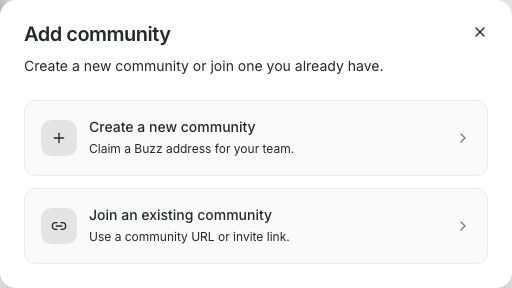 | 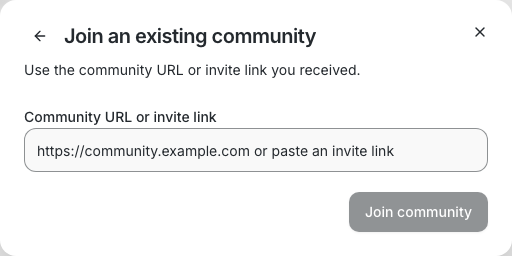 | | Create a new community | Hosted community icon | | --- | --- | | 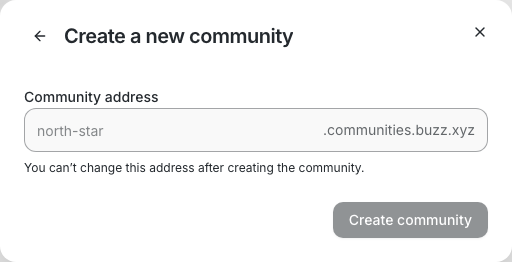 |  | | Invites | Invite link | | --- | --- | | 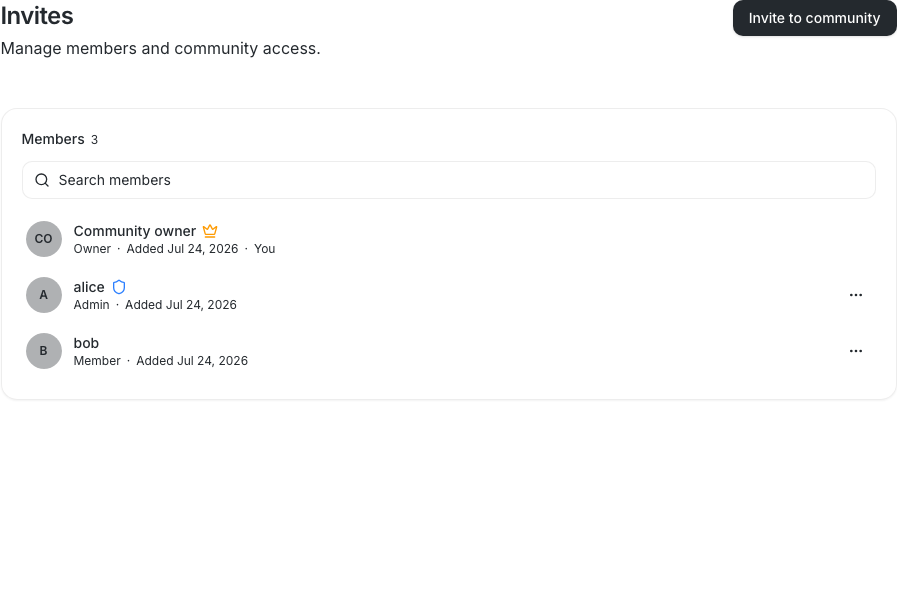 | 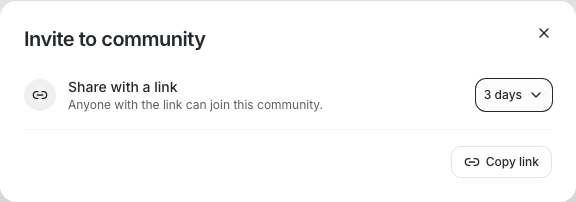 | --------- Signed-off-by: Wes <wesbillman@users.noreply.github.com> Co-authored-by: Wes <wesbillman@users.noreply.github.com> Co-authored-by: Carl <c7ebe626f000404285d3686e1dc74cc07cc60a9754a150041ba132e14bd3e2ec@buzz.block.builderlab.xyz> |
||
|
Atish Patel
|
b8510ede1b |
fix(desktop): clarify CLI runtime setup (#2680)
## Why Installing the Codex, Claude, or Goose desktop app does not install the command-line harness Buzz needs. The current UI makes that distinction unclear, links some missing-CLI states to adapter documentation, and can report a successful install from the installer exit code even when runtime discovery still fails. On Windows, Buzz also invokes Goose's Bash installer, which writes the executable somewhere Buzz does not discover. ## What - distinguish missing vendor CLIs from missing or outdated ACP adapters in runtime metadata and UI guidance - link Codex, Claude Code, and Goose missing-CLI states to their official CLI installation documentation - explain in Settings, onboarding, and agent configuration that the desktop app alone is not sufficient - use Goose's official PowerShell installer on Windows - refresh PATH and rediscover the requested runtime after installation, keeping the control retryable if the runtime is still unavailable - add Rust and Playwright regression coverage for Windows installer selection, CLI/adapter guidance, false-success prevention, verified installs, and onboarding copy ## Risk Assessment Medium. This changes desktop onboarding and runtime installation behavior. Successful installs now require the runtime catalog to verify availability; previously hidden discovery failures will surface as actionable errors instead of a false success state. ## References - [Codex CLI installation](https://developers.openai.com/codex/cli/) - [Claude Code installation](https://code.claude.com/docs/en/getting-started) - [Goose installation](https://goose-docs.ai/docs/getting-started/installation/) - Follow-up to #2563 and #2587 ## Validation - `just desktop-typecheck` - `just desktop-test` — 3,455 passed - focused Rust post-install verification tests - focused Playwright Doctor/onboarding coverage (in progress; CI and local sequential rerun will provide final results) Generated with Codex --------- Signed-off-by: Atish Patel <atish@squareup.com> Co-authored-by: Codex <noreply@openai.com> Co-authored-by: Goose <opensource@block.xyz> |
||
|
Will Pfleger
|
9731cd818b |
fix(onboarding): show real install errors and fix concurrent install state (#2658)
Signed-off-by: Will Pfleger <pfleger.will@gmail.com> Co-authored-by: npub1mn7jgtj4w2pd0g0zeuhxsa6jy6p0rewxz4kujt98my82ahfmp72sxjexk7 <dcfd242e557282d7a1e2cf2e6877522682f1e5c6156dc92ca7d90eaedd3b0f95@buzz.block.builderlab.xyz> |
||
|
klopez4212
|
76aeae7036 | Clarify agent harness defaults in create flow (#2601) | ||
|
Logan Johnson
|
80244f8231 |
Fix avatar upload lifecycle edge cases (#2277)
Signed-off-by: Logan Johnson <loganj@squareup.com> Signed-off-by: npub1dpf98sl35hm9k65t8h6cvh5n6knn2msugh5k5nmysxwnw5wlh7uqn2wgp4 <685253c3f1a5f65b6a8b3df5865e93d5a7356e1c45e96a4f64819d3751dfbfb8@sprout-oss.stage.blox.sqprod.co> Signed-off-by: npub13n66s06epmqf2kc3v373ez8hj65cuzyvxzjf93vwpervxqn2u7jq2qd9je <8cf5a83f590ec0955b11647d1c88f796a98e088c30a492c58e0e46c3026ae7a4@buzz.block.builderlab.xyz> Co-authored-by: npub1dpf98sl35hm9k65t8h6cvh5n6knn2msugh5k5nmysxwnw5wlh7uqn2wgp4 <685253c3f1a5f65b6a8b3df5865e93d5a7356e1c45e96a4f64819d3751dfbfb8@sprout-oss.stage.blox.sqprod.co> Co-authored-by: npub13n66s06epmqf2kc3v373ez8hj65cuzyvxzjf93vwpervxqn2u7jq2qd9je <8cf5a83f590ec0955b11647d1c88f796a98e088c30a492c58e0e46c3026ae7a4@buzz.block.builderlab.xyz> |
||
|
Taksh Kothari
|
06e3d82b04 |
fix(desktop): allow skipping harness setup onboarding (#2360)
Signed-off-by: Taksh <takshkothari09@gmail.com> |
||
|
Wes
|
fd967c6ea4 |
feat(desktop): gate sign-out behind key backup + typed confirmation (#2424)
Signed-off-by: Wes <wesb@block.xyz> Co-authored-by: npub1cl47vfhsqpqy9pwndphpm36vcp7vvz5h2js4qpqm5yewzj7nutkq7xyw8c <c7ebe626f000404285d3686e1dc74cc07cc60a9754a150041ba132e14bd3e2ec@buzz.block.builderlab.xyz> |
||
|
Will Pfleger
|
25f631870e |
fix(onboarding): skip community profile setup for existing relay members (#2300)
Signed-off-by: Will Pfleger <pfleger.will@gmail.com> Co-authored-by: npub1mn7jgtj4w2pd0g0zeuhxsa6jy6p0rewxz4kujt98my82ahfmp72sxjexk7 <dcfd242e557282d7a1e2cf2e6877522682f1e5c6156dc92ca7d90eaedd3b0f95@sprout-oss.stage.blox.sqprod.co> |
||
|
cynfria
|
f609fcee02 |
Keep avatar preview visible during upload (#2237)
Signed-off-by: npub19x6jnl6rhepymwyl2xlltz3ce7rfg2ktllle3g2vu59n3s490k8s9n40l3 <29b529ff43be424db89f51bff58a38cf86942acbffff98a14ce50b38c2a57d8f@sprout-oss.stage.blox.sqprod.co> Co-authored-by: npub19x6jnl6rhepymwyl2xlltz3ce7rfg2ktllle3g2vu59n3s490k8s9n40l3 <29b529ff43be424db89f51bff58a38cf86942acbffff98a14ce50b38c2a57d8f@sprout-oss.stage.blox.sqprod.co> Co-authored-by: Logan Johnson <loganj@squareup.com> |
||
|
Will Pfleger
|
fd55ab6624 | fix(desktop): keep machine onboarding for unrecognized identities after reset (#2244) | ||
|
morgmart
|
50f4412167 | Hide bundled harnesses from onboarding (#2233) | ||
|
Wes
|
c1de3e7c0e |
fix(desktop): align onboarding runtime auth (#2229)
Signed-off-by: Wes <wesbillman@users.noreply.github.com> Co-authored-by: Pinky <44b8e82baa6e0e254e0208d68f335c283c94e7b78dd1fa10d5a49d3f13dd0435@sprout-oss.stage.blox.sqprod.co> |
||
|
morgmart
|
6ab45d75de | Simplify first-community onboarding choices (UI only) (#2194) | ||
|
Wes
|
d538111b51 |
Fix persisted agent defaults display (#2182)
Signed-off-by: Wes <wesbillman@users.noreply.github.com> Signed-off-by: npub1gjuws2a2dc8z2nszprtg7v6u9q7ffeah3hgl5yx45jwn7y7aqs6s5e9xj6 <44b8e82baa6e0e254e0208d68f335c283c94e7b78dd1fa10d5a49d3f13dd0435@sprout-oss.stage.blox.sqprod.co> Co-authored-by: Pinky <44b8e82baa6e0e254e0208d68f335c283c94e7b78dd1fa10d5a49d3f13dd0435@sprout-oss.stage.blox.sqprod.co> |
||
|
cynfria
|
77900e69b3 |
fix(desktop): composite harness loader opacity (#2180)
Signed-off-by: npub19x6jnl6rhepymwyl2xlltz3ce7rfg2ktllle3g2vu59n3s490k8s9n40l3 <29b529ff43be424db89f51bff58a38cf86942acbffff98a14ce50b38c2a57d8f@sprout-oss.stage.blox.sqprod.co> Co-authored-by: npub19x6jnl6rhepymwyl2xlltz3ce7rfg2ktllle3g2vu59n3s490k8s9n40l3 <29b529ff43be424db89f51bff58a38cf86942acbffff98a14ce50b38c2a57d8f@sprout-oss.stage.blox.sqprod.co> |








































