mirror of
https://github.com/block/buzz.git
synced 2026-11-28 04:01:45 +00:00
6b0dfc1957fb6cb87d40b5c3bd6570aa7e8a896e
9 Commits
| Author | SHA1 | Message | Date | |
|---|---|---|---|---|
 Tom Brow |
0966f3fad6 |
feat(mobile): tag escaped relay errors with their call and reason class (#9821)
Makes relay errors that nothing catches readable in diagnostic reports. Today an unhandled relay rejection or timeout arrives with its text removed and a stack that stops at the async error handler, so a report can't say which call failed or why. ## Changes - **Typed call and reason:** relay errors now carry the call (`publish`, `query`, `history`, `subscribe`) and a fixed reason class taken from the relay's reason prefix (`invalid`, `rate-limited`, `restricted`, `auth-required`, `blocked`, `duplicate`, `pow`, `unsupported`, `error`, `timeout`, or `other`). Types: - `RelayEventRejectedException` implements the new `RelayCallError`; - new `RelayTimeoutException` extends `TimeoutException`, and `RelayAckTimeoutError` now extends it; - new `RelayClosedException` replaces the plain `Exception` for a closed history or live subscription, with the same `toString`. - new `RelayQueryException` (a `RelayException` that is also a `RelayCallError`) for a non-2xx `/query` answer, with its reason from the status alone; - a one-shot signed event the relay refuses now fails with a typed rejection, with the same text. Existing `TimeoutException` checks and message helpers behave as before. - **Report tags:** before the filter runs, a report whose error is a `RelayCallError` gets `relay.call` and `relay.reason` tags. The relay's own text is never sent. These reports are also grouped by call and reason on top of the default grouping, so a rate limit and an invalid request from the same code become separate issues. - **Call-site stack:** pending publishes, one-shot signed events, and history and live subscriptions keep the stack where they were created, and errors completed later from timers or socket callbacks use it. A report's stack now reaches the calling code. - **Spec:** one bullet on the tags, the grouping and the stack. ## Validation New tests: - a table of reason prefixes to classes; - error types, fields and the existing message helpers; - relay session cases: a rejected publish's call, reason and calling stack, the timeout types, and closed subscriptions; - reports: tags, the grouping key, no relay text, and non-relay errors untouched. - production refusals through a serialized report: `/query` statuses, snapshot `/query` versus discovery, and one-shot rejections and timeouts with the caller's stack. Full-app run on an iOS simulator (signed in, healthy relay): cold start and session restore, channel list, opening channels and DMs, history back to each channel's start, send, react, edit, thread reply, search, channel details and Add Members, Settings > Send test report, and background then foreground followed by a send and a delete. All passed with no new errors in the device log, and no doubled error names in any logged text. Error paths (timeouts, closed connections, relay rejections) weren't triggered on the healthy relay; the unit tests above cover them. --------- Signed-off-by: Tom Brow <tomb@block.xyz> Co-authored-by: studio <dc2fc481343672df31a689840c09299972e704dac592e0da6f18486646a7ee3e@localhost> |
||
|
Tom Brow
|
9a9d579460 |
feat(mobile): resolve push wakes into notifications in Dart (#9558)
Ticket 5 of the [Android push design](https://github.com/block/buzz/pull/9555). It builds on [#9556 Dart body formatter](https://github.com/block/buzz/pull/9556), now merged. Native posting, the 2 s generic notification, the foreground check and FCM are ticket 6 and are not here. ## What it does `resolvePushWake` is the Dart half of an Android push wake. A wake carries no content, so it means "sync now": the function reads the saved communities, signs a `/query` to each relay (the same NIP-98 request the app uses), fetches what is newer than the last shown message, applies the same eligibility rules as the iOS resolver, and returns every eligible unshown message with title, body (ticket 4's formatter), conversation id, navigation target and category (direct message or mention). It is plain Dart: no Flutter UI and no Riverpod app state, so a headless engine can run it. - Eligibility is a port of the iOS `PushLeaseMatcher`, applied to the same subscriptions the app already syncs: self-authored messages and muted DMs are ignored (mutes reach the subscriptions for DMs only, as on iOS), and a message tagging more than 20 people is dropped. Only joined DMs and `#p` mentions notify. - Results are bounded: newest 20 overall, newest 8 per conversation. Messages cut by the caps are still recorded as shown, so a later wake does not bring them back. - `PushWakeRunner` runs one wake at a time per process. A wake that arrives mid-run sets a rerun flag, and every waiting caller gets one result with the notifications of every pass. ## Decisions - **Shown record.** One empty marker file per message, created exclusively. That is atomic across isolates and processes with no lock, and the foreground app can write the same record through the same `claim`. The newest time is the maximum of the marker names, so it can never move backwards (a separate cursor file would lose updates between concurrent writers). Markers older than 15 minutes before the newest are deleted. The app's other stores don't fit: `shared_preferences` has no atomic read-modify-write across isolates, and secure storage has none either. File locks were avoided because POSIX locks are per process, and the app and the background engine share a process. - **Claim before post.** `claim` is the post decision, so a message is returned at most once. If native posting then fails, the message is not offered again, as on iOS. - **Claim oldest first.** Each claim can advance the newest time, and claim rejects anything more than 15 minutes older, so messages are claimed oldest first. A wake cut short leaves only messages newer than everything it claimed, which the next fetch still covers. - **Fetch window.** Fetches start 15 minutes before the newest shown message, the same reorder window the iOS cache uses, and claim rejects anything older. With no record yet, the fetch looks back 15 minutes only, so a new install or community doesn't dump history. - **Timeouts.** 3 s per fetch request, 1.5 s for the sender and channel name lookup (which runs after messages are claimed, so a slow lookup costs only names), 5 s overall from entry, well under the ~8 s native watchdog. On expiry it returns what it has. `PushWakeResult.incomplete` lists communities that couldn't be read; with no notifications it tells the caller to use its generic fallback. Communities that failed record nothing, so the next wake retries them. - **Paging.** A relay answers each filter's newest `limit` events, so a page filled by messages that can't notify could hide an eligible one. A subscription whose 50-event page comes back full is read again below its oldest event, up to 5 pages per community; a community that stops at the cap, or whose later page fails, is reported incomplete and keeps what it read. A page over the 4 MiB cap is asked for again with half the events. - **Fresh reads.** Message filters ask for `"consistency": "strong"`, so a wake for a message that has just arrived isn't answered by a replica that lacks it. That costs one writer read per community per wake. - **Deadline.** The 5 s budget runs from entry, reading the community list included, and no request may outlast it. Claims already running get 250 ms to finish, and what a community claimed before the deadline is still returned. - **Thread target.** A reply opens its direct parent's thread, as the in-app inbox does; a broadcast reply opens the channel. - **Transport.** HTTP `/query` rather than a WebSocket: one round trip per community, no connection to keep, and the same request the iOS resolver sends. ## Regressions Nothing existing changes: the new files are not referenced by app code yet, so there is no runtime effect until ticket 6 wires them in. Bugs stay inside the new wake path. ## Open questions - Organization-protected relays need a federated-identity header, which the iOS extension gets from a shared session. The headless path sends none yet, so such a community is reported as failed. Wiring it belongs with ticket 6 or 7. - Before ticket 6 calls this: the notifications setting is read only at entry, where iOS rechecks before posting; and Solo chat titles get a `#` where iOS and the app show none. A wake the deadline cuts short claims oldest first, so it can show older messages and leave the newest for another wake that nothing prompts (each winning claim lists the store directory again, so a long offline backlog on slow storage is where this bites). Ticket 6 can rerun when a wake is incomplete but returned notifications, or batch the claims: oldest first, all markers created before one listing that checks and prunes, cap overflow still recorded. A claim that storage never answers can still be lost after the 250 ms grace. - First-wake baseline: with no shown record yet, a wake looks back only 15 minutes, so a phone's first wake after a longer outage (still inside the relay's delivery window) can miss the message that caused it and report complete. Ticket 7 owns the fix: write a bounded baseline at enrollment, before wakes are turned on. - A wake reads the community snapshot at entry; rechecking the saved community, identity and push preference just before posting is on ticket 6's list, before ticket 7 turns wakes on. - Sender names come only from profiles their authors signed. Channel titles come from kind 39000 events whose id and signature check out, but nothing yet checks that the signing key is the relay's, because the community record has no relay key. That check belongs with ticket 7's enrollment work, which learns the relay key. Until then a relay could only mislabel a notification the user is already entitled to. ### Validation Added tests: - `push_wake_journey_test.dart`: journeys against a fake relay (only `/query` over HTTP is fake): DM and mention notify; self-authored, muted, hellthread, unrelated and text-less messages don't; already shown doesn't repeat; several messages across two conversations after one wake; a missed wake recovered by the next; a catch-up after a quiet spell returns messages more than 15 minutes apart; several communities, including a wake stopped partway by a failed claim whose leftover message is far newer than the one claimed; per-conversation and overall caps without resurfacing; slow, silent and unreachable relays return inside the budget and recover on the next wake; two wakes in different "isolates" never notify twice; the app recording a message during a run is respected; a wake mid-run reruns once and loses or repeats nothing, and is reported incomplete when no budget is left to rerun. - The journeys now also cover: an eligible DM and mention behind a page of messages that can't notify; an oversized page retried at half size; a relay past the page cap, and a later page failing, both leaving the community unfinished; message reads pinned to the writer; reply and broadcast-reply tap targets; unsigned or forged names falling back to short keys; a community list that never loads, and storage that stalls one community's claim, both ending at the budget. - `shown_message_store_test.dart`: concurrent claims, the reorder window, future-dated messages, pruning. Break checks: removing the hellthread rule fails the first journey; making marker creation non-exclusive fails the concurrent-claim test and the two-isolate journey; claiming newest first fails the catch-up and partial-wake steps; dropping the skipped-rerun flag fails the rerun journey. --------- Signed-off-by: Tom Brow <tomb@squareup.com> Signed-off-by: Tom Brow <tomb@block.xyz> Co-authored-by: studio <dc2fc481343672df31a689840c09299972e704dac592e0da6f18486646a7ee3e@localhost> |
||
|
Tom Brow
|
7382130948 |
feat(mobile): count networking events for diagnostics (#9810)
Implements the networking counts in docs/mobile-diagnostic-reporting.md:
every request through the shared HTTP client and every relay connection
event is counted, with backend (host), endpoint (from a fixed list),
outcome and kind of failure, plus a duration for requests and time to
connect.
## Changes
- **HTTP:** `newAppHttpClient` returns a counting wrapper, and the relay
HTTP query client wraps its own transport the same way. A failure status
is counted at its headers, a transport failure when it happens, and a
success once its body ends or its reader stops (duration is still time
to headers). A caller deadline noted with `noteHttpDeadline` makes a
request still waiting for headers or still reading its body a timeout;
the invite mint now notes its deadline too. Requests the app cancels are
not counted, and a throwing reporter never changes a request's result. A
request counts only for the member who started it, and is dropped if it
finishes while anyone else, or no one, is signed in. Only failed
requests leave a breadcrumb, so successes don't push useful entries out
of the SDK's buffer.
- **Backend names:** only the app's own hosts are named (relays this run
has used, the build's Builderlab origin and hosted relay domains, the
push gateway). Any other host, such as a remote image's, is counted as
`external`.
- **Relay:** the session counts connected (with time to connect),
disconnected or a failed attempt (once per attempt), reconnect attempts,
history queries (EOSE, CLOSED, timeout), publishes (OK true or false,
ack timeout) and live subscriptions closed by the relay. Queries and
publishes still unanswered when the socket drops are counted as
disconnected. A refused protected upgrade is counted before its renewal,
and the relay's authorization denial makes the following close an auth
refusal. Intentional disconnects (background pause, sign-out, community
switch) are not counted. The session's debug hooks moved to
`relay_session_test_hooks.dart` to stay under the file-size limit.
- **Install ID on counts:** metrics carry scope attributes but not scope
tags, so startup also sets `install.id` as an attribute, and the filter
allows it.
- **Spec:** marks counts as implemented and records that the destination
can filter counts by member, so the log-line fallback isn't needed.
### Endpoints
`relayConnection`, `relayReconnect`, `relayQuery`, `relayPublish`,
`relaySubscription`, `relayHttpQuery` (`/query`, `/count`,
`/profiles/search`), `relayInfo` (GET of a server's root),
`mediaDownload`, `mediaUpload`, `communityAdmission`,
`builderlabAccount`, `otherHttp`.
### Failure kinds
| Source | Kind |
|---|---|
| 401, 403 | `authRefused` |
| 408, abort before headers, timeouts | `timeout` |
| 429 | `rateLimited` |
| 5xx | `serverError` |
| Other 4xx | `clientError` (new) |
| No network | `offline` |
| Host unreachable | `unreachable` |
| TLS failure | `insecure` |
| Connection closed or reset (including ECONNRESET) | `disconnected` |
| Relay `rate-limited:` / `query timed out` | `rateLimited` / `timeout`
|
| Other relay refusal prefixes (`restricted:`, `auth-required:`,
`invalid:`, ...) | `relayRefused` |
| Anything else | `relayError` or `other` (new) |
## Validation
New tests:
- `counted_http_client_test.dart`: status and endpoint tables, transport
failure kinds (the error still reaches the caller and nothing is
reported as an error), a closed client, a throwing reporter, success
settled at body end, deadlines before headers and mid-body, requests
held across a member switch and a sign-out, and remote media hosts
counted as external.
- `relay_network_counts_test.dart`: connect, disconnect, reconnect, auth
refusal, queries, publishes, CLOSED, operations lost with the socket, a
refused protected upgrade before renewal, the relay's authorization
denial, and another member's session counting nothing.
Full-app run on an iOS simulator at
|
||
|
Tom Brow
|
d1a8c3607d |
perf(mobile): use HTTP/2 on Android through app-wide Cronet engines (#9435)
Follows #8897 (iOS HTTP/2), now on main. ## What Android gets the same app-wide shared sessions as iOS, backed by Cronet (`cronet_http`) instead of `NSURLSession`: - One Cronet engine per traffic class (API, media), so requests to a host multiplex over one HTTP/2 connection and gzip is inflated natively, off the Dart isolate. - HTTP/2 on, HTTP cache off, QUIC off. QUIC would be a separate behavior change, and `cronet_http`'s changelog lists DNS failures with QUIC on cellular. - Streamed uploads (media and voice notes) stay on `dart:io` on Android: `CronetClient` reads a request body into memory before sending it, which would break upload progress and copy large attachments in full. - If no Cronet provider is available (no Google Play services), the engine fails to build and the app keeps `dart:io`, as today. - Transport error classification covers Cronet failures alongside `NSURLSession` ones, so invite and pairing errors keep their friendly messages. ## Measurements Android emulator (API 36, arm64), profile builds of this branch and main, signed in to the Feedback community. 8 cold starts per build, alternating builds in blocks of 4. Times are for relay `/query` requests started in the first 8 s. | | main (`dart:io`) | this branch (Cronet) | |---|---|---| | First query response | 6.99 s | 1.99 s | | Startup burst settled | 8.36 s | 2.78 s | | Burst after the first connection | 1.44 s | 0.77 s | | Query latency after the first connection, median / p90 | 165 / 1567 ms | 106 / 158 ms | **Unexplained stall:** most of main's startup gap is a ~5 s stall before its first response on every cold start. Its cause is unconfirmed; my guess is `dart:io` loading its CA store on the emulator, which HTTP/2 itself wouldn't fix, so the first two rows likely overstate the win on real devices. The rows after the first connection exclude the stall and are the fairer comparison. I also tried emulated EDGE throttling, but the emulator's throttle did not slow its traffic, so there are no slow-link numbers yet. ## Regressions None found. Devices without Play services keep `dart:io`. Cleartext `http://` requests keep the handle's own `dart:io` client, as on iOS. ## Testing - Full mobile suite passes (`flutter test`, 4784 tests). - Automated app run on the emulator: onboarding, Feedback nsec import, channel and DM list load, and 16 cold starts with request timing. Media loading wasn't separately exercised. - No visible UI change, so no screenshots. --------- Signed-off-by: Tom Brow <tomb@squareup.com> Co-authored-by: Tom Brow <tomb@squareup.com> |
||
|
Tom Brow
|
a2d4ba0267 |
feat(mobile): use HTTP/2 on iOS through app-wide URLSessions (#8897)
On iOS, Buzz's HTTP traffic now uses HTTP/2. Dart's `dart:io` client speaks only HTTP/1.1, so every feature's client opened its own connections to the relay, which sits behind Cloudflare and offers HTTP/2. On a slow link those extra handshakes, and the HTTP/1.1 head-of-line queueing, are a large share of cold-start time. ### What changes - iOS HTTP goes through two app-wide `NSURLSession`s via [cupertino_http](https://pub.dev/packages/cupertino_http) (`lib/shared/http/app_http_client.dart`): one for API traffic (relay queries, NIP-11, account, admission, pairing) and one for media (image/video/voice downloads and uploads). Requests to a host multiplex over one connection per session. Media has its own session so image bytes can't starve queries on a shared HTTP/2 connection: in prototype measurements with a single shared session, the channel-list batch query finished *later* than on HTTP/1.1. - Callers keep owning and closing their clients; on iOS `close()` leaves the shared session open. Both sessions are ephemeral with no URL cache and no cookies, so apart from the protocol (and native gzip, inflated off the Dart isolate) behavior matches `dart:io`. - Android, and tests, keep `http.Client()` unchanged, including `http.runWithClient` overrides. - Because closing a client no longer cancels a request on a shared session, the relay query client (both `/query` posts and bounded snapshot reads) and the dev push-lease fetch abort their request on timeout instead. - Non-`https` requests (`http://` media and community icons from other clients, local dev relays) stay on the handle's own `dart:io` client, because App Transport Security would block cleartext loads through URLSession. An HTTPS URL that redirects to `http://` is the one case that newly fails on iOS (URLSession follows the redirect and ATS blocks the downgrade); we accept that rather than follow redirects in Dart. - URLSession failures arrive as `NSErrorClientException`, not `SocketException`, so pairing and invite-join error messages now also recognize `NSURLErrorDomain` offline, TLS and timeout codes. - cupertino_http 3.0.1+ requires native_toolchain_c 0.19 and hooks 2.x, so `buzz_secp256k1` moves to those. Its build hook compiles unchanged. ### What gets better, and what doesn't get worse - **Better:** on a slow link, requests reuse one warm connection per session instead of paying TCP+TLS setup each time, so they complete where `main` times out (see the table). On Wi-Fi, small queries are slightly faster. - **Not worse:** request semantics, caching (none) and cookies (none) match `dart:io`; Android and tests are untouched; timed-out requests are aborted so they can't keep using bandwidth on the shared connection; offline errors keep their friendly messages. The accepted regression is HTTPS-to-HTTP redirects on iOS, above. WebSockets stay on `dart:io`. Android (Cronet) is a possible follow-up using the same seam. ### Validation Added tests: shared-session handles don't close the session; off iOS the transport honors `http.runWithClient`; NSURLError code classification; timed-out relay queries and bounded snapshot reads abort their request; cleartext requests stay off the shared session. Focused existing validation: full mobile suite (the only failures are 11 push/notification tests that fail identically on `main` on the same machine), `flutter analyze`, `buzz_secp256k1` package tests (27/27), and an iOS release build. On-device A/B on an iPhone 12 mini against the internal prod relay over WARP, comparing cold starts of `main` and this branch (profile builds with local-only request timing, 3 cold starts each): | | `main` | this branch | |---|---|---| | Wi-Fi: first query done (median) | 0.31s | 0.25s | | Wi-Fi: small-query latency (median) | 0.22s | 0.18s | | NLC Edge: requests completed in 90s | 0, 0, 0 (29–30 failed) | 12, 14, 16 (5–7 failed) | | NLC Edge: first request done | never | 6.3–7.0s | On Wi-Fi the two are about even. Under Edge, every HTTP/1.1 request on `main` hit its timeout while still opening a connection, and each retry started a fresh TCP+TLS handshake. The branch reuses one connection, so queries complete. Connection counts weren't measured on the device, since no proxy was in the path. Cold-cache demo on an iOS simulator (this branch, app caches and cached prefs wiped before launch): avatars, community icons, channel lists, public channel images, a DM image and custom emoji, video playback, reactions, and an image and video upload with progress all load. The DM image and clip are synthetic test media. https://github.com/user-attachments/assets/039d1a25-46f2-4e0e-b147-f96d0cfabd40 buzz-review-completed (agent review and device validation done; the human-test step is not applicable under Tom's standing exception for mobile changes) --------- Signed-off-by: Tom Brow <tomb@squareup.com> Co-authored-by: Tom Brow <tomb@squareup.com> Co-authored-by: studio <dc2fc481343672df31a689840c09299972e704dac592e0da6f18486646a7ee3e@buzz.block.builderlab.xyz> Co-authored-by: Claude Opus 5.5 <noreply@anthropic.com> |
||
|
Tyler
|
dafe31bfe5 | feat(mobile): persist frontier-only NIP-RS read state across devices and restarts (#8998) | ||
|
Tom Brow
|
770ab7ff82 |
perf(mobile): decode relay query responses off the UI isolate (#8669)
### Context Profiling on an iPhone 12 mini (Profile build, real community) showed `RelaySessionNotifier._postForEvents` producing contiguous main-isolate busy runs with p90 110 ms and max 124 ms (27 runs of 50 ms or longer). Stacks were dominated by `jsonDecode` of `response.body`, with `NostrEvent.fromJson` smaller. The whole HTTP response decode ran on the UI isolate: gzip inflate (done by `dart:io`), the UTF-8 decode behind `response.body`, JSON parsing, and event parsing. ### What changes - Successful `/query` and `/profiles/search` responses (the only two callers of `_postForEvents`) are now decoded in a single `Isolate.run` from `response.bodyBytes`: inflate, UTF-8, JSON, validation, `NostrEvent.fromJson`. The parsed events come back by ownership transfer (`Isolate.exit`), not a copy. - Gzip: the query transport now sends `Accept-Encoding: gzip` and sets `autoUncompress = false`, so compressed bodies reach the isolate still compressed. Whether bytes are gzip is decided by the gzip magic bytes, so a transport that already inflated (or an injected test client) still works. Error bodies are inflated inline (small). - Unchanged: `FormatException` messages, the malformed-event wrapping, `RelayException.body`, and the rate-limit gate reading the error body. - Fencing (Review-Proven Rule 2): the `_disposed` / `_ageRestricted` / `_contextGeneration` check still runs before the decode and now runs again after it. If the session retires during the decode, the query reports `StateError` even when the decode itself failed, matching the old ordering where a retired session never decoded. ### Design notes - `Isolate.run` per response instead of a long-lived worker: no lifecycle or disposal to manage, no idle isolate heap on a small phone, easy to fake in tests, and the same shape as `parseProfileEventBatch`. The main-isolate side of a spawn measured at microseconds, so there is no size threshold; small responses take the same path. - Event id and signature verification does not happen on these events on the main isolate today (nothing in the mobile app verifies queried events; NIP-OA verification in profile parsing is already in an isolate), so nothing was moved. - Other HTTP decode sites found and left alone: invite create/join, hosted join policy, BuilderLab account, media upload response, community icon lookup, dev push lease NIP-11, archived-agents. These decode small, rare responses (one small JSON object each), where an isolate adds complexity without a measurable gain. Media and avatar byte downloads do no JSON decoding. The mobile app has no `/count` caller. ### Validation Added tests (`relay_session_test.dart`, through the production `queryRelay` / `searchProfiles` path with the real isolate decoder): parsing with non-ASCII content; profile search; gzip success body and `Accept-Encoding`; gzip error body feeding the rate-limit gate and `RelayException.body`; malformed JSON; non-list body; non-object element; malformed event; invalid UTF-8; error status skips decoding; session disposed, age-restricted, or retired-before-decode while a decode is outstanding. The fencing tests are falsifiable: removing the post-decode check fails the disposed and age-restricted tests; removing the retired-wins-over-decode-error branch fails its test; removing the pre-decode check fails the never-decodes test. `FakeRelay` (test helper) now injects an inline decoder, because `fakeAsync` cannot deliver isolate results; it calls the same parse function. The default transport still honors `http.runWithClient`, which the hosted journey tests use to fake the network (`relay_http_query_client_test.dart`; fails without the fix). `just mobile-check` and `just mobile-test` pass. Host benchmark (AOT executable on an Apple silicon Mac, median of 25, copy of the parse logic, main-isolate stall measured with a 0.5 ms heartbeat timer): | Response | Main-isolate blocked before | after | | --- | --- | --- | | 500 events, ~630 KB | 2.4 ms | 0 ms (max gap 0.05 ms) | | 500 events, ~630 KB gzip | 3.2 ms | 0 ms (max gap 0.19 ms) | | 500 events with 50 20 KB avatars, ~1.6 MB | 5.1 ms | 0 ms (max gap 0.28 ms) | | 500 events, ~4.5 MB | 14.0 ms | 0 ms (max gap 0.27 ms) | | 500 events, ~4.5 MB (827 KB gzip) | 17.4 ms | 0 ms (max gap 0.35 ms) | Total latency is unchanged within noise (for example 14.5 ms to 14.9 ms). The host is much faster than the 12 mini, so absolute device savings should be several times larger. On the iPhone 12 mini (Profile builds of base and this branch, real community over the production relay, two runs per scenario; main-isolate stalls measured with a 4 ms heartbeat timer, since the wireless device tunnel has no VM service): | Scenario | Main-isolate `_postForEvents` time, base | this branch | Max stall, base | this branch | | --- | --- | --- | --- | --- | | Cold start + 60 s (~16k events, 7.8 MB gzip) | 282 to 295 ms (max 116 ms) | 0.01 ms | 147 to 150 ms | 100 to 102 ms | | Inbox + search (~7k events) | 122 to 123 ms (max 111 ms) | 0.01 ms | 138 to 142 ms | 97 to 99 ms | | Open 6 channels (558 events) | 5 to 6 ms | 0.01 ms | 88 ms | 86 to 87 ms | | Background 10 s + resume (~7k events) | 118 to 124 ms | 0.01 ms | n/a (suspension) | n/a | - The production relay serves gzip (about 4.4:1; the largest catch-up response is 3.15 MB on the wire, 13.9 MB inflated, 7k events). Inside the isolate that response takes 30 to 47 ms to inflate, 39 to 55 ms for UTF-8, 65 to 105 ms for `jsonDecode` and 7 to 32 ms for `NostrEvent.fromJson`. - Many 16 to 90 ms stalls remain on both builds; they come from other work (mostly markdown build and layout), not response decoding. - Home, channels, inbox, search, profile and a thread render the same on both builds. buzz-review-completed 🤖 Generated with [Claude Code](https://claude.com/claude-code) --------- Signed-off-by: Tom Brow <tomb@block.xyz> Co-authored-by: Claude Sonnet 5.5 <noreply@anthropic.com> |
||
|
Wes
|
b6aa5539e3 |
feat(mobile): account onboarding, key recovery and hosted reconnect (#8375)
## Behavior Adds optional mobile Builderlab sign-in, identity backup/recovery, community discovery/creation, and account-aware reconnect. **Builderlab features are disabled by default:** when `BUZZ_AUTH_DOMAINS` is unset or empty, account login, creation, backup/recovery, reconnect prompts, and background account restoration are hidden/disabled. QR/code pairing, links, and invites retain Nostr-only entry. Saved account state is retained for later opt-in. `--dart-define=BUZZ_AUTH_DOMAINS=communities.buzz.xyz,communities.public.builderlabstaging.xyz` opts those DNS domains and their subdomains into required account setup. The same policy gates pairing, deep links, durable community admission, and reconnect. A nonempty list enables Builderlab features; `BUZZ_BUILDERLAB_URL` alone does not. Enabled flows still require their backend services. Existing Nostr relay authentication remains mandatory. `BUZZ_HOSTED_RELAY_AUTH=true` enables scoped relay assertions and reconnect prompts only for configured authentication domains. Configure assertion issuance and each community's issuer binding before enabling assertions; enable relay enforcement last. Account credentials stay at Builderlab. Wrong-account recovery preserves keys; failed writes are not replayed; authentication is bounded by request deadlines. Hosted flows preserve keys across cancellation/restart, reconcile interrupted creation/invitation acceptance, and support manual nsec file import/export. Account identities are scoped to backend and authenticated subject; reusing an existing local key for an unbound account requires an explicit selection. Recovery reconciles the advertised and recovered inventories before automatic selection. Successful self-hosted admission retires its pending key, and iOS startup removes interrupted export files. Adds authenticated relay `GET /operator/communities/joined` for the companion Builderlab membership endpoint. ## Validation - Follow-up review repair at `66a12ac92`: self-hosted entry presents readable choices and import despite incomplete enumeration, while generation still requires a complete empty inventory; explicit selection uses exact-key lookup. Consuming a value-equal duplicate now advances dispatch. Reconnect requires an existing account binding or a subject-scoped backup receipt before signing an assertion, and pins the subject inside the serialized account request. An empty different account is refused without sending key proof. Focused checks: configured domains 58 passed; default 49 passed, 9 hosted-only skips. Separate isolated mutations fail the incomplete-inventory sheet, exact-key reuse, duplicate dispatch and reconnect journeys (including an empty-account-only bypass); restored controls pass. Evidence uses synthetic storage/network boundaries, not physical Android or live backend association. All mandatory commit/push hooks passed; fresh GitHub CI is pending. - Bounded review repair at `d3cc0003f`: incomplete secure-storage enumeration now blocks automatic identity generation while explicit known-key reads retain their fallback; declined/failed onboarding links release the queue; HTTP 429/5xx keeps Retry regardless of response encoding. Default app-gate coverage exercises a bind link followed by ordinary community entry. Focused checks: configured domains 47 passed; default 38 passed, 9 hosted-only skips. Removing the three production fixes in an isolated source/Git/build copy fails the identity-resolution, declined/failed queue, and Retry journey assertions; clean and restored controls pass. Storage and HTTP failures are synthetic; physical Android and live outage behavior were not exercised. Published after all mandatory commit/push hooks passed (mobile analysis/tests, branch-skew and file-size gates); fresh GitHub CI remains pending. - Existing whole-PR source review cleared the reconnect defects at `fb15d5b82`. - Domain-policy increment: focused environment, entry, app-gate, pairing and onboarding journeys pass with empty and configured domains. Existing pairing provider/page tests pass. Changed Dart files analyze cleanly. - Isolated source/Git/build mutation: forcing paired credentials through hosted login fails the default-build journey; clean and restored controls pass. CI now runs configured-domain journeys in addition to the default-build suite. - Integrated main through `5b433d929` at `0067c069c`, including its pinned Flutter upgrade. Preserved the PR welcome UI with the updated transition API and added Material surfaces around onboarding selection/consent rows. Focused post-merge runs pass in both configurations; all mandatory local push gates passed (mobile analysis/tests, Rust tests, desktop-native checks, branch-skew and file-size checks). - Merge-review repair at `a315bce11`: focused identity/storage/admission and widget journeys pass, including account switching with an empty or already-bound second account, explicit reuse, and self-hosted removal/rejoin with another key. Default-domain journeys pass too (hosted-only cases intentionally skip there). - Isolated source/Git/build mutation checks: bypassing account scoping, reuse consent, pending-key retirement, or recovery inventory reconciliation fails the relevant journey/invariant assertions; clean and restored controls pass. - Native `RunnerTests/IdentityFilePluginTests`: both tests pass on the iPhone 18 Pro iOS 27 simulator with an isolated app identifier. At `24a0dcaac`, the picker journey seeds residue in Library/Caches, matching path_provider_foundation, and verifies plugin startup removes it while preserving an unrelated file. The earlier tmp-only fixture did not exercise the actual export location. This is synthetic native cleanup/picker evidence, not a real terminated-share or live account round trip. - Follow-up: Caches and tmp cleanup; fallback to individually known identity slots when Android bulk enumeration fails; explicit replacement of a refused self-hosted key preserves its original before swapping the retry slot. Configured-domain journeys/invariants: 34 passed; default: 31 passed, 3 hosted-only skips. Isolated enumeration/retry mutations fail with passing controls. Bulk-read fallback preserves but cannot enumerate arbitrary other-account slots until bulk reads recover. - Configured-domain CI exposed a stale pairing-status assertion after account scoping. The repaired test checks the admission mismatch, preserved account/transfer keys, and no admitted community. The configured-domain CI selection passes locally (56 tests); removing the production mismatch guard fails the updated test, with clean/restored controls passing. This is synthetic coordinator evidence, not physical QR acceptance. - Final review repair (`40e1e6101`): native iOS export creation uses atomic complete file protection; normal and restart cleanup remain. Account/policy/claim HTTP uses one 30-second total deadline with request abort and body cancellation. Removed the unrelated NIP-FA spec edit. - Focused account/admission/export tests: 25 pass; configured-domain account/admission/onboarding journeys: 33 pass. Isolated deadline and native-dispatch mutations fail, with passing clean/restored controls. Native export/picker tests: 2 pass on iOS 27 simulator. The real file-protection attribute assertion is physical-device-only because simulator provides no Data Protection attribute; locked-device protection and interrupted real sharing have not been observed. - Opt-in UI: configured-domain CI selection passes (57 tests); default selection passes (7 tests, 10 hosted-only skips); URL-only plus whitespace/empty domains passes (6 tests, 9 hosted-only skips). Changed Dart files analyze cleanly. Independent mutations that unconditionally initialize the coordinator in the app gate, welcome entry, or link form fail the default journey; clean/restored controls pass. - Native welcome screens exercised on iPhone 18 Pro / iOS 27 simulator in default and configured builds: default exposes community link / QR / pairing code only; configured build additionally exposes Builderlab connection and community creation. No live hosted login was exercised in this check. - Delivery at `e48fe73a9`: all mandatory push hooks passed (full mobile analysis/tests, Rust tests, desktop-native checks, branch and file-size checks). GitHub checks had not yet populated at the immediate post-push snapshot. ## Review disposition | Feedback | Disposition | | --- | --- | | Explicit self-hosted entry under unreadable inventory, duplicate invite dispatch, reconnect cross-account binding ([entry](https://github.com/block/buzz/pull/8375#discussion_r4318421622), [queue](https://github.com/block/buzz/pull/8375#discussion_r4318421640), [reconnect](https://github.com/block/buzz/pull/8375#discussion_r4318455512)) | Repaired at `66a12ac92`; evidence above. Reconnect refuses unproven ownership rather than silently establishing a binding. | | Incomplete Android identity inventory, stranded deep-link queue, transient HTTP retry classification ([review](https://github.com/block/buzz/pull/8375#pullrequestreview-5576864143)) | All three repaired in `d3cc0003f`; focused journeys and isolated mutation evidence above. | | Account cross-link, incomplete recovery inventory, committed invite checkpoint, pending local key retirement/replacement | Repaired in the preceding commits; journey and mutation evidence above. | | iOS interrupted key export ([review](https://github.com/block/buzz/pull/8375#pullrequestreview-5575253252)) | Native cleanup plus complete protection at creation implemented. Physical-device lock and real interrupted sharing acceptance remains pending. | | Trickle responses bypass idle timeout; unrelated NIP-FA edit ([review](https://github.com/block/buzz/pull/8375#pullrequestreview-5575764556)) | Total request deadline/abort implemented; spec edit removed. | | Production domains rejected | Ordinary entry now needs no Builderlab configuration. Opt-in account-required domains must still use supported community mappings. | | Lost Android Keystore recovery | Backup exclusions prevent the reviewed stale-restore scenario; genuine key loss still has no in-app recovery/reset and remains deferred. | | Native secp256k1 dependency question | Obsolete against the current base: upstream C integration landed in #8398; no package diff remains here. | | Operator membership endpoint contract | Documentation now states the operator chooses the pubkey; no end-user session binding is implied. Additional handler-level coverage is optional follow-up. | | Optional Android partial document cleanup/activity retention; local work after backup cancellation | Follow-up hardening, not claimed implemented. Cancellation prevents remote backup upload. | | Semgrep crypto inventory notices | Informational inventory, not demonstrated defects. | ## Remaining draft gates Native QR/browser-return acceptance remains unverified for this revision. Optional Builderlab onboarding still needs backend backup-status and joined-community routes, recovery policy/configuration, and real backup/recovery/reconnect acceptance. The empty-domain build removes these services as prerequisites for ordinary pairing; it does not make the optional hosted flows backend-ready. Human acceptance and current CI are still required before merge. Review dispositions retained: production auth-domain configuration must use supported community mappings; enabling `builderlab.xyz` does not add support for `buzz.block.builderlab.xyz`. Recovery after genuinely losing an Android Keystore key remains a follow-up, not a newly implemented capability. Human acceptance steps: build once without `BUZZ_AUTH_DOMAINS` (including with a previously saved account) and confirm no Builderlab controls/restoration while ordinary link and QR/code entry work. Build with supported domains and confirm connection/creation appear; exercise browser return and live backup/recovery/reconnect. On physical iOS, exercise export and interrupted sharing/locked-device protection. Record results before marking review complete. --------- Signed-off-by: Wes <wesbillman@users.noreply.github.com> Co-authored-by: Brain <1a02c72794dcd0f07058a353bc3a81f4028b8c77c92c87fce6d5c8b85970a20b@buzz.block.builderlab.xyz> Co-authored-by: Brain <1a02c72794dcd0f07058a353bc3a81f4028b8c77c92c87fce6d5c8b85970a20b@wes.communities.public.builderlabstaging.xyz> |
||
|
klopez4212
|
b30f1f6129 |
Polish mobile profiles, DMs, and sheets (#5401)
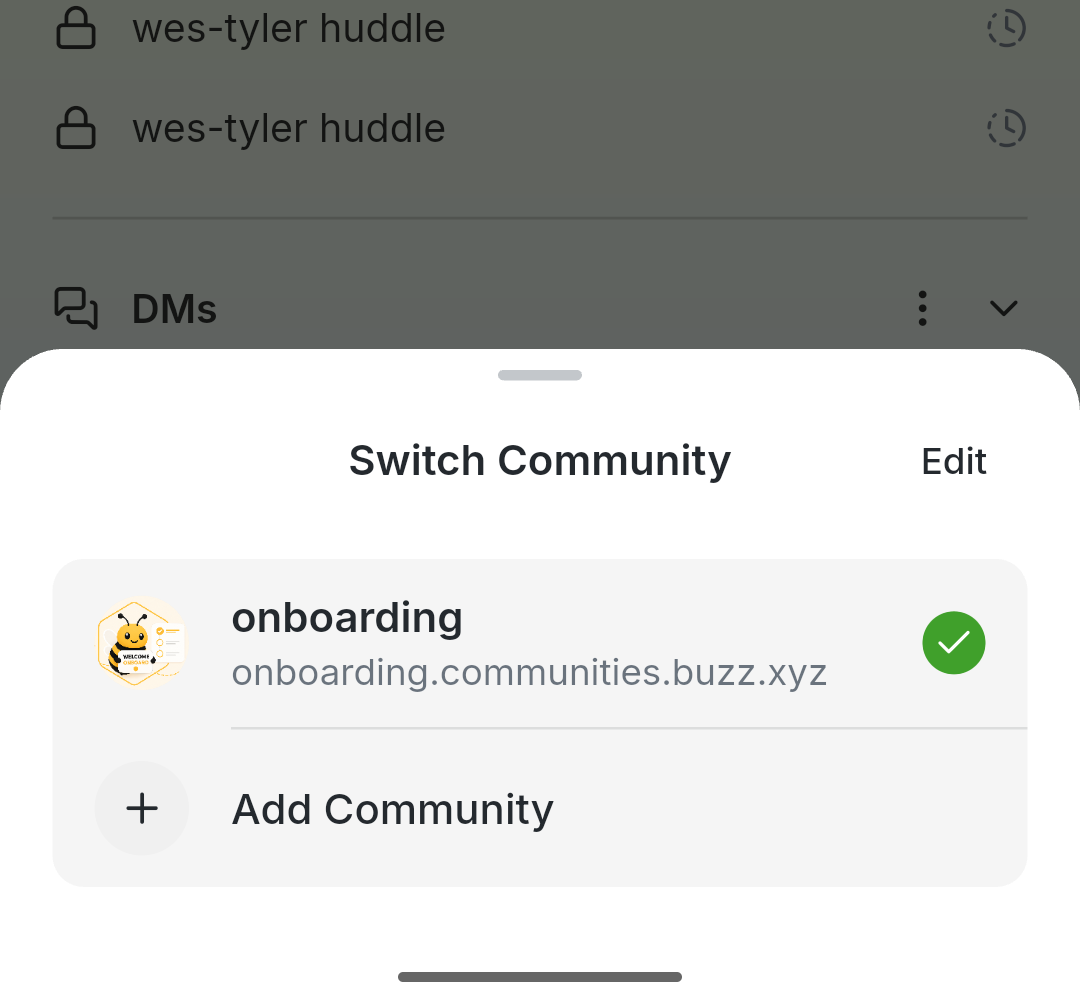
## Summary
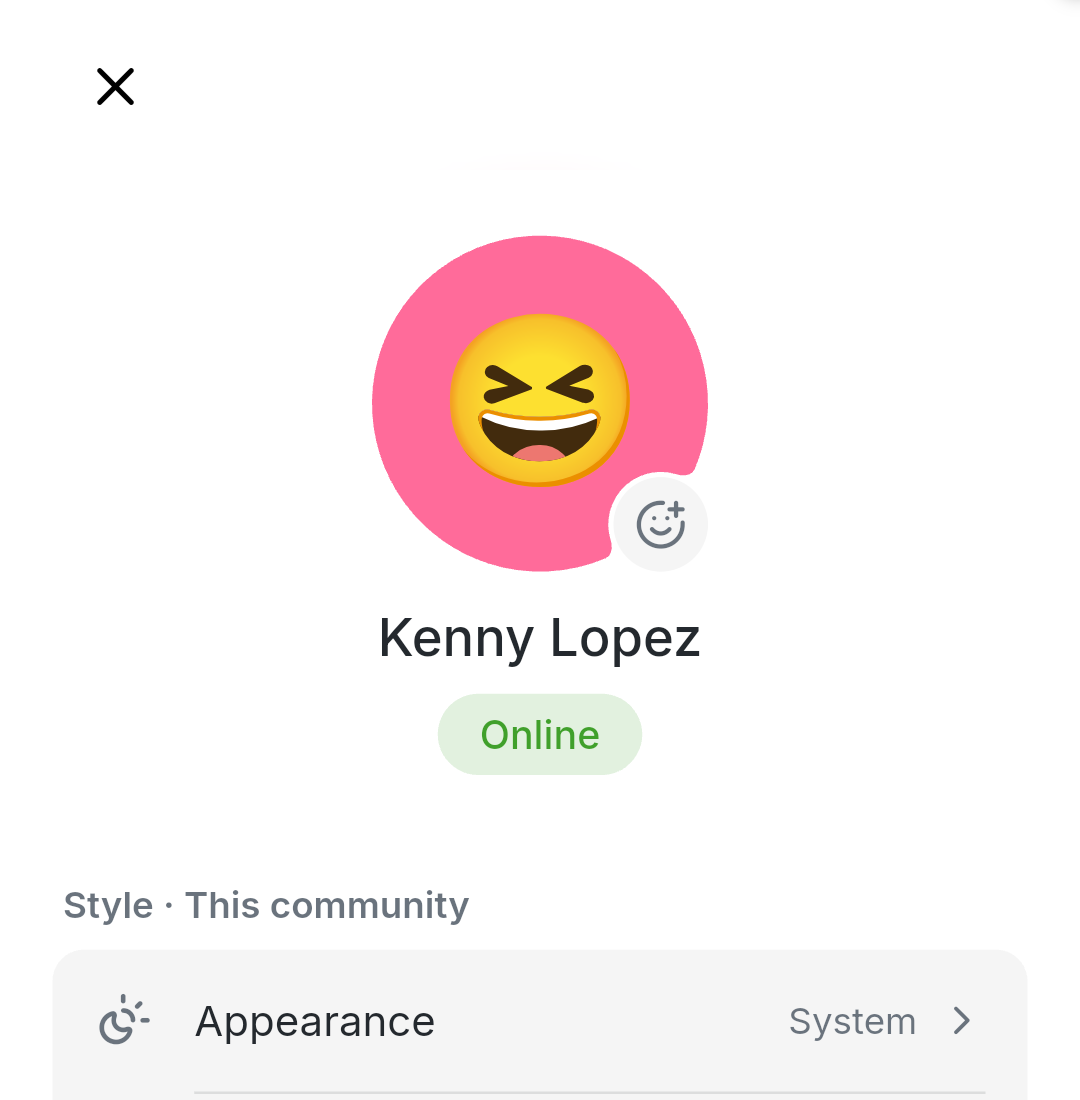
- add poster-first, tap-to-toggle animated avatars on profile surfaces
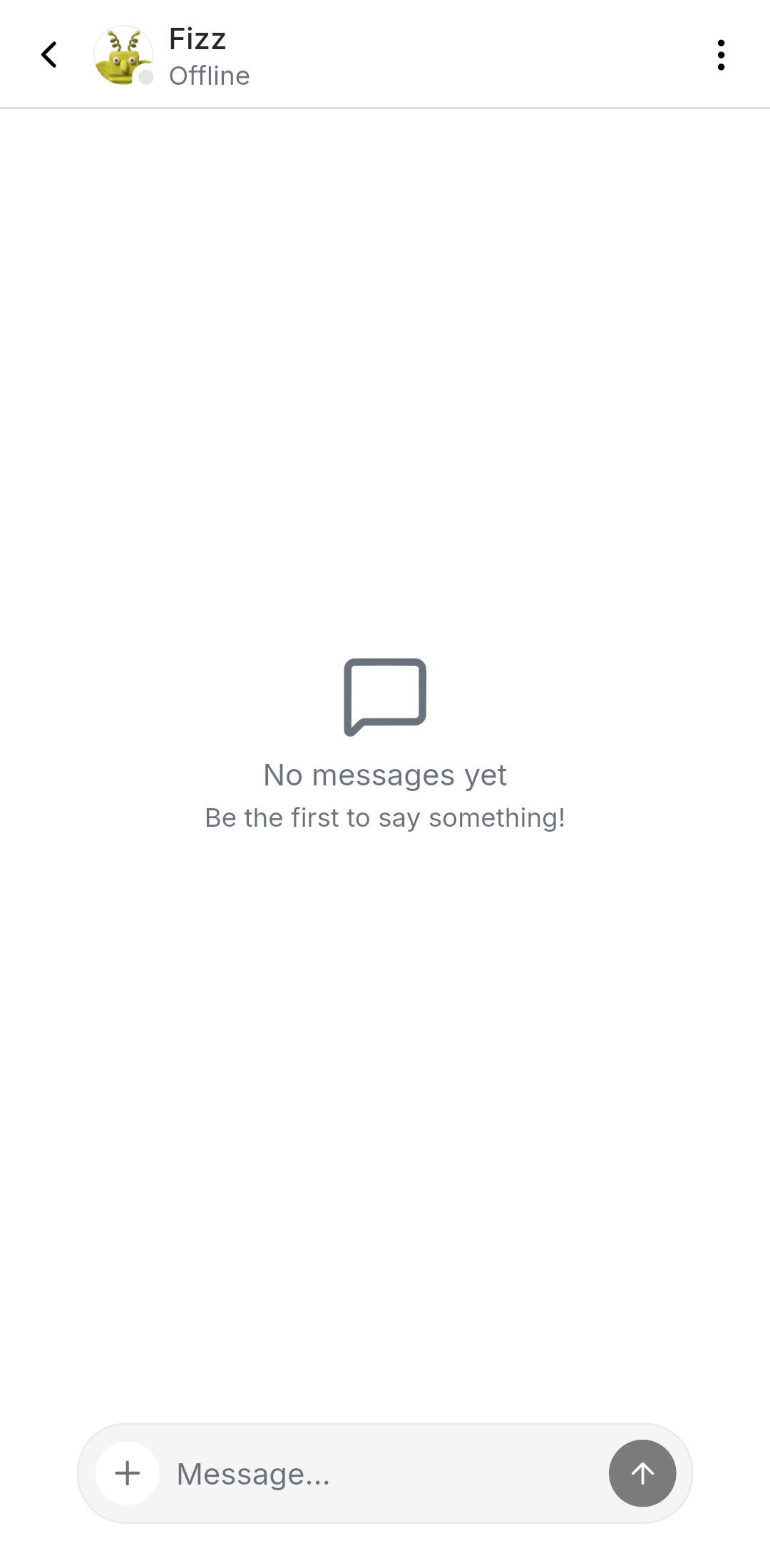
while preserving transparent/static behavior elsewhere
- align mobile DM headers, membership actions, and invisible agent
recipient addressing with established desktop semantics
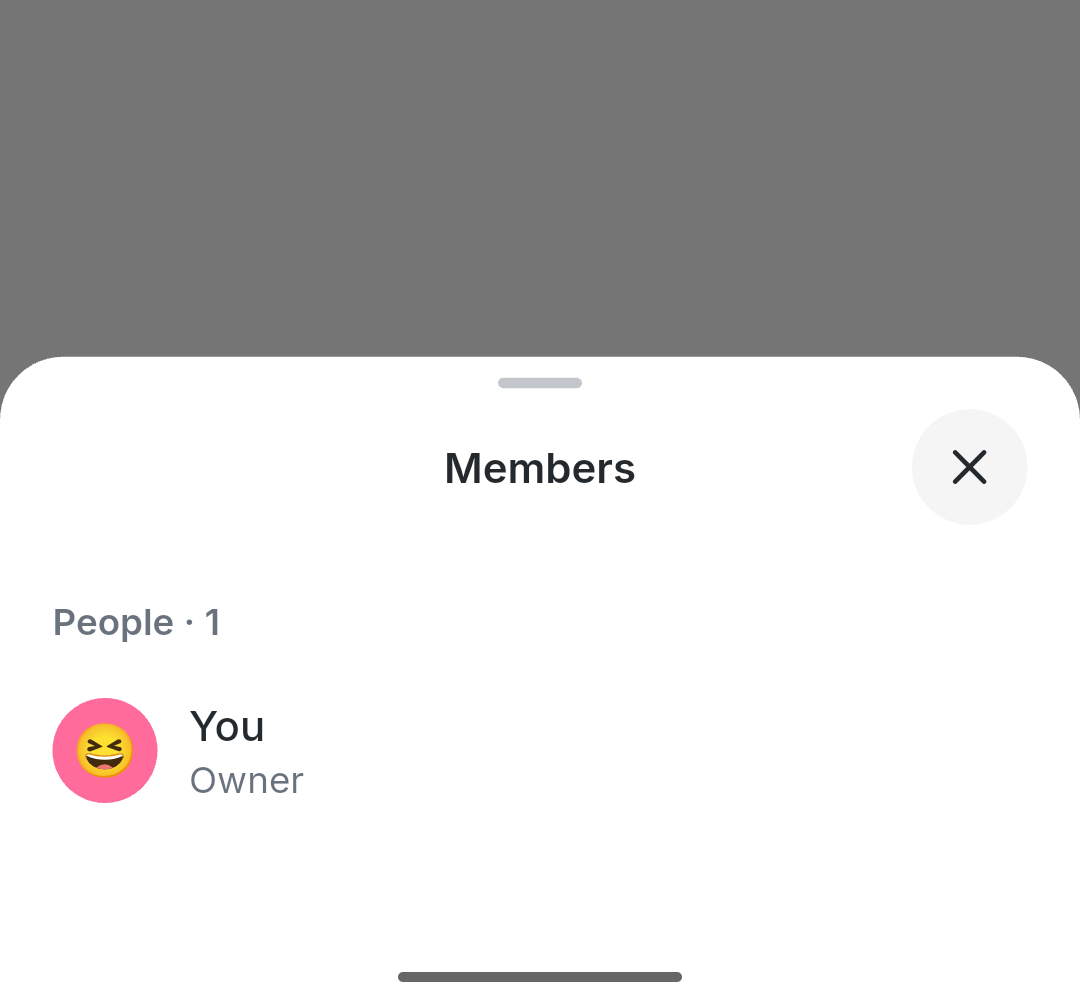
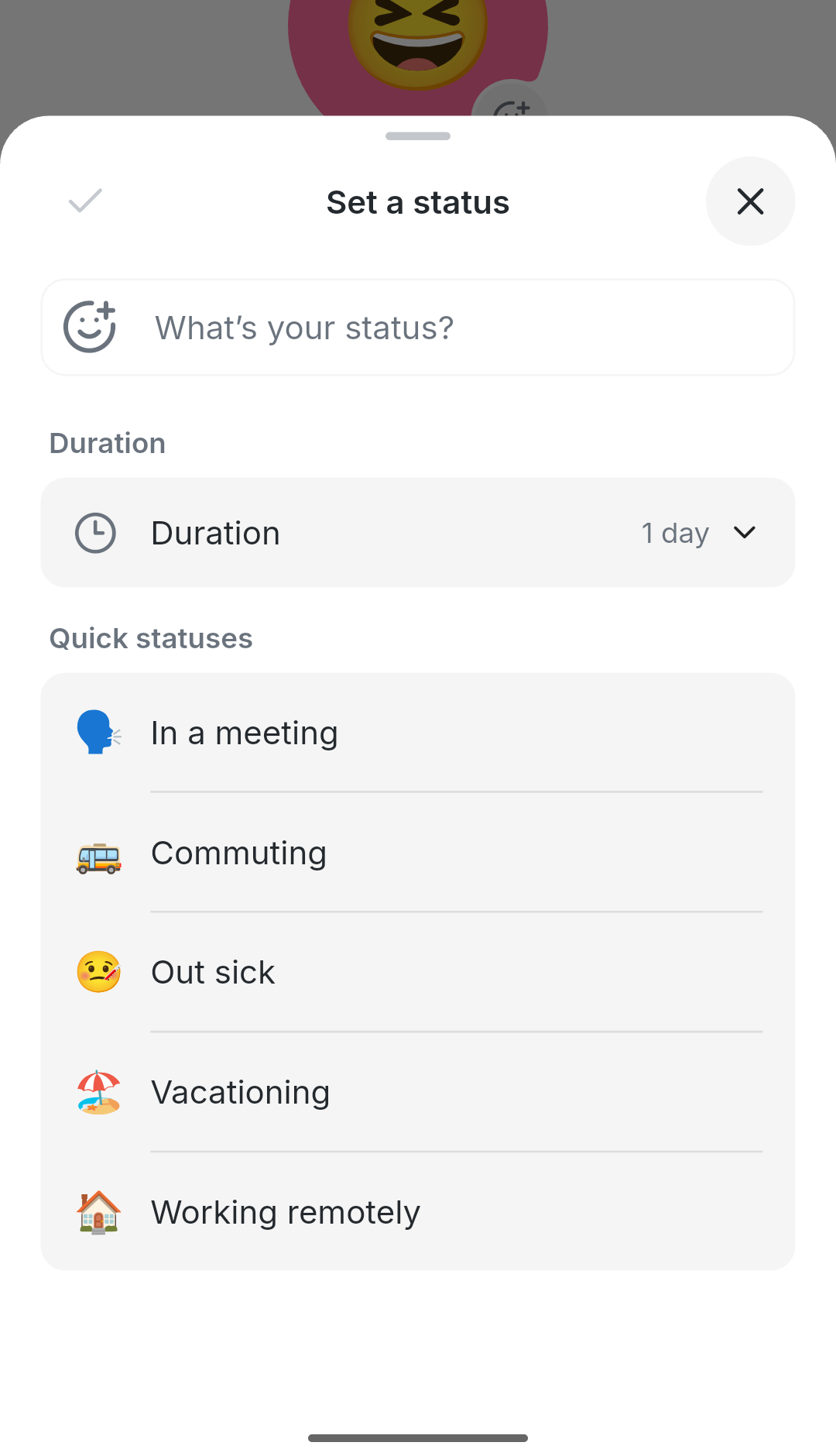
- polish titled sheets and status editing, preserve native iOS sheet
corners, and batch relay reads to improve review-build responsiveness

## Snapshots

<table>
  <tr>
    <th>Profile avatar</th>
    <th>Agent DM header and composer</th>
  </tr>
  <tr>
<td><img
src="https://raw.githubusercontent.com/block/buzz/e8de7495451dbe1a393ab43c5e204ca7425f2ba5/pr-5401--profile-avatar.png"
width="360" alt="Mobile profile settings with animated avatar
surface"></td>
<td><img
src="https://raw.githubusercontent.com/block/buzz/e8de7495451dbe1a393ab43c5e204ca7425f2ba5/pr-5401--agent-dm.png"
width="360" alt="Agent direct message with masked presence and normal
composer"></td>
  </tr>
  <tr>
    <th>Members sheet</th>
    <th>Status editor</th>
  </tr>
  <tr>
<td><img
src="https://raw.githubusercontent.com/block/buzz/e8de7495451dbe1a393ab43c5e204ca7425f2ba5/pr-5401--members-sheet.png"
width="360" alt="Members bottom sheet with centered title and padded
content"></td>
<td><img
src="https://raw.githubusercontent.com/block/buzz/e8de7495451dbe1a393ab43c5e204ca7425f2ba5/pr-5401--status-sheet.png"
width="360" alt="Status editor bottom sheet with duration and quick
statuses"></td>
  </tr>
  <tr>
    <th colspan="2">Switch Community</th>
  </tr>
  <tr>
<td colspan="2" align="center"><img
src="https://raw.githubusercontent.com/block/buzz/e8de7495451dbe1a393ab43c5e204ca7425f2ba5/pr-5401--switch-community.png"
width="720" alt="Switch Community bottom sheet with centered title and
aligned Edit action"></td>
  </tr>
</table>

## Validation
- `just mobile-check`
- `just mobile-test` (1,283 tests)
- installed and reviewed isolated debug builds on iPhone and Pixel

---------

Signed-off-by: kenny lopez <klopez4212@gmail.com>
Signed-off-by: Princess Donut <b238ea756dee4d98afa5883fc7f1de61eeabe65bf700e3a5a5a80db5e42e2c2b@buzz.block.builderlab.xyz>
Signed-off-by: Kenny Lopez <klopez4212@gmail.com>
Signed-off-by: Wes <wesbillman@users.noreply.github.com>
Co-authored-by: Princess Donut <b238ea756dee4d98afa5883fc7f1de61eeabe65bf700e3a5a5a80db5e42e2c2b@buzz.block.builderlab.xyz>
Co-authored-by: Wes <wesbillman@users.noreply.github.com>
Co-authored-by: Carl <c7ebe626f000404285d3686e1dc74cc07cc60a9754a150041ba132e14bd3e2ec@buzz.block.builderlab.xyz>
|