## Summary
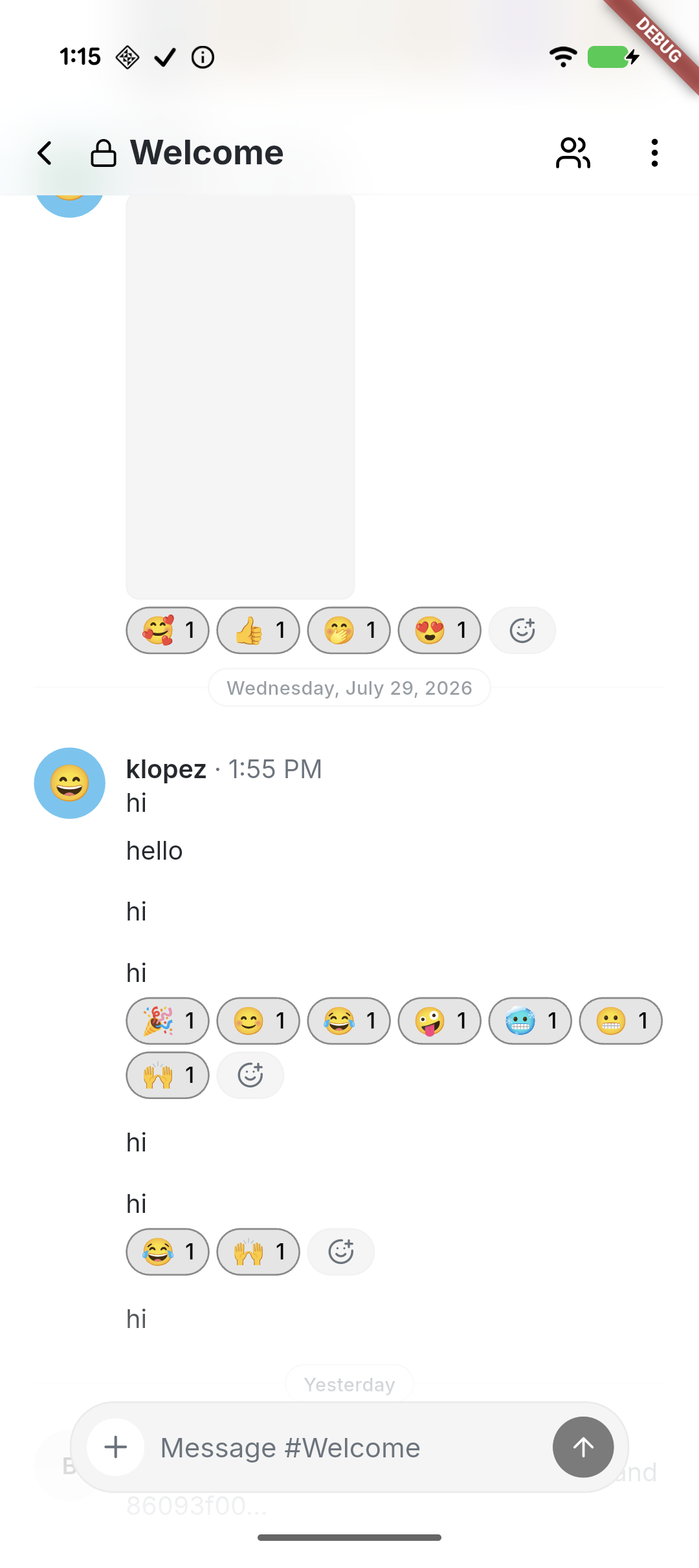
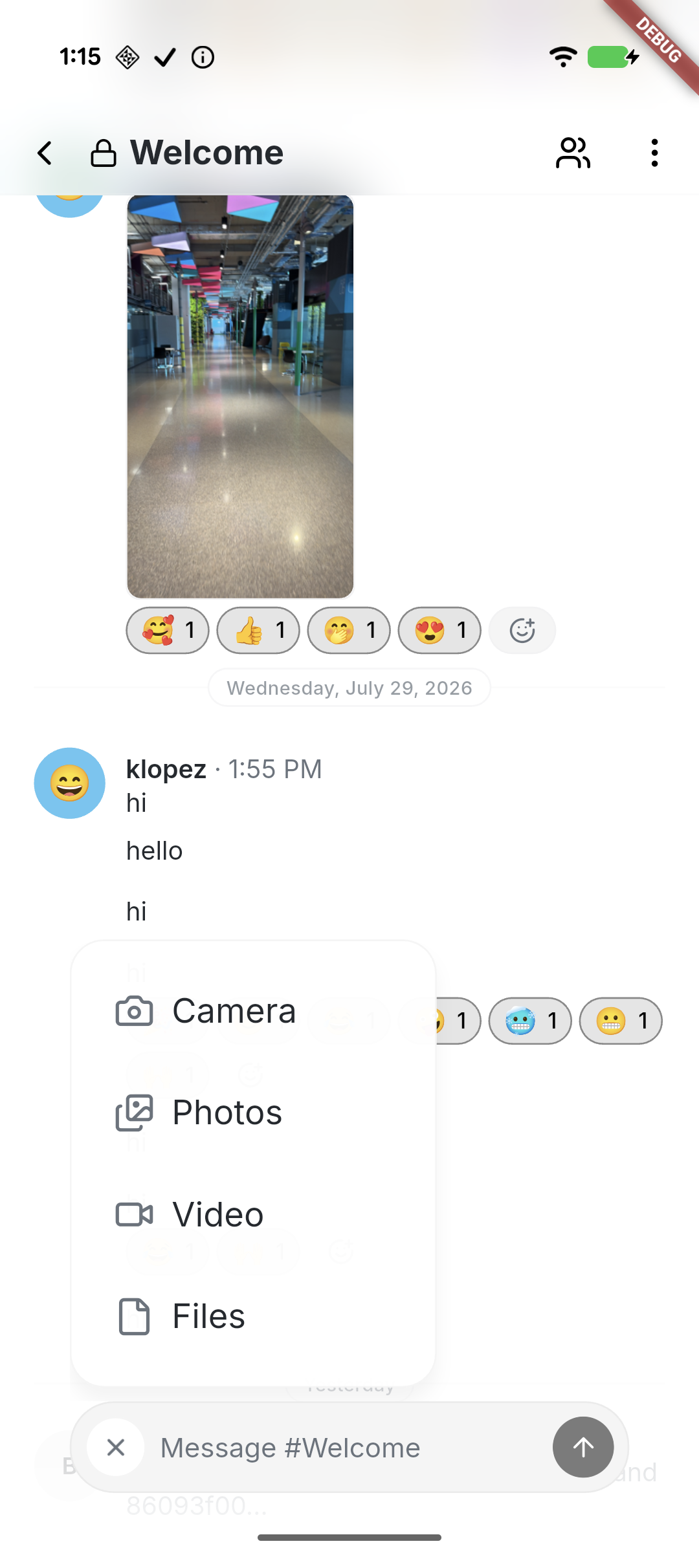
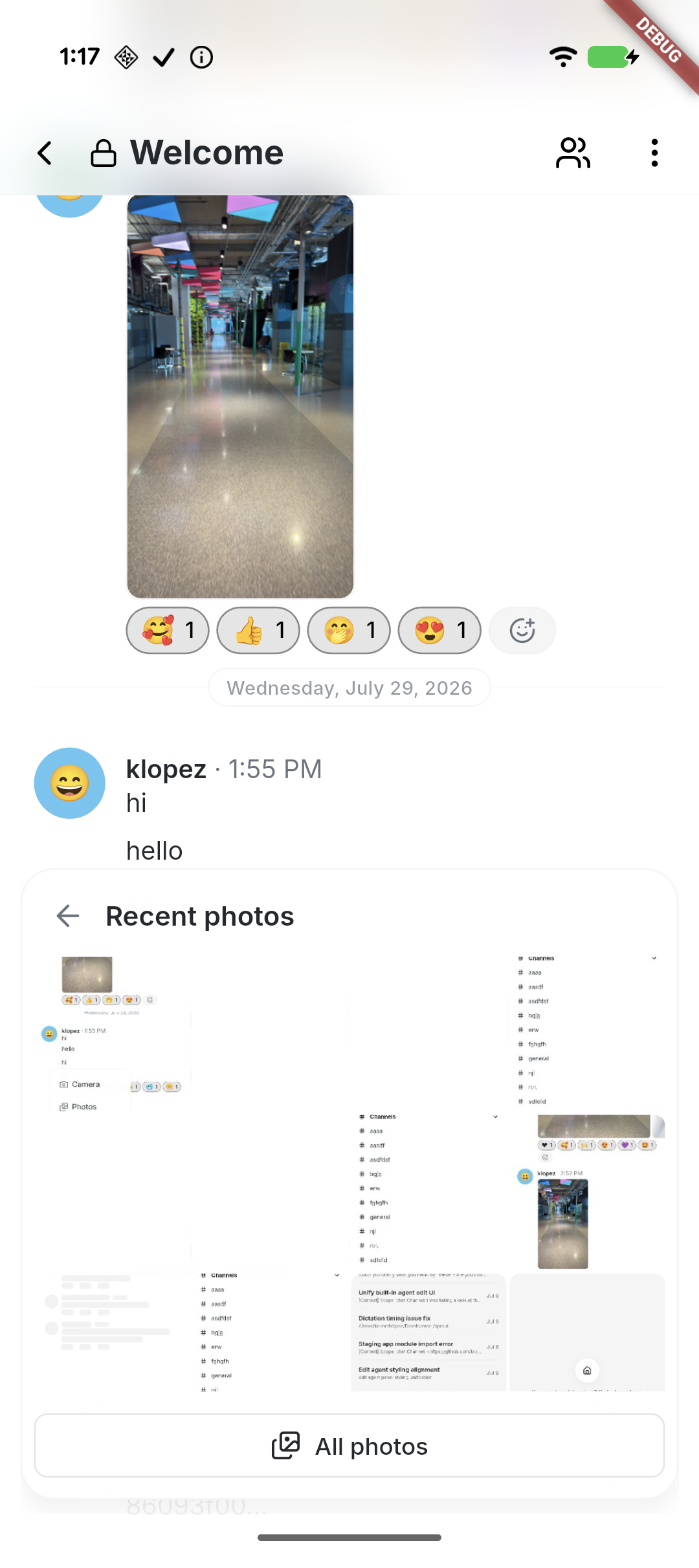
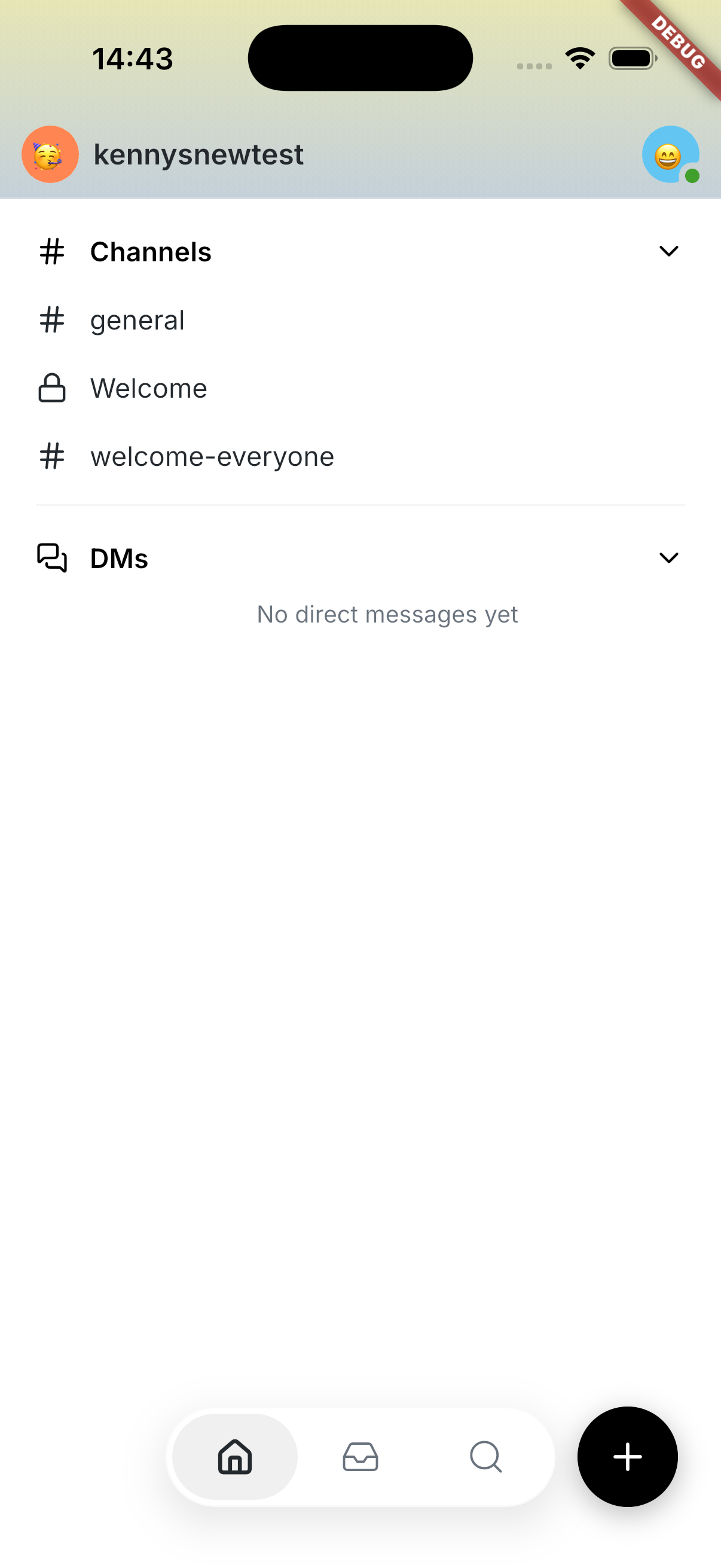
Use rounded, grouped rows consistently across mobile sheets and menus,
including Members and list pickers. Keep sheet content above the system
gesture area with 4dp of extra bottom padding on Android and iOS.

### Related issue
No duplicate found; related member-picker work: #4051.

### Testing
- Mobile analysis, formatting, file-size checks, and full mobile test
suite pass.
- Android build installed and launched on Pixel 10.
- Before/after Members previews use sample data (attached below).
- Full `just ci` stopped during Rust compilation because local disk
space ran out.

Signed-off-by: kenny lopez <klopez4212@gmail.com>
## Summary
Inline code on mobile renders as **bold body text on a faint background
wash** — no monospace face, no chip, and it cannot wrap. #5257 diagnosed
this as a missing `highlightBuilder`.
That is no longer the right fix. `gpt_markdown` 1.2.0 deprecates
`highlightBuilder` (removal in 2.0.0), renders inline code as a real
chip, and adds `InlineCodeStyle` for restyling it. The package author
confirmed this on the issue. So this PR is an upgrade — 1.1.6 → 1.2.1 —
plus one theme declaration, rather than the builder the issue originally
asked for.
**Where the style is declared.** `GptMarkdownThemeData` goes in
`AppTheme._buildTheme`, which both `light()` and `dark()` call. That
reaches all four `GptMarkdown` call sites — `message_content`,
`transcript_item_widget`, `token_pill`, `custom_emoji_render` — so the
style is stated once instead of per widget. A widget-level
`inlineCodeStyle` would have covered channel messages only, leaving the
other three on the package's defaults.
**What is declared.** Face, size, ink, chip fill and outline — not the
face alone. A face name on its own leaves the rest on the package's
defaults, which put inline code at 14.1sp beside a fenced block's 13, on
a neutral `onSurface` tint rather than the app's code surface. In dark
that tint is *lighter* than the surface, while every other code surface
in the app is recessed, so the chip read as a different kind of object.
All of it now comes from one `CodeStyle` declaration that the fenced
block reads from too, so the two cannot be edited apart.
**Three adaptations the upgrade requires.** Each was found by running
the gate, not by reading the changelog:
1. **`imageBuilder` widened** to `(context, url, width, height)`. This
is a hard compile error, and it is **not listed in the package's
migration guide**, which states "nothing here stops code compiling".
Worth reporting upstream.
2. **`autolink` now defaults to `true`.** `normalizeBareLinks()` already
rewrites bare URLs into Markdown links before rendering, so both would
run. `message_content` opts out with `autolink: false` to keep current
behaviour exactly. The migration guide argues for dropping the
pre-processor instead — a better fix, but a behavioural change that
belongs in its own PR.
3. **`gpt_markdown.dart` now re-exports `markdown_config.dart`**, making
two direct imports redundant. `flutter analyze` reports `No issues
found!` on 1.1.6 and flags both on 1.2.1, so these warnings are new, not
pre-existing.
**Deliberately out of scope.** The three non-message call sites now
autolink bare URLs, since only `message_content` has a pre-processor to
collide with. Custom inline components (`_MentionMd`, `CustomEmojiMd`,
`_ChannelLinkMd`) could additionally declare `allScopesExceptLinkLabel`
— 1.2.0 offers it as the fix for a `WidgetSpan` chip going blank inside
a link label on iOS — but current behaviour is unchanged without it, so
that stays a separate change.
### Related issue
Fixes#5257
Duplicate scan: searched `gpt_markdown`, `inline code mobile`,
`highlightBuilder` and `InlineCodeStyle` across both PRs and issues. No
open PR touches inline code styling. #6135 (link labels) and #6166 (text
selection) also touch mobile Markdown but address different defects.
### Testing
Full gate, `just ci` — exit 0:
| Stage | Result |
|---|---|
| Rust (33 suites) | 4768 passed, 0 failed |
| Desktop | 5799 passed, 0 failed |
| Mobile | **2011 passed**, 0 failed |
| `flutter analyze` | `No issues found!` |
| Desktop + web build | ok |
Run on the branch with `main` merged in, so these numbers match what CI
builds.
**New regression test** — `renders inline code in the app code style`.
It resolves the `CodeTextSpan` the package tags inline code with, which
carries both the resolved `TextStyle` and the colours the chip behind it
is painted with, so face, size, ink, fill and outline are all asserted
rather than a widget's presence. It is negative-controlled: reverting
only the theme declaration fails it with
```text
Expected: a numeric value within <0.001> of <13.0>
Actual: <14.1>
```
and dropping the declaration entirely falls back to
`packages/gpt_markdown/JetBrainsMono` — so the test measures the real
thing, and it would catch a future regression that silently drops the
theme extension.
The test passes `baseStyle: messageBodyTextStyle`, the style the message
surfaces actually use; the widget's own fallback is the smaller
`bodyMedium`, which would move the expected size.
The test finds paragraphs with `find.byWidgetPredicate((widget) =>
widget is RichText)`, not `find.byType(RichText)`: inline code renders
through `BidiRichText`, a `RichText` subclass, and `byType` matches
exact runtime types.
That is a hazard for any test that reads text back out of a paragraph,
and one landed after this branch was cut:
`message_content_custom_emoji_test.dart` arrived with #6996 and its
`code keeps literal emoji while adjacent known tokens render` case reads
a code span through `find.byType(RichText)`. It passes on `main` and
fails on the merge result, which is what CI builds, so it went red only
once CI was authorized. It now uses the same predicate. The two other
`byType(RichText)` call sites — the rest of that file and
`message_author_meta_test.dart` — were re-run and pass: their content
carries no code span, so the exact type still matches. They were left
alone.
### Screenshots
Rendered through the real `MessageContent` widget with the app's own
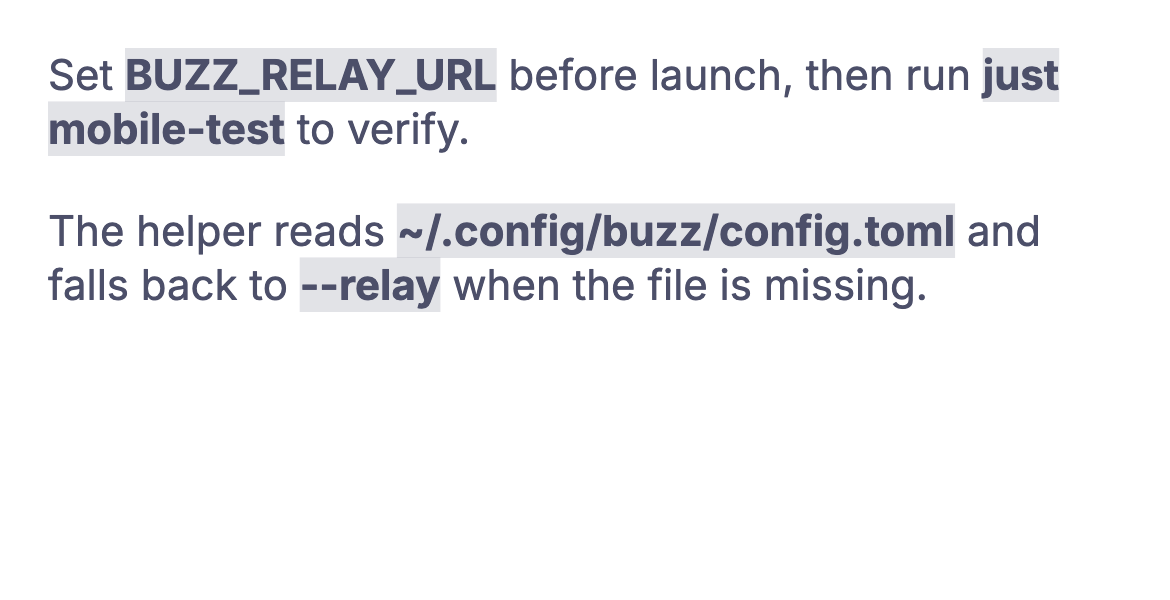
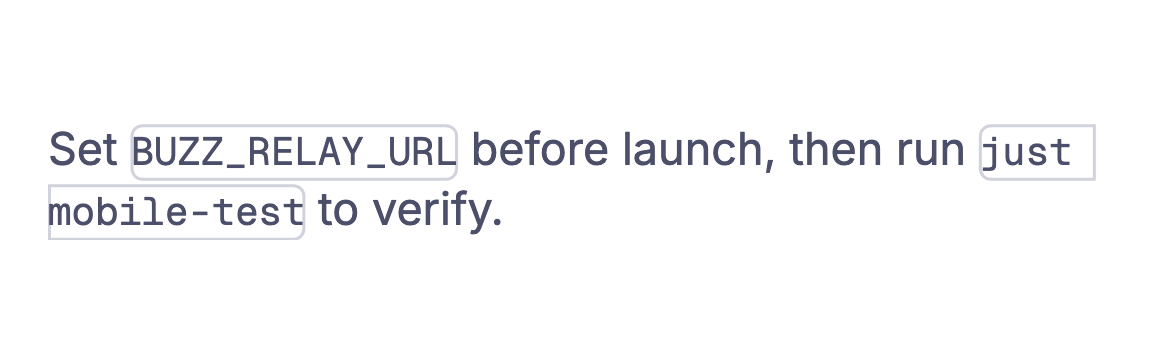
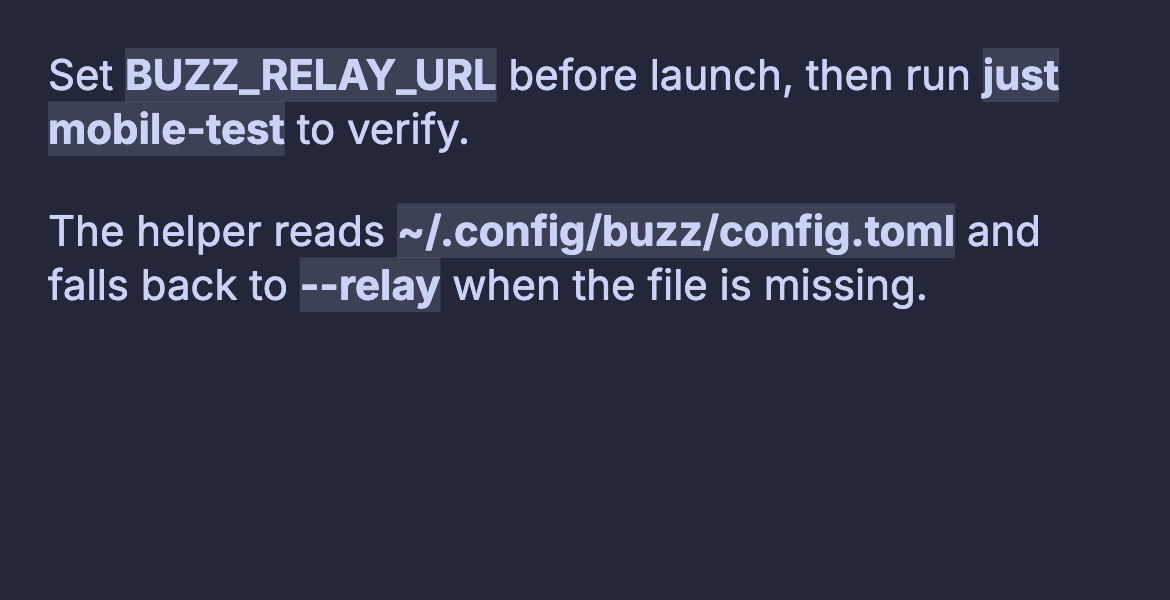
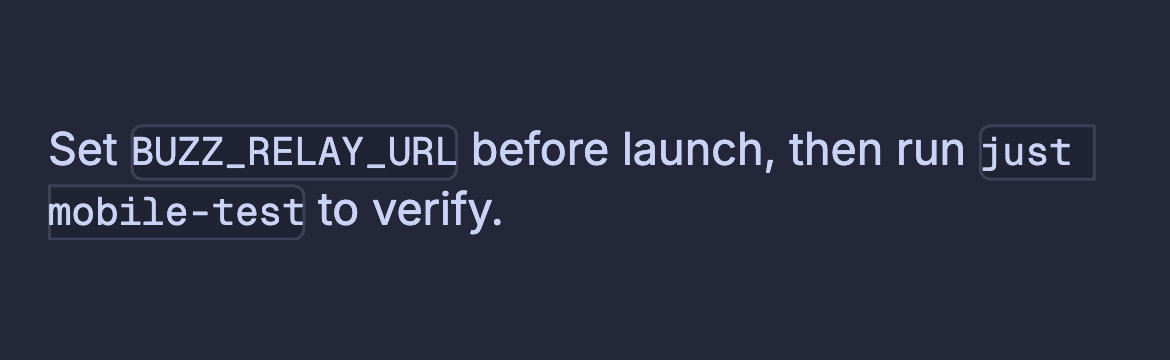
fonts loaded, at 390pt wide, 3x DPR. Sample text: ``Set `BUZZ_RELAY_URL`
before launch, then run `just mobile-test` to verify.``
| | Before (1.1.6) | After (1.2.1) |
|---|---|---|
| Light |
|
|
| Dark |
|
|
Before: bold Inter on a flat wash, no chip edge, and `just mobile-test`
breaks across the line with the wash simply ending. After: Geist Mono in
a bordered, rounded chip, and the wrapped fragment gets its own chip on
each line.
---------
Signed-off-by: Tolga Cinisli <tolgacinisli@gmail.com>
Co-authored-by: Tolga Cinisli <tolgacinisli@gmail.com>
**Category:** new-feature
**User Impact:** Mobile now keeps each community’s appearance in sync
with desktop, including theme, accent, and system-mode preference.

**Problem:** Appearance choices were device-local, so the same account
could look different between desktop and mobile. Live sync could also
stop after the relay closed a subscription.

**Solution:** Store each community’s encrypted appearance preference on
its relay using the shared desktop wire contract, restore it from a
local identity-scoped cache, and apply replacement events live. Closed
subscriptions now recover with guarded backoff and fetch the latest
preference so no update is lost during the gap.

<details>
<summary>File changes</summary>

**mobile/lib/app.dart**
Connects community appearance state to the authenticated app lifecycle.

**mobile/lib/features/settings/accent_picker_page.dart**
Aligns mobile accent choices and selection behavior with the shared
catalog.

**mobile/lib/features/settings/settings_page/appearance_section.dart**
Clarifies the active appearance and hides accent controls when the Buzz
theme owns its neutral accent.

**mobile/lib/features/settings/theme_picker_page.dart**
Persists catalog theme choices through the community-scoped provider.

**mobile/lib/shared/theme/accent_colors.dart**
Matches desktop’s accent catalog and wire values.

**mobile/lib/shared/theme/buzz_theme.dart**
Keeps Buzz visually neutral without discarding the user’s stored accent
for other themes.

**mobile/lib/shared/theme/community_theme_preference.dart**
Defines and validates the versioned desktop-compatible appearance
payload.

**mobile/lib/shared/theme/community_theme_provider.dart**
Coordinates cache-first appearance loading with account and community
changes.

**mobile/lib/shared/theme/community_theme_sync.dart**
Adds encrypted NIP-78 relay persistence, live replacement handling,
deterministic ordering, safe seeding, and resilient subscription
recovery.

**mobile/lib/shared/theme/theme.dart**
Exports the community appearance modules.

**mobile/test/features/settings/theme_picker_page_test.dart**
Covers the updated settings behavior.

**mobile/test/shared/crypto/nip44_interop_test.dart**
Proves Dart decrypts a desktop-produced nostr-rs NIP-44 v2 preference.

**mobile/test/shared/theme/buzz_theme_test.dart**
Covers Buzz’s neutral rendering and stored-accent restoration.

**mobile/test/shared/theme/community_theme_preference_test.dart**
Covers wire parsing, validation, migration, and future-version handling.

**mobile/test/shared/theme/community_theme_sync_test.dart**
Covers cache/relay lifecycle, replacement ordering, switching races,
absence-only seeding, and closed-subscription recovery.

</details>

## Reproduction steps

1. Sign into desktop and mobile with the same account and join the same
community relay.
2. On desktop, choose a distinctive non-Buzz theme and accent; mobile
should update without a local toggle.
3. Restart mobile and confirm it restores the same appearance.
4. Change the mobile theme and accent and confirm desktop follows.
5. Leave mobile idle or backgrounded through a relay reconnect, then
change desktop again; mobile should resubscribe and catch up
automatically.
6. Switch communities and confirm each community restores only its own
appearance.

---------

Signed-off-by: Taylor Ho <taylorkmho@gmail.com>
Co-authored-by: npub1223z34hd7vtwc6qj4s7flsxkj644nlre2nthu7lrrmkumhu3xddsrx9r6w <52a228d6edf316ec6812ac3c9fc0d696ab59fc7954d77e7be31eedcddf91335b@buzz.block.builderlab.xyz>
## Summary
- replace mobile connecting and reconnecting banners with element-shaped
skeletons for channel lists and message timelines
- add a low-contrast two-second shimmer and same-slot reveal, with
reduced-motion support
- align top, section, loaded-row, and skeleton label columns

## Why
Connection banners shifted content and did not match the desktop loading
treatment. The skeletons preserve layout and make reconnects less
disruptive.

## Testing
- `just mobile-check`
- `just mobile-test` — 704 passed, 1 skipped
- Pixel 10 visual verification in loaded and reconnecting states

---------

Signed-off-by: kenny lopez <klopez4212@gmail.com>
## Summary
- reorganize mobile settings around profile, appearance, and connection
cards
- add System/Light/Dark theme pairing, accent selection, and the Buzz
gradient theme
- align avatar badges, status editing, and supporting mobile chrome

## Test plan
- `just mobile-check`
- `just mobile-test`
## Summary

- Refine mobile navigation with icon-only tabs, haptics, a solid active
state, and spring quick actions.
- Bring Create channel and New message closer to desktop with radio
settings, keyboard submission, relay people, and wrapped recipient
chips.
- Keep both sheets draggable below the status area and prevent keyboard
overflow with many recipients.

## Testing

- `just mobile-check`
- `just mobile-test`
- Pixel 10 manual verification