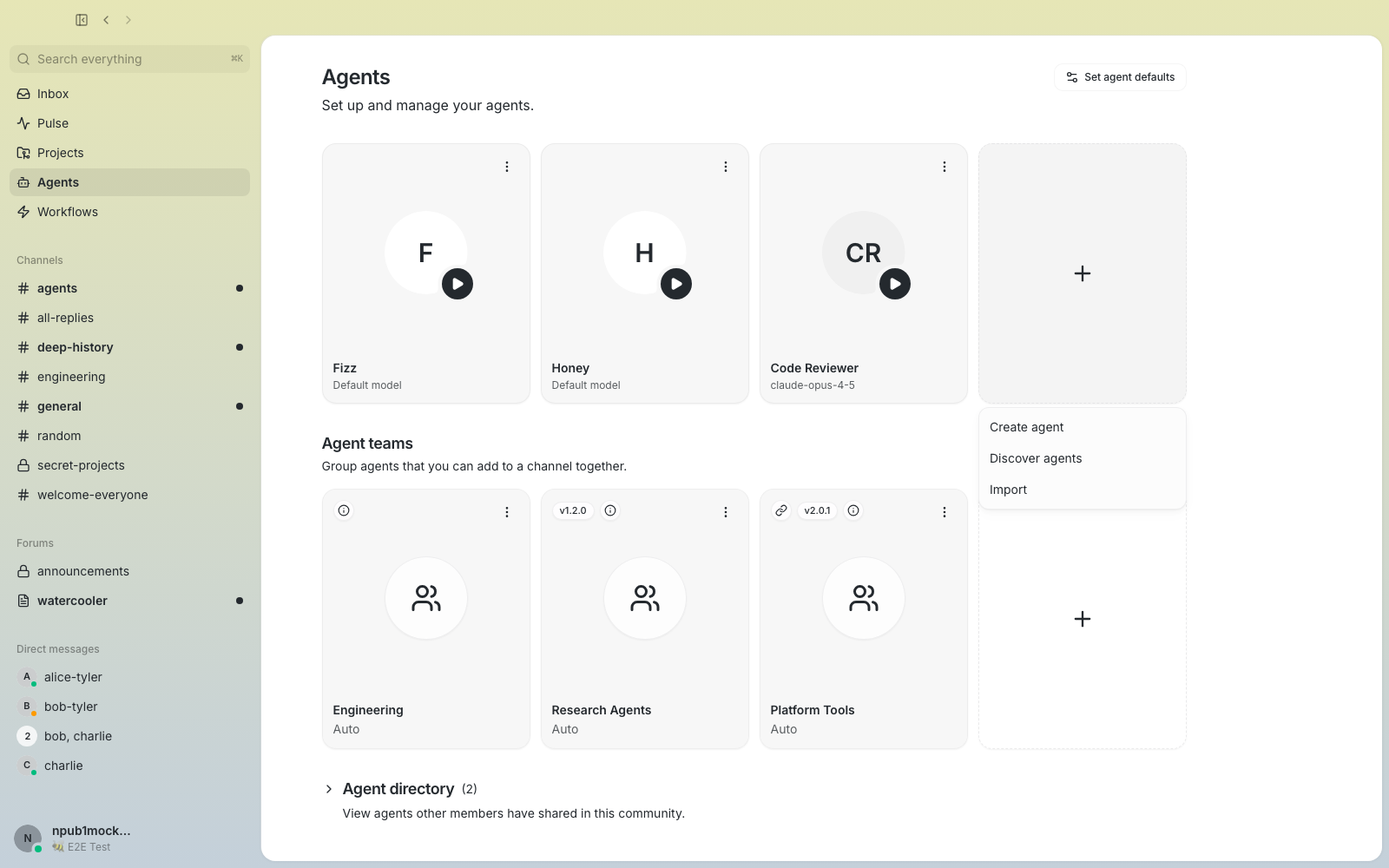
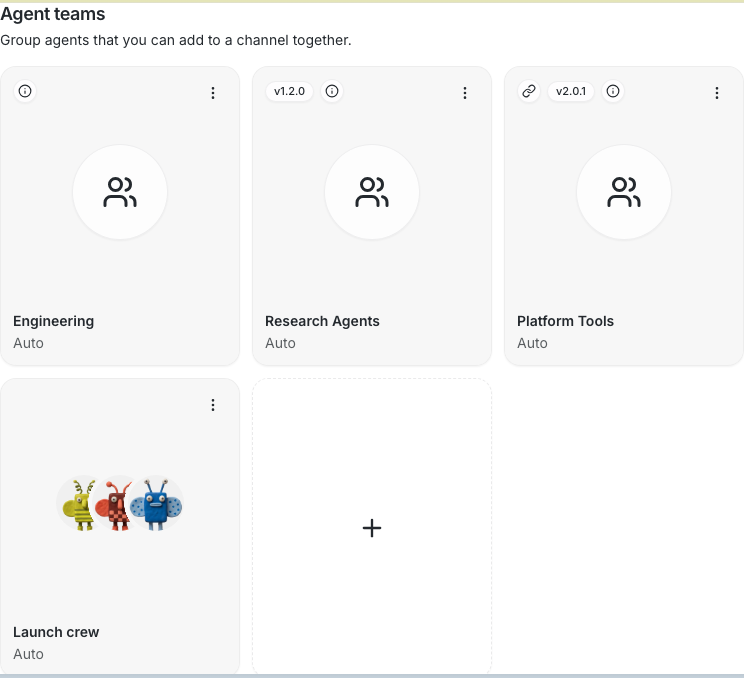
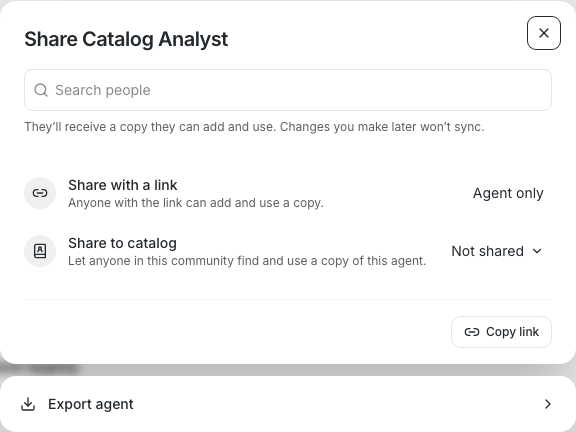
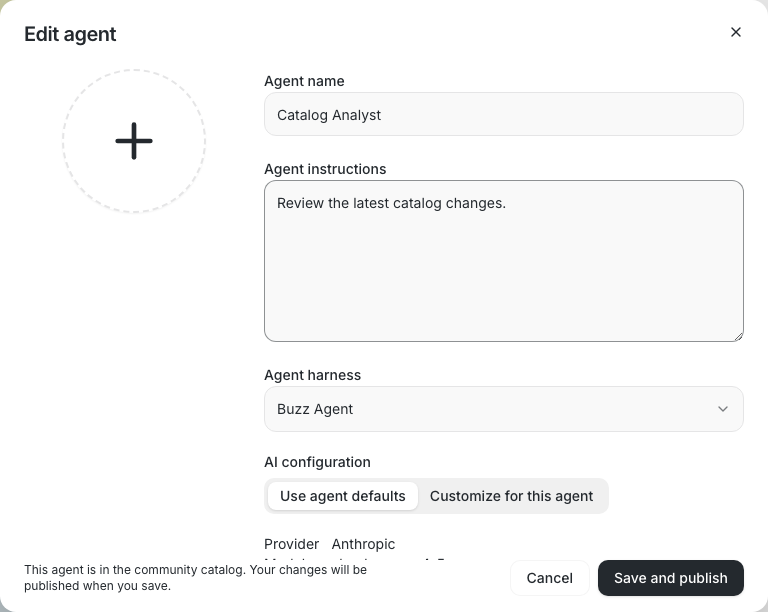
## Summary

- render existing shared personas whose catalog avatar is a bounded
inline PNG, JPEG, GIF, or WebP data URL
- keep rejecting arbitrary, malformed, unsupported, and oversized
`data:` URLs
- preserve hosted relay URLs as the forward format; catalog browsing
remains read-only

## Root cause

Paul's live shared kind:30175 head contains a 144,878-character
`data:image/png;base64,...` avatar. The catalog projection accepted
HTTP(S) URLs and bounded percent-encoded SVG emoji avatars only, so it
projected Paul's avatar to `null` before `ProfileAvatar` rendered it.
The owner still saw the local persona avatar, producing the reported
owner/viewer mismatch.

This patch accepts only four raster MIME types with strict base64 shape
and a 256 KiB total URL cap at the existing catalog parsing boundary. It
repairs already-signed heads such as Paul without viewer-side uploads or
publication side effects.

Hosted media remains the canonical forward path. #3578 uploads inline
raster avatars during snapshot import, preventing the known source from
creating future inline persona/profile values; existing signed catalog
heads still need this compatibility path until their owners republish.

## Agent instruction finding

The catalog publishes `AgentDefinition.system_prompt` verbatim as the
user-authored **Agent instruction**, as documented by the sharing UI and
NIP-AP. No Buzz base/core/runtime prompt is concatenated in the publish,
catalog, or import path. This PR therefore does not remove authored
instructions and accidentally strip copied agents of their behavior.

## Validation

- targeted `personaCatalogRelay.test.mjs`: 24 passed
- Desktop typecheck: passed
- pre-push Desktop frontend suite: 3,771 passed
- pre-push Desktop checks: passed
- `git diff --check`: passed
- independent review: no blockers, 9.4/10

Signed-off-by: Wes <wesbillman@users.noreply.github.com>
Co-authored-by: Carl <c7ebe626f000404285d3686e1dc74cc07cc60a9754a150041ba132e14bd3e2ec@buzz.block.builderlab.xyz>
## Summary

Fixes two distinct fidelity failures in direct agent sharing:

- The sender now puts the same effective avatar shown on the agent card
into People-share and file-export snapshot PNGs, including
profile/kind:0 fallback avatars.
- The importer now persists the visible PNG body as the portable avatar
instead of ignoring it in favor of sender-local manifest references.
- Export materializes inherited runtime, provider, and model identifiers
verbatim, while preserving explicit definition values. It does not
translate or substitute configuration for a different recipient setup.
- Sharing waits for a profile-only fallback avatar query, preventing an
early-click race.

The PNG import path keeps the existing safety invariant: decode is
capped at 2048×2048 / 32 MiB and re-encoded avatars above the 2 MiB
inline limit fall back to the manifest reference. The exact transparent
1×1 no-avatar placeholder is ignored.

The original Tyler↔Wes screenshot demonstrates both stages: Wren's
attachment had an avatar that disappeared after **Add agent**
(receiver/import failure), while Pinky's attachment was already blank
(sender/projection failure).

### Related issue

N/A — reported and traced in the linked Buzz conversation.

### Testing

- `cargo test --manifest-path desktop/src-tauri/Cargo.toml
commands::personas::snapshot` — 57 passed
- `pnpm exec tsc --noEmit`
- Biome check on changed frontend/E2E files
- Pre-push hooks:
  - desktop check
  - desktop tests
  - desktop Tauri tests — 1853 passed, 14 ignored
  - file-size ratchet

The People-share E2E regression asserts that a profile-only avatar
reaches `avatarPngDataUrl` in the real encode command payload.

---------

Signed-off-by: Wes <wesbillman@users.noreply.github.com>
Co-authored-by: Carl <c7ebe626f000404285d3686e1dc74cc07cc60a9754a150041ba132e14bd3e2ec@buzz.block.builderlab.xyz>
Fixes#2787
- Added `claude-opus-5` to `config.rs` model classification and adaptive
effort helpers.
- Updated fixture test configurations to cover `claude-opus-5`.
- Verified with `cargo test` and JS unit tests.
Signed-off-by: Apurva Shaw <apurvashaw@Apurvas-MacBook-Air.local>
Co-authored-by: Apurva Shaw <apurvashaw@Apurvas-MacBook-Air.local>
Registering a custom ACP harness works today, but only from Settings →
Agents. Anyone whose first touchpoint is "New agent" has no way to
discover the custom path — the dropdown just lists the baked-in presets
plus whatever was registered earlier. This adds an inline "Add custom
harness…" entry to the harness dropdown in all three agent surfaces:
create, edit-definition (`AgentDefinitionDialog`), and instance edit
(`AgentInstanceEditDialog`).

The entry is a sentinel option (`ADD_CUSTOM_HARNESS_VALUE`, NUL-prefixed
so it can never collide with a real harness id — backend ids match
`[a-z0-9_][a-z0-9_-]*`), mirroring the `CUSTOM_ENTRY_ID` trick already
used in `HarnessCatalogDialog`. Picking it never writes into form state;
it opens `AddCustomHarnessDialog`, a thin modal wrapper hosting the
existing `CustomHarnessForm` in `chromeless` mode. `CustomHarnessForm`'s
`onSaved` now carries the saved `definition.id` (the form may rewrite
it); the two existing call sites ignore the argument, so their behavior
is unchanged.

Selection after save is deferred rather than immediate.
`usePendingHarnessSelection` holds the saved id until the runtime
catalog actually publishes it via discovery, then selects it exactly
once — so the dialog never selects an id it cannot render, and
back-to-back registrations resolve correctly. The wait is scoped to the
owning dialog's `open` state: both host dialogs stay mounted when
closed, so an unpublished id is dropped on close rather than selecting
into reset form state when discovery later catches up. Selection is
routed through each dialog's normal dropdown change handler, so
provider/model reset (and command pinning in the instance dialog) behave
identically to a hand-picked harness. Dismissing the modal leaves the
previous selection untouched. `AgentInstanceEditDialog`'s existing
"Custom command" option is a different feature (ad-hoc command override
vs. a registered reusable harness) and is untouched.

Coverage is 16 unit tests in `addCustomHarness.test.mjs` (real React
mount, following the existing `.test.mjs` pattern) plus 4 Playwright
specs in `inline-custom-harness.spec.ts` covering all three surfaces
end-to-end. Both suites were mutation-verified: treating the sentinel as
a real selection, selecting before the catalog publishes, never clearing
the pending id, ignoring the dialog's open state, and reversing
latest-save-wins each turn the unit tests red; reverting the two dialog
diffs turns all four e2e specs red. The `check-file-sizes.mjs` overrides
for the two dialogs are ratcheted to their exact new counts (1048 and
1229) — verified tight in both directions, N passes and N−1 fails, so no
headroom is introduced.

---------

Signed-off-by: Will Pfleger <pfleger.will@gmail.com>
## Why

The Inbox mixed overlapping feed categories with personal work queues,
so **All** was not actually comprehensive and several filters did not
make it clear why an item appeared. Threads and DMs could produce one
row per event instead of one row per conversation, drafts were hidden
until selected, and reminders appeared through multiple competing
presentations.

This refactor makes the **Inbox** a focused, conversation-oriented place
to catch up on work relevant to you. It is intentionally not a mirror of
every unread event in every channel.

## What changed

- Keep the destination named **Inbox** and use the standard Lucide bell
icon.
- Refocus **All** on DMs, mentions, thread replies, needs-action items,
replies from agents the user owns or controls, due reminders, and active
drafts.
- Exclude generic top-level channel traffic and updates from agents the
user does not own or control.
- Group each thread or DM into one row, sorted by latest activity.
- Resume an unread conversation at its oldest unread message while
opening the full thread or DM in the detail pane.
- Reuse the existing **New** divider at the unread boundary.
- Make the detail title a direct link to the canonical conversation.
- Give Reminders and Drafts the same list/detail interaction and
location metadata as conversation rows.
- Separate Reminders and Drafts from message filters with a subtle
divider, without adding another labeled section.
- Put reminder and draft counts beside their corresponding filter labels
instead of on the generic filter button.
- Preserve the selected conversation when switching filters if it
remains valid; otherwise select a valid replacement without flashing
stale detail.
- Use filter-specific empty states and rename the options toggle to
**Show unread only**.
- Ship the focused behavior directly. The earlier experiment gate,
Custom view, and default-view controls have been removed from this PR to
keep the first pass focused.

## Filter model

| Filter | What appears |
| --- | --- |
| **All** | One row per personally relevant conversation, plus due
reminders and active drafts. Includes DMs, mentions, thread replies,
explicit needs-action items, and replies from agents the current user
owns or controls. Excludes generic top-level channel traffic, other
agents' updates, and reminders that are not due yet. |
| **Mentions** | Conversations containing a direct mention. Each
conversation appears once and opens with full context. |
| **Threads** | Conventional threaded replies, grouped to one row per
thread. Broadcast replies are not treated as conventional thread
replies. |
| **Needs action** | Feed items explicitly classified as requiring
action. |
| **Agents** | Conversations whose representative response was authored
by an agent the current user owns or controls, including top-level DM
responses. If a human replies afterward, the conversation leaves this
filter until an owned agent responds again. |
| **Reminders** | All pending reminders, including upcoming reminders
that stay out of **All** until they are due. |
| **Drafts** | Active drafts, ordered by their last real edit time. |

## Grouping, ordering, and state

- A thread or DM creates one Inbox row rather than one row per event.
- An unread conversation resumes at its oldest unread message so
intervening context is not skipped.
- Conversation rows still sort by their latest activity.
- The detail pane opens the full available conversation and shows the
shared **New** divider before the first unread message.
- Upcoming reminders appear only in **Reminders**.
- When a reminder becomes due, it enters **All** at its trigger time. If
its source conversation is already represented, the reminder state
merges into that row instead of creating a duplicate; otherwise it
appears as a standalone reminder row.
- A due reminder can enrich a row in another relative filter when that
conversation already qualifies for the filter. Reminder lifecycle
remains separate from message read state.
- Drafts appear in **All** by their last real edit time. Opening an
unchanged draft does not move it to the top.
- Reminder and draft rows show their location as `In #channel` or `In DM
with <name>`.
- **Show unread only** hides reminder and draft work queues because they
do not share message unread semantics.

## Removed or narrowed

- **Remove the old Activity filter.** It overlapped with All while still
omitting items All now includes.
- **Narrow Agents.** It no longer gathers every agent participating in a
shared thread or subsequent human follow-ups.
- **Remove duplicate reminder presentations.** The aggregate
pending-reminders jump and duplicate generic feed rows are replaced by
one list/detail model.
- **Remove Custom and default-view settings from this pass.** They added
considerable state and UI before the core model had been validated.
- **Do not add section labels for Reminders and Drafts.** A divider
communicates the distinction without creating another hierarchy in the
menu.

## Risk assessment

Medium implementation risk because this changes composition, grouping,
ordering, read behavior, and personal queues in a primary desktop view.
The implementation is scoped to the desktop UI and its local feed
projection; it does not change relay schemas or public APIs.

## Testing

- Desktop formatting, lint, file-size, text-size, and TypeScript checks
passed.
- Desktop unit suite: **3,663 passed, 0 failed**.
- Desktop E2E production build passed.
- Playwright smoke coverage across every spec touching this surface
(`channels`, `smoke`, `profile`, `project-inbox`, `community-rail`,
`integration`, `drafts-screenshots`): **118 passed, 0 failed**.
- Full Playwright smoke project: **732 passed, 1 skipped**. Three local
failures were investigated and cleared — `community-rail` keyboard
reorder passed on re-run (flaky), while `relay-reconnect:97` and
`video-attachment:223` are untouched by this commit (the only change to
shared `tests/helpers/bridge.ts` is a comment) and pass in CI.
- Unit coverage includes focused All matching, owned-agent filtering,
conversation grouping, oldest-unread selection, selection stability,
chronological reminder/draft composition, trigger-time reminder
ordering, and duplicate reminder suppression.

## Update: July 27, 2026

The naming decision is settled: the surface stays **Inbox**. An earlier
pass in this branch had renamed it to **Activity**; that rename has been
reverted in `9c00d2d6e`, which is naming-only and changes no behavior.

The revert covers file names, component/hook/type/constant identifiers,
the sidebar label and tooltip, the `Inbox options` and `Filter inbox:`
aria-labels, and the corresponding test names, test ids, and fixture
ids.

Three things were deliberately left as `activity`:

- **The feed API contract** — the `activity` / `agent_activity`
categories, the `feed.activity` and `feed.agentActivity` keys, and the
`types=` query parameter. These are the server's names, not the
surface's.
- **Plain-noun usage** — empty states such as "No activity yet", plus
`latestActivityAt` and `PROJECT_ACTIVITY_KINDS`.
- **Pre-existing agent, project, and profile activity code**, which
refers to a different concept entirely.

The earlier experiment-gate approach has also been dropped, so
`tests/helpers/bridge.ts` no longer claims that an Activity preview
feature exists — `preview-features.json` has no such entry and the seed
helper enables every desktop feature.

Generated with Codex

---------

Signed-off-by: Clay Delk <clay.delk@gmail.com>
Co-authored-by: Claude Opus 5 (1M context) <noreply@anthropic.com>
**Category:** improvement
**User Impact:** Users can understand, install, authenticate, and manage
agent runtimes from one progressively disclosed Agents settings
experience.

**Problem:** Runtime health and custom harness management were split
across overlapping settings surfaces, exposing low-level configuration
too early while leaving setup and authentication states hard to
understand. **Solution:** Consolidate those operations into one stable
runtime list and an Add runtimes catalog, with task-oriented state
labels, direct setup actions, and custom configuration contained in a
dedicated form.

<details>
<summary>File changes</summary>

**desktop/playwright.config.ts**
Registers the visual coverage needed for the redesigned runtime catalog.

**desktop/public/harness-logos/CREDITS.md**
Documents bundled runtime-mark provenance and the decision not to ship
the withdrawn OpenAI mark.

**desktop/public/runtime-icons/codex.png**
Removes the obsolete Codex bitmap in favor of the neutral fallback.

**desktop/public/runtime-icons/goose.svg**
Removes the old Goose asset now replaced by the theme-adaptive mark.

**desktop/src-tauri/src/managed_agents/discovery.rs**
Aligns runtime discovery guidance with the new task-oriented setup
language.

**desktop/src-tauri/src/managed_agents/discovery/runtime_metadata.rs**
Updates runtime metadata used by the redesigned settings states.

**desktop/src/features/agents/ui/runtimeAvailabilityWarning.test.mjs**
Updates availability-warning expectations for the revised runtime
guidance.

**desktop/src/features/onboarding/assets/harness-logos/chatgpt.png**
Removes the redundant bitmap from the unified runtime icon pipeline.

**desktop/src/features/onboarding/assets/harness-logos/goose.png**
Removes the redundant Goose bitmap.

**desktop/src/features/onboarding/ui/HarnessMarks.tsx**
Adds theme-adaptive bundled runtime marks with safe fallbacks.

**desktop/src/features/onboarding/ui/RuntimeIcon.tsx**
Centralizes runtime logo rendering so settings and catalog rows cannot
drift.

**desktop/src/features/onboarding/ui/SetupStep.tsx**
Aligns onboarding runtime setup copy with the settings terminology.

**desktop/src/features/onboarding/ui/presetLogos.test.mjs**
Guards bundled-logo behavior and prevents the withdrawn Codex mark from
returning.

**desktop/src/features/settings/ui/CustomHarnessForm.tsx**
Reworks custom runtime creation and editing into a clear, dedicated
catalog form.

**desktop/src/features/settings/ui/HarnessCatalogDialog.tsx**
Introduces the Add runtimes master-detail catalog, grouped setup states,
loading treatment, and pinned actions.

**desktop/src/features/settings/ui/HarnessManagementCard.tsx**
Removes the superseded standalone custom-harness management surface.

**desktop/src/features/settings/ui/HarnessRow.tsx**
Provides stable operational runtime rows with install, update,
authentication, edit, and delete behavior.

**desktop/src/features/settings/ui/HarnessesSettingsPanel.tsx**
Consolidates runtime health and custom management into one Agents
settings panel.

**desktop/src/features/settings/ui/SettingsPanels.tsx**
Wires the consolidated panel into Agents settings.

**desktop/src/features/settings/ui/harnessCatalogCopy.ts**
Adds restrained, source-annotated runtime descriptions and setup
guidance.

**desktop/src/features/settings/ui/harnessCatalogLogic.test.mjs**
Covers grouping, state labels, stable row order, actions, and adapter
warnings.

**desktop/src/features/settings/ui/harnessCatalogLogic.ts**
Centralizes catalog grouping, actions, status labels, and runtime-safe
warning copy.

**desktop/src/features/settings/ui/harnessGalleryLogic.test.mjs**
Removes obsolete gallery-only tests after consolidation.

**desktop/src/features/settings/ui/harnessGalleryLogic.ts**
Retains only the shared custom-runtime safety logic needed by the new
surface.

**desktop/src/shared/ui/config-nudge-attachment.tsx**
Points configuration nudges to Agent runtimes with matching terminology.

**desktop/src/testing/e2eBridge.ts**
Adds deterministic runtime states for authentication and catalog E2E
coverage.

**desktop/tests/e2e/doctor-states.spec.ts**
Verifies ready, setup-required, node-gated, authentication, loading, and
error contracts.

**desktop/tests/e2e/harness-catalog-screenshots.spec.ts**
Captures whole-pane visual states for the runtime catalog experience.

**desktop/tests/e2e/harness-management.spec.ts**
Exercises catalog actions and custom runtime create, edit,
authentication, and deletion flows.

**desktop/tests/e2e/onboarding-agent-defaults.spec.ts**
Updates default-runtime expectations for the consolidated experience.

**desktop/tests/e2e/profile.spec.ts**
Aligns profile navigation assertions with the new settings surface.

</details>

## Reproduction steps

1. Open Settings → Agents and inspect Agent runtimes; ready, signed-out,
installable, and setup-required runtimes should have stable rows and
explicit actions.
2. Open Add runtimes and browse the Setup and Installed groups; select
entries to see sourced guidance and a pinned Install or Setup guide
action.
3. Select Custom harness, create a runtime, then edit and delete it;
verify required-field gating and the blast-radius confirmation.
4. Exercise a signed-out runtime and connect it; the row should move
from Sign-in needed to Ready without reordering.
5. Resize the window and switch themes to verify responsive layout and
adaptive bundled marks.

## Screenshots

| Mixed runtime states | Goose not installed | Sign-in needed |
|---|---|---|
| <img width="980" height="1000" alt="image"
src="https://github.com/user-attachments/assets/28705b39-1d91-440a-a954-fb2d7d8ee759"
/> | <img width="980" height="1000" alt="image"
src="https://github.com/user-attachments/assets/e65ce8e1-8c85-4272-afb5-e6001b94d560"
/> | <img width="980" height="1000" alt="image"
src="https://github.com/user-attachments/assets/3987f355-960d-4744-8c26-b3746944a33c"
/> |

| Add runtimes catalog | Custom runtime | Setup guide |
|---|---|---|
| <img width="896" height="672" alt="image"
src="https://github.com/user-attachments/assets/a2f32c8a-4dff-4929-af96-b07346933335"
/> | <img width="896" height="672" alt="image"
src="https://github.com/user-attachments/assets/b2e85a0c-3940-4875-a138-4035423c9de7"
/> | <img width="896" height="672" alt="image"
src="https://github.com/user-attachments/assets/5a690c1c-368e-4ee3-98b9-ffefdc3cf804"
/> |

Full 13-state screenshot matrix and review evidence:
https://buzz.block.builderlab.xyz/channels/c5af9e3e-4317-4853-b3e3-ed9c15bc511d?event=ec88f6e472f2b08d6318ae76fd754fd4f218385f67cfe59b73034c4bc34c9252

---------

Signed-off-by: Taylor Ho <taylorkmho@gmail.com>
Signed-off-by: npub1223z34hd7vtwc6qj4s7flsxkj644nlre2nthu7lrrmkumhu3xddsrx9r6w <52a228d6edf316ec6812ac3c9fc0d696ab59fc7954d77e7be31eedcddf91335b@buzz.block.builderlab.xyz>
Co-authored-by: npub1223z34hd7vtwc6qj4s7flsxkj644nlre2nthu7lrrmkumhu3xddsrx9r6w <52a228d6edf316ec6812ac3c9fc0d696ab59fc7954d77e7be31eedcddf91335b@buzz.block.builderlab.xyz>
## Why
The agent avatar picker disables Emoji Mart search, making emojis
difficult to find when creating or editing an agent.

## What
- Enable sticky search in the shared agent avatar picker
- Focus the search field when the Emoji tab opens
- Add end-to-end coverage for search, focus, and selection

## Risk Assessment
Low — this is limited to the desktop agent avatar picker and does not
change avatar persistence or agent configuration.

## References
- `pnpm --dir desktop test` — 3,448 passed
- `pnpm --dir desktop typecheck` — passed
- `pnpm --dir desktop exec playwright test tests/e2e/agents.spec.ts` —
20 passed

---
**Update Jul 24, 16:28 EDT:** Completed `CONTRIBUTING.md` validation.

### Manual test
1. Create an agent and open Add avatar → Emoji.
2. Confirm the search field is focused and filters results.
3. Select an emoji and confirm it becomes the avatar.
4. Repeat while editing an existing agent.

### Validation
- `just ci` — passed
- `just test` — passed

### Follow-up work
None.

Generated with Codex
> [!NOTE]
> **Part 1 of a multi-PR onboarding rework.** This PR only restores the
hidden harnesses, adjusts the card layout, and gates onboarding
completion on valid config. A follow-up PR (stacked on this branch)
restructures the flow: the harness page becomes a single-choice "pick
your default harness" step, and install/sign-in/provider setup moves to
the following page. Review this one on its own terms — the flow rework
is intentionally not here.

## Summary

- Restore **Goose** and **Buzz Agent** to onboarding harness selection,
reverting the launch-only restriction from #2233
- The restore is the single centralized allowlist
(`ONBOARDING_RUNTIME_ORDER` in `onboardingRuntimeSelection.ts`) that
#2233 deliberately set up for this moment — setup cards, readiness
handoff, and the defaults harness picker all derive from it
- Lay the four harness cards out as a single row at `lg` and above
(`lg:grid-cols-4`); below 1024px (including the app's 800px minimum
window width) the grid is 2×2, and 1-up on narrow viewports
- **Gate onboarding Finish on actual config validity** (review finding):
the defaults page rendered provider/model/credential fields for
provider-required harnesses but Finish only checked that a harness was
selected — a fresh user picking Buzz Agent could persist a default that
fails at first spawn. The Finish gate now consumes `AgentConfigFields`'
existing `onValidityChange` signal. Baked build env and runtime-file
config satisfy the gate, so internal builds and existing Goose users are
never blocked
- Update the unit + E2E specs that pinned the hidden behavior, plus two
new E2E cases pinning the Finish gate (blocked-until-configured, and
baked-env never blocked)
- AGENTS.md rule 7 updated to document the completion gate

## Testing

- `onboardingRuntimeSelection.test.mjs` — 4 passed
- `pnpm typecheck` — clean
- `pnpm exec playwright test tests/e2e/onboarding-agent-defaults.spec.ts
--project=smoke` — 21 passed
- `onboarding-docked-cta-screenshots.spec.ts` — 3 passed
- Biome — clean

## Known cosmetic issue (deferred to PR 2)

At the app's minimum window size (800×500) the 2×2 grid extends past the
visible area and the footer CTA overlaps card space. Next still
hit-tests correctly. PR 2 redesigns this page entirely (cards become a
single-choice chooser with no inline setup), so this is deferred rather
than patched twice.

---------

Signed-off-by: morgmart <98432065+morgmart@users.noreply.github.com>
Uses MeshLLM built-in `mesh` collective intelligence / Mixture of Agents
when Buzz Auto sees two or more distinct physical models. With zero or
one model, Auto remains ordinary `auto`. This is an alternative way to
improve tool responses, accuracy, and resistance to hallucination when a
high-latency distributed mesh contains diverse models.

Models and members may come and go: collective routing enables only
after stable capacity, drops on confirmed contraction, and can recover
later. Mesh-specific failures retry once through ordinary Auto.

This update also pins MeshLLM to a v0.73.1-compatible backport of
[MeshLLM #1074](https://github.com/Mesh-LLM/mesh-llm/pull/1074), so
client-only Buzz nodes cannot enter model election or download a remote
provider model. Buzz preserves the selected local sharing model and
switches an existing client to sharing across a controlled app restart,
retaining one runtime and one `:9337` / `:3131` pair per machine.

Validation:
- Full local `just ci` passes on the cleaned branch.
- MeshLLM host-runtime suite: 1,568 passed, 0 failed; strict Clippy
passes.
- Buzz desktop Tauri suite with `mesh-llm`: 1,721 passed, 0 failed;
strict feature Clippy passes.
- Playwright covers client-to-share using the saved local model and no
destructive stop.
- Packaged two-machine testing proved single-model routing, dual-model
collective routing, tool-markup fallback, and runtime reuse.
- Packaged client-only recheck routed a real Mini Buzz turn through M5
while Mini stayed `is_client=true`, `is_host=false`, hosted no models,
and created no Gemma cache.

Builds on the recovery work merged in #2823; this PR does not duplicate
it.

---------

Signed-off-by: Michael Neale <michael.neale@gmail.com>
Signed-off-by: Tyler Longwell <tlongwell@block.xyz>
Co-authored-by: Michael Neale <michael.neale@gmail.com>
Co-authored-by: npub1qyvc0c5kl4gqv2fd97fsk46tu378sqgy35vc83rvgfwne90sel7s0ed67d <011987e296fd5006292d2f930b574be47c7801048d1983c46c425d3c95f0cffd@buzz.block.builderlab.xyz>
Co-authored-by: Tyler Longwell <tlongwell@block.xyz>
## What

One-line default change: `DEFAULT_AGENT_PARALLELISM` 24 → 10
(`desktop/src-tauri/src/managed_agents/types.rs`), requested by Tyler in
[buzz-generic-acp-harnesses](buzz://message?channel=d6d84fdc-47fe-4e41-acf5-a08a4a013e6b&id=a047ead3a34ba804c376bf79f29e355d304162a88c7b2a7121e092547c572022).

## Why

Each unit of parallelism is a **full agent subprocess** per agent ×
community pair, spawned eagerly and serially at create/start before the
harness connects to the relay:

- At 24, a desktop with a few dozen agent×community pairs carries >1,000
potential idle subprocesses.
- Slow-starting harnesses (OpenClaw measured at 4–10s per worker) take
minutes to create, and messages sent during that window can be
permanently missed (the startup watermark is captured only after eager
pool init).
- Parallelism is per-channel concurrency — a channel never uses more
than one worker — so 10 still covers concurrent-channel fan-out for
typical agents.

Context: verified RCA + live 1-worker/3-mention experiment in the same
thread. Demand-driven pool growth (seed 1, grow on contention up to the
cap) is agreed as a follow-up; this is the interim risk reduction.

## Scope / blast radius

- Existing agent records keep their persisted `parallelism` value — only
new records and unset defaults change.
- Per-agent override unchanged (1..=32 via agent editor /
`BUZZ_ACP_AGENTS`).
- Readers of the constant (`team_snapshot`, `personas/snapshot/import`,
`commands/agents` mint path) all take the new default transitively; no
other code pins 24.
- `activeAgentTurnsStore.test.mjs` comments updated so the 24-turn
eviction case is framed against the harness cap (32) instead of the
default — coverage unchanged, no assertion touched.

## Verification

At 63bb0c1c4, same shell: desktop Rust `cargo test --lib` 1693/0 (14
ignored) · JS suite 3523/3523 · tsc clean · biome clean on touched file
· cargo fmt clean.

Signed-off-by: Tyler Longwell <tlongwell@block.xyz>
Co-authored-by: npub1qyvc0c5kl4gqv2fd97fsk46tu378sqgy35vc83rvgfwne90sel7s0ed67d <011987e296fd5006292d2f930b574be47c7801048d1983c46c425d3c95f0cffd@buzz.block.builderlab.xyz>
Co-authored-by: Tyler Longwell <tlongwell@block.xyz>
## Summary

Introduces a single effective-config resolver that makes agent
definitions authoritative for model, provider, system prompt, and
relay-mesh routing on linked instances. Stale materialized record bytes
are never consulted at spawn, deploy, readiness, hash, card summary, or
mesh preflight.

**Resolution semantics (field-specific):**
- **model/provider (linked):** definition → global. `None` = inherit
global default. Record value never consulted.
- **model/provider (definition-less):** instance → global.
- **system_prompt (linked):** strictly from definition; blank = no
prompt. No global tier for prompt.
- **system_prompt (definition-less):** from the instance.
- **relay-mesh preflight (both):** driven by the same
`resolve_effective_config` resolution spawn's mesh env consults. For a
linked instance the record's own `provider`/`model`/`relay_mesh` bytes
are never consulted; for a definition-less instance with no provider of
its own, the legacy marker and env preset are the last fallback (see
below).
- **Orphaned (linked record, definition missing):** spawn, deploy, and
mesh preflight blocked with actionable user-facing error.

**Changes:**
- New `effective_config` resolver module with `ConfigSource` metadata
(`definition`, `global`, `instance_legacy`)
- All consumers routed through the single resolver: local spawn, deploy,
readiness, spawn hash, card summary, relay-mesh preflight (interactive
start and restore-on-launch)
- `apply_persona_snapshot` no longer preserves stale record
model/provider when definition is blank
- Backend `update_managed_agent` blocks model/provider/prompt writes for
linked records
- Frontend omits model/provider/systemPrompt submission for linked
instances; system prompt override hidden
- `model_source` field added to `ManagedAgentSummary` so card labels
distinguish inherited (`Default model (X)`) from explicit
- Spawn hash now digests resolved model/provider (not raw record fields)
so global default changes trip the restart badge even for runtimes
without `model_env_var`
- Orphan spawn/deploy/mesh-preflight blocked with jargon-free error
("This agent's configuration is missing — it may still be syncing or was
deleted on another device")
- `EffectiveAgentConfig::relay_mesh_model_id()` and
`resolve_effective_relay_mesh_model_id()` added; both mesh preflights
(`start_local_agent_with_preflight`, `restore_managed_agents_on_launch`)
call this instead of the deleted
`relay_mesh_config`/`relay_mesh_model_id` record-byte sniffs
- Legacy relay-mesh records keep their mesh routing. Two shipped
generations predate `provider: "relay-mesh"` and are never rewritten on
load: the typed `relay_mesh` marker (added when `ManagedAgentRecord` had
no `provider` field), and before it the mesh preset written directly
into `env_vars`. `resolve_definition_less` falls back to the marker,
then to the env preset, so these records still resolve to mesh instead
of silently misrouting to an unrelated provider while their stale env
bytes reach the child. The fallback is skipped when the record carries
an explicit `provider` — that states current intent, including a switch
away from mesh — and `resolve_linked` has no legacy fallback at all
- The env discriminator accepts both spellings of the two sentinels
renamed in the Jun-11 window without a record migration: the provider
env key (`BUZZ_AGENT_PROVIDER`, previously `SPROUT_AGENT_PROVIDER`) and
the api-key value (`buzz-mesh-local`, previously `sprout-mesh-local`).
Each is independent, since a record can straddle the window; the current
provider-key spelling wins when both are present
- Dead `persona_field_with_record_fallback` and wrapper
`persona_snapshot_with_agent_config_fallback` deleted; callers use
`persona_snapshot` directly
- New resolver/deploy/hash/write-guard/mesh-preflight tests, including
switch-away and global-inheritance regressions for both mesh preflight
call sites, per-class legacy-mesh resolution (typed marker and env
preset, in every rename-window spelling combination), and the paired
assertions that a linked instance's legacy mesh bytes stay inert

---------

Signed-off-by: Will Pfleger <pfleger.will@gmail.com>
Co-authored-by: npub1mn7jgtj4w2pd0g0zeuhxsa6jy6p0rewxz4kujt98my82ahfmp72sxjexk7 <dcfd242e557282d7a1e2cf2e6877522682f1e5c6156dc92ca7d90eaedd3b0f95@buzz.block.builderlab.xyz>
## Summary

- Deletes 6 orphaned files in `desktop/src/features/agents/ui/` (556
lines) that formed a closed cluster with zero imports from the reachable
module graph — orphaned by the 1B dialog consolidation
(`PersonaCatalogSurface`, `PersonaCatalogSection`,
`PersonaCatalogDetailsSheet`, `PersonaCatalogSelectionBadge`,
`PersonaIdentity`, `PersonaLibraryEntryPoints`).
- Removes a stale `check-file-sizes.mjs` override entry for the
no-longer-existent `PersonaDialog.tsx`.

Verified dead two ways: import-graph reachability walk from all entry
points puts all six outside the reachable set, and `tsc --noEmit` passes
clean after deletion. Their `data-testid`s have zero references outside
the cluster. `PersonaCatalogDialog.tsx` is alive (`AgentsView` imports
it) and stays.

Independent of #1968 — pure dead code removal, no behavioral change.
Desktop's active-turn store capped tracked concurrent turns per agent at
`4` while the harness runs `DEFAULT_AGENT_PARALLELISM = 24` parallel
agent subprocesses and accepts up to `32` (`--agents` /
`BUZZ_ACP_AGENTS`, `value_parser range(1..=32)`). Turns above the cap
were silently evicted, so a genuinely-running turn lost its working
badge in the sidebar and the agents popover.

The eviction also caused the badge set to rotate indefinitely. Evicted
turns are still alive, so their hosts keep emitting `turn_liveness`
every 10s; `recordActivity` can't find the evicted turn, `resurrectTurn`
recreates it, and that eviction drops one of the surviving turns. With
two live turns above the cap the visible set churned every 10 seconds.

`MAX_TURNS_PER_AGENT` exists only to bound map growth, so it now sits at
the harness's hard upper bound of `32` — unreachable for any
legitimately-configured agent while still keeping the per-agent map
bounded. `MAX_TERMINAL_TOMBSTONES` derives from it (`* 4`), so the
tombstone cap moves from 16 to 128.

Two regressions cover the reported symptom: a default-parallelism agent
working in 24 channels keeps all 24 badges, and the tracked channel set
stays stable as `turn_liveness` arrives for turns that previously would
have been evicted.

Signed-off-by: Will Pfleger <pfleger.will@gmail.com>
Co-authored-by: npub1mn7jgtj4w2pd0g0zeuhxsa6jy6p0rewxz4kujt98my82ahfmp72sxjexk7 <dcfd242e557282d7a1e2cf2e6877522682f1e5c6156dc92ca7d90eaedd3b0f95@buzz.block.builderlab.xyz>
When Desktop stops or restarts a managed-agent pair, the harness is
SIGKILLed after 1s and `turn_completed` never lands.
`activeAgentTurnsStore` then sees the "all turns silent at once" pattern
and delays badge cleanup for up to 3 min (the pause that protects live
badges during transient relay-stream gaps). This is unnecessary when
Desktop itself issued the kill — there is no relay-gap ambiguity.

## What changed

**`activeAgentTurnsStore.ts`** — new `clearActiveTurnsForAgent(pubkey)`
- Tombstones every live turn for the agent via `recordTerminal` (blocks
in-flight `turn_liveness` frames from resurrecting them via
`resurrectTurn`)
- Removes the agent's entry from `activeTurnsByAgent`
- Preserves `lastProcessed` (watermark) — full-buffer replay after the
clear is a no-op
- Preserves `clockOffsetByAgent` — still valid, harmless

**`managedAgentRuntimeHooks.ts`** — clearing at the successful-stop
boundary
- New `clearActiveTurnsForAgentOnStop(pubkey, relayUrl?)` — relay-scope
gate: only clears when the stopped pair's relay matches the active
community (pair-scoped), or when an active community is configured
(agent-wide ops)
- New `restartManagedAgentPair(pubkey, relayUrl, stop, clear, start)` —
dependency-injected stop → clear → start sequence; the `restart` branch
of `useManagedAgentRuntimeAction`'s `mutationFn` is a single call into
it. The clear fires after a successful stop and before start begins, so
the badge is gone even when start fails, a failed stop clears nothing,
and no clear can run after the new process is spawned (genuinely-new
turns are never wiped)
- `useManagedAgentRuntimeAction.onSuccess` clears for `stop` actions,
before the query-cache update

**`managedAgentControlActions.ts`** — `onStopped` callback on
`respawnManagedAgentWithRules`, invoked after the stop promise resolves
and before start begins

**`welcomeKickoff.ts`** — same `onStopped` boundary on
`restartWelcomeTeammate`

**Call sites covered (all stop/restart UI paths):**
- `useManagedAgentRuntimeAction` — pair-scoped stop (`onSuccess`) and
restart (`restartManagedAgentPair` in `mutationFn`); Members-sidebar +
settings card
- `useMembersSidebarActions.handleRespawnAll` — via `onStopped`
- `useMembersSidebarActions.handleStopAll` — direct local-stop branch
- `useMembersSidebarActions.handleLifecycleAction` — local-stop fallback
branch
- `useAgentLifecycleActions.handleAgentPrimaryAction` — Agents-tab stop
- `useAgentLifecycleActions.handleAgentRestart` — via `onStopped`
- `useManagedAgentActions.handleStop` / `handleBulkStopRunning` — Agents
screen
- `useAutoRestartPolicy` — inline, between stop and start
- `restartWelcomeTeammate` call site — via `onStopped`

Provider agents are excluded at each site: they go through `!shutdown`
(relay message), not a direct harness kill.

## Tests

Twelve behavior tests across three files:

- `activeAgentTurnsStore.test.mjs` (6) — clear removes the agent's turns
and notifies subscribers, other agents untouched; full-buffer replay
after clear is a no-op (watermark preserved); late `turn_liveness` frame
with timestamp ≤ clear time does not resurrect (tombstone); new
`turn_started` after clear is tracked normally; badge gone when stop
succeeds even if start fails; new frame during start-pending does not
resurrect the cleared badge
- `managedAgentControlActions.test.mjs` (3) — `onStopped` fires on
stop-success/start-failure; does not fire on stop-failure; strict stop →
`onStopped` → start ordering
- `managedAgentRuntimeHooks.test.mjs` (3) — pair-restart seam: clear ran
when start fails (rejection propagates); stop failure invokes neither
clear nor start; strict stop → clear → start ordering

---------

Signed-off-by: Will Pfleger <pfleger.will@gmail.com>
Co-authored-by: npub1mn7jgtj4w2pd0g0zeuhxsa6jy6p0rewxz4kujt98my82ahfmp72sxjexk7 <dcfd242e557282d7a1e2cf2e6877522682f1e5c6156dc92ca7d90eaedd3b0f95@buzz.block.builderlab.xyz>
Fixes#1822
## Problem
Renaming an agent via the agent settings dialog performs a local save
(always succeeds) and a best-effort relay kind:0 republish (can fail:
network blip, auth expiry, relay unreachable). On sync failure the
dialog `console.warn`'d the error and closed as a clean success — the
user had no signal that the relay still holds the old name, which breaks
`@mention` resolution and shows the stale name in other agents' `From:`
lines (discovered via #1743).
## Fix
Surface `profileSyncError` as a `toast.warning` in
`AgentInstanceEditDialog`, matching the treatment the create and
persona-save paths already give the same field
(`useManagedAgentActions.ts`, `UserProfilePanelPersonaSubmit.ts`). The
save is not blocked — the local rename is valid and persists, per the
issue's guidance.
The toast points at the retry path that actually works: **restarting the
agent**. Re-saving the same name does not retry — `update_managed_agent`
computes `name_changed` against the already-updated record, so a second
identical save skips the sync — but `start_managed_agent` fires
`reconcile_agent_profile`, which queries the relay's kind:0 and
republishes when the display name diverges.
Scope notes:
- `EditRespondToDialog` (the third caller of the update mutation) never
changes the name, and the Rust side only sets `profile_sync_error` when
the name changed — so no change needed there.
- The alternative fix in the issue (retry-with-backoff in
`sync_managed_agent_profile`) is not taken here;
`reconcile_agent_profile` on agent start already provides self-healing,
and this change makes that path discoverable at the moment of failure.
## Testing
- `just desktop-check` — biome + file-size + px-text + pubkey-truncation
guards clean.
- `just desktop-test` — 3331 passed, 0 failed.
- The handler branch is a straight conditional on the mutation result;
the repo's `.test.mjs` convention covers extracted pure logic, and there
is no extracted logic here to unit-test (consistent with the equivalent
toast branches on the create/persona paths).
---------
Signed-off-by: ayobamiseun <adegokeayobamiseun@gmail.com>
Signed-off-by: npub1mprnacetjua2xx3p5eddmhxyk6wv929ymm5py8kd2xfxurxahspqqlgyta <d8473ee32b973aa31a21a65adddcc4b69cc2a8a4dee8121ecd51926e0cddbc02@buzz.block.builderlab.xyz>
Co-authored-by: npub1mprnacetjua2xx3p5eddmhxyk6wv929ymm5py8kd2xfxurxahspqqlgyta <d8473ee32b973aa31a21a65adddcc4b69cc2a8a4dee8121ecd51926e0cddbc02@buzz.block.builderlab.xyz>
## Why

Installing the Codex, Claude, or Goose desktop app does not install the
command-line harness Buzz needs. The current UI makes that distinction
unclear, links some missing-CLI states to adapter documentation, and can
report a successful install from the installer exit code even when
runtime discovery still fails. On Windows, Buzz also invokes Goose's
Bash installer, which writes the executable somewhere Buzz does not
discover.

## What

- distinguish missing vendor CLIs from missing or outdated ACP adapters
in runtime metadata and UI guidance
- link Codex, Claude Code, and Goose missing-CLI states to their
official CLI installation documentation
- explain in Settings, onboarding, and agent configuration that the
desktop app alone is not sufficient
- use Goose's official PowerShell installer on Windows
- refresh PATH and rediscover the requested runtime after installation,
keeping the control retryable if the runtime is still unavailable
- add Rust and Playwright regression coverage for Windows installer
selection, CLI/adapter guidance, false-success prevention, verified
installs, and onboarding copy

## Risk Assessment

Medium. This changes desktop onboarding and runtime installation
behavior. Successful installs now require the runtime catalog to verify
availability; previously hidden discovery failures will surface as
actionable errors instead of a false success state.

## References

- [Codex CLI installation](https://developers.openai.com/codex/cli/)
- [Claude Code
installation](https://code.claude.com/docs/en/getting-started)
- [Goose
installation](https://goose-docs.ai/docs/getting-started/installation/)
- Follow-up to #2563 and #2587

## Validation

- `just desktop-typecheck`
- `just desktop-test` — 3,455 passed
- focused Rust post-install verification tests
- focused Playwright Doctor/onboarding coverage (in progress; CI and
local sequential rerun will provide final results)

Generated with Codex

---------

Signed-off-by: Atish Patel <atish@squareup.com>
Co-authored-by: Codex <noreply@openai.com>
Co-authored-by: Goose <opensource@block.xyz>