mirror of
https://github.com/block/buzz.git
synced 2026-11-25 02:31:36 +00:00
 2e3bebe9b6
## Summary

Ticket 7 of the [Android push
plan](https://github.com/block/buzz/blob/main/PLANS/ANDROID_PUSH.md).
Android phones can now enroll with the push gateway and publish a relay
lease, through the same shared push layer iOS uses. The wake handling
side is ticket 6, [#9804 Android push wake
handling](https://github.com/block/buzz/pull/9804).

- The phone gets an FCM token, then generates a sign-only P-256 Keystore
key whose attestation challenge is the SHA-256 of the enrollment
transcript. The chain goes to the gateway at enrollment. Every later
installation call (delegate, rotate endpoint, revoke delegation, revoke
installation) is signed with that key over the transcript bytes the
gateway builds.
- A rotated FCM token rotates the endpoint. Signing out revokes the
delegation and the installation. The first enrollment waits a short
random time.
- Android 13+ asks for the notification permission at the same point iOS
does. Declining keeps the app working.
- A phone that cannot attest (no hardware attestation, unlocked
bootloader, unlisted boot key) keeps working, and Settings says push is
unavailable on this phone.
- The relay lease keeps the fixed `transport` value iOS sends.
- Firebase config is the same build-time setting [#9804 Android push
wake handling](https://github.com/block/buzz/pull/9804) adds: four
`BUZZ_FIREBASE_*` environment variables become the string resources
Firebase reads. Nothing is committed, and builds without them still work
(push reports unavailable). The Gradle hunks (permission, config block,
`firebase-messaging` dependency) are copied from that PR verbatim so the
two merge cleanly, including its `lifecycle-process` line, which this PR
does not use.
- The token and permission calls use their own `buzz/push_registration`
channel, because Android's notification-open handler from that PR
already owns `buzz/push` and a channel has one native handler.
- The gateway gets an `enroll_android` transcript vector so Dart and
Rust agree on the exact bytes.

Enrollment state is journaled before each network attempt, so a lost
response resumes with byte-identical requests instead of leaving an
orphaned installation.

### Related issue

None found. Builds on [#9560 enroll Android
installations](https://github.com/block/buzz/pull/9560) and [#9562
verify Key Attestation](https://github.com/block/buzz/pull/9562).

### Validation

Journey tests cover first enrollment, a second relay, reuse and renewal,
lost responses, token rotation, an installation the gateway dropped, a
lost Keystore key, a phone that cannot attest, and sign-out revocation,
against a fake gateway that keeps the real gateway's semantics.
Transcripts replay the shared vectors byte for byte. A settings journey
checks the Notifications row and the unavailable row on Android, and a
resume table checks the FCM token refresh: it runs while the relay
reconnects, but not when push is off or the relay doesn't offer push.

On a physical Pixel 9a (debug build, a local test gateway on a local
Postgres, reached over `adb reverse`), the real Keystore key and
hardware attestation chain enrolled and delegated, and the gateway
accepted the attestation. The same session then ran: a signed delivery
authorized against the delegation, endpoint rotation and re-delegation
at the next epoch, rotating back, delegation revocation, installation
revocation, and re-enrolling the same FCM token afterwards.

The notification prompt appears when registration starts, before the
token is fetched:

<img
src="https://github.com/user-attachments/assets/2aed92fe-20c1-4658-b990-51c3f3c96120"
width="270" alt="Android notification permission prompt">

Not validated on the device: the FCM wake itself (the local gateway has
no credentials to call FCM, so the delivery was authorized and then
failed at the FCM hop), lease publication to a relay, and the in-app
unavailable row, which only the widget tests exercise. A relay-backed
run needs a signed-in test community on the phone.

### Settings while turning off

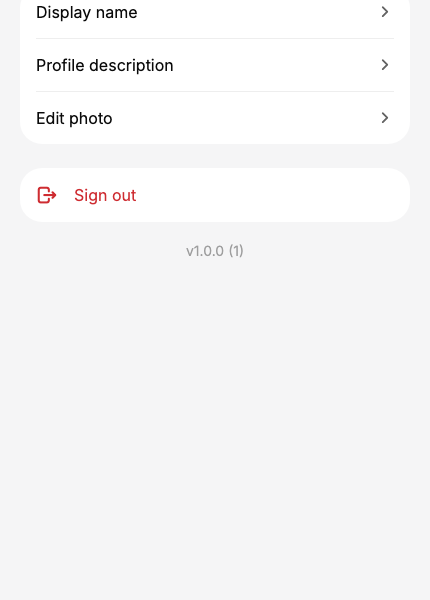
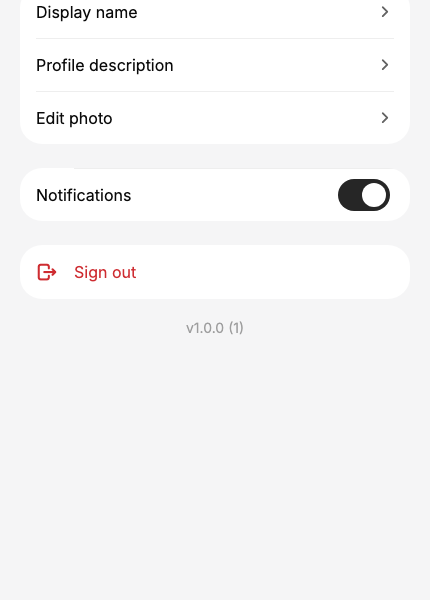
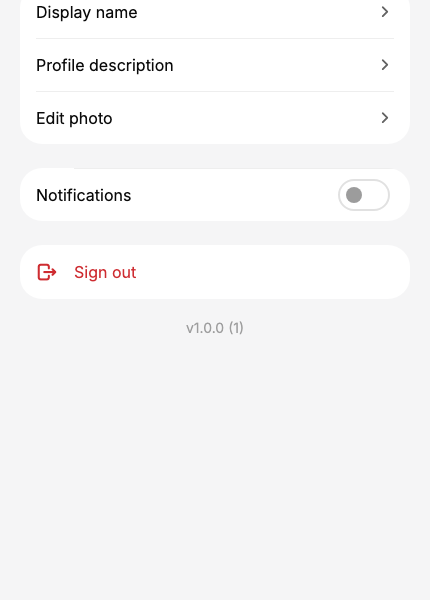
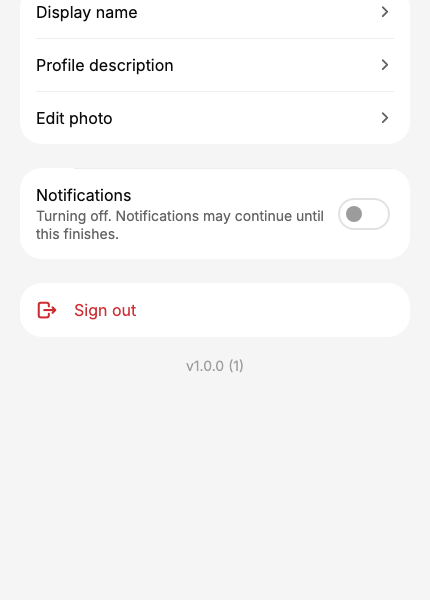
Turning notifications off sends a relay tombstone. Until the relay
accepts it, the row now says so, on both platforms. An Android build
without a gateway also keeps a saved opt-in visible so it can still be
turned off; once off, the row goes away. These are rendered from the
Settings journey test.

| | Before | After |
|---|---|---|
| Android build without a gateway, saved opt-in | <img
src="https://raw.githubusercontent.com/block/buzz/47220acf78ad21639d2a3a8b79be3f0272e74db2/pr-9811--01-before-config-less.png"
width="270" alt="Before: no Notifications row"> | <img
src="https://raw.githubusercontent.com/block/buzz/47220acf78ad21639d2a3a8b79be3f0272e74db2/pr-9811--02-after-config-less.png"
width="270" alt="After: Notifications row with the switch on"> |
| After turning off, relay has not accepted yet | <img
src="https://raw.githubusercontent.com/block/buzz/47220acf78ad21639d2a3a8b79be3f0272e74db2/pr-9811--03-before-turning-off.png"
width="270" alt="Before: plain off switch"> | <img
src="https://raw.githubusercontent.com/block/buzz/47220acf78ad21639d2a3a8b79be3f0272e74db2/pr-9811--04-after-turning-off.png"
width="270" alt="After: Turning off. Notifications may continue until
this finishes."> |

### Regressions

- iOS enrollment is unchanged: the shared bridge only branches to the
Dart authority on Android. iOS gains the pending opt-out subtitle, and
its opt-out now also tombstones after a gateway change using the saved
lease id.
- The Android app gains the `firebase-messaging` dependency and a
`POST_NOTIFICATIONS` permission. Backups exclude the push preferences
file.


### Known limits

- An FCM token rotation while the app is running is picked up on the
next resume or launch, because the wake service owns the single
messaging service. It could call into the registration plugin once both
Android push PRs merge.
- After an endpoint rotation, only the active community's lease is
republished. Other enabled communities' grants are void until each is
opened, the same way their leases lapse at grant expiry today.

---------

Signed-off-by: Tom Brow <tomb@block.xyz>
Co-authored-by: studio <dc2fc481343672df31a689840c09299972e704dac592e0da6f18486646a7ee3e@buzz.block.builderlab.xyz>
Co-authored-by: studio <dc2fc481343672df31a689840c09299972e704dac592e0da6f18486646a7ee3e@localhost>
695 lines
24 KiB
Dart
695 lines
24 KiB
Dart
import 'dart:async';
|
|
|
|
import 'package:nostr/nostr.dart' as nostr;
|
|
import 'package:flutter/foundation.dart';
|
|
import 'package:flutter/services.dart';
|
|
|
|
import '../community/community.dart';
|
|
import '../deeplink/deep_link.dart';
|
|
import '../diagnostics/diagnostic_reporter.dart';
|
|
import '../relay/relay_provider.dart';
|
|
import 'android_push_authority.dart';
|
|
import 'android_push_gateway.dart';
|
|
import 'android_push_keystore.dart';
|
|
import 'push_snapshot.dart';
|
|
|
|
const _channel = MethodChannel('buzz/push');
|
|
|
|
/// Android's FCM token registration. It has its own channel because Android's
|
|
/// notification-open handler already owns `buzz/push`, and a channel has one
|
|
/// native handler.
|
|
const _registrationChannel = MethodChannel('buzz/push_registration');
|
|
|
|
/// The code native enrollment fails with when the push gateway's reply does
|
|
/// not match its protocol.
|
|
const _gatewayResponseInvalid = 'gateway_response_invalid';
|
|
|
|
/// Latest APNs registration state, including callbacks replayed by iOS after
|
|
/// the Flutter method channel attaches.
|
|
final apnsDeviceToken = ValueNotifier<String?>(null);
|
|
final apnsRegistrationError = ValueNotifier<String?>(null);
|
|
|
|
/// Latest FCM registration token and failure on Android. They play the role
|
|
/// of the two APNs notifiers above; a phone only ever sets one pair.
|
|
final fcmDeviceToken = ValueNotifier<String?>(null);
|
|
final fcmRegistrationError = ValueNotifier<String?>(null);
|
|
|
|
/// Why push cannot work on this phone (no hardware key attestation, no
|
|
/// Firebase, no FCM token), or null. The app works without push; settings
|
|
/// shows the reason.
|
|
final pushUnavailableReason = ValueNotifier<String?>(null);
|
|
|
|
final pushEndpointGrants = ValueNotifier<List<BuzzPushEndpointGrant>>([]);
|
|
final pushEndpointGrantError = ValueNotifier<String?>(null);
|
|
|
|
/// The most recent notification response waiting for app navigation.
|
|
///
|
|
/// Native iOS buffers cold-start responses until Dart asks for them. This
|
|
/// notifier also carries warm responses into the existing deep-link pipeline.
|
|
final pendingPushNotificationLink = ValueNotifier<MessageDeepLink?>(null);
|
|
|
|
MessageDeepLink? _pushNotificationLink(Object? arguments) {
|
|
if (arguments is! Map) return null;
|
|
final eventId = arguments['eventId'];
|
|
final communityId = arguments['communityId'];
|
|
final channelId = arguments['channelId'];
|
|
final threadRootId = arguments['threadRootId'];
|
|
if (eventId is! String ||
|
|
eventId.isEmpty ||
|
|
communityId is! String ||
|
|
communityId.isEmpty ||
|
|
channelId is! String ||
|
|
channelId.isEmpty ||
|
|
(threadRootId != null &&
|
|
(threadRootId is! String || threadRootId.isEmpty))) {
|
|
return null;
|
|
}
|
|
return MessageDeepLink(
|
|
communityId: communityId,
|
|
channelId: channelId,
|
|
messageId: eventId,
|
|
threadRootId: threadRootId as String?,
|
|
);
|
|
}
|
|
|
|
/// A reply typed into an iOS notification, waiting to be sent.
|
|
@immutable
|
|
class BuzzNotificationReply {
|
|
const BuzzNotificationReply({
|
|
required this.id,
|
|
required this.text,
|
|
required this.link,
|
|
required this.senderPubkey,
|
|
required this.messageCreatedAt,
|
|
required this.deadline,
|
|
this.replyRootId,
|
|
this.recipientPubkey,
|
|
this.inSolo = false,
|
|
this.recovered = false,
|
|
this.mayHavePublished = false,
|
|
});
|
|
|
|
final String id;
|
|
final String text;
|
|
|
|
/// The notified message, and where tapping its notification opens.
|
|
final MessageDeepLink link;
|
|
|
|
/// Author of the notified message, whom the reply mentions.
|
|
final String senderPubkey;
|
|
|
|
/// NIP-10 thread root of the notified message; null when it is top-level.
|
|
final String? replyRootId;
|
|
|
|
/// The account the notification was for, which the reply must go out as,
|
|
/// guarding against a community's credentials being replaced in place. Null
|
|
/// for a notification an earlier build posted.
|
|
final String? recipientPubkey;
|
|
|
|
/// When the notified message was created, in Unix seconds.
|
|
final int messageCreatedAt;
|
|
|
|
/// When iOS stops waiting for the reply and reports it as not sent.
|
|
final DateTime deadline;
|
|
|
|
/// Whether the notification knew the message is in a Solo chat, which
|
|
/// takes no thread replies.
|
|
final bool inSolo;
|
|
|
|
/// Whether an earlier launch was given this reply and never finished it.
|
|
/// It is never sent again.
|
|
final bool recovered;
|
|
|
|
/// Whether that earlier launch may have published it.
|
|
final bool mayHavePublished;
|
|
|
|
static BuzzNotificationReply? fromArguments(Object? arguments) {
|
|
if (arguments is! Map) return null;
|
|
final link = _pushNotificationLink({
|
|
for (final key in const [
|
|
'eventId',
|
|
'communityId',
|
|
'channelId',
|
|
'threadRootId',
|
|
])
|
|
if (arguments.containsKey(key)) key: arguments[key],
|
|
});
|
|
final id = arguments['id'];
|
|
final text = arguments['text'];
|
|
final sender = arguments['senderPubkey'];
|
|
final root = arguments['replyRootId'];
|
|
final recipient = arguments['recipientPubkey'];
|
|
final createdAt = switch (arguments['messageCreatedAt']) {
|
|
final String value => int.tryParse(value),
|
|
_ => null,
|
|
};
|
|
final deadline = switch (arguments['deadline']) {
|
|
final String value => int.tryParse(value),
|
|
_ => null,
|
|
};
|
|
if (link == null ||
|
|
id is! String ||
|
|
id.isEmpty ||
|
|
text is! String ||
|
|
text.trim().isEmpty ||
|
|
sender is! String ||
|
|
sender.isEmpty ||
|
|
createdAt == null ||
|
|
createdAt <= 0 ||
|
|
deadline == null ||
|
|
(root != null && (root is! String || root.isEmpty)) ||
|
|
(recipient != null && (recipient is! String || recipient.isEmpty))) {
|
|
return null;
|
|
}
|
|
return BuzzNotificationReply(
|
|
id: id,
|
|
text: text,
|
|
link: link,
|
|
senderPubkey: sender,
|
|
messageCreatedAt: createdAt,
|
|
deadline: DateTime.fromMillisecondsSinceEpoch(deadline),
|
|
replyRootId: root as String?,
|
|
recipientPubkey: recipient as String?,
|
|
inSolo: arguments['inSolo'] == 'true',
|
|
recovered: arguments['recovered'] == 'true',
|
|
mayHavePublished: arguments['publishing'] == 'true',
|
|
);
|
|
}
|
|
}
|
|
|
|
/// Bumped when iOS hands the app a notification reply to send.
|
|
final notificationReplyAvailable = ValueNotifier<int>(0);
|
|
|
|
/// Takes notification replies native iOS is holding for the app.
|
|
Future<List<BuzzNotificationReply>> takePendingBuzzNotificationReplies() async {
|
|
if (defaultTargetPlatform != TargetPlatform.iOS) return const [];
|
|
try {
|
|
final raw = await _channel.invokeListMethod<dynamic>(
|
|
'takePendingNotificationReplies',
|
|
);
|
|
return [
|
|
for (final value in raw ?? const [])
|
|
?BuzzNotificationReply.fromArguments(value),
|
|
];
|
|
} on MissingPluginException {
|
|
return const [];
|
|
}
|
|
}
|
|
|
|
/// Tells iOS that a notification reply may be published from now on, so a
|
|
/// relaunch never drafts or resends it. Returns once that is saved, false
|
|
/// when iOS has already ended the reply, which then must not be published.
|
|
Future<bool> markBuzzNotificationReplyPublishing(String id) async {
|
|
if (defaultTargetPlatform != TargetPlatform.iOS) return true;
|
|
try {
|
|
return await _channel.invokeMethod<bool>(
|
|
'markNotificationReplyPublishing',
|
|
id,
|
|
) ??
|
|
true;
|
|
} on MissingPluginException {
|
|
// Flutter tests and non-Runner embeddings do not install the native bridge.
|
|
return true;
|
|
}
|
|
}
|
|
|
|
/// Reports whether a notification reply was sent, so iOS clears the
|
|
/// conversation's notifications or shows that it wasn't. [unknown] means it
|
|
/// may have gone out; [draftThreadRootId] is the thread holding its draft,
|
|
/// which the "Reply not sent" notification opens. Without [draftKept], iOS
|
|
/// shows the unsent text in a notification even for a reply an earlier
|
|
/// launch was given.
|
|
Future<void> completeBuzzNotificationReply(
|
|
String id, {
|
|
required bool sent,
|
|
bool unknown = false,
|
|
String? draftThreadRootId,
|
|
bool draftKept = true,
|
|
}) async {
|
|
if (defaultTargetPlatform != TargetPlatform.iOS) return;
|
|
try {
|
|
await _channel.invokeMethod<void>('completeNotificationReply', {
|
|
'id': id,
|
|
'sent': sent,
|
|
if (unknown) 'unknown': true,
|
|
'draftThreadRootId': ?draftThreadRootId,
|
|
if (!draftKept) 'noDraft': true,
|
|
});
|
|
} on MissingPluginException {
|
|
// Flutter tests and non-Runner embeddings do not install the native bridge.
|
|
}
|
|
}
|
|
|
|
/// Tells the iOS notification extension which community is selected; only
|
|
/// its notifications offer Reply.
|
|
Future<void> shareSelectedCommunityWithNotifications(
|
|
String? communityId,
|
|
) async {
|
|
if (defaultTargetPlatform != TargetPlatform.iOS) return;
|
|
try {
|
|
await _channel.invokeMethod<void>('setSelectedCommunity', communityId);
|
|
} on MissingPluginException {
|
|
// Flutter tests and non-Runner embeddings do not install the native bridge.
|
|
}
|
|
}
|
|
|
|
/// Pulls a notification response that arrived before the Flutter method
|
|
/// handler was installed.
|
|
Future<void> syncPendingBuzzPushNotificationResponse() async {
|
|
if (defaultTargetPlatform != TargetPlatform.iOS) return;
|
|
try {
|
|
final arguments = await _channel.invokeMapMethod<dynamic, dynamic>(
|
|
'takePendingNotificationResponse',
|
|
);
|
|
final link = _pushNotificationLink(arguments);
|
|
if (link != null) pendingPushNotificationLink.value = link;
|
|
} on MissingPluginException {
|
|
// Flutter tests and non-Runner embeddings do not install the native bridge.
|
|
}
|
|
}
|
|
|
|
/// Starts the independent iOS notification-authorization and APNs-registration
|
|
/// requests. Display authorization is intentionally not returned or persisted:
|
|
/// APNs registration and enrollment remain valid while display is denied.
|
|
Future<void> startBuzzPushRegistration() async {
|
|
if (!Env.pushGatewayConfigured ||
|
|
(defaultTargetPlatform != TargetPlatform.iOS &&
|
|
defaultTargetPlatform != TargetPlatform.android)) {
|
|
return;
|
|
}
|
|
try {
|
|
await (defaultTargetPlatform == TargetPlatform.android
|
|
? _registrationChannel
|
|
: _channel)
|
|
.invokeMethod<void>('startRegistration');
|
|
} on MissingPluginException {
|
|
// Flutter tests and non-Runner embeddings do not install the native bridge.
|
|
}
|
|
}
|
|
|
|
/// Asks Android for the current FCM token. FCM rotates it on its own, and the
|
|
/// app learns of that when it next runs. A changed token arrives through
|
|
/// [fcmDeviceToken] like the first one.
|
|
Future<void> refreshBuzzPushToken() async {
|
|
if (!Env.pushGatewayConfigured ||
|
|
defaultTargetPlatform != TargetPlatform.android) {
|
|
return;
|
|
}
|
|
try {
|
|
await _registrationChannel.invokeMethod<void>('refreshToken');
|
|
} on MissingPluginException {
|
|
// Flutter tests and non-Runner embeddings do not install the native bridge.
|
|
}
|
|
}
|
|
|
|
AndroidPushAuthority? _androidAuthority;
|
|
|
|
AndroidPushAuthority get _androidPushAuthority =>
|
|
_androidAuthority ??= AndroidPushAuthority(
|
|
keystore: const MethodChannelAndroidPushKeystore(),
|
|
gateway: AndroidPushGatewayClient(baseUrl: Uri.parse(Env.pushGatewayUrl)),
|
|
store: SecureAndroidPushStateStore(),
|
|
);
|
|
|
|
@visibleForTesting
|
|
set debugAndroidPushAuthority(AndroidPushAuthority? authority) =>
|
|
_androidAuthority = authority;
|
|
|
|
BuzzPushEndpointGrant _grantOf(AndroidPushGrant grant) => BuzzPushEndpointGrant(
|
|
relayOrigin: grant.relayOrigin,
|
|
relayPubkey: grant.relayPubkey,
|
|
installationId: grant.installationId,
|
|
endpointGrant: grant.endpointGrant,
|
|
endpointHash: grant.endpointHash,
|
|
endpointEpoch: grant.endpointEpoch,
|
|
generation: grant.generation,
|
|
expiresAt: grant.expiresAt,
|
|
);
|
|
|
|
/// Revokes what the phone's push installation holds for relays no community
|
|
/// uses any more, and the installation itself once no community remains.
|
|
/// Android only; iOS revokes only relay leases. [desiredRelays] and
|
|
/// [noCommunities] are read when the work runs.
|
|
Future<void> reconcileBuzzPushAuthority({
|
|
required Set<String> Function() desiredRelays,
|
|
required bool Function() noCommunities,
|
|
}) async {
|
|
if (!Env.pushGatewayConfigured ||
|
|
defaultTargetPlatform != TargetPlatform.android) {
|
|
return;
|
|
}
|
|
await _androidPushAuthority.reconcile(
|
|
desiredRelays: desiredRelays,
|
|
revokeInstallation: noCommunities,
|
|
);
|
|
}
|
|
|
|
class BuzzPushEndpointGrant {
|
|
final String relayOrigin;
|
|
final String relayPubkey;
|
|
final String installationId;
|
|
final String endpointGrant;
|
|
final String endpointHash;
|
|
final int endpointEpoch;
|
|
final int generation;
|
|
final int expiresAt;
|
|
|
|
const BuzzPushEndpointGrant({
|
|
required this.relayOrigin,
|
|
required this.relayPubkey,
|
|
required this.installationId,
|
|
required this.endpointGrant,
|
|
required this.endpointHash,
|
|
required this.endpointEpoch,
|
|
required this.generation,
|
|
required this.expiresAt,
|
|
});
|
|
|
|
factory BuzzPushEndpointGrant.fromMap(Map<dynamic, dynamic> map) {
|
|
final generation = map['generation'] as int;
|
|
return BuzzPushEndpointGrant(
|
|
relayOrigin: map['relayOrigin'] as String,
|
|
relayPubkey: map['relayPubkey'] as String,
|
|
installationId: map['installationId'] as String,
|
|
endpointGrant: map['endpointGrant'] as String,
|
|
endpointHash: map['endpointHash'] as String,
|
|
endpointEpoch: map['endpointEpoch'] as int,
|
|
generation: generation,
|
|
expiresAt: map['expiresAt'] as int,
|
|
);
|
|
}
|
|
}
|
|
|
|
Future<List<BuzzPushEndpointGrant>> readBuzzPushEndpointGrants() async {
|
|
if (!Env.pushGatewayConfigured ||
|
|
(defaultTargetPlatform != TargetPlatform.iOS &&
|
|
defaultTargetPlatform != TargetPlatform.android)) {
|
|
return const [];
|
|
}
|
|
try {
|
|
final List<BuzzPushEndpointGrant> grants;
|
|
if (defaultTargetPlatform == TargetPlatform.android) {
|
|
grants = [
|
|
for (final grant in await _androidPushAuthority.grants())
|
|
_grantOf(grant),
|
|
];
|
|
} else {
|
|
final raw = await _channel.invokeListMethod<dynamic>('endpointGrants', {
|
|
'gatewayUrl': Env.pushGatewayUrl,
|
|
});
|
|
grants = [
|
|
for (final value in raw ?? const [])
|
|
BuzzPushEndpointGrant.fromMap(value as Map<dynamic, dynamic>),
|
|
];
|
|
}
|
|
pushEndpointGrants.value = grants;
|
|
pushEndpointGrantError.value = null;
|
|
return grants;
|
|
} catch (error) {
|
|
pushEndpointGrantError.value = error.toString();
|
|
rethrow;
|
|
}
|
|
}
|
|
|
|
bool _wanted() => true;
|
|
|
|
/// Enrolls the endpoint and optionally rewrites the NSE snapshot afterward.
|
|
///
|
|
/// The rewrite propagates NIP-11 `self` rotations even when the opaque grant
|
|
/// and accepted relay lease remain reusable and their generations do not move.
|
|
///
|
|
/// On Android the grant comes from the Dart-side [AndroidPushAuthority], which
|
|
/// needs the relay's [relayOrigin] and push key [relayPubkey] from its
|
|
/// descriptor, where iOS native code fetches them itself.
|
|
///
|
|
/// [desiredRelays] (Android) are the relay origins whose push is on, which
|
|
/// enrollment uses to revoke delegations no relay points at any more.
|
|
///
|
|
/// [stillWanted] says whether the community still wants push. It is read before
|
|
/// each call that creates authority, and the result is null once it said no.
|
|
Future<BuzzPushEndpointGrant?> enrollBuzzPush(
|
|
String relayUrl,
|
|
String gatewayUrl, {
|
|
List<Community>? communitiesForSnapshotRefresh,
|
|
String? relayOrigin,
|
|
String? relayPubkey,
|
|
Set<String> Function()? desiredRelays,
|
|
bool Function() stillWanted = _wanted,
|
|
DiagnosticReporter diagnostics = const NoopDiagnosticReporter(),
|
|
}) async {
|
|
final BuzzPushEndpointGrant grant;
|
|
if (defaultTargetPlatform == TargetPlatform.android) {
|
|
final token = fcmDeviceToken.value;
|
|
if (token == null ||
|
|
relayOrigin == null ||
|
|
relayPubkey == null ||
|
|
desiredRelays == null) {
|
|
throw StateError('Android push enrollment needs a token and a relay.');
|
|
}
|
|
final AndroidPushGrant? enrolled;
|
|
try {
|
|
enrolled = await _androidPushAuthority.enroll(
|
|
relayOrigin: relayOrigin,
|
|
relayPubkey: relayPubkey,
|
|
endpoint: token,
|
|
stillWanted: stillWanted,
|
|
desiredRelays: desiredRelays,
|
|
);
|
|
} on AndroidPushAttestationUnavailable catch (error) {
|
|
pushUnavailableReason.value = error.reason;
|
|
rethrow;
|
|
}
|
|
if (enrolled == null) return null;
|
|
grant = _grantOf(enrolled);
|
|
pushUnavailableReason.value = null;
|
|
} else {
|
|
if (!stillWanted()) return null;
|
|
final Map<dynamic, dynamic>? raw;
|
|
try {
|
|
raw = await _channel.invokeMapMethod<dynamic, dynamic>('enrollPush', {
|
|
'relayUrl': relayUrl,
|
|
'gatewayUrl': gatewayUrl,
|
|
});
|
|
} on PlatformException catch (error, stackTrace) {
|
|
// The gateway is called from native code. It has its own code for a
|
|
// reply the app cannot read; every other failure (offline, refused,
|
|
// expired, server errors) is routine and not reported.
|
|
if (error.code == _gatewayResponseInvalid) {
|
|
diagnostics.reportError(
|
|
error,
|
|
stackTrace,
|
|
operation: DiagnosticOperation.pushGatewayResponse,
|
|
);
|
|
}
|
|
rethrow;
|
|
}
|
|
if (raw == null) {
|
|
throw StateError('Native push enrollment returned no grant.');
|
|
}
|
|
grant = BuzzPushEndpointGrant.fromMap(raw);
|
|
}
|
|
await readBuzzPushEndpointGrants();
|
|
if (communitiesForSnapshotRefresh != null) {
|
|
try {
|
|
await registerBuzzPushCommunitySnapshot(communitiesForSnapshotRefresh);
|
|
pushCommunitySnapshotError.value = null;
|
|
} catch (error, stackTrace) {
|
|
reportPushCommunitySnapshotError(error, stackTrace);
|
|
}
|
|
}
|
|
return grant;
|
|
}
|
|
|
|
/// Latest failure to export the community snapshot used by the iOS
|
|
/// notification service extension. Snapshot export is push enrichment and must
|
|
/// never gate authentication or community persistence.
|
|
final pushCommunitySnapshotError = ValueNotifier<String?>(null);
|
|
final pushLeaseCleanupError = ValueNotifier<String?>(null);
|
|
|
|
void reportPushCommunitySnapshotError(Object error, StackTrace stackTrace) {
|
|
pushCommunitySnapshotError.value = error.toString();
|
|
debugPrint('Push community snapshot export failed: $error');
|
|
debugPrintStack(stackTrace: stackTrace);
|
|
}
|
|
|
|
void reportPushLeaseCleanupError(Object error, StackTrace stackTrace) {
|
|
pushLeaseCleanupError.value = error.toString();
|
|
debugPrint('Push lease cleanup failed: $error');
|
|
debugPrintStack(stackTrace: stackTrace);
|
|
}
|
|
|
|
/// Restores notification presentation without reading community storage.
|
|
Future<void> restoreAgeRestrictedBuzzNotifications() async {
|
|
if (defaultTargetPlatform != TargetPlatform.iOS) return;
|
|
await _channel.invokeMethod<void>('restoreAgeRestrictedNotifications');
|
|
}
|
|
|
|
/// Removes notifications rendered before a confirmed age restriction.
|
|
Future<void> purgeAgeRestrictedBuzzNotifications() async {
|
|
if (defaultTargetPlatform != TargetPlatform.iOS) return;
|
|
await _channel.invokeMethod<void>('purgeAgeRestrictedNotifications');
|
|
}
|
|
|
|
Future<void> registerBuzzPushCommunitySnapshot(
|
|
List<Community> communities,
|
|
) async {
|
|
if (defaultTargetPlatform != TargetPlatform.iOS) return;
|
|
try {
|
|
final snapshots = [
|
|
for (final community in communities)
|
|
if (community.pushNotificationsEnabled)
|
|
BuzzPushCommunitySnapshot(
|
|
id: community.id,
|
|
name: community.name,
|
|
relayUrl: community.relayUrl,
|
|
pubkey: community.pubkey ?? pubkeyFromNsec(community.nsec),
|
|
subscriptions: community.pushSubscriptionState.authoritative,
|
|
),
|
|
];
|
|
final signingKeys = <String, String>{};
|
|
for (final community in communities) {
|
|
if (!community.pushNotificationsEnabled) continue;
|
|
final nsec = community.nsec;
|
|
if (nsec == null || nsec.isEmpty) continue;
|
|
try {
|
|
final decoded = nostr.Nip19.decode(payload: nsec);
|
|
if (decoded.prefix != nostr.Nip19Prefix.nsec ||
|
|
decoded.data.length != 64) {
|
|
continue;
|
|
}
|
|
signingKeys[community.id] = decoded.data;
|
|
} catch (_) {
|
|
// Native storage is fail-closed; malformed keys are never exported.
|
|
}
|
|
}
|
|
await _channel.invokeMethod<void>('syncPushSnapshot', {
|
|
'section': 'communities',
|
|
'communities': [for (final snapshot in snapshots) snapshot.toJson()],
|
|
'signingKeys': signingKeys,
|
|
});
|
|
} on MissingPluginException {
|
|
// Flutter tests and non-Runner embeddings do not install the native bridge.
|
|
}
|
|
}
|
|
|
|
/// Shares the organization account session with the iOS notification
|
|
/// extension, or removes it when [credential] is null. Failures propagate to
|
|
/// the account client, which owns retrying them. Organization relays
|
|
/// enforce NIP-FI, so the extension needs the session to mint the assertion
|
|
/// that lets it read the message a push refers to.
|
|
Future<void> shareOrganizationSessionWithNotifications({
|
|
required Uri origin,
|
|
required String? credential,
|
|
required List<String> relayHosts,
|
|
}) async {
|
|
if (defaultTargetPlatform != TargetPlatform.iOS) return;
|
|
try {
|
|
await _channel.invokeMethod<void>('syncPushSnapshot', {
|
|
'section': 'organizationSession',
|
|
'origin': origin.toString(),
|
|
'credential': credential,
|
|
'relayHosts': relayHosts,
|
|
});
|
|
} on MissingPluginException {
|
|
// Flutter tests and non-Runner embeddings do not install the native bridge.
|
|
}
|
|
}
|
|
|
|
/// Shares the hosted account session with the iOS notification extension, or
|
|
/// removes it when [credential] is null, like
|
|
/// [shareOrganizationSessionWithNotifications]. A hosted relay matches when its
|
|
/// host is under [communityDomain] and equal to or under one of
|
|
/// [relayDomains], as in `HostedRelayAuth`.
|
|
Future<void> shareHostedSessionWithNotifications({
|
|
required Uri origin,
|
|
required String? credential,
|
|
required List<String> relayDomains,
|
|
required String communityDomain,
|
|
}) async {
|
|
if (defaultTargetPlatform != TargetPlatform.iOS) return;
|
|
try {
|
|
await _channel.invokeMethod<void>('syncPushSnapshot', {
|
|
'section': 'hostedSession',
|
|
'origin': origin.toString(),
|
|
'credential': credential,
|
|
'relayDomains': relayDomains,
|
|
'communityDomain': communityDomain,
|
|
});
|
|
} on MissingPluginException {
|
|
// Flutter tests and non-Runner embeddings do not install the native bridge.
|
|
}
|
|
}
|
|
|
|
void installBuzzPushMethodHandler() {
|
|
_registrationChannel.setMethodCallHandler((call) async {
|
|
switch (call.method) {
|
|
case 'fcmTokenChanged':
|
|
final args = call.arguments;
|
|
if (args is Map) {
|
|
final token = args['token'];
|
|
if (token is String && token.isNotEmpty) {
|
|
fcmDeviceToken.value = token;
|
|
// A token ends an earlier failure to get one, but not an
|
|
// attestation failure, which enrollment owns.
|
|
if (pushUnavailableReason.value == fcmRegistrationError.value) {
|
|
pushUnavailableReason.value = null;
|
|
}
|
|
fcmRegistrationError.value = null;
|
|
}
|
|
}
|
|
return null;
|
|
case 'fcmRegistrationFailed':
|
|
final args = call.arguments;
|
|
final message = args is Map ? args['message'] : null;
|
|
final reason = message is String && message.isNotEmpty
|
|
? message
|
|
: 'FCM registration failed';
|
|
final previous = fcmRegistrationError.value;
|
|
fcmRegistrationError.value = reason;
|
|
// A held token still delivers, so a failed refresh is transient. Never
|
|
// overwrite another reason, such as attestation, which enrollment owns.
|
|
final shown = pushUnavailableReason.value;
|
|
if (fcmDeviceToken.value == null &&
|
|
(shown == null || shown == previous)) {
|
|
pushUnavailableReason.value = reason;
|
|
}
|
|
debugPrint('FCM registration failed: $reason');
|
|
return null;
|
|
default:
|
|
throw MissingPluginException('Unexpected ${call.method}');
|
|
}
|
|
});
|
|
_channel.setMethodCallHandler((call) async {
|
|
switch (call.method) {
|
|
case 'apnsTokenChanged':
|
|
final args = call.arguments;
|
|
if (args is Map) {
|
|
final token = args['token'];
|
|
if (token is String && token.isNotEmpty) {
|
|
apnsDeviceToken.value = token;
|
|
apnsRegistrationError.value = null;
|
|
}
|
|
}
|
|
return null;
|
|
case 'apnsRegistrationFailed':
|
|
final args = call.arguments;
|
|
final message = args is Map ? args['message'] : null;
|
|
apnsRegistrationError.value = message is String && message.isNotEmpty
|
|
? message
|
|
: 'APNs registration failed';
|
|
debugPrint('APNs registration failed: ${apnsRegistrationError.value}');
|
|
return null;
|
|
case 'notificationReplyAvailable':
|
|
notificationReplyAvailable.value++;
|
|
return null;
|
|
case 'notificationOpened':
|
|
final link = _pushNotificationLink(call.arguments);
|
|
if (link == null) return 'ignored';
|
|
pendingPushNotificationLink.value = link;
|
|
return 'handled';
|
|
default:
|
|
throw MissingPluginException('Unknown buzz/push method ${call.method}');
|
|
}
|
|
});
|
|
}
|