 9462d8884a
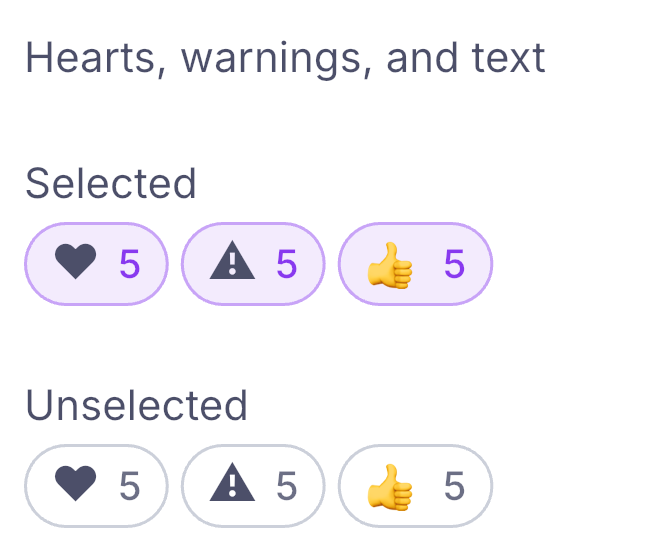
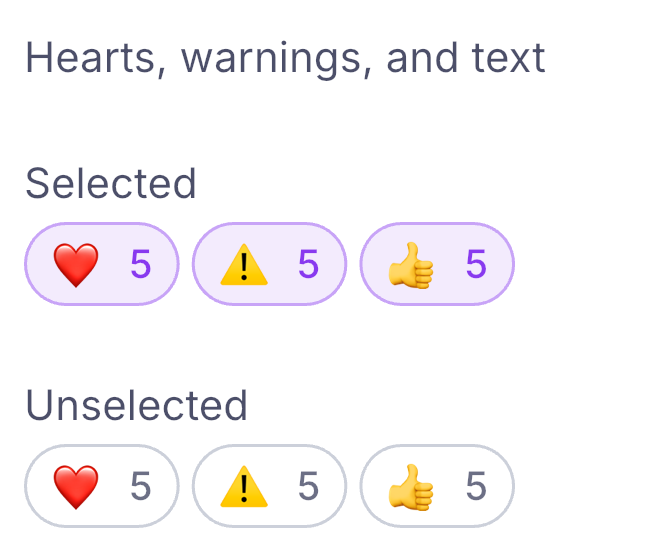
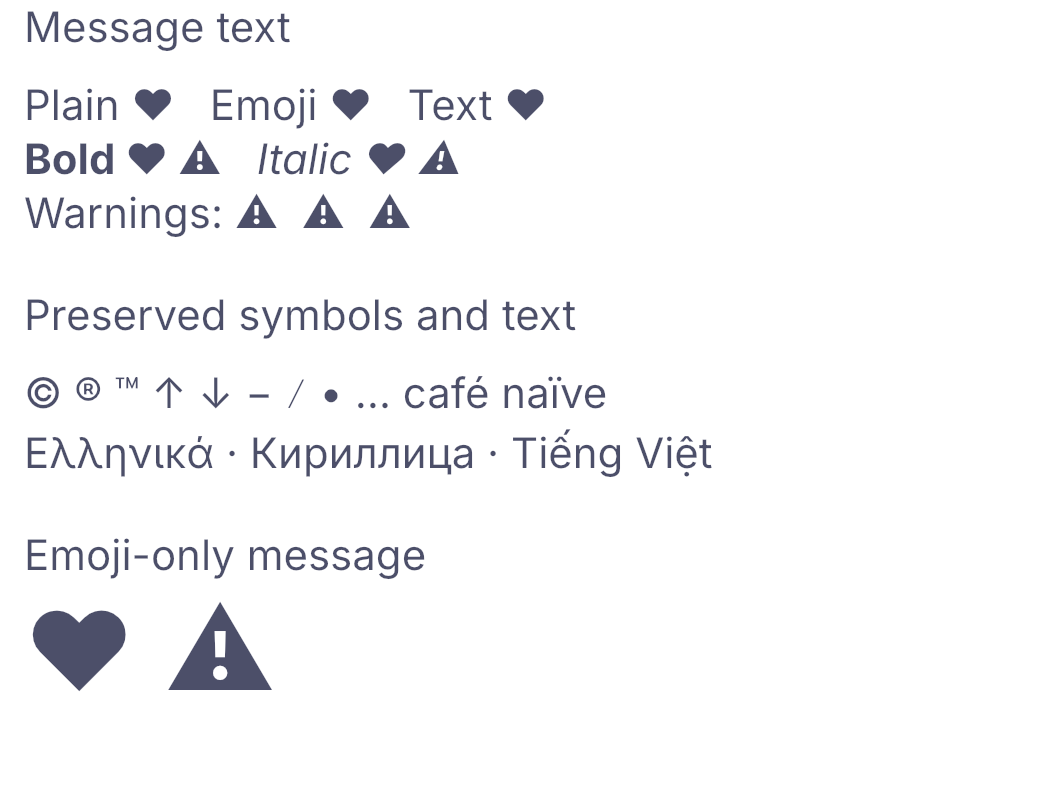
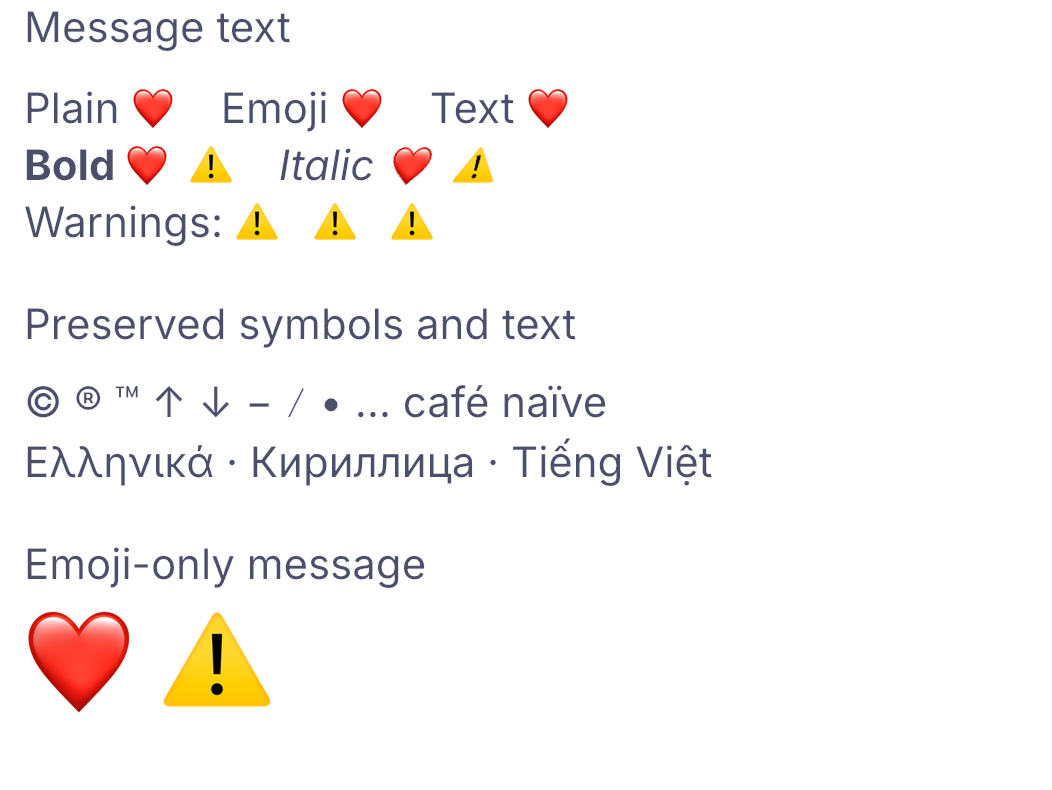
Mobile heart and warning reactions and message text render as monochrome
symbols because bundled Inter supplies U+2764 and U+26A0. Remove only
those two character mappings from both regular and italic Inter fonts so
Flutter uses native font fallback. No production Dart or Markdown
parsing changes are needed.
The reproducible font-processing script verifies that every other
mapping and font table is unchanged, apart from the required checksum.
Glyphs, metrics, language coverage and symbols such as © ® ™ ↑ ↓ − ∕ are
preserved; the bundled Inter license is retained.
Validated on an actual iPhone 17 Pro simulator running iOS 26.5.
Reaction hearts and warnings remain centered within 0.33 logical pixels
of the pill center. Native screenshot checks cover reactions and plain,
emoji, explicit text-style, bold, italic, and enlarged emoji-only
message hearts and warnings, plus pixel-identical preserved text
samples.
**Fallback behavior:** on iOS 26.5, plain ❤ / ⚠ and explicit text-style
❤︎ / ⚠︎ also render as color emoji. Native font metrics add one logical
pixel to each of the three mixed-message lines in this fixture. Android
visual behavior has not been validated.
### Reactions
| Before | After |
| --- | --- |
| 
| 
|
### Message text
| Before | After |
| --- | --- |
| 
| 
|
Images are cropped native simulator screenshots of production widgets
with synthetic content. Before uses the original bundled fonts; after
uses the processed fonts.
Added tests: the existing mobile CI test lane now checks both bundled
fonts against the verified generated artifacts, preventing restoration
of the old mappings or unintended font changes.
Validation: the two asset tests, font-table verification, byte-identical
regeneration, native screenshot regression checks, and Flutter analysis
pass. The screenshot test fails against the original rendering. Pre-push
checks, including the full mobile suite, pass. Full repository
validation also passes. The enlarged emoji-only screenshot check passes
and rejects the old normal-sized fixture. GitHub CI, Codex review, and
the security review pass for commit 538167a788. Both prior Codex
findings are addressed and resolved.
---------
Signed-off-by: Tom Brow <tomb@block.xyz>




Buzz Mobile
Flutter mobile client for Buzz.
See VISION_MOBILE.md for intended behavior and architecture.
Setup
Use the Flutter SDK pinned by the repository. Activate Hermit from the repo root before resolving packages or running any Flutter command:
cd /path/to/buzz
. ./bin/activate-hermit
./bin/just mobile-install
mobile-build-android intentionally builds with --no-pub. If an IDE or an
external Flutter SDK has touched mobile/.dart_tool, rerun mobile-install
with the pinned SDK before building so flutter_test, sky_engine, and the
engine all come from the same Flutter version.
Run
# From repo root (applies a worktree-isolated debug identity and starts/reuses Simulator):
just mobile-dev

# Direct (uses the app's configured community; apply worktree overrides first):
cd mobile && flutter run --dart-define=BUZZ_PUSH_GATEWAY_URL=https://push.example
Worktree-aware debug identity
Debug builds produced from a git worktree get a unique app identifier keyed
to the worktree directory name
(xyz.block.buzz.dogfood.mobile.<slug> on iOS,
xyz.block.buzz.mobile.<slug> on Android) plus a display-only branch label
in the app name (Buzz (my-branch), or a short SHA when the worktree is
detached). Because the identifier follows the directory rather than the
branch, one worktree keeps exactly one installed app — and its login state —
across branch switches, and builds from multiple worktrees install side by
side, mirroring the desktop dev experience. Release and profile builds
always keep the production identity and name.
just mobile-dev and just mobile-build-android apply this automatically by
running scripts/mobile-worktree-overrides.sh, which writes two gitignored
files:
mobile/ios/Flutter/WorktreeOverrides.xcconfig(included by Debug builds only; a developer'sAppOverrides.xcconfigis included after it, so app-specific overrides like a personalBUNDLE_IDENTIFIERfor device signing always win)mobile/android/worktree.properties(read by the debug build type only)
Android developers can keep a stable local test identity that takes precedence
over the generated worktree values by creating the gitignored
mobile/android/AppOverrides.properties:
appName=Buzz Pairing
applicationIdSuffix=.device_pairing_e2e1
These values are consumed by the debug build type only. The standard
just mobile-build-android command can still be used; regenerating
worktree.properties does not overwrite AppOverrides.properties. Release
and profile builds keep the production Buzz name and application ID.
For direct Xcode / Android Studio / flutter run development, run
./scripts/mobile-worktree-overrides.sh from the repo root once per branch
switch to refresh the display label (the install identity never changes);
the persisted files are then picked up by any subsequent build. In the main
checkout the script is a no-op that removes stale override files, restoring
the plain Buzz identity. To enable push in direct Xcode builds and Runner tests, supply a
BUZZ_PUSH_GATEWAY_URL build setting in the gitignored
mobile/ios/Flutter/AppOverrides.xcconfig; the build phase validates and
passes it through as a Flutter Dart define. Since // begins an xcconfig
comment, spell the origin as BUZZ_PUSH_GATEWAY_URL = https:/$()/push.example.
For an Android debug build that must remain installed alongside other Buzz worktree builds, set an explicit launcher name and package suffix when invoking the generator or a recipe that invokes it:
BUZZ_PUSH_GATEWAY_URL="https://push.example" \
BUZZ_ANDROID_DEBUG_APP_NAME="Buzz Huddles" \
BUZZ_ANDROID_DEBUG_ID_SUFFIX=".huddles_829c" \
./bin/just mobile-build-android
This example produces the debug-only package
xyz.block.buzz.mobile.huddles_829c with the launcher label Buzz Huddles.
The suffix must start with a dot followed by a lowercase letter and may contain
only lowercase letters, digits, and underscores. Release and profile builds
ignore these overrides and retain the production package and name.
To remove leftover worktree-suffixed installs from booted iOS simulators and
connected Android emulators, run just mobile-clean (add --dry-run via
./scripts/mobile-worktree-clean.sh --dry-run to preview). Production
installs are never touched.
iOS push capability
Every iOS artifact builds and embeds the Notification Service Extension and
native push bridge. Runtime activation is fail-closed and scoped to the current
relay. After authenticated connectivity and a fully valid NIP-11 nip-pl push
descriptor, Buzz independently requests display permission and registers with
APNs. Display denial or request failure does not gate the device token, gateway
enrollment, or lease publication, so a later user opt-in can display pushes
without rebuilding transport authority. An absent, malformed, or unreachable
descriptor leaves push inactive without partial enrollment.
Mobile builds without a gateway origin succeed with push unavailable. To enable push, supply the gateway origin explicitly:
flutter build ios --dart-define=BUZZ_PUSH_GATEWAY_URL=https://push.example
flutter build apk --dart-define=BUZZ_PUSH_GATEWAY_URL=https://push.example
The iOS and Android build gates validate any supplied define, rejecting empty or malformed values. Release/profile builds require an HTTPS origin without an explicit port. An absent define disables permission requests, APNs registration, gateway enrollment, and lease publication; Settings shows push as unavailable. No production gateway is selected implicitly. Enrollment grants and crash-recovery journals are scoped to this origin. Push has not shipped to existing users, so there is no legacy-state or cross-gateway migration. Changing gateways requires fresh enrollment; old installations expire under their original gateway's lease policy. Current-gateway response loss is still retried from the exact journaled request.
Relay rollout remains an explicit deployment opt-in. Only deployments with
BUZZ_PUSH_ENABLED=true advertise the descriptor and process push. See
docs/push-gateway-deployment.md for the canonical gateway profile contract,
manual physical-device proof, measurements, and rollback procedure.
For local physical-device development, override the identity and sandbox
environments in the gitignored mobile/ios/Flutter/AppOverrides.xcconfig:
BUNDLE_IDENTIFIER = com.example.buzz.mobile
BUZZ_DEVELOPMENT_TEAM = YOUR_TEAM_ID
BUZZ_IOS_PUSH_ENVIRONMENT = development
BUZZ_APP_ATTEST_ENVIRONMENT = development
BUZZ_PUSH_GATEWAY_URL = https:/$()/push.example
Use your personal bundle ID and team above. Provision both the parent and its
.NotificationService extension. Configure an isolated gateway with the matching
App Attest application ID, APNs topic and sandbox certificate. Development
attestation requires the explicit personal-dev-app-attest gateway build feature
and BUZZ_PUSH_APP_ATTEST_ENVIRONMENT=development; ordinary gateway builds accept
production attestation only. See docs/push-gateway-deployment.md.
This validates the personal client/relay/gateway integration, not the internally
distributed dogfood artifact. Validate dogfood separately using the signed
internal release and its production gateway configuration.
Parent app identifiers require Apple's Communication Notifications capability and a regenerated app provisioning profile. The Notification Service Extension profile does not require that capability. Enable it on the personal development App ID for local rich-presentation validation. Enabling it on the Block dogfood and eventual App Store App IDs is a release follow-up and is not performed by this repository change. Without a matching parent profile, source and unit validation still work, but the app cannot be signed for a physical device.
APNs and the gateway continue to carry only the constant opaque wake-up. The extension fetches the message from the scoped relay, verifies message, sender profile, and channel-metadata signatures, and uses a bounded App Group cache for names and app-rendered avatar thumbnails. It never fetches an avatar URL; missing, stale, or invalid enrichment falls back to the verified message with a short sender pubkey, community subtitle, and no image.
Checks
dart format --output=none --set-exit-if-changed .
flutter analyze
flutter test --dart-define=BUZZ_PUSH_GATEWAY_URL=https://push.example
Or from the repo root: just mobile-check and just mobile-test.
Android release signing
Android release builds fail unless all upload-key inputs are supplied through the environment:
BUZZ_ANDROID_UPLOAD_KEYSTORE_PATH: path to a CI-vended keystore fileBUZZ_ANDROID_UPLOAD_KEYSTORE_PASSWORDBUZZ_ANDROID_UPLOAD_KEY_ALIASBUZZ_ANDROID_UPLOAD_KEY_PASSWORD
The keystore path must be absolute, and the keystore must remain outside the repository. Development and debug builds do not require these variables.
Release pipelines that sign through the central APK Signer service instead of
a local upload keystore must set BUZZ_ANDROID_RELEASE_SIGNING=external. That
mode produces an unsigned release bundle and refuses to run if any
BUZZ_ANDROID_UPLOAD_* value is also set.
Architecture
lib/
├── main.dart              # Entry point, Riverpod bootstrap
├── app.dart               # MaterialApp with theme
├── shared/
│   └── theme/             # Catppuccin light/dark, spacing tokens, extensions
└── features/
    └── home/              # Placeholder home surface
- State management: Riverpod + Hooks (
HookConsumerWidget) - Theme: Catppuccin Latte (light) / Macchiato (dark) — matches desktop
- Spacing:
Gridtokens for consistent spacing - Linting:
flutter_lints+riverpod_lintviacustom_lint - Feature isolation: No cross-feature imports except
shared/