mirror of
https://github.com/block/buzz.git
synced 2026-11-24 18:21:59 +00:00
 3689241672
On iOS, a notification that shows a channel or DM message now offers
**Reply**. The user types a reply in the notification and sends it
without opening the app.
- The reply goes in a subthread under the notified message (its thread
root is the message's own root, or the message itself when top-level). A
Solo chat takes no thread replies, so there it goes at the chat's top
level.
- It always mentions the notified message's sender, so the person or
agent being answered is notified. Typed `@name` text stays plain, since
a notification has no mention autocomplete.
- It is sent by the app's own send path. iOS starts the Flutter engine
when it wakes the app in the background, and the reply reopens the relay
connection (closed after the background grace period), waiting a bounded
time for it before sending.
- A sent reply marks the conversation read **up to the notified
message** (newer messages stay unread) and clears that notification and
earlier ones from the same conversation.
- An unsent reply (offline, relay error, timeout, a channel the user
isn't in) keeps the typed text as a draft, after any draft already
there, and shows a "Reply not sent" notification that opens the
conversation.
For now only notifications from the community selected in the app offer
Reply: replying must not switch communities, and the app can only reach
the selected one. Forum posts and fallback notifications that show no
message offer none. The design and the options considered are in
`docs/adr/0004-notification-reply.md`.
### Before / after
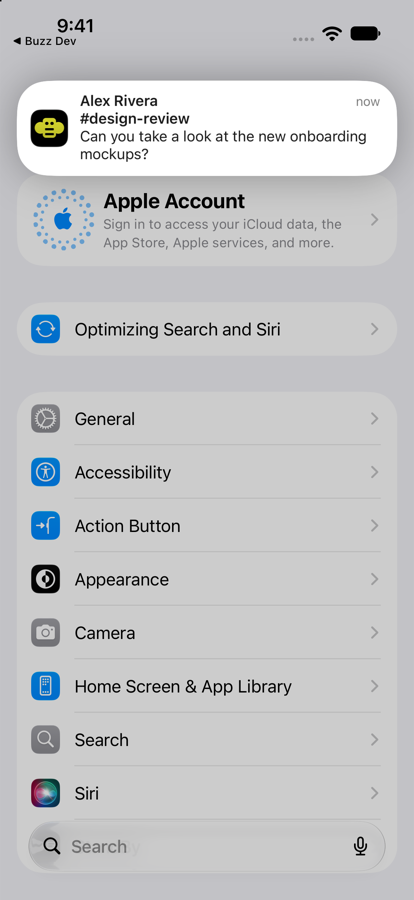
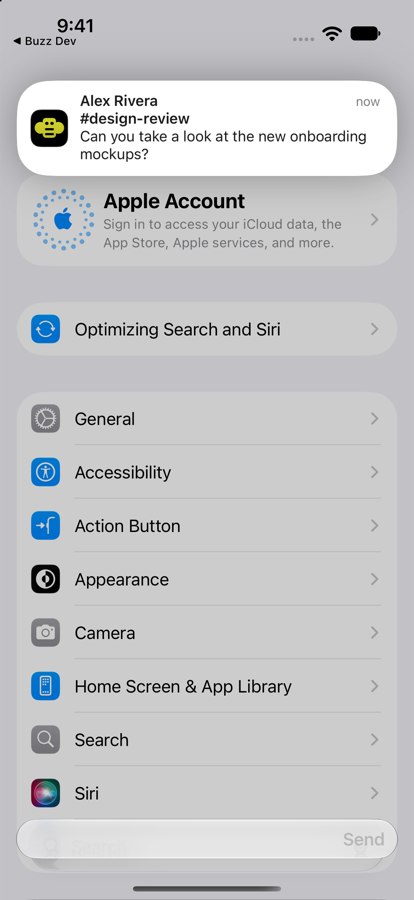
Long-pressing a message notification (synthetic names and text). Before
has no reply field (captured by sending the notification without its new
reply category, which is how main presents it); after shows one with
Send.
| Before | After |
| --- | --- |
|
|
|
### Demo
With the app backgrounded past the relay grace period, replying from the
notification lands the reply in a subthread under the message:
https://github.com/user-attachments/assets/37df7e28-aa46-4521-938e-8af5faa77b83
### Regressions
Nothing existing changes unless the user taps Reply. Notifications gain
a category and a small reply context in `userInfo`; tapping a
notification still opens the conversation as before. The relay reconnect
only happens for a pending reply and then falls back to the normal
background disconnect, so idle background behavior and network use are
unchanged. Reply failures end in a draft and a "Reply not sent"
notification rather than touching other state.
### Validation
- End to end on an iOS 27 simulator against a real community: with the
app backgrounded past the relay grace period, replied from the
notification; the reply appeared in a subthread under the message,
mentioning its sender. The demo above was recorded before the review
fixes (session hold, community fence, origin-community drafts, composer
draft sync); the same run was repeated on the current head, 9b9c8b0, and
the reply again appeared in the subthread with no "Reply not sent"
notification.
- Human testing is waived for this repo's mobile client; the simulator
run above replaces it. Not yet exercised on a physical device or on a
cold launch (app not running).
- Added tests: a Dart journey covering top-level, in-thread and Solo
replies, another community (draft kept in that community), a failed
send, a channel the user isn't in (draft appended), a reply arriving
while running, an unreachable relay, and a community switch while
connecting (not sent, draft kept in the reply's community); a
relay-session test that a background-work hold keeps the grace
disconnect off, including one already waiting on cleanup, until released
or its limit; a composer step showing a draft appended elsewhere appears
in the mounted composer and survives its next edit; a relay-session test
for reconnecting a paused session and timing out (fails without the
fix); Swift tests for reply context encoding, NIP-10 root parsing
aligned with the app, and request validation.
- `relay_session.dart` was at its 1200-line cap, so the background
connect lives in a new part file and three existing test hooks moved
unchanged into another.
- Full `mobile-test`, `mobile-check` and BuzzPushKit `swift test` pass.
---------
Signed-off-by: Tom Brow <tomb@squareup.com>
Signed-off-by: Tom Brow <tomb@block.xyz>
Co-authored-by: studio <dc2fc481343672df31a689840c09299972e704dac592e0da6f18486646a7ee3e@buzz.block.builderlab.xyz>


305 lines
8.5 KiB
Dart
305 lines
8.5 KiB
Dart
import 'dart:io';
|
|
import 'dart:async';
|
|
import 'dart:convert';
|
|
|
|
import 'package:flutter/foundation.dart';
|
|
import 'package:nostr/nostr.dart' as nostr;
|
|
import 'package:web_socket_channel/io.dart';
|
|
import 'package:web_socket_channel/web_socket_channel.dart';
|
|
|
|
import 'nostr_models.dart';
|
|
import 'relay_websocket.dart';
|
|
import 'package:buzz/shared/crypto/event_signing.dart';
|
|
|
|
/// Low-level websocket connection with NIP-42 authentication.
|
|
///
|
|
/// Handles the raw websocket lifecycle: connect, authenticate via NIP-42
|
|
/// challenge/response, send/receive JSON frames, and disconnect.
|
|
///
|
|
/// Does NOT handle reconnection — that is [RelaySessionNotifier]'s job.
|
|
enum SocketState { disconnected, connecting, authenticating, connected }
|
|
|
|
class RelayAuthRejectedException implements Exception {
|
|
final String message;
|
|
|
|
const RelayAuthRejectedException(this.message);
|
|
|
|
@override
|
|
String toString() => 'Relay authentication rejected: $message';
|
|
}
|
|
|
|
/// The relay answered an EVENT with OK false, so it wasn't stored.
|
|
class RelayEventRejectedException implements Exception {
|
|
final String message;
|
|
|
|
const RelayEventRejectedException(this.message);
|
|
|
|
@override
|
|
String toString() => 'Exception: $message';
|
|
}
|
|
|
|
Exception classifyRelayAuthFailure(String message) {
|
|
if (message.startsWith('error:')) return Exception(message);
|
|
return RelayAuthRejectedException(message);
|
|
}
|
|
|
|
class RelaySocket {
|
|
/// Interval for sending a ping and awaiting its pong before disconnecting.
|
|
static const pingInterval = Duration(seconds: 30);
|
|
|
|
@visibleForTesting
|
|
static Duration debugPingInterval = pingInterval;
|
|
|
|
@visibleForTesting
|
|
static Duration debugConnectTimeout = relayWebSocketConnectTimeout;
|
|
|
|
final String _wsUrl;
|
|
final String? _nsec;
|
|
final void Function(List<dynamic> message) _onMessage;
|
|
final void Function() _onConnected;
|
|
final void Function(Object? error) _onDisconnected;
|
|
|
|
WebSocketChannel? _channel;
|
|
StreamSubscription<dynamic>? _subscription;
|
|
SocketState _state = SocketState.disconnected;
|
|
Completer<void>? _authCompleter;
|
|
Timer? _authTimeout;
|
|
String? _pendingAuthEventId;
|
|
int? _closeCode;
|
|
|
|
SocketState get state => _state;
|
|
|
|
/// The WebSocket close code the relay sent, once it has closed the
|
|
/// connection; null if the connection failed without one.
|
|
int? get closeCode => _closeCode;
|
|
|
|
/// Scoped assertion supplied by the connection owner before connecting.
|
|
Map<String, String> headers = const {};
|
|
|
|
RelaySocket({
|
|
required String wsUrl,
|
|
required String? nsec,
|
|
required void Function(List<dynamic> message) onMessage,
|
|
required void Function() onConnected,
|
|
required void Function(Object? error) onDisconnected,
|
|
}) : _wsUrl = wsUrl,
|
|
_nsec = nsec,
|
|
_onMessage = onMessage,
|
|
_onConnected = onConnected,
|
|
_onDisconnected = onDisconnected;
|
|
|
|
/// Connect to the relay and complete NIP-42 authentication.
|
|
Future<void> connect() async {
|
|
if (_state != SocketState.disconnected) return;
|
|
_state = SocketState.connecting;
|
|
|
|
try {
|
|
_channel = IOWebSocketChannel(
|
|
openRelayWebSocket(
|
|
Uri.parse(_wsUrl),
|
|
headers: headers,
|
|
pingInterval: debugPingInterval,
|
|
connectTimeout: debugConnectTimeout,
|
|
),
|
|
);
|
|
await _channel!.ready;
|
|
} catch (e) {
|
|
// A channel that never opened never completes sink.close(), so a later
|
|
// disconnect() must not await it.
|
|
_channel = null;
|
|
_state = SocketState.disconnected;
|
|
_onDisconnected(e);
|
|
return;
|
|
}
|
|
|
|
// The channel may have been disposed while we were awaiting ready
|
|
// (e.g. provider rebuild triggered dispose() concurrently).
|
|
if (_channel == null) {
|
|
_state = SocketState.disconnected;
|
|
return;
|
|
}
|
|
|
|
_state = SocketState.authenticating;
|
|
_authCompleter = Completer<void>();
|
|
|
|
_subscription = _channel!.stream.listen(
|
|
_handleRawMessage,
|
|
onError: (Object error) {
|
|
_failAuth(error);
|
|
_resetConnection();
|
|
_onDisconnected(error);
|
|
},
|
|
onDone: () {
|
|
_closeCode = _channel?.closeCode;
|
|
_failAuth(null);
|
|
_resetConnection();
|
|
_onDisconnected(null);
|
|
},
|
|
);
|
|
|
|
// Wait for auth to complete (or timeout).
|
|
_authTimeout = Timer(const Duration(seconds: 8), () {
|
|
if (_authCompleter != null && !_authCompleter!.isCompleted) {
|
|
_authCompleter!.completeError(
|
|
TimeoutException('NIP-42 auth timed out after 8s'),
|
|
);
|
|
}
|
|
});
|
|
|
|
try {
|
|
await _authCompleter!.future;
|
|
_authTimeout?.cancel();
|
|
_state = SocketState.connected;
|
|
_onConnected();
|
|
} catch (e) {
|
|
_authTimeout?.cancel();
|
|
await disconnect();
|
|
_onDisconnected(e);
|
|
}
|
|
}
|
|
|
|
/// Send a raw JSON array over the websocket.
|
|
void send(List<dynamic> payload) {
|
|
_channel?.sink.add(jsonEncode(payload));
|
|
}
|
|
|
|
/// Upper bound on a graceful close. A channel whose upgrade is still pending
|
|
/// never completes sink.close(), and callers await disconnect() in cleanup.
|
|
static const closeTimeout = Duration(seconds: 2);
|
|
|
|
/// Gracefully close the connection, waiting at most [closeTimeout].
|
|
Future<void> disconnect() async {
|
|
_resetConnection();
|
|
final channel = _channel;
|
|
_channel = null;
|
|
if (channel != null) {
|
|
await channel.sink.close().timeout(closeTimeout, onTimeout: () {});
|
|
}
|
|
}
|
|
|
|
void dispose() {
|
|
_resetConnection();
|
|
_channel?.sink.close();
|
|
_channel = null;
|
|
}
|
|
|
|
void _resetConnection() {
|
|
_state = SocketState.disconnected;
|
|
_subscription?.cancel();
|
|
_subscription = null;
|
|
_authTimeout?.cancel();
|
|
_authTimeout = null;
|
|
_pendingAuthEventId = null;
|
|
}
|
|
|
|
void _failAuth(Object? error) {
|
|
if (_authCompleter != null && !_authCompleter!.isCompleted) {
|
|
_authCompleter!.completeError(error ?? Exception('Connection closed'));
|
|
}
|
|
}
|
|
|
|
void _handleRawMessage(dynamic raw) {
|
|
final String text;
|
|
if (raw is String) {
|
|
text = raw;
|
|
} else {
|
|
return; // Binary frames are not part of the Nostr protocol.
|
|
}
|
|
|
|
final List<dynamic> data;
|
|
try {
|
|
data = jsonDecode(text) as List<dynamic>;
|
|
} catch (_) {
|
|
return; // Malformed JSON.
|
|
}
|
|
|
|
if (data.isEmpty) return;
|
|
final type = data[0] as String;
|
|
|
|
switch (type) {
|
|
case 'AUTH':
|
|
_handleAuthChallenge(data);
|
|
case 'OK':
|
|
_handleOk(data);
|
|
default:
|
|
// Pass EVENT, EOSE, NOTICE, etc. upstream.
|
|
_onMessage(data);
|
|
}
|
|
}
|
|
|
|
/// Handle the relay's AUTH challenge: sign a kind:22242 event and respond.
|
|
void _handleAuthChallenge(List<dynamic> data) {
|
|
if (data.length < 2) return;
|
|
final challenge = data[1] as String;
|
|
|
|
if (_nsec == null) {
|
|
_failAuth(Exception('No nsec available for NIP-42 auth'));
|
|
return;
|
|
}
|
|
|
|
try {
|
|
// Decode bech32 nsec to hex private key.
|
|
final privkeyHex = nostr.Nip19.decode(payload: _nsec).data;
|
|
if (privkeyHex.isEmpty) {
|
|
_failAuth(Exception('Invalid nsec'));
|
|
return;
|
|
}
|
|
|
|
// Build the auth tags.
|
|
final tags = <List<String>>[
|
|
['relay', _wsUrl],
|
|
['challenge', challenge],
|
|
];
|
|
|
|
// Create and sign the kind:22242 AUTH event.
|
|
final event = signNostrEvent(
|
|
kind: EventKind.auth,
|
|
content: '',
|
|
tags: tags,
|
|
secretKey: privkeyHex,
|
|
);
|
|
|
|
_pendingAuthEventId = event.id;
|
|
send(['AUTH', event.toMap()]);
|
|
} catch (e) {
|
|
_failAuth(e);
|
|
}
|
|
}
|
|
|
|
@visibleForTesting
|
|
void debugHandleOkForTest(List<dynamic> data) => _onMessage(data);
|
|
|
|
/// Handle OK frames. During auth, complete the auth flow.
|
|
void _handleOk(List<dynamic> data) {
|
|
if (data.length < 3) return;
|
|
final eventId = data[1] as String;
|
|
final accepted = data[2] as bool;
|
|
|
|
// Check if this OK is for our pending AUTH event.
|
|
if (_pendingAuthEventId != null && eventId == _pendingAuthEventId) {
|
|
_pendingAuthEventId = null;
|
|
if (accepted) {
|
|
if (_authCompleter != null && !_authCompleter!.isCompleted) {
|
|
_authCompleter!.complete();
|
|
}
|
|
} else {
|
|
final message = data.length > 3
|
|
? data[3] as String
|
|
: 'Auth rejected by relay';
|
|
_failAuth(classifyRelayAuthFailure(message));
|
|
}
|
|
return;
|
|
}
|
|
|
|
// Pass non-auth OK frames upstream for pending event tracking.
|
|
_onMessage(data);
|
|
}
|
|
}
|
|
|
|
/// HTTP upgrade failures retain their status through WebSocketChannel.
|
|
bool relayUpgradeRefused(Object? error) {
|
|
if (error is WebSocketChannelException) error = error.inner;
|
|
return error is WebSocketException &&
|
|
(error.httpStatusCode == 401 || error.httpStatusCode == 403);
|
|
}
|