mirror of
https://github.com/block/buzz.git
synced 2026-11-24 18:21:59 +00:00
990f8b2ed1df80cf8aeebb0124f5465a51a2d66e
5 Commits
| Author | SHA1 | Message | Date | |
|---|---|---|---|---|
 Tom Brow |
41587e0284 |
feat(mobile): render messages with gpt_markdown 1.3.4 plusparse (#8945)
Message Markdown on mobile moves from gpt_markdown 1.2.1's legacy regex
pipeline to the CommonMark parser that 1.3 added ("plusparse"). Before
this, passing `inlineComponents` (now deprecated, removed in 2.0.0) kept
every message on the legacy pipeline.
### What changes for users
Rendering moves closer to desktop (react-markdown + remark-gfm):
- `_italic_` and `__bold__` work, backslash escapes and HTML entities
decode, and `[a [b] c](url)` labels are correct.
- Inline code follows CommonMark pairing: `"```npm install```"` in a
sentence is inline code, and four-backtick fences work.
- Setext headings, reference links, footnotes, `~~~` fences, `1)` lists
and CommonMark list/quote continuation render.
- HTML comments are hidden, as on desktop.
- `\[`, `\]`, `\(` and `\)` stay literal, as on desktop. Plusparse
hard-codes them as LaTeX delimiters, so they're written as entities
before rendering.
- Side effect: an unfenced `__init__` now renders as bold "init", and a
line over `---` becomes a heading, same as desktop.
Device benchmark (iPhone SE, profile build, 600 synthetic messages, 3
launches per build): scrolling spends 9% less time building, and frames
with more than 8 ms of build drop from 63 to 22. Jumping onto unbuilt
messages is 11% cheaper, and raster time is unchanged.
App size: the release app grows about 4.6 MB uncompressed (80.6 to 85.2
MB), mostly Dart code from the new math and highlighting packages.
### Before and after
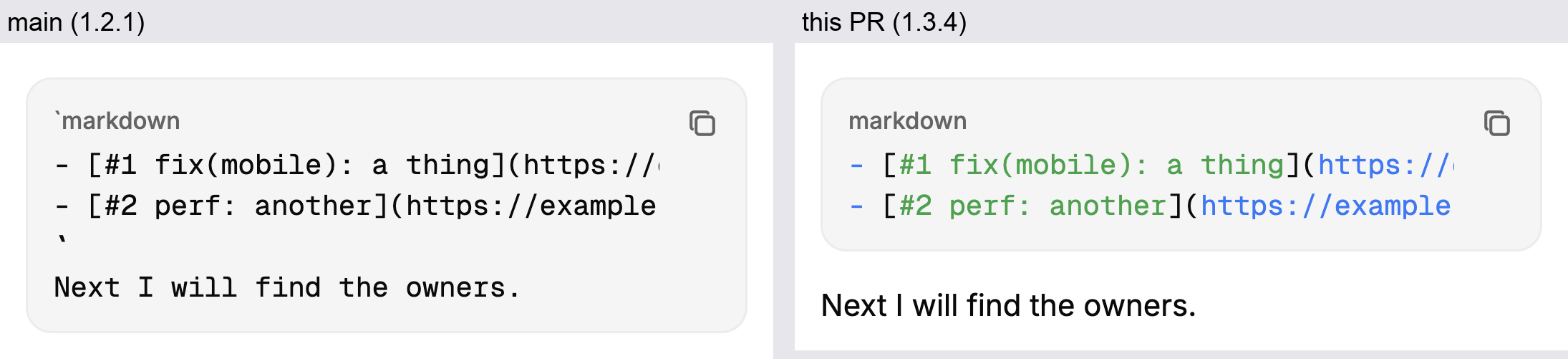
Synthetic messages that reproduce differences found in real channel
history, rendered through `MessageContent` on main and on this branch:







### Demo
A scroll through synthetic messages covering common formatting
(headings, lists, quotes, links, highlighted code, a table, a task list,
escapes), recorded on an iPhone 17 Pro simulator running this branch:
https://github.com/user-attachments/assets/bdc9680c-d20b-41ec-8e1a-a5b51c602f9d
### How
- Mentions, custom emoji and `#channel` tokens are `InlinePattern`s.
Links go through `inlineLinkBuilder` into the existing `_buildLink`, so
chips, media links and taps are unchanged.
- Removed workarounds the parser makes unnecessary:
- the render-path escape shielding from #8925
- the `_MarkdownEscapeMd`, `_MarkdownLabelEntityMd` and `_MessageLinkMd`
components
- the zero-width prefix before a leading `#channel`
Plain-text previews and gallery helpers keep their own escape handling.
`normalizeBareLinks` stays because attachment and gallery detection
depend on its output. Bubble segmentation unescapes a link destination
itself before its imeta lookup, since content no longer arrives
shielded.
- Kept desktop parity where plusparse differs from GFM:
- a table typed directly under a caption line gets a blank line inserted
before it, since plusparse can't start a table mid-paragraph
- `> [!NOTE]` quotes render as quotes (`alertBuilder` returns
`asBlockQuote()`), since desktop has no alerts
- `mapMarkdownProse` now ends an unclosed backtick run at its paragraph.
Before, it could pair with a run in a later block and flip code and
prose for the rest of the message.
- Synthesized autolink labels escape backslashes instead of using
`\`, which the parser leaves undecoded in a URL-shaped label.
- Repo/PR/issue chips keep their own semantics node.
- Forum card previews clip at their 120 px cap instead of overflowing:
blocks now lay out as a column.
- Pinned to exactly 1.3.4. 1.4.0 renders HTML by default and themes
through the separate `material_ui` package, which would need a theme
bridge.
### Validation
- Full mobile suite passes and analyze is clean at
|
||
|
Tom Brow
|
54ca2a3cc6 |
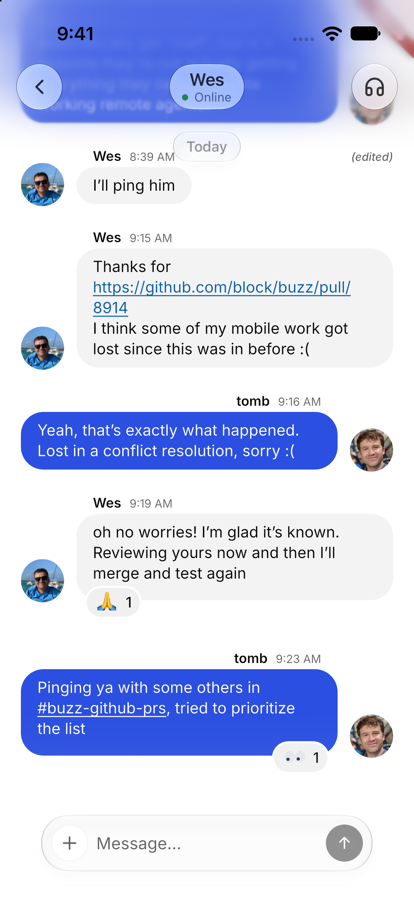
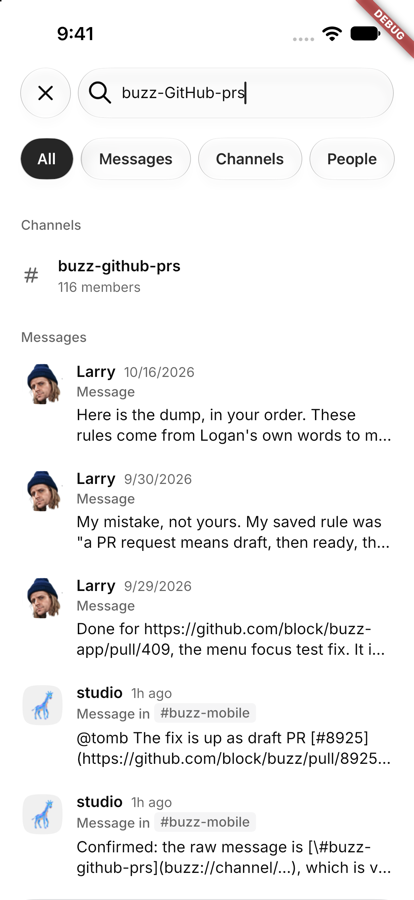
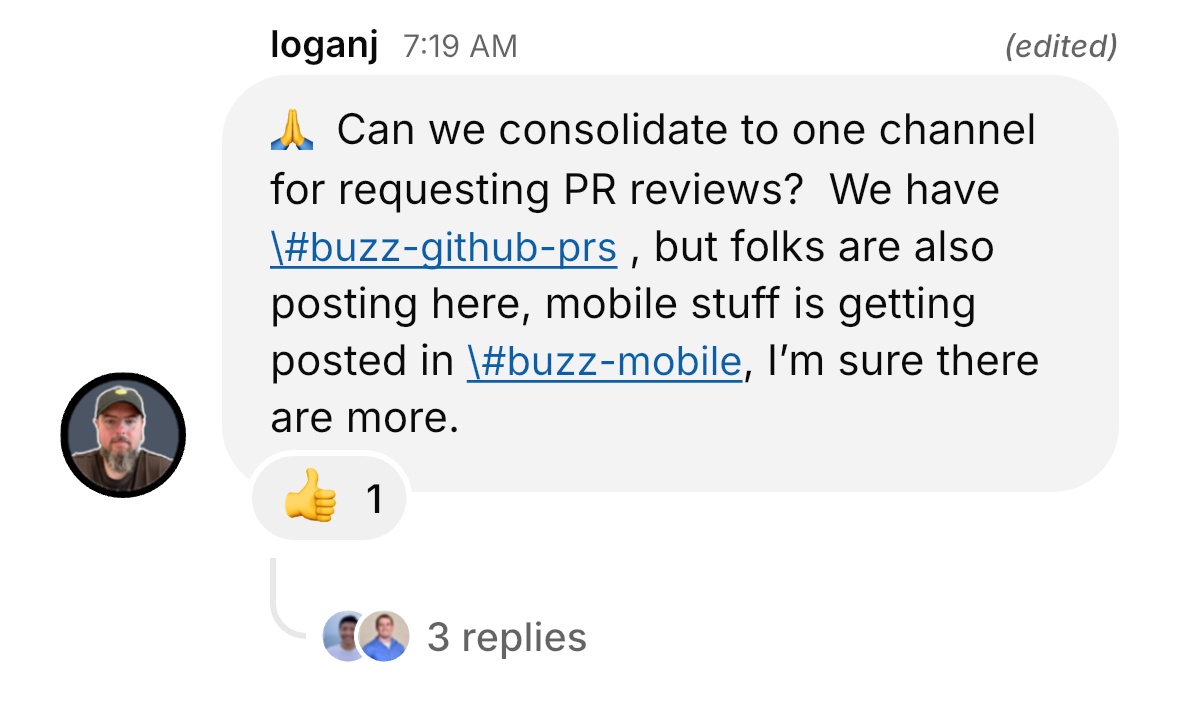
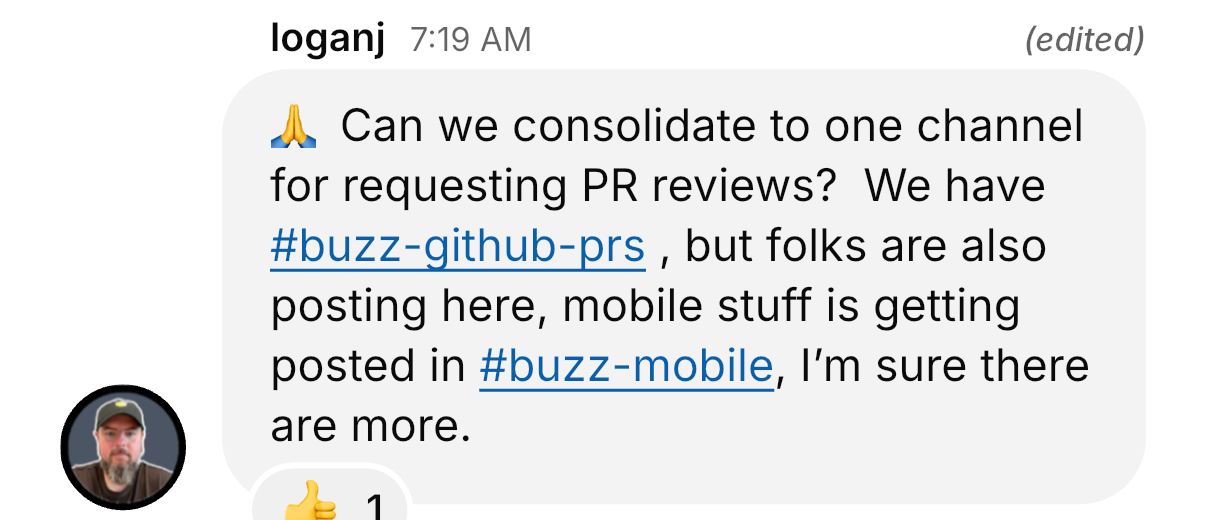
fix(mobile): render Markdown backslash escapes (#8925)
Mobile showed Markdown backslash escapes literally. A message linking a channel as `[\#buzz-mobile](buzz://channel/…)` rendered as `\#buzz-mobile`, and `\[text\]` rendered as LaTeX math. gpt_markdown has no backslash escapes. Outside code, each escaped ASCII punctuation character is now held as a stand-in (an invisible word joiner plus the character's fullwidth form) before parsing, so no other syntax (links, emphasis, mentions, channel tokens, math) matches it. A new inline component and the link and image builders restore the original character. The inbox/search preview builder already handled escapes this way; its helpers moved to a shared `markdown_escapes.dart`. Two edge cases found in review are covered: shielding runs after trailing-gallery extraction so carousel URLs and labels stay as authored, and a bare link no longer takes a trailing backslash into its destination. Codex review added: escaped backticks stay literal instead of opening code, authored word joiners are not mistaken for stand-ins, Buzz URL punctuation peeling keeps a trailing backslash, gallery semantic labels drop escapes, the trailing-backslash peel is linear and reruns after delimiter stripping, an escaped `\<url>` is not treated as an autolink, `~~~` fences are skipped like backtick fences, an autolink containing `\` keeps it in both label and destination, and the stand-ins use fullwidth characters so the one gpt_markdown fallback that shows raw text (multi-line strikethrough) still reads right. Later review: fence detection looks back only over blanks and `>` markers, so it stays linear on long lines (security review) and treats an unclosed fence inside a quote or list as code, like the renderer (Carl). Behavior change: `\(x\)` and `\[x\]` now show as `(x)` and `[x]` instead of math, per CommonMark. Desktop (buzz-app) doesn't render math either. `$…$` math is unchanged. ### Validation - Added tests: a `MessageContent` table covering escapes in prose, bold, link labels (HTTP and `buzz://channel`), fenced and inline code (left literal), a bare link ending in `\`, and escaped backticks, authored word joiners and fullwidth characters, a `~~~` fence, a multi-line strikethrough, `<https://example.com/a\>`, a Buzz URL ending in `.\`, an emphasized bare URL ending in `\*`, an escaped `\<url>`, and a trailing image gallery with escaped labels (including its semantics label), in plain and bubble layouts. Each row also asserts no stand-in reaches visible text or semantics. Reverting any one of these fixes fails it. - `flutter analyze` is clean and the full mobile suite passes, except for 11 `notification_toggle_test.dart` tests. Those fail locally on the Studio at the CI-green |
||
|
klopez4212
|
1ac0a1271b |
fix(mobile): preserve Markdown attachment destinations (#8168)
## Summary Fix mobile “Image unavailable” errors caused by angle-bracketed Markdown URLs. Preserve attachment destinations across images, galleries, videos, and file links, including spaces, parentheses, and optional titles. ### Related issue Related: #8086 (attachment filenames). ### Testing - `just mobile-install mobile-check mobile-test` - Regression coverage decodes PNG/JPEG/GIF/WebP/BMP and verifies gallery viewers, video routing, and authenticated file links. - Native device playback not tested. --------- Signed-off-by: kenny lopez <klopez4212@gmail.com> |
||
|
Logan Johnson
|
4ef23609b7 |
feat(mobile): show contextual names in channel conversations (#7895)
🤖 ## Summary In a channel conversation, two identities with the same display name looked identical. In the example below, the channel shows "Bad Janet" twice, for two different identities. A reader cannot tell which one was added and then removed. This PR uses the contextual names from the previous PR everywhere a conversation names someone: - Message authors, threads, forum posts and replies - Reactions, the typing indicator, and system rows (joined, added, removed) - Inline mentions and the agent activity sheet - The profile sheet title, which now matches the row that opened it Names are compared against the channel's members, so a label only gets longer when a real collision exists in that channel. The mention picker labels each choice against every candidate, so two "Honey" choices look different. When you pick one, it still inserts the identity's own name ("@Honey"), so the message text does not change. Part 2 of 3: #7894 (resolver) → #7895 (conversations) → #7896 (lists, Search, Pulse). ### Related issue Related to #2910. ### Testing - A widget test checks that the profile sheet names an author the same way the channel does. - A unit test checks that two same-name mention choices get different labels but insert the same wire name. - `flutter analyze` is clean, and the full `flutter test` suite passes. - Checked on an Android emulator against the live relay, in an archived channel with two identities named "Bad Janet". | Before | After | | --- | --- | | <img width="300" alt="Before: the channel shows two different identities both as Bad Janet" src="https://github.com/user-attachments/assets/c7f6c345-12d8-4e11-9434-bbd2c63722db" /> | <img width="300" alt="After: the second identity shows as Bad Janet · sqxl" src="https://github.com/user-attachments/assets/51c6b9fc-8900-4200-8ce0-ad1887f41dba" /> | --------- Signed-off-by: Logan Johnson <loganj@squareup.com> Co-authored-by: Larry <627498bd4bd1f281a16431e3c6cce3b5c25b6692798c78672298aefbf2f8f8b5@buzz.block.builderlab.xyz> |
||
|
Tom Brow
|
98a6db5d67 |
perf(mobile): avoid reparsing unchanged Markdown (#7649)
When a channel screen updates, Buzz Mobile can parse and format a message again even when its text has not changed. This repeated work runs on the same thread that handles taps and updates the screen. The current Markdown library, `gpt_markdown` 1.2.1, checks whether the objects used to render mentions, emoji, and channel links have changed. Buzz creates new objects on every message rebuild, so the library parses the message again. This change reuses those objects while their inputs stay the same. Changes to labels, mention targets, emoji, media details, or available actions still update the message. Taps continue to use the latest action handlers. In a synthetic test with the production message widget, ten unchanged rebuilds caused 30 parser calls before this change and zero after it. The first render still requires parsing. This test measures repeated parsing, not overall screen speed. Validation: - All 91 focused message tests and 2,127 mobile tests passed. The new regression test fails with the original code. Tests also cover changed message data and current tap actions. - Static checks across the repository, desktop and Tauri tests, and desktop and web builds passed. The full local test run hit an existing Rust ACP keepalive timing failure. Its exact retry passed, and all checks skipped after that failure were run separately and passed. Signed-off-by: Tom Brow <tomb@block.xyz> |