mirror of
https://github.com/block/buzz.git
synced 2026-10-31 14:31:02 +00:00
f2f4cb2cb69d171fba96bd22f014e8228df08443
2317 Commits
| Author | SHA1 | Message | Date | |
|---|---|---|---|---|
 Duncan |
f2f4cb2cb6 |
refactor(desktop): close global-tier restart-eligibility gap via ops module
The restart-eligibility gate (effective_secrets_unavailable) covered the instance/definition/harness tiers but not the global tier. A setup-mode agent could be stopped by an auto-restart while the committed global ref was unhydratable, then hit the strict global reload at spawn, refusing respawn after the live process was already stopped (FailedAfterStop). Extract the four restart flows into an AppHandle-free restart_ops module. Each op takes the global-config loader as a closure it invokes itself, so the strict-global re-read and load-before-stop ordering are op-owned and stop-spy-testable. The two pre-scan selectors own the strict-global gate (unreadable global yields zero candidates); the two under-lock authorizers re-read the committed global before the stop. Production shells in agent_discovery.rs and global_agent_config.rs become thin wiring. Co-authored-by: Will Pfleger <pfleger.will@gmail.com> Signed-off-by: Will Pfleger <pfleger.will@gmail.com> |
||
|
Duncan
|
f022098c03 |
Merge remote-tracking branch 'origin/main' into duncan/keyring-secret-projection
* origin/main: test: add deterministic desktop release smoke (#5699) fix(channels): return complete member rosters (#5765) feat(desktop): add Inbox message delete action (#5779) fix(desktop): enforce agent mention authorization at send boundaries (#5681) Signed-off-by: Duncan <dcfd242e557282d7a1e2cf2e6877522682f1e5c6156dc92ca7d90eaedd3b0f95@buzz.block.builderlab.xyz> |
||
|
Wes
|
76f114a252 |
test: add deterministic desktop release smoke (#5699)
## Summary - add `just desktop-release-smoke`, a deterministic desktop correctness/reachability smoke against an ephemeral real local relay - preserve existing DM history when the first live DM enters a pageless query window, the desktop-v0.5.10 disappearing-DM regression - enforce foreground JS ordering: a frame and actionable sidebar input must dispatch before mounted stale queries begin resume refetches, while separately requiring the navigation to commit promptly - seed a 10,000-event dense-second fixture and verify exact event-ID reachability, SHA-256 identity, ordering, duplicate absence, bounded mounted rows, and drained render work - isolate Postgres per run, serialize the shared Redis DB, retain phase/relay/Playwright diagnostics, and gate desktop release manifest assembly on the smoke This is deliberately **not a performance-regression gate**. CDP and action timing fields are informational only. There is no candidate/baseline comparison or threshold. A future performance lane needs repeated equivalent fixtures, discrete interaction samples, and an explicit comparator/noise policy. The diagnostics record the fixture version, row count, wall-clock base timestamp (`fixtureSecond`), expected event-ID hash, observed state, and measurements. Because the created-at floor requires a current timestamp, paired comparison remains disabled. The release job runs on an isolated GitHub-hosted runner. The script also guards automatic local runs with a Redis allocation lock. Its remaining direct-PID cleanup and free-port selection race mean it should not be repurposed onto a persistent concurrent shared runner without first hardening process-group cleanup and port reservation. ### Related issue N/A ### Testing - `pnpm --dir desktop typecheck` - focused real-local-relay release smoke passed after adversarial review fixes - identical DM witness passed current and failed `desktop-v0.5.10` with the history-loss signature - identical foreground witness bytes (`2c1e97df04c9b8ca0304b66bbbe9bdb4d08924ad8ce0f68a9c490458fcc3aca8`) failed `desktop-v0.5.10` structurally: the first resume fetch was marker 1, before first frame/sidebar dispatch at marker 8 - with PR #5696 (`59f613c40`) merged, the witness showed focus at 951.3 ms, first frame at 951.6 ms, click dispatch at 952.1 ms, first resume fetch at 968.9 ms, and route commit at 992.4 ms - the gate therefore protects first paint and actionable input dispatch; route commit is a bounded responsiveness witness, not a prerequisite for resume work - the corrected focused foreground scenario passed at `6d9b5be40da58bbee92a856b04c3558946d0a950`; the prior merged-tree full run passed DM retention and 10k reachability before exposing this contract mismatch - pre-push passed on exact pushed head `6d9b5be40da58bbee92a856b04c3558946d0a950`, including desktop checks, typecheck, desktop tests, Rust tests, mobile tests, and Tauri checks - full 10,000-event scenario reached 10,000/10,000 exact IDs with matching SHA-256, 199 continuation requests, and 95 mounted rows in about 4.4 minutes - reduced-row review run passed in 18.4 seconds ### Foreground witness boundary The Chromium test is a deterministic JS policy gate. Headless Chromium does not expose an honest blur/focus transition in this fixture, so the test drives the production focus listener and `document.hasFocus()` predicate together and records that simulation explicitly. It proves refetch fan-out ordering, not AppKit activation, WKWebView paint, or an activating physical click. A packaged macOS native lane is still required before claiming the actual desktop activation experience is certified. --------- Signed-off-by: Wes <wesbillman@users.noreply.github.com> Co-authored-by: Carl <c7ebe626f000404285d3686e1dc74cc07cc60a9754a150041ba132e14bd3e2ec@buzz.block.builderlab.xyz> |
||
|
Wes
|
e0940927ff |
fix(channels): return complete member rosters (#5765)
## Summary - return complete channel rosters instead of truncating at 1,000 members - chunk `event_mentions` inserts inside one transaction so large kind `39002` snapshots remain discoverable by every `p` tag - add a targeted `buzz-admin reconcile-channels --channel <uuid>` force-republish path for stale discovery snapshots - cover a 1,501-member roster, 11,000-tag mention index, and kind `39002` tag construction past member 1,000 ## Why The relay builds NIP-29 discovery and several authorization decisions from `get_members()`, but that helper silently returned only the first 1,000 active members. Desktop then counted the truncated kind `39002` event, while late members could be rejected by roster-scanning member actions. Removing the roster cap exposes PostgreSQL's 65,535 bind-parameter ceiling in mention indexing, so the insert is chunked transactionally to preserve all-or-nothing indexing. The existing reconcilers only fill missing discovery events. The targeted admin option bypasses the separately known 1,000-channel reconciliation-list ceiling and replaces an existing channel snapshot using the configured production relay key. ## Attribution This supersedes and builds on #3166 by @LordMelkor. Thank you for identifying the roster boundary and contributing the original complete-roster and mention-index patch. The production roster/query changes and the two PostgreSQL regressions retain that work's shape; this PR rebases it onto current `main`, adds relay coverage, and adds the targeted repair operation requested for rollout. ## Validation Exact pushed head: `24d02e4f3824150ed84913c9d230e675502e5b12` - `cargo check -p buzz-db -p buzz-admin` - `cargo test -p buzz-db channel::tests::get_members_returns_full_roster_beyond_1000 -- --ignored --exact --nocapture` - `cargo test -p buzz-db feed::tests::insert_mentions_indexes_rosters_past_bind_parameter_cap -- --ignored --exact --nocapture` - `cargo test -p buzz-relay --lib handlers::side_effects::tests::group_members_snapshot_keeps_members_past_one_thousand -- --exact` - `cargo run -q -p buzz-admin -- reconcile-channels --help` - mandatory pre-push hook: branch-skew, desktop checks/typecheck/tests, mobile tests, Rust tests, and desktop Tauri checks all passed on the pushed head ## Rollout 1. Deploy the relay/backend build. 2. Run `buzz-admin reconcile-channels --channel <general-channel-uuid>` with `BUZZ_RELAY_PRIVATE_KEY` configured. 3. Verify the replacement kind `39002` roster count matches the active database membership count. No schema migration or desktop release is required. Fixes #3156 Supersedes #3166 --------- Signed-off-by: Wes <wesbillman@users.noreply.github.com> Co-authored-by: Carl <c7ebe626f000404285d3686e1dc74cc07cc60a9754a150041ba132e14bd3e2ec@buzz.block.builderlab.xyz> |
||
|
Tom Brow
|
514195b1d5 |
feat(desktop): add Inbox message delete action (#5779)
### What changed? Inbox message action menus now show a standalone Delete action beside Edit for manageable messages. Delete reuses the existing confirmation and targets the message whose menu was opened, while the existing empty-edit deletion path remains unchanged. ### Why? Inbox users can delete a message directly without first entering edit mode. Thread context can contain multiple messages, so the action must preserve the active Inbox selection and delete only the chosen row. ### How is it tested? Desktop checks, typechecking, builds, and test suites pass. Added tests: - [Inbox edit and delete E2E coverage](https://github.com/block/buzz/tree/main/desktop/tests/e2e/inbox-edit.spec.ts) Signed-off-by: Tom Brow <tomb@block.xyz> Co-authored-by: Codex <noreply@openai.com> |
||
|
Duncan
|
46669ef3e7 |
fix(desktop): gate agent restart on global availability, bind restart seams
The pass-2 secret-availability gate closed the stop-then-fail-at-respawn class for the record-derivable tiers (instance, definition, harness) but left two gaps: 1. Global tier: both post-install restart checks loaded the global config with unwrap_or_default() while spawn_agent_child reloads it strictly, so a restart authorized while the global ref was unavailable — even for an unrelated secret — would stop a live process only to hit the spawn refusal (FailedAfterStop). The global-config-save flow's under-lock recheck reused phase-1 snapshots and never re-attested the committed global ref before the stop. 2. The four production restart-gate call sites consulted effective_secrets_unavailable at the call site, so mutating any single call did not fail a test — only the pure predicate was bound. Add refuse_restart_on_unavailable_global (mirrors refuse_save_on_unavailable_current) and route the strict global load through it at both post-install sites and the global-config under-lock recheck. Consolidate each flow's secret consultation into AppHandle-free composed seams (should_restart_after_install_for, refuse_restart_on_unavailable_secrets, should_restart_on_config_change_for) so the consultation lives in one testable place, and bind each with record-driven regressions. Global availability stays a separate strict Result gate rather than a fourth arm of effective_secrets_unavailable — it is not derivable from a record. Co-authored-by: Will Pfleger <pfleger.will@gmail.com> Signed-off-by: Will Pfleger <pfleger.will@gmail.com> |
||
|
Wes
|
bcf353c969 |
fix(desktop): enforce agent mention authorization at send boundaries (#5681)
## Summary - allow channel-member remote/headless agents only with current kind `10100` directory evidence, while stale member identities remain hidden - fail closed while managed/relay directories load, error, or background-refetch across channel, forum, and cached autocomplete surfaces - revalidate agent mention authorization immediately before normal sends and message-edit saves, including after deferred uploads - in owner-only builds, fetch fresh authoritative profile ownership at send time and deny missing, changed-owner, or unavailable proofs - preserve human mention tags when agent authorization is revoked or unknown Supersedes #5536 because its contributor-fork head cannot be updated by maintainers. ## Validation Exact head: `7278cdd5fbcee676c7b858ea098503c62eeeff0d` - mandatory pre-push suites passed: desktop check/typecheck/tests, Rust tests, mobile tests, desktop Tauri checks, branch-skew - desktop unit tests: 4,732 passed - focused edit/ownership regressions: 8 passed - focused mention E2E: 5 passed (remote positive, stale-member negative, directory error, pre-send revocation, mid-send revocation) - file-size ratchet passed One first focused E2E batch had a timing-only miss where the send click did not emit; the isolated rerun passed. One separate pre-push attempt hit the existing randomized passphrase separator test; the successful exact-head push reran and passed the mandatory suite. --------- Signed-off-by: JDiz00 <174381550+JDiz00@users.noreply.github.com> Signed-off-by: Wes <wesbillman@users.noreply.github.com> Co-authored-by: JDiz00 <174381550+JDiz00@users.noreply.github.com> Co-authored-by: Carl <c7ebe626f000404285d3686e1dc74cc07cc60a9754a150041ba132e14bd3e2ec@buzz.block.builderlab.xyz> |
||
|
Duncan
|
b0a4346c4d |
Merge remote-tracking branch 'origin/main' into duncan/keyring-secret-projection
* origin/main: fix(desktop): route compact preview geometry fixture through media proxy (#5799) Make workflow run history authoritative in Desktop (#5780) Signed-off-by: Duncan <dcfd242e557282d7a1e2cf2e6877522682f1e5c6156dc92ca7d90eaedd3b0f95@buzz.block.builderlab.xyz> |
||
|
thomaspblock
|
b269e8df7e |
fix(desktop): route compact preview geometry fixture through media proxy (#5799)
**Category:** fix (CI) **User Impact:** None — test-only change that unblocks `main` and every open PR. **Problem:** `main` has been red since #5629 landed on `45f4b91a3`: `Desktop Smoke E2E (3)` fails `compact link preview image geometry truncates long titles to one line` on every build (main run 31727837133, and e.g. #5792, #5790). Two independently-green PRs raced: #5629 added the test stubbing its preview image at the raw relay origin (`http://localhost:3000/media/*.png`), while #5627 rewrites sent snapshot media through the authenticated local media proxy (`http://127.0.0.1:54321` in the E2E mock bridge). Merged together, the image request goes to the proxy origin, the stub never matches, and `naturalWidth` stays `0`. **Solution:** Point the route stub at the mock proxy origin, matching the existing `sent link preview media uses the authenticated proxy in compact and rich cards` test in the same spec. **Testing:** Reproduced the failure locally on `45f4b91a3`, then with this fix: targeted test passes, and the full `messaging.spec.ts` smoke suite passes 58/58. Signed-off-by: Thomas Petersen <thomasp@squareup.com> Co-authored-by: Wintermute <3f1797424fd9ad6653a83665c660517777cd7f8c228c0d5907f49e01537f3ca5@buzz.block.builderlab.xyz> |
||
|
Wes
|
2693e0db1f |
Make workflow run history authoritative in Desktop (#5780)
## Summary

- persist stable workflow run `error_code` values separately from human
diagnostics
- expose NIP-98 authenticated, channel-authorized run history and
approval reads with stable keyset pagination
- connect Desktop to those authoritative reads and return the
relay-created run ID on trigger
- show truthful loading, failure, and pending-trace states, and do not
render approval actions from non-actionable stored hashes

## Validation

- pre-push `branch-skew`, `desktop-typecheck`, `desktop-test`,
`rust-tests`, `desktop-tauri-checks`, and `desktop-check` all passed on
`a097dbe5f`
- Desktop tests: 4,761 passed, 0 failed
- `cargo check -p buzz-relay`
- `git diff --check`

## Remaining gate

This does not claim a relay-backed Playwright workflow journey. The
browser relay bridge still routes workflow invokes through in-memory
handlers; that production-shaped acceptance gate remains follow-up work
before Workflows can leave preview.

---------

Signed-off-by: Wes <wesbillman@users.noreply.github.com>
Co-authored-by: Carl <c7ebe626f000404285d3686e1dc74cc07cc60a9754a150041ba132e14bd3e2ec@buzz.block.builderlab.xyz>
Co-authored-by: Mongo <5c25403eab7271f9f94ddd4f2b270e8cac2c92e2c830c51877cca6ec974ffb3f@buzz.block.builderlab.xyz>
Co-authored-by: Princess Donut <68157ebd23b3897c1991015c3038658ea916200c67d3a54620b0754d1b92f6e0@buzz.block.builderlab.xyz>
mobile-v0.11.0-rc.1 |
||
|
Duncan
|
92845b36b7 |
refactor(desktop): extract agent_discovery tests to #[path] sibling
The restart-eligibility gate pushed agent_discovery.rs over the 1000+ desktop file-size ratchet ceiling (1819 -> 1849). Move the test module to a sibling agent_discovery_tests.rs included via #[path], matching the runtime_commands_tests.rs convention. Pure relocation, no behavior change. Co-authored-by: Will Pfleger <pfleger.will@gmail.com> Signed-off-by: Will Pfleger <pfleger.will@gmail.com> |
||
|
Duncan
|
e07d887786 |
Merge remote-tracking branch 'origin/main' into duncan/keyring-secret-projection
* origin/main: fix(desktop): more compact "compact" link previews (#5629) Fix mobile composer input regressions (#5594) Add mobile community invites (#5641) Signed-off-by: Duncan <dcfd242e557282d7a1e2cf2e6877522682f1e5c6156dc92ca7d90eaedd3b0f95@buzz.block.builderlab.xyz> |
||
|
Duncan
|
b33c1780ae |
fix(desktop): gate agent restart eligibility on secret availability
Automatic restart flows (post-install adapter bounce, global-config change) derived eligibility purely from resolve_effective_agent_env + agent_readiness. An unavailable secret tier hydrates to an empty env that is indistinguishable from an intentionally-empty one, so those flows could stop a live/setup process and only discover the refusal at respawn (FailedAfterStop). Add effective_secrets_unavailable(record, personas) — ORs the three registry-derivable tiers (instance secrets_unavailable, definition, harness) — and thread it through both eligibility predicates and the under-lock recheck in each flow, refusing before any stop. Co-authored-by: Will Pfleger <pfleger.will@gmail.com> Signed-off-by: Will Pfleger <pfleger.will@gmail.com> |
||
|
Taylor Ho
|
45f4b91a36 |
fix(desktop): more compact "compact" link previews (#5629)
**Category:** improvement **User Impact:** Compact link previews now use a single-line title and smaller thumbnail, making conversations easier to scan. **Problem:** Compact previews gave long titles and oversized thumbnails too much visual weight in the message timeline. **Solution:** Keep titles to one ellipsized line and reduce image thumbnails to a 104×64 treatment while preserving the existing wide aspect ratio; Rich previews remain unchanged. <details> <summary>File changes</summary> **desktop/src/shared/ui/compact-link-preview-attachment.tsx** Tightens the Compact presentation with a single-line title and smaller wide thumbnail, leaving Rich previews untouched. **desktop/tests/e2e/messaging.spec.ts** Adds focused coverage for title overflow, exact 64px card and 104×64 thumbnail geometry, and successful decoded-image rendering using a realistic fixture, plus an optional visual capture. **desktop/tests/fixtures/github-pr-5629-og.png** Provides realistic visible image bytes for the compact-preview image-rendering E2E path. </details> ## Reproduction steps 1. Launch the desktop app with link preview style set to Compact. 2. Send a link whose preview has an image and a long title. 3. Confirm the thumbnail renders at the smaller wide size and the title truncates to one line with an ellipsis. 4. Switch link preview style to Rich and confirm its presentation is unchanged. ## Screenshot  --------- Signed-off-by: Taylor Ho <taylorkmho@gmail.com> Co-authored-by: Carl <acda9e433d19dcd0e6b6840f7f4b98f3a56f1fab98049d444c087019e6d36560@buzz.block.builderlab.xyz> |
||
|
klopez4212
|
98d3d77b42 |
Fix mobile composer input regressions (#5594)
## Summary - reuse the channel member snapshot so first-use `@` suggestions appear immediately - reduce selection-only composer rebuilds so iOS selection handles stay responsive - make Return insert a newline, send only from the composer button, and animate multiline growth with reduced-motion support ## Validation - `just mobile-check` - `just mobile-test` — 1,271 tests passed - signed iPhone Release and Pixel 10 debug builds installed and launched - `just ci` passed mobile, Rust, desktop, and web checks until the unrelated `buzz-terminal` lifecycle test timed out waiting for `$0`; reproduced unchanged in isolation --------- Signed-off-by: kenny lopez <klopez4212@gmail.com> Signed-off-by: Fast Fizz <2df81cb51f05a9d5387ef24d7b9ecb8fcdfcd1c70ffabc67061c9596e1b5b1c4@buzz.block.builderlab.xyz Signed-off-by: Fast Fizz <2df81cb51f05a9d5387ef24d7b9ecb8fcdfcd1c70ffabc67061c9596e1b5b1c4@buzz.block.builderlab.xyz> Co-authored-by: Fast Fizz <2df81cb51f05a9d5387ef24d7b9ecb8fcdfcd1c70ffabc67061c9596e1b5b1c4@buzz.block.builderlab.xyz> |
||
|
klopez4212
|
8abc2baf0b |
Add mobile community invites (#5641)
## Summary - add a permission-gated mobile community invite page - create, copy, and natively share configurable invite links - invite a validated npub directly with member/admin role selection - reuse Buzz profile actions, search styling, settings rows, and modal sheets ## Validation - `just mobile-check` - `flutter test` (1,275 tests) - Pixel and iPhone review builds installed and launched --------- Signed-off-by: kenny lopez <klopez4212@gmail.com> Signed-off-by: Kenny Lopez <klopez4212@gmail.com> Signed-off-by: Fast Fizz <2df81cb51f05a9d5387ef24d7b9ecb8fcdfcd1c70ffabc67061c9596e1b5b1c4@buzz.block.builderlab.xyz> Co-authored-by: Carl <3c4caeafb646d23867f1c4832e68211d77e2561946171625f75c3ce1a3f2670f@buzz.block.builderlab.xyz> Co-authored-by: Fast Fizz <2df81cb51f05a9d5387ef24d7b9ecb8fcdfcd1c70ffabc67061c9596e1b5b1c4@buzz.block.builderlab.xyz> |
||
|
Duncan
|
16c9d922a4 |
fix(desktop): fail closed on unavailable harness env, preserve the ref
A persisted harness env_ref whose keyring generation is missing, unreadable, or malformed hydrated to an empty env, the definition still reached the loaded registry and spawn descriptor, and a subsequent metadata save read the empty partially-hydrated view as an intentional clear and erased the ref — turning a keyring outage into permanent pointer loss. Add a runtime-only env_unavailable marker (#[serde(skip)], reconstructed on load) mirroring the agent tier's secrets_unavailable. hydrate_harness_env sets it when a present env_ref cannot be resolved. Fail closed at all four harness seams — spawn, deploy, model discovery, and both status local_setup sites — via unavailable_harness_id. On save, persisted_unavailable_env_ref re-reads the on-disk record so an empty-env save over an unavailable record preserves the raw ref instead of clearing it; a genuine clear of a healthy record still clears. A rename of an unavailable record is refused: the ref key embeds the id, so it can neither be re-read under the new id nor carried forward safely. Also correct the harness_env_key comment: unreclaimed generations accrete (no harness-namespace GC), they are not bounded. Co-authored-by: Will Pfleger <pfleger.will@gmail.com> Signed-off-by: Will Pfleger <pfleger.will@gmail.com> |
||
|
Hayt
|
8ef5aeeb5f |
refactor(desktop): drive secret txn lock through lock-owning seams
The interleave/txn-lock regressions drove `transaction_lock_at` directly in the test, not the production lock acquisition, so deleting the real lock in `save_managed_agents`/`save_agent_definitions` or the identity persist path left both tests green. The lock primitive was proven; the production wiring was not (Thufir r5 IMPORTANT #1). Extract AppHandle-free entry points that own lock -> mutation as one unit: `save_managed_agents_locked_at`/`save_agent_definitions_locked_at` in storage, and `persist_identity_locked` (in commands/identity, the command-orchestration layer) for the three identity-persist sites. All production wrappers route through them. Identity persist contends on the same store-directory inode every agent save takes via `secret_txn_lock_dir`, so identity/agent secrets on the shared blob mutually exclude. The interleave tests now drive those exact seams via a store-injected barrier that pauses mid-mutation inside the lock span; a non-blocking flock(LOCK_NB) probe proves EWOULDBLOCK exclusion. Deleting either storage acquisition or the identity acquisition now turns the matching regression red. Co-authored-by: Will Pfleger <pfleger.will@gmail.com> Signed-off-by: Will Pfleger <pfleger.will@gmail.com> |
||
|
Duncan
|
243a39d79a |
test(desktop): replace vacuous keyring-gate coverage with production-seam tests
The r5 review flagged several fail-closed seams as under- or falsely tested. This makes the coverage and comments truthful at each: - global-config save and snapshot export each extract an AppHandle-free seam (refuse_save_on_unavailable_current, resolve_snapshot_global) so the missing/unreadable-ref refusal is unit-testable; both map only the Err arm and pass Ok through unchanged. - runtime_commands readiness tests drop two assertion-free let _ = status bodies for real local_setup assertions, with a positive control that proves the negatives are caused by the definition-unavailable gate. - a concurrent instance/definition save interleave test pins that neither half is lost or re-inlined under the shared txn lock; save_agent_ definitions_at is split out as the path-based seam it drives. - dev_service_migration, secret_store, and runtime comments corrected to match the code (marker-clear proof conditions, completion vs per- coordinate markers, Windows named mutex, lone degraded-empty consumer). Co-authored-by: Will Pfleger <pfleger.will@gmail.com> Signed-off-by: Will Pfleger <pfleger.will@gmail.com> |
||
|
Duncan
|
532d9ad96e |
refactor(desktop): unify the definition-secrets-unavailable spawn gate
The definition tier of the fail-closed spawn gate — refuse to launch or deploy a linked instance whose definition's env_vars ref could not be hydrated from the keyring — was open-coded identically at four sites (spawn, two status rows, deploy) and reimplemented again in tests. Extract `unavailable_definition_id` next to its sibling `spawn_key_refusal` and route every site through it. It returns the offending definition id so the spawn and deploy paths can name it in the refusal message without a second lookup; status rows use `.is_some()`. Co-authored-by: Will Pfleger <pfleger.will@gmail.com> Signed-off-by: Will Pfleger <pfleger.will@gmail.com> |
||
|
Hayt
|
67da23b1c7 |
docs(desktop): correct harness .bak safety comments for inline fallback
The save-path .bak comments called a leaked backup unconditionally harmless. That holds only when the harness env was projected into the keyring; in the keyring-unavailable/keyless fallback the env stays inline, so the .bak carries plaintext secrets. State the real contract and point at the boot migration that scrubs *.json.bak for exactly that case. Co-authored-by: Will Pfleger <pfleger.will@gmail.com> Signed-off-by: Will Pfleger <pfleger.will@gmail.com> |
||
|
Hayt
|
f048f3bb84 |
feat(desktop): project custom-harness env secrets into the keyring
Custom harness definitions carried their `env` map (which can hold provider secrets like ANTHROPIC_API_KEY) in plaintext on disk. Mirror the agent-store secret seam: add an `env_ref` generation pointer, strip `env` into the OS keyring under `harness:<id>:env:<gen>` on save, hydrate it back on load, and write the stripped JSON 0o600. A boot migration lifts pre-existing inline env, verifies each projected generation reads back, then scrubs plaintext-bearing backup/temp artifacts. Keyless builds and keyring outages keep env inline as an authoritative fallback. Co-authored-by: Will Pfleger <pfleger.will@gmail.com> Signed-off-by: Will Pfleger <pfleger.will@gmail.com> |
||
|
Hayt
|
76ceb42e17 |
refactor(desktop): split databricks reconcile out of migration.rs
migration.rs is at the desktop 1000-line file-size ratchet's frozen base (1408, pinned on origin/main), so the custom-harness boot-migration wiring cannot add its module registration without tripping the ratchet. Lift the self-contained databricks V1->V2 reconcile pair (reconcile_databricks_v1_to_v2 + its _in_file helper) into a migration/databricks_reconcile.rs submodule and move its tests to the sibling databricks_reconcile_tests.rs, reclaiming headroom. Pure movement: function bodies are byte-identical; only patch_json_records/canonical_dev_data_dir gain a super:: qualifier, the entry point narrows pub -> pub(super) (its sole caller is the boot call), and the test file's test_support import re-roots to crate::migration::test_support. All 11 databricks reconcile tests stay green. Co-authored-by: Will Pfleger <pfleger.will@gmail.com> Signed-off-by: Will Pfleger <pfleger.will@gmail.com> |
||
|
Hayt
|
4f362f0473 |
refactor(desktop): split custom_harnesses tests into sibling file
custom_harnesses.rs is about to grow with keyring env projection, so lift its unit tests into a #[path]-included custom_harnesses_tests.rs sibling to stay under the desktop 1000-line file-size ratchet. Pure movement: production code is byte-identical, and the 43 test functions move unchanged into the sibling module. Co-authored-by: Will Pfleger <pfleger.will@gmail.com> Signed-off-by: Will Pfleger <pfleger.will@gmail.com> |
||
|
Duncan
|
a3dd40a38b |
Merge remote-tracking branch 'origin/main' into duncan/keyring-secret-projection
* origin/main: Harden shared agent instruction review (#4220) chore(release): release Buzz Desktop version 0.5.11 (#5714) feat(acp): report standard adapter usage (#4950) fix(mobile): settle hydrated threads on latest reply (#4702) perf(desktop): persist channel snapshot hash (#5684) fix(agent): raise output limit and allow 3 recoveries (#5475) fix(desktop): defer foreground resume work (#5696) Co-authored-by: Will Pfleger <pfleger.will@gmail.com> Signed-off-by: Will Pfleger <pfleger.will@gmail.com> # Conflicts: # desktop/src-tauri/src/commands/personas/update.rs # desktop/src-tauri/src/managed_agents/mod.rs |
||
|
Duncan
|
762a3eeb7a |
fix(desktop): serialize identity persist against agent saves on the txn lock
Identity and agent secrets share one SecretStore blob, but the identity persist path took no transaction lock, so an identity keyring write could interleave with a concurrent agent save/GC projection transaction on the same blob. Acquire the secret txn lock at the AppHandle-bearing entry points (import_identity, persist_current_identity, pairing recover), held across the persist span only. Lock order is identity_mutation -> txn -> blob on identity paths and txn -> blob on save/GC paths, so no path acquires them in opposing order. The boot path is left to single-instance serialization (lib.rs single-instance plugin). Co-authored-by: Will Pfleger <pfleger.will@gmail.com> Signed-off-by: Will Pfleger <pfleger.will@gmail.com> |
||
|
Duncan
|
07ef044ba7 |
perf(desktop): batch secret projection into one blob mutation with gen reuse
The seam wrote each secret field with its own mutate_blob call and minted a fresh generation every save, so a metadata-only save churned the keyring blob and left GC-eligible orphan generations behind. write_secrets_batched reuses the live generation when a field's bytes are unchanged (no write, no new UUID, no GC churn) and commits every changed field in a single store_batch_verified mutation. Per-field cancel_gc_candidacy is dropped on this path: under the txn lock GC cannot run, a fresh UUID gen was never observed by a sweep, and a reused gen is a live ref sweeps skip, so no candidate marker can exist at save time. Verification bypasses the cache via verify_stored_raw so a backend that acks a write it did not persist is still caught. Co-authored-by: Will Pfleger <pfleger.will@gmail.com> Signed-off-by: Will Pfleger <pfleger.will@gmail.com> |
||
|
Duncan
|
1d3c27c676 |
fix(desktop): harden blob lockfile against tmp-cleaner unlink race
The service-keyed /tmp blob lockfile could be unlinked by a tmp cleaner while a holder kept its flock; a recreate under the same pathname is a fresh inode a second process can lock in parallel, splitting mutual exclusion across two inodes. Recheck (dev, ino) after the lock is granted and re-acquire against the live pathname on a mismatch, bounded by MAX_BLOB_LOCK_REACQUIRE so a pathname churned faster than we can lock fails loudly instead of spinning. Co-authored-by: Will Pfleger <pfleger.will@gmail.com> Signed-off-by: Will Pfleger <pfleger.will@gmail.com> |
||
|
Alex Rosenzweig
|
a96af89526 |
Harden shared agent instruction review (#4220)
## Summary - render shared-agent instructions as literal text so Markdown cannot conceal spoiler contents, link destinations, or image sources - reject non-reviewable Unicode controls at every agent-definition boundary while preserving legitimate rendered emoji sequences - verify shared catalog event IDs and signatures before trusting authorship, coordinates, pagination, or executable content - preserve the exact system-prompt bytes between review and execution instead of silently stripping or normalizing content ## Security rationale Shared system prompts are executable configuration. Previously, catalog prompts were projected through the chat Markdown renderer, which could hide text, replace link destinations with benign labels, and turn image syntax into remote loads. Zero-width and bidirectional controls could also make reviewed text differ from what the agent executes. This change establishes a review invariant: the prompt a user sees is the prompt the agent executes. Definitions that cannot be reviewed faithfully are rejected rather than rewritten. Catalog events must also pass Nostr ID/signature verification before they can claim a publisher, coordinate, or cursor. ## What changed - catalog instructions render as exact literal text rather than rich Markdown - catalog relay events are verified on a fresh wire-shaped object before paging, coordinate selection, attribution, or projection - forged content, pubkeys, signatures, and invalid newer heads are ignored and cannot shadow a valid signed definition - TypeScript catalog parsing rejects unsafe remote definitions before they reach the UI - shared Rust validation covers persona create/update/import, inbound relay sync, definition-less managed-agent sync, and catalog publication paths - definition-less managed agents now fail closed on local create, local update, and publication before persistence or relay retention - linked managed agents validate their local name while treating the persona definition as authoritative; their inert record-level prompt is not executed or published - names reject layout controls; prompts retain ordinary newlines and tabs - legitimate emoji composition is supported, including contextual VS16, ZWJ, skin-tone, family, flag, and keycap sequences - detached selectors/joiners, bidirectional controls, tag characters, zero-width concealment, and other default-ignorables remain rejected - names are bounded to 128 characters and prompts to 64 KiB - contributor guidance documents the byte-for-byte review requirement for future sharing paths Validation reports the offending code point and never silently removes it. ## E2E recording [buzz-shared-agent-security-e2e.webm](https://github.com/user-attachments/assets/44d6b75f-0877-490f-bda4-a716fae3f700) The recording demonstrates: - a safe definition remains visible - a prompt containing zero-width `U+200B` is rejected - a name containing bidi override `U+202E` is rejected - the prompt is preserved exactly - spoiler, link, and image syntax remains literal and does not render or load ## Verification Passed locally: - `just test`: all 10 unit and Docker-backed integration stages - desktop frontend unit suite: 4,295 tests - persona catalog relay unit suite: 32 tests, including forged-event and cursor-shadowing cases - focused Rust definition-validation coverage: 3 local create/update tests and 6 publication-filtered tests - complete desktop Tauri library suite after rebase: 2,263 passed, 14 ignored, 0 failed - desktop Tauri clippy with warnings denied and Rust formatting - complete agent Playwright spec: 34 tests - the exact formerly failing `inbox-edit` immediate-attachment smoke test after rebase: 1 test - focused shared-agent publish, literal-review, hidden-control, signature, and cross-member import Playwright coverage - desktop E2E production build and TypeScript typecheck - changed-file formatting/lint and file-size ratchet - pre-commit secret scan and DCO signoff The branch was rebased onto current `main`, which includes the upstream attachment-button label fix. Fresh post-rebase GitHub CI is green for every required and selected check: Desktop Core, all four Desktop Smoke E2E shards, both Desktop E2E Integration shards and their aggregate, Desktop E2E Relay, Desktop Build (macOS), Windows Rust, Rust Lint, DCO, security scanners, and Desktop Release Candidate. The previously failing `Desktop Smoke E2E (3)` shard now passes. The repository-wide desktop check also reports existing CSS formatting/`!important` findings in `components.css` and `terminal.css`; neither file is changed by this PR. GitHub's Desktop Core lint and format stage passes on the rebased branch. --------- Signed-off-by: Alex Rosenzweig <arosenzweig@squareup.com> |
||
|
Wes
|
9e0c6b4320 |
chore(release): release Buzz Desktop version 0.5.11 (#5714)
## Buzz Desktop release v0.5.11 - **Frozen main:** `4749bc7be3cdb78c2db4ce4864775ba7ab60b4cc` - **Reviewed candidate:** `248b9d1b7666aacbcb1485b76e81de30a271ba0e` - **Previous desktop release:** `desktop-v0.5.10` - **Proposed immutable tag:** `desktop-v0.5.11` This PR may be **squash merged** after the Desktop Release Candidate check and all protected-branch checks pass. Merging authorizes publication of the exact reviewed candidate; later or unrelated changes on `main` cannot alter it. The checked-in changelog accounts for every non-merge commit in the release range. The Desktop tag points to the reviewed candidate commit, not the later squash commit. Publication remains bound to that immutable candidate tag. Signed-off-by: Wes <wesbillman@users.noreply.github.com> Co-authored-by: Release Automation <release-automation@users.noreply.github.com> |
||
|
Duncan
|
3f7e1b60d6 |
refactor(desktop): split log helpers out of managed_agents storage
storage.rs and storage_tests.rs crossed the desktop 1000-line file-size ratchet after the keyring merge. Lift the log/receipt/PID domain (log-path resolution, rotation, install logs, runtime receipts, PID files, log-tail error extraction) into a storage/logs.rs submodule re-exported via `pub use logs::*`, and move its tests to storage/logs_tests.rs. Pure movement: each item keeps its original visibility so all caller paths resolve unchanged, and the workspace test count is identical before and after (2623 passed / 0 failed / 15 ignored). Co-authored-by: Will Pfleger <pfleger.will@gmail.com> Signed-off-by: Will Pfleger <pfleger.will@gmail.com> |
||
|
Atish Patel
|
4749bc7be3 |
feat(acp): report standard adapter usage (#4950)
## Why Claude Code and Codex expose standard ACP prompt-response usage, but Buzz only consumed Goose’s private cumulative usage notification. Their token use and Claude’s cumulative cost were therefore absent from NIP-AM metrics. ## What - Read per-turn `session/prompt` response usage for known Claude and Codex adapters - Publish Claude’s raw cumulative cost separately from per-turn tokens without changing the NIP-AM schema - Keep Goose usage exclusive and cover Claude/Codex wire serialization ## Risk Assessment Low-to-medium: changes best-effort observability only and does not affect prompt execution. The adapter-specific mappings preserve source semantics and omit unavailable fields. ## References - Validated with `cargo fmt --check`, `cargo test -p buzz-acp --no-run`, and full `cargo test -p buzz-acp` (678 passed at `652e373a` before merge-trailer amendment). Generated with Codex --------- Signed-off-by: Atish Patel <atish@squareup.com> Signed-off-by: Brainy Bumble <0ed7657b57c0e8a9f5288390dd6c8d5d0a3a06abe9b01b9006814f52077d6cdf@buzz.block.builderlab.xyz> Co-authored-by: WorkerBeeGPT <c5c455215c2506cb8ba776518cec804af62d3a0526e32d496a22072e395042b9@buzz.block.builderlab.xyz> Co-authored-by: Brainy Bumble <0ed7657b57c0e8a9f5288390dd6c8d5d0a3a06abe9b01b9006814f52077d6cdf@buzz.block.builderlab.xyz> |
||
|
Logan Johnson
|
7634fe7456 |
fix(mobile): settle hydrated threads on latest reply (#4702)
🤖 ## Summary Mobile threads could open above the newest reply because the reply query hydrates across relay pages while the list is still being laid out. Ordinary thread opens now wait for authoritative hydration and late layout before settling on the latest reply. The initial settle is generation-guarded: if another reply arrives while it is pending, the stale target is discarded and the current tail becomes the target. Explicit deep links still own their requested position, existing threads only follow remote replies when the previous tail was visible, and local sends remain visible. ### Related issue No matching issue found. This is separate from the channel unread-navigation behavior in #4239. Originating Buzz thread: `buzz://message?channel=a9081ecd-9be0-400b-8bf9-2e8e0d385b80&id=bfb289fc53754f62f641fbf58bf2d7a9c181a3e6eb09a6ba762aeb6904b6cde4&thread=bfb289fc53754f62f641fbf58bf2d7a9c181a3e6eb09a6ba762aeb6904b6cde4` ### Testing - Added a widget regression covering paginated hydration plus a live reply arriving during the initial settle. - Full mobile Flutter test suite passed; `flutter analyze` passed. - GitHub CI passed, including the Mobile job. - Built, installed, and launched the debug app on an iPad Pro 11-inch (M4), iOS 18.6 simulator. An authenticated manual thread traversal was not performed because the fresh app was not paired to a relay account. --------- Signed-off-by: npub13n66s06epmqf2kc3v373ez8hj65cuzyvxzjf93vwpervxqn2u7jq2qd9je <8cf5a83f590ec0955b11647d1c88f796a98e088c30a492c58e0e46c3026ae7a4@buzz.block.builderlab.xyz> Signed-off-by: loganj <loganj@squareup.com> Signed-off-by: npub1em3jmyn4vu57urqf03txrwreccvejvwdy5c4er8nnrwt7rc4tncscs3ssu <cee32d92756729ee0c097c5661b879c6199931cd25315c8cf398dcbf0f155cf1@buzz.block.builderlab.xyz> Signed-off-by: Brother Darryl <146fb160a3266e6165bfa385f6048c975eda9e21cf65da097a0b5ea7952532a5@buzz.block.builderlab.xyz> Signed-off-by: Larry <8cf5a83f590ec0955b11647d1c88f796a98e088c30a492c58e0e46c3026ae7a4@buzz.block.builderlab.xyz> Co-authored-by: npub1em3jmyn4vu57urqf03txrwreccvejvwdy5c4er8nnrwt7rc4tncscs3ssu <cee32d92756729ee0c097c5661b879c6199931cd25315c8cf398dcbf0f155cf1@buzz.block.builderlab.xyz> Co-authored-by: npub13n66s06epmqf2kc3v373ez8hj65cuzyvxzjf93vwpervxqn2u7jq2qd9je <8cf5a83f590ec0955b11647d1c88f796a98e088c30a492c58e0e46c3026ae7a4@buzz.block.builderlab.xyz> Co-authored-by: Codex <noreply@openai.com> Co-authored-by: Brother Darryl <146fb160a3266e6165bfa385f6048c975eda9e21cf65da097a0b5ea7952532a5@buzz.block.builderlab.xyz> |
||
|
Wes
|
c86443c599 |
perf(desktop): persist channel snapshot hash (#5684)
## Summary - persist each relay/identity's complete channel list and server hash as one integrity-checked snapshot - paint the snapshot immediately on cold boot, then revalidate with `knownHash` - fail slow-never-wrong: malformed/legacy/partial snapshots and mismatched not-modified responses force an unhashed full fetch - add sidebar boot diagnostics and deterministic unit/E2E coverage for boot, identity/relay isolation, partial writes, mismatch fallback, and community switches ## Safety invariants - channel list and hash are serialized in one localStorage document and replaced together - snapshot ownership is scoped to normalized relay URL plus identity pubkey - a not-modified response is accepted only when its hash exactly matches the hash describing the available list - any missing or impossible hash/list pairing retries `getChannels(null)` before replacing persistence ## Validation At exact commit `19ca25d23c434cc0b8893a93691aaf4c77794f60` with a clean working tree: - `cd desktop && pnpm check && pnpm typecheck` — passed (existing informational Biome findings only) - `cd desktop && pnpm test` — 4,723 passed - `cd desktop && node --import ./test-loader.mjs --experimental-strip-types --test src/features/channels/channelSnapshot.test.mjs` — 13 passed - `cd desktop && pnpm exec playwright test e2e/sidebar-snapshot.spec.ts --grep "cold boot paints" --repeat-each=5` — 5 passed - `cd desktop && pnpm exec playwright test e2e/sidebar-snapshot.spec.ts` — 8 passed - push hooks repeated desktop check/typecheck and all 4,723 unit tests successfully The Playwright suite uses injected bridge delays. Its roughly 0.5–0.6 s snapshot paint and 3.0 s snapshot-to-live readings are synthetic invariant evidence, not production desktop performance measurements. ## Measurement context The controlled current-main investigation is documented separately in `RESEARCH/DESKTOP_PERF_DEEP_DIVE_2026_08_12.md`; its raw local artifacts are `.scratch/summer-perf-deepdive-results-v2.json`, `.scratch/summer-perf-deepdive-run.log`, `.scratch/summer-perf-deepdive-run-2.log`, and `.scratch/summer-perf-deepdive-build-2.log`. Those original timings are also synthetic Chromium/mock-bridge measurements and are not presented as shipped Tauri/WKWebView or production-relay numbers. ## Latest review delta At exact tip `e8e2b1d617aac7ea008258ad9974bbf8da9cd2eb`, storage-denial reads fail open to the live fetch, hashless retries reject `channels: null` before pair/persistence updates, identity-read failure enables a hashless live fetch, and repeated consumers reuse snapshot parsing/integrity validation by storage key + raw document. The four remaining review nits are deferred as non-blocking follow-ups. Validation at this tip: sidebar snapshot E2E 30/30 serial; desktop unit suite 4,725/4,725; full push gate green (desktop check/typecheck/unit, Rust, Tauri). --------- Signed-off-by: Summer <1fdd3cc104e2911eb3b2da6f97d1b25f4a7f3550ded4492b24ff1d95acd66766@buzz.block.builderlab.xyz> Co-authored-by: Summer <1fdd3cc104e2911eb3b2da6f97d1b25f4a7f3550ded4492b24ff1d95acd66766@buzz.block.builderlab.xyz> |
||
|
Atish Patel
|
72d56e7bd3 |
fix(agent): raise output limit and allow 3 recoveries (#5475)
## Summary Raise the built-in output and recovery defaults so long-running agents have more room to finish useful work instead of terminating after repeated 32,768-token reasoning-only responses. - Raise `BUZZ_AGENT_MAX_OUTPUT_TOKENS` from 32,768 to 65,536 - Raise the finite output-truncation recovery allowance from 2 to 3 via `BUZZ_AGENT_MAX_TOKEN_RECOVERIES`; `0` still disables recovery - Strengthen the recovery prompt so the model stops prolonged reasoning, uses tools immediately, and builds scripts or artifacts in small verifiable steps - Preserve the safety invariant that incomplete truncated tool calls are discarded and never executed - Keep proactive handoff independently at 90% of `BUZZ_AGENT_MAX_CONTEXT_TOKENS` (180,000 tokens with the 200,000 default), regardless of the output allowance - Add request-loop and configuration regressions for exact-N recovery, disabled recovery, successful tool-first recovery, discarded truncated calls, and finite round bounds `BUZZ_AGENT_MAX_OUTPUT_TOKENS` remains an explicit per-agent deployment setting. Operators should configure it at or below the served model's output limit; this PR does not perform live provider capability discovery or automatic clamping. **Risk:** Medium — this increases the default request size and permits one additional recovery attempt by default. Recovery remains finite and bounded by `BUZZ_AGENT_MAX_ROUNDS`. Deployments whose served model rejects 65,536 output tokens must set a lower per-agent value. Current output limits - model - output token max - DeepSeek V4 Flash - 384,000 tokens - Qwen 3.8 (Max) - 131,072 tokens - GLM 5.2 - 131,072 tokens - GPT 5.6 - 128,000 tokens - Claude Opus 5 - 128,000 tokens - Gemini 3.6 Flash - 65,536 tokens - Kimi K3 (Moonshot)- 131,072 tokens ### Related issue None found. Originating benchmark analysis: `buzz://message?channel=c3252dd2-0142-4e01-88c7-a2183c3960a5&id=91e991aab5fd49094583c3937477f6c12db57a41d86edf7fd4745d0d57d10017` ### Testing - `cargo fmt --all -- --check` - `cargo test -p buzz-agent` — 595 passed, 0 failed, 0 ignored at `bd6de557b367850f50325bafdd3c046131942bef` - `cargo clippy -p buzz-agent --all-targets -- -D warnings` - Previously failing `cancelled_turn_with_usage_emits_notification_before_response` passed alone and in the full rerun - Push hooks passed: organization guard, branch skew, Rust tests, and Desktop Tauri checks ### Update — 2026-08-11 Per review feedback, the recovery default is 3. The OpenRouter live `/models` output-cap discovery, cache, request clamp, and related tests/documentation were removed. Per-agent output configuration is now the sole output-cap mechanism. Proactive handoff and its pre-usage byte fallback now depend only on 90% of `BUZZ_AGENT_MAX_CONTEXT_TOKENS`; with the 200,000 default, the handoff threshold is 180,000 regardless of `BUZZ_AGENT_MAX_OUTPUT_TOKENS`. Generated with Brainy Bumble ### Targeted validation — 2026-08-11 Ran the exact PR binary once on each of the 11 benchmark tasks causally affected by the previous 32,768-token ceiling, using OpenRouter with `deepseek/deepseek-v4-flash-0731` pinned to Fireworks and maximum reasoning effort. Relay-429 collection failures were excluded and rerun at concurrency 2. - **6/11 passed:** `circuit-fibsqrt`, `feal-linear-cryptanalysis`, `model-extraction-relu-logits`, `path-tracing`, `schemelike-metacircular-eval`, and `sqlite-db-truncate` - **5/11 reached the benchmark deadline:** `adaptive-rejection-sampler`, `dna-assembly`, `path-tracing-reverse`, `regex-chess`, and `write-compressor` - `regex-chess` reached exactly 65,536 output tokens, triggered one output-limit recovery, and then reached the deadline. This directly confirms that the larger ceiling and recovery path were active, but not that recovery guarantees completion. For context, ten of these tasks were 0/5 in the historical baseline; `sqlite-db-truncate`, the clean control, was 4/5. This is targeted one-attempt-per-task validation rather than a statistically powered comparison. The result should not be attributed solely to the recovery default of 3: this PR also raises the output ceiling and strengthens recovery behavior, and OpenRouter routing conditions may differ from the historical direct-Fireworks runs. Generated with Brainy Bumble --------- Signed-off-by: Atish Patel <atish@squareup.com> Signed-off-by: Brainy Bumble <0ed7657b57c0e8a9f5288390dd6c8d5d0a3a06abe9b01b9006814f52077d6cdf@buzz.block.builderlab.xyz> Signed-off-by: Hardworking Honey <c5c455215c2506cb8ba776518cec804af62d3a0526e32d496a22072e395042b9@buzz.block.builderlab.xyz> Co-authored-by: Brainy Bumble <0ed7657b57c0e8a9f5288390dd6c8d5d0a3a06abe9b01b9006814f52077d6cdf@buzz.block.builderlab.xyz> Co-authored-by: Hardworking Honey <c5c455215c2506cb8ba776518cec804af62d3a0526e32d496a22072e395042b9@buzz.block.builderlab.xyz> |
||
|
Wes
|
59f613c404 |
fix(desktop): defer foreground resume work (#5696)
## Summary - defer foreground resume work until the activation task has returned, a frame has painted, and a trailing task gets a turn - centralize app-focus subscribers and remove the broad TanStack `refetchOnWindowFocus` fan-out - coalesce relay recovery and preserve an explicit deferred refresh only for workflow data without a polling/push freshness path - defer the notification permission native check while keeping blur and cheap correctness signals immediate ## Why Buzz Desktop 0.5.10 can spend roughly 1.5 seconds in the WebKit window-focus listener/microtask checkpoint before returning to the run loop. Focus currently fans out into query refetches, React polling updates, relay reconnect/replay, and native work in one activation turn. This patch establishes an interaction-first foreground boundary rather than letting those consumers compete with the activating input and first paint. ## Validation - focused foreground/workflow/relay tests: 18/18 passed before commit - `pnpm --dir desktop typecheck`: passed before commit - pre-commit desktop check and file-size gate: passed - pre-push desktop check, typecheck, and full desktop unit suite: 4,743/4,743 passed at `704e7b4b6618fafce655bb2b07c7a9fe0fc8c643` - Princess Donut independent adversarial review: PASS after two lifecycle/freshness blockers were resolved ## Manual test 1. Install the PR build and use Buzz long enough to populate channels, home, workflows, agents, and other polling surfaces. 2. Switch to another app for 30-60 seconds. 3. Return by clicking Buzz and immediately click a channel or scroll. 4. Confirm the first interaction and paint are prompt, then confirm channels/home/workflows refresh and a degraded relay reconnects after the activation boundary. 5. Repeat while rapidly switching away again to verify no resume work starts after focus has been lost. --------- Signed-off-by: Wes <wesbillman@users.noreply.github.com> Co-authored-by: Carl <c7ebe626f000404285d3686e1dc74cc07cc60a9754a150041ba132e14bd3e2ec@buzz.block.builderlab.xyz> |
||
|
Duncan
|
a6d1c40e7f |
chore: merge origin/main into keyring-secret-projection
Pull W8 forward: main advanced 18 commits and touched two files this branch also touches (managed_agents/runtime.rs, commands/agent_models_tests.rs), so the branch-skew guard blocked pushes. Merge (not rebase) to preserve the reviewed r5 SHAs; both overlaps auto-resolved cleanly (runtime.rs keeps main's idle_pool_sleep env line alongside this branch's persona_drift extraction; agent_models_tests.rs keeps both sides' record fields and new tests). Co-authored-by: Will Pfleger <pfleger.will@gmail.com> Signed-off-by: Will Pfleger <pfleger.will@gmail.com> |
||
|
Duncan
|
5406fb0c17 |
fix(desktop): stop boot migration and instance saves from clearing keyring secret refs
The boot migration ran already-projected records (empty inline, live ref) through the strip-on-save seam, which reads an empty inline field as a user clear and drops the ref — silently wiping every committed secret ref on the second launch, then GC deletes the orphaned generations. And save_managed_agents re-read the definition half through the hydrating loader, so every instance-side save re-inlined definition secrets back into plaintext JSON and froze GC on the inline+ref conflict. Give the migration its own field-granular transition (migrate_inline_field -> FieldMigration) that only projects a non-empty inline value and never clears a ref it did not write; expose it as a pub(crate) seam so the custom-harness migration shares one W1-safe semantic. Re-read the definition half RAW under the txn lock and propagate a parse error with ? instead of unwrap_or_default(), so a malformed store fails the save rather than deleting every definition. Broaden the backup recognizer structurally to catch this repo's own pre-backfill.bak and pre-team-suffix-strip.bak producers. Co-authored-by: Will Pfleger <pfleger.will@gmail.com> Signed-off-by: Will Pfleger <pfleger.will@gmail.com> |
||
|
Will Pfleger
|
c6c6e7eca7 |
perf(desktop): coalesce thread-activity localStorage writes (#5693)
Each incoming thread reply drove a full `JSON.stringify` + `setItem` of the ~600 KB thread-activity buffer. A burst of replies serialized the whole blob once per event on the main thread, which is one of the renderer stalls under load in the desktop-longevity arc. This collapses the burst into a single debounced write, applying the coalescing pattern Wes introduced for read-state persistence in #5591 (`readStateManager`) to the thread-activity path. ## What changed - **`threadActivityStorage.ts`** — coalescing primitives: - `scheduleThreadActivityWrite` — first-writer-wins (a pending timer is *not* reset), 1s trailing edge. The timer reads the live buffer *at fire time* and re-checks the loaded scope, so N replies within the window persist exactly once with the burst's final state, and a write that outlives a scope switch can neither land under the new key nor persist the wrong buffer. - `flushThreadActivityWrite` — synchronous persist + timer cancel; a no-op when nothing is pending. - `removeLegacyThreadActivityKey` — idempotent one-time cleanup of the orphaned pre-relay-scoping `buzz-thread-activity.v1:<pubkey>` key. - **`useThreadActivityPersistence.ts`** (new companion hook) — owns the loaded scope, the write timer, the `pagehide` / `visibilitychange`→hidden / unmount flush, and hydration + legacy cleanup on identity/relay change. Mirrors the existing `useObservedUnreadPersistence` sibling. - **`useUnreadChannels.ts`** — rewired to instantiate the hook and call `activityPersistence.schedule(...)` at both writer sites instead of writing per event. The buffer (`threadActivityRef`) stays parent-owned; the hook decides when it is durably persisted. Net **990** lines (was 1021), back under the 1000-line ceiling. ## Durability `pagehide`, `visibilitychange`→hidden, unmount, and scope-reseed all flush synchronously, so the last burst of replies survives a `Cmd+R` or an idle reload that tears the webview down inside the coalescing window. ## Tests - `threadActivityWriteScheduler.test.mjs` — fake-timer unit coverage: burst→one `setItem`, live-buffer-at-fire-time, scope-mismatch rejection, stale-scope timer abort, flush persists+cancels, flush no-op, legacy-key removal. - `useThreadActivityPersistence.test.mjs` — mounts the real hook via `createRoot`+`act`: `pagehide` / visibility / unmount flush of the live buffer, scope switch flushing A under A's key without leaking into B, B-bucket rehydration, legacy-key cleanup, and the empty-scope write fence. ## Related Based on [#5591](https://github.com/block/buzz/pull/5591) (Wes) — `perf(desktop): coalesce read state localStorage persistence`, the proven first-writer-wins coalescing pattern this extends to thread activity. Signed-off-by: Will Pfleger <pfleger.will@gmail.com> Co-authored-by: Duncan <dcfd242e557282d7a1e2cf2e6877522682f1e5c6156dc92ca7d90eaedd3b0f95@buzz.block.builderlab.xyz> |
||
|
Wes
|
c3b0ccf383 |
Batch observer-store publications per relay envelope (#5680)
## Summary - preserve the ACP observer envelope through renderer ingestion - bulk-deduplicate/sort/fold one agent batch before one external-store publication - suppress publications for entirely duplicate replay batches - cover raw history, transcript, active-turn terminal behavior, and publication count ## Why The harness already publishes observer frames in one-second batches. Desktop expanded each envelope and called the global observer store once per inner frame. Each call copied/sorted up to 3,000 retained frames and woke every observer subscriber; the app-level active-turn bridge then rescanned every running/deployed agent's retained buffer. ## Representative work-count profile Controlled workload: 14 agents, 1,000 retained frames each, 24 inner frames/envelope, 10 rounds (3,360 new frames). | Counter | Before | After | |---|---:|---:| | Observer publications | 3,360 | 140 | | Aggregate retained events revisited by a representative global subscriber | 52,686,480 | 2,196,880 | Both deterministic counters fall **24×**. Node wall time was loader/JIT-noisy and is deliberately not presented as production CPU evidence. ## Validation Exact head `038a29f6f0ff866884e07bb66eebe87e576f6769`: - `pnpm --dir desktop test` — 4,718 passed, 0 failed - `pnpm --dir desktop typecheck` — passed before rebase; the rebase changed only the base and the full suite passed on the exact head - pre-commit Desktop Biome + file-size gate — passed The installed v0.5.10-block process and LocalStorage database were not restarted or modified. Signed-off-by: Wes <wesbillman@users.noreply.github.com> Co-authored-by: Princess Donut <68157ebd23b3897c1991015c3038658ea916200c67d3a54620b0754d1b92f6e0@buzz.block.builderlab.xyz> |
||
|
Wes
|
dc2dbfe0f5 |
feat(buzz-acp): idle re-sleep for woken lazy pools (#5682)
## What Adds an opt-in **idle re-sleep** for woken lazy ACP pools. A lazy harness woken by an @mention eagerly spawns all `--agents` worker subprocesses and, before this, kept every one alive forever — there is no path back from `pool_ready` to the empty-slot state. Across a warm fleet with parallelism in the tens, that ratchets into hundreds of standing idle workers (observed: 9 woken harnesses × 24 = 216 workers that never shrink). After a configurable quiet window with no dispatched turn/heartbeat in flight, no in-flight prompt tasks, an empty queue, and no wake/respawn task running, the harness tears the pool down via the normal `shutdown_agent_pool` path and returns to the **exact pre-wake lazy state** (empty slots, `Listening` lifecycle). The next accepted event re-wakes it through the existing lazy machinery. **No second pool lifecycle.** ## Why it's safe - **Race-safe with enqueue/wake by construction.** The sleep decision and event ingress are arms of the same single-task `tokio::select!`. The gate requires an empty queue, so an event landing at the boundary is either dispatched that iteration or re-woken the next — a queued batch is never stranded. - **Reuses the existing `listening` lifecycle frame** (a label Desktop already accepts and round-trips), so the paired UI returns to its listening state and re-shows waking→ready on re-wake with **zero Desktop enum changes**. - **Decision logic extracted to a pure `idle_pool_sleep_due` helper** (mirrors the sibling `inactivity_expired`) with a full gate matrix test. ## Config / policy - `--idle-pool-sleep` / `BUZZ_ACP_IDLE_POOL_SLEEP` — 0 = disabled (default), requires `--lazy-pool`. - Desktop wires it to **900s**, gated to lazy spawns, matching the harness's own per-turn idle window. Reserved key (desktop-owned lifetime policy) so user env can't disable it. ## Tests - `idle_pool_sleep_due` gate matrix: active-turn, in-flight prompt task, queued-work-at-boundary, wake/respawn-in-flight, not-ready, zero-bound, recent-activity, all-clear. - Config parse (`--idle-pool-sleep`), reserved-key membership. - `cargo test -p buzz-acp` → **761 passed, 0 failed** at base `63f961c7e`. Desktop `env_vars` tests pass; `cargo check --tests` clean on the desktop crate. > Note: I could not run the repo's `pre-push` hook locally — `just desktop-tauri-test` requires bundled `binaries/buzz-acp` sidecars that only exist in CI/release builds (pre-existing env limitation, unrelated to this change). Pushed with `--no-verify`; CI runs the authoritative gate. ## Scope Idle re-sleep only. Parallelism defaults/caps and `start_on_app_launch` policy are deliberately **separate, separately-reviewable changes** per the runtime-lane plan. --------- Signed-off-by: Wes <wesbillman@users.noreply.github.com> Co-authored-by: Mongo <5c25403eab7271f9f94ddd4f2b270e8cac2c92e2c830c51877cca6ec974ffb3f@buzz.block.builderlab.xyz> |
||
|
Taylor Ho
|
a8e5c89e23 |
fix(desktop): preserve agent mention separator after send (#5623)
**Category:** fix **User Impact:** Typing immediately after sending to a persistently addressed agent now continues after the agent mention instead of corrupting it. **Problem:** Post-send restoration passed the persistent `@Agent ` prefix through the Markdown parser, which discarded its trailing separator and left WebKit rendering the caret at the mention boundary. **Solution:** Restore the prefix as literal ProseMirror text, preserve the separator, and focus a selection placed at the restored document end. This does not expand or otherwise change the setting’s existing scope: persistent addressed agents remain thread-only. <details> <summary>File changes</summary> **desktop/src/features/messages/lib/useRichTextEditor.ts** Adds a focused plain-text restoration helper that preserves trailing whitespace while suppressing authored-update reconciliation. **desktop/src/features/messages/ui/useMentionSendFlow.ts** Routes non-empty post-send persistent audience restoration through the literal-text helper instead of Markdown content loading. **desktop/tests/e2e/persistent-agent-audience.spec.ts** Extends the real Enter-send flow to assert the preserved separator, document-end selection, and immediate typing outside the agent mention. </details> ## Reproduction steps 1. Open a thread with a persistently addressed agent. 2. Send a message with Enter. 3. Confirm the composer restores the addressed agent and a trailing space. 4. Type immediately without clicking the composer. 5. Confirm the new text appears after the agent mention and the mention remains highlighted. https://github.com/user-attachments/assets/92f088aa-a516-48d1-acde-35e29f558f14 --------- Signed-off-by: Taylor Ho <taylorkmho@gmail.com> |
||
|
Taylor Ho
|
884ed8a5d3 |
fix(link-previews): proxy sent preview media (#5627)
## Overview **Category:** fix **User Impact:** Sent link previews now reliably display their thumbnail and favicon when the media is hosted on the relay. **Problem:** Sent preview cards loaded relay-hosted snapshot media directly, so authenticated relay requests could fail even though the snapshot itself was valid. **Solution:** Rewrite snapshot media at the shared card render boundary through Buzz's authenticated local media proxy, preserving the original display domain and rerendering when the proxy becomes ready. ## Changes <details> <summary>File changes</summary> **desktop/src/shared/ui/link-preview-attachment.tsx** Routes sent preview thumbnails and favicons through authenticated relay media handling above the Compact/Rich fork while preserving original metadata. **desktop/src/testing/e2eBridge.ts** Adds an opt-in proxy-readiness seam that deterministically re-arms the production media lookup when released. **desktop/tests/e2e/messaging.spec.ts** Covers the real send, snapshot, recipient, and card-render path for Compact and Rich previews, including fallback URLs, proxied URLs, and decoded image content. **desktop/tests/helpers/bridge.ts** Exposes the opt-in media-proxy startup state to E2E tests. </details> ## Reproduction Steps 1. Send a link whose preview snapshot includes a relay-hosted thumbnail and favicon. 2. Inspect the sent message card in Compact mode and confirm both images render after the local media proxy becomes ready. 3. Switch link previews to Rich mode and confirm the thumbnail and favicon continue to render. 4. Run the focused Playwright regression: `pnpm exec playwright test tests/e2e/messaging.spec.ts --project=smoke --grep "sent link preview media uses the authenticated proxy"` ## Before / After | Before | After | | --- | --- | | Relay-hosted preview media fails to load. | The sent preview thumbnail and favicon render through the authenticated media proxy. | | 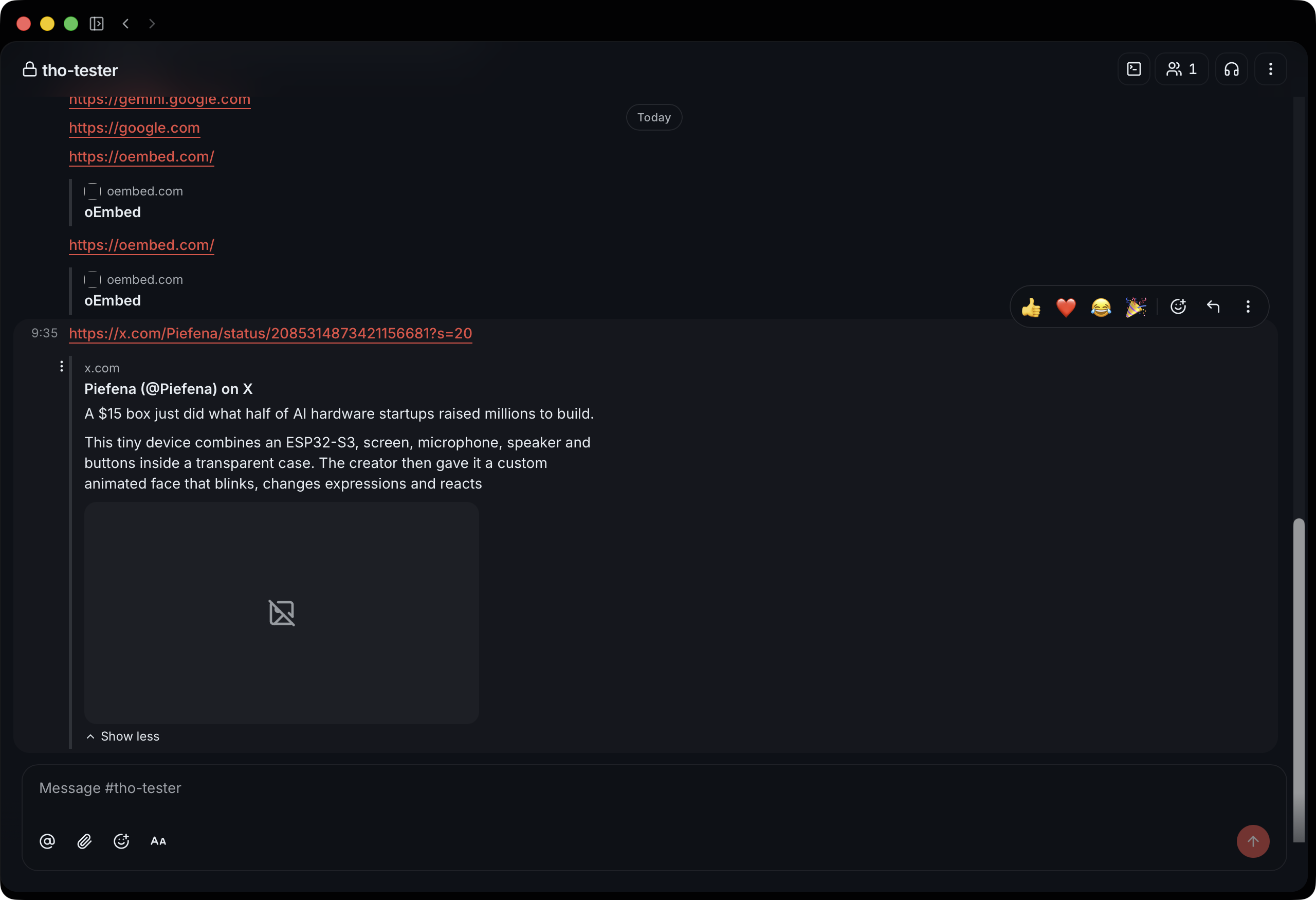 | 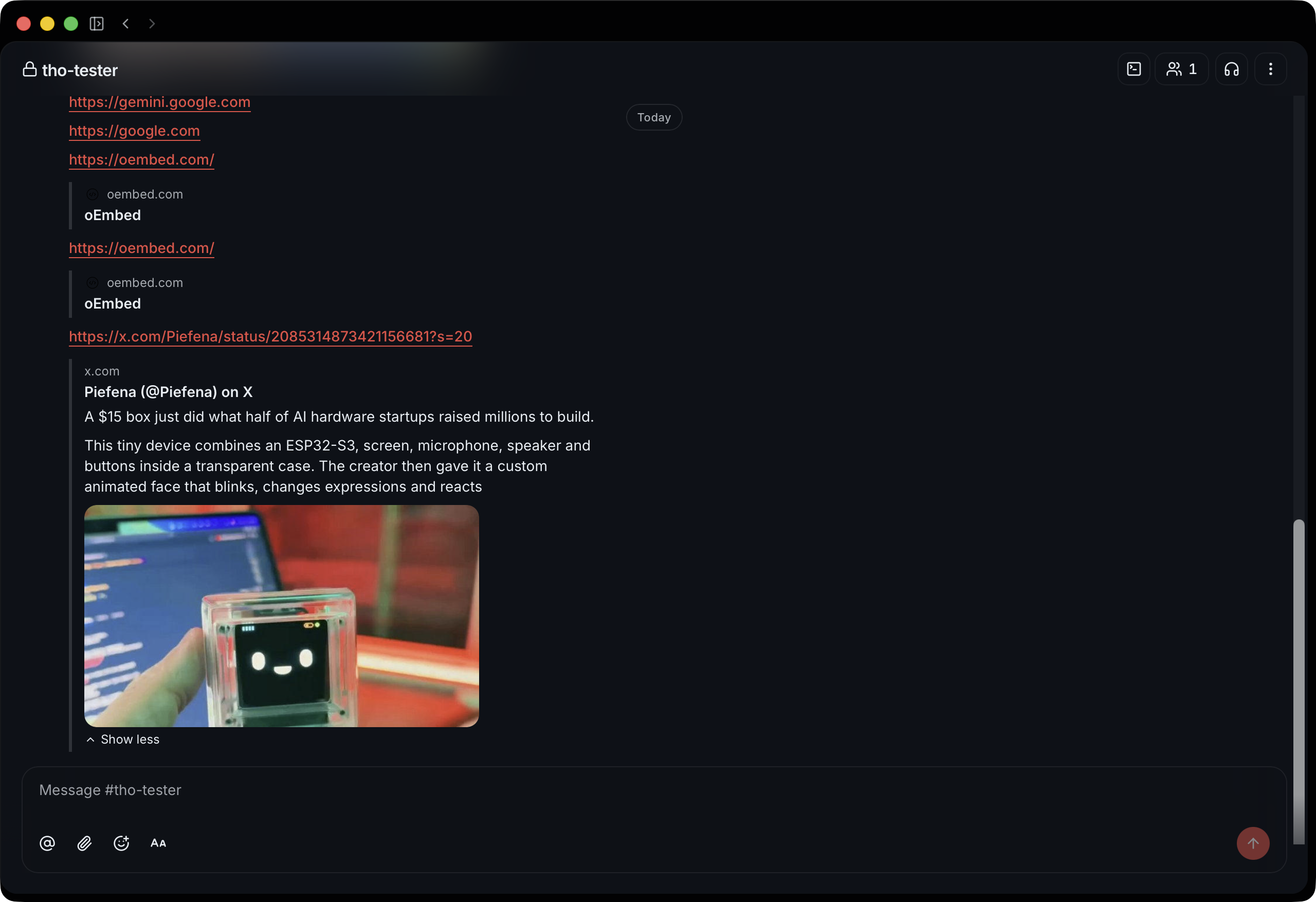 | Signed-off-by: Taylor Ho <taylorkmho@gmail.com> |
||
|
Kalvin C
|
8a2c9af2db |
feat(deletion): add durable whole-community deletion (#4425)
## Summary Adds a durable, operator-controlled V1 for deleting an entire Buzz community without deleting another tenant's data. The workflow is exposed through `buzz-admin deletions`: - `sweep` records independent fleet storage-taxonomy observations - `submit`, `list`, `inspect`, and `approve` manage a deletion request - `unblock` resumes a fail-closed request after an operator records remediation identity and reason - `run` and `drain` execute bounded work Requests advance through a PostgreSQL-backed state machine and stop at `retention_pending` after logical deletion has been independently verified across PostgreSQL, object storage, and Redis. This PR ships the engine and CLI, not a continuously running worker or Kubernetes packaging. For V1, a cluster/VM administrator invokes `/usr/local/bin/buzz-admin` from the existing relay image, for example with `kubectl exec` or an equivalent container/VM exec path. ## What whole-community V1 removes For the target community, V1 removes: - rows from the allowlisted community-scoped PostgreSQL catalog, including members, profiles, authored events and bodies, DMs, reactions, mentions, memberships, tokens, workflows, moderation, audit, feedback, and rate-limit state - media sidecars and upload-attribution records under `_meta/<community>/` and `_uploads/<community>/` - Git repository pointers under `repos/<community>/` - Redis keys under `buzz:<community>:*` The community row survives as a permanent tombstone, and deletion control-plane records remain as evidence of the request, approval, execution, and result. ## Safety model Deletion is not a broad `DELETE CASCADE` followed by optimistic cleanup. The destructive boundaries are durable and fail closed. ### 1. Inventory and approval - `submit` resolves the target and freezes the schema plus summary-only storage inventory. - Approval is bound to the exact request, community, and frozen inventory digest. - Unsupported manifest versions, malformed keys inside the target's owned prefixes, live scoped-table/write-fence coverage drift, frozen-inventory mismatch, and approval mismatch block execution rather than guessing. Migration and catalog revision numbers are not authorization gates; the executor validates the live safety shape instead. - Storage inventory is server-side prefix scoped to exactly: - `_meta/<community>/` - `_uploads/<community>/` - `repos/<community>/` - The deletion path never lists the whole shared bucket and has no arbitrary per-community object cap. Its listing work is proportional to the target community's bindings, not total fleet storage. - Fleet-wide taxonomy sweeps remain independent observability. They report unknown writer shapes but do not gate deletion submission, fencing, or destructive progress. Maintainers must add deletion taxonomy coverage whenever a new community-owned object-key class is introduced; writer-coverage tests bind the current media and Git writers to that contract. ### 2. Quiesce, fence, and destructive freeze - Writes continue through submission, inventory, and approval. They stop when execution moves the target into `quiescing` and then establishes the durable fence. - Already-admitted external effects finish under heartbeated serving-write leases; the exact admitted lease may renew while the community is quiescing, but new lease acquisition is rejected. The executor drains admitted leases before destructive work. - Invite minting after quiescing begins fails as typed `AccessDenied` (HTTP 503 at the relay boundary) before an invite can be persisted. - Database triggers enforce the community write fence across the complete catalog of community-scoped tables. Startup/readiness and destructive execution validate that catalog so a newly added but unfenced table cannot silently escape. - **Named isolation assumption — fresh write snapshot.** Every writer transaction that can reach a community-fenced relation must use PostgreSQL `READ COMMITTED`; each guarded write therefore observes a statement snapshot no older than acquisition of the community deletion lock. `REPEATABLE READ` and `SERIALIZABLE` can retain a pre-fence snapshot and are unsupported for writers. The writer pool refuses non-`READ COMMITTED` sessions at connection setup, and both SQL fence functions reject an explicit per-transaction isolation override with SQLSTATE `25000`. Configuration-delivered bad isolation can surface through SQLx as a pool-acquire timeout because every `after_connect` attempt is rejected; the precise `community writes require READ COMMITTED isolation` reason remains observable when the SQL guard is reached. Read-only replica transactions are outside this assumption. - Holding the shared advisory lock until the guarded write executes is a separate liveness condition: under `READ COMMITTED`, releasing it early does not permit resurrection because the trigger rechecks the fence, but it can turn a fleet sweep into a statement-wide SQLSTATE `55000` abort. - After the fence closes writers, storage is re-enumerated into chunked side-table rows. Per-prefix counts and digests bind those concrete keys to the destructive manifest. - Manifest chunk insertion, update, and deletion are protected after freeze. This closes the race where an unbound key could otherwise appear after the manifest was committed. ### 3. Checkpointed destruction - Target-owned object bindings are deleted from the frozen destructive manifest in bounded batches with durable progress. - The concrete key list lives in chunked side-table rows rather than one request-row JSON value. It supports large communities, resumable execution, and terminal cleanup. - Missing objects are accepted as idempotent crash-window outcomes; malformed ownership, changed evidence, and unexplained target-prefix drift fail closed. - PostgreSQL purging remains scoped by `community_id`, including the guarded NIP-RS hard-delete path discovered with real Desktop kind `30078` read-state data. - Redis cleanup explicitly scans and `UNLINK`s only `buzz:<community_id>:*`. Natural expiry is insufficient because some keys, including tunnel generation counters used as fencing state, are deliberately persistent. ### 4. Independent verification - PostgreSQL logical absence is checked after purge. - The three target-owned storage prefixes are freshly inventoried again and must be empty. - Redis requires two complete empty namespace scans. - Only after all three stores pass does the request advance through `logically_verified` to `retention_pending`. ## What V1 deliberately does not erase ### Shared content-addressed storage Per-community deletion removes bindings, metadata, attribution records, and Git pointers. It does **not** physically delete fleet-shared CAS bytes that another community may still reference: - media blobs and thumbnails - Git manifests, packs, and indexes (`manifests/`, `packs/`, and `idx/`) Safe reclamation requires a separate fleet-wide reachability and retention GC. Unknown keys elsewhere in the shared bucket do not block one community's deletion; malformed or unrecognized keys inside that community's three owned prefixes still fail closed. ### External retained copies The online logical-deletion proof does not erase object versions/replicas, database backups/WAL, CDN copies, provider retention copies, or observability exports. Those require their own retention and purge controls. ### Member-only erasure This PR erases a whole community. It does not implement the different operation "erase one npub while preserving the community." Removing membership or accepting NIP-09 is not member erasure. A member-only workflow would need to find and selectively remove or redact authored event content and pubkeys, profile data, DMs, reactions, mentions, memberships/roles, tokens, workflows/subscriptions, upload attribution, moderation/audit history, repository attribution, and identity embedded in tags or JSON. It would also need explicit rules for ownership transfer, surviving replies and thread metadata, audit-chain integrity, immutable Git history, and shared-CAS reachability. That requires a pubkey-level fence and selective graph rewrite; it is a separate deletion product, not a safe extension of this whole-tenant worker. ## In scope - migration `0029_community_deletion.sql`: requests, approvals, leases, manifest chunks, checkpoints, tombstones, and the universal write-fence catalog - durable executor leases, generations, heartbeats, retry/block state, and resumable stage transitions - operator-driven `sweep`, `submit`, `list`, `inspect`, `approve`, `unblock`, `run`, and `drain` commands - serving-path fences for database writes and external effects across event ingest, media, Git, workflow, push, invites, mesh/tunnel, and related paths - target-prefix-only storage inventory, summary manifests, post-fence destructive chunks, and bounded batch deletion - exact community Redis namespace purge and two-pass absence verification - cross-community isolation, crash/resume, manifest-integrity, writer-taxonomy, and schema/migration regressions - desired-state `schema/schema.sql` support without requiring a SQLx migration ledger ## Deferred / not covered - dedicated Helm/chart worker Deployment, service account, secrets, probes, resources, and network policy - autonomous `buzz-admin deletions worker` poll loop and worker-only health server - least-privilege separation among migration, relay-serving, and destructive execution roles - fleet-wide shared-CAS physical GC - backup/provider/CDN/observability retention completion - member-only erasure - provider-native conditional-delete improvements - a general force-continue escape hatch; permanent safety failures remain fail closed unless an operator remediates the cause and records an audited `unblock` The removed continuous-worker implementation remains deferred; no remote follow-up branch is claimed by this PR. ## Validation ### Current PR head and repository state Current pushed head: `359d8402ee15f049768f54156f67b953c7a7e2ed`, rebased onto `cc9a2f783375e51a6e8d1f2f9d01d5f7e22813d1` (`origin/main` at push time). The complete PR diff is now 47 files, 9,834 additions, and 517 deletions. The bespoke source-scanner stack was removed to keep this PR scoped to community deletion. Tyler/team requested the underlying fenced-write safety behavior, not `ast-grep`, `crates/buzz-db/tests/community_fenced_writes.rs`, its 27 fixtures, or the new `scripts/lints/community_*.yml` rules. Those scanner-specific files, dependencies, Hermit links, and runner wiring are absent from the current tree. The production database write fence, startup/destructive live-catalog validation, and deletion behavior remain. Source validation on this exact SHA passed: - `cargo fmt --all -- --check` - `bash -n scripts/run-tests.sh` - `cargo nextest run -p buzz-db --all-targets`: 102 passed, 173 skipped, 0 failed - `cargo nextest run -p buzz-deletion --all-targets`: 10 passed, 9 skipped, 0 failed - `cargo nextest run -p buzz-admin --all-targets`: 1 passed, 0 failed - affected-package/all-target Clippy with warnings denied - lockfile consistency - Helm 3.16.4 lint and all 44 chart unit tests - Helm region controls using that fixture: default `BUZZ_S3_REGION=us-east-1`, explicit `eu-west-2` override, and blank-region schema rejection The prior Kubernetes battery below was run against `928992237358a3294621ac0280830b77155abc04`. It remains useful evidence for the patch-equivalent production deletion implementation, but it is **not** claimed as exact-SHA evidence for current head `359d8402ee15f049768f54156f67b953c7a7e2ed`; the current cleanup removes only scanner/test/tooling infrastructure. CI restarted for the new head after the rebase and is pending. Human review remains `CHANGES_REQUESTED`. ### Prior-head live Kubernetes deletion and safety gates The full program used one immutable image, real PostgreSQL, Redis, MinIO, and a three-relay Kubernetes release: - source: `928992237358a3294621ac0280830b77155abc04` (**prior head**) - image: `buzz-e2e:sha-928992237358` - immutable image digest: `sha256:a1a204f4618ac22d9e210be5e5290645a15d79831ae30b0e44379357c8e4a895` - evidence root: `/tmp/buzz-e2e/20260807T033025Z-928992237358-full-gates/` - evidence-manifest digest: `82875c5bc9bea7370b796a7aef3457b3a1c8306c84c59e0f7388bbb5ad30e865` Passed gates at that prior head: - **Chart/operator region:** default `us-east-1`, explicit nondefault propagation, blank-region schema rejection, live in-pod environment, and an in-pod taxonomy sweep over 18 objects with zero unknown. - **Fenced writers and lifecycle:** open-write/fence ordering; 100-attempt anti-starvation; invite, push matcher, and exhausted-reaper bystander isolation; non-`READ-COMMITTED` rejection; manifest/tombstone contracts; eight-failure stage block and audited `unblock`. - **Destructive lifecycle:** submit → approve → run → `retention_pending`; PostgreSQL tombstone and Redis/S3 verification true; zero retries/errors; terminal reruns rejected with exit 5. - **Fresh 10,001-object crash boundary:** exactly two chunks (10,000 + 1). The executor deleted chunk 0 from MinIO while its PostgreSQL stamp was row-lock-blocked, was killed with `SIGKILL`, left one object and both stamps absent, then resumed the same request under generation 2 to zero objects and terminal state. - **Independent dead-owner recovery:** a dedicated executor claimed generation 1, blocked before effects, and was killed through containerd with `SIGKILL` (no TERM cleanup). The request remained owned and unreclaimable before lease expiry; a successor claimed generation 2 after 60 seconds and completed with two attempts and zero retries. - **Three-pod socket isolation:** ordinary NIP-42 and joined huddle-audio target witnesses on every replica received exact `1008 / community deleted`; healthy-tenant witnesses on those pods remained live; deleted-host reconnect returned HTTP 404. - **Health/provenance:** all replicas independently returned ready and retained the exact image digest before/after destructive runs and an audio-enabled rolling restart; PostgreSQL, Redis, and MinIO were healthy at close. Instrument corrections were retained as evidence rather than counted as product failures: a foreground PostgreSQL forward caused an initial `PoolTimedOut`; Kubernetes pod deletion exercised graceful TERM rather than dead-owner recovery; shell-background socket witnesses died with their parent; and the first image build hit the corporate TLS proxy. Detached forwarding/witnesses, containerd `SIGKILL`, and the configured internal CA/Artifactory mirror produced the discriminating runs without weakening product security. ### Prior-head cleanup For the prior-head Kubernetes run, the Helm release was removed, namespace absence was verified, run-owned Screen sessions were absent, and that source worktree remained clean. The evidence manifest was independently recomputed and every indexed artifact passed `shasum -a 256 -c`. The current `359d8402` source worktree is also clean after the scanner-only cleanup and push. --------- Signed-off-by: npub122y0pqkertljmedu303rl0aqrj3w8pvu43t6jxm6875lzg6f2pwqegc3xc <5288f082d91aff2de5bc8be23fbfa01ca2e3859cac57a91b7a3fa9f12349505c@buzz.block.builderlab.xyz> Signed-off-by: npub1dccv64krpcpse5cmkzfeh998cftungyatw3djt8jwdw6g43f7fyqzzmrf7 <6e30cd56c30e030cd31bb0939b94a7c257c9a09d5ba2d92cf2735da45629f248@buzz.block.builderlab.xyz> Signed-off-by: Kalvin Chau <kalvin@block.xyz> Signed-off-by: am <6e30cd56c30e030cd31bb0939b94a7c257c9a09d5ba2d92cf2735da45629f248@buzz.block.builderlab.xyz> Signed-off-by: cid <d9f92a72922bf45c17379a47d64dae84b6020397c2d5a52b5317d512068cd9d3@buzz.block.builderlab.xyz> Co-authored-by: npub122y0pqkertljmedu303rl0aqrj3w8pvu43t6jxm6875lzg6f2pwqegc3xc <5288f082d91aff2de5bc8be23fbfa01ca2e3859cac57a91b7a3fa9f12349505c@buzz.block.builderlab.xyz> Co-authored-by: npub1dccv64krpcpse5cmkzfeh998cftungyatw3djt8jwdw6g43f7fyqzzmrf7 <6e30cd56c30e030cd31bb0939b94a7c257c9a09d5ba2d92cf2735da45629f248@buzz.block.builderlab.xyz> Co-authored-by: cid <d9f92a72922bf45c17379a47d64dae84b6020397c2d5a52b5317d512068cd9d3@buzz.block.builderlab.xyz> |
||
|
Wes
|
63d14a0e95 |
fix(desktop): preserve live channel timelines (#5662)
## Summary - restore the post-subscribe channel-window refresh that closes the gap left by a live subscription starting at the current second - prevent an unresolved, pageless channel window from replacing a populated timeline cache with its first live event - replace the invalid freshness-gate tests with a regression reproducing the populated cache + pageless window + first live event state from the report ## Root cause This was a data-projection bug, not a virtualized-row failure. PR #5577 skipped the post-subscribe refresh for a fresh cache even though `subscribeToChannelLive` starts at `since: now`, leaving events between the cached page and subscription establishment undiscovered. A successful but pageless companion window could then receive one live event and project that one-row overlay over the populated message cache. Reload fetched page zero and restored the conversation. ## Validation Validated exact head `bfbaefe95da5452cdda3a0b5df970eb11e44f6f8`: - focused `projectChannelWindow.test.mjs`: 9/9 passed - pre-push: branch skew, desktop check, desktop typecheck, and all 4,715 desktop tests passed - independent fresh-frame review: 9/10, no blockers ## Authorship disclosure Carl implemented and is posting this change on Wes's behalf. Signed-off-by: Wes <wesbillman@users.noreply.github.com> Co-authored-by: Carl <c7ebe626f000404285d3686e1dc74cc07cc60a9754a150041ba132e14bd3e2ec@buzz.block.builderlab.xyz> |
||
|
klopez4212
|
63f961c7e4 |
Refine channel settings and profile panels (#5574)
## Summary - simplify channel settings into concise detail, member, canvas, and action sections - align human and agent profiles around shared rows, segmented tabs, and top-level actions - add agent runtime presentation, sticky glass behavior, and scroll-linked action transitions ## Snapshots ### Channel settings  ### Agent info  ### Agent runtime  ## Validation - `pnpm -C desktop check` - `pnpm -C desktop test` (4,604 passed) - `pnpm -C desktop build:e2e` - focused channel settings and agent profile Playwright tests --------- Signed-off-by: kenny lopez <klopez4212@gmail.com> Co-authored-by: Mongo <9cfd347903944d5b85aa6c93d2ab67381b978a92a31914bca69998968752a1d7@buzz.block.builderlab.xyz> |
||
|
Will Pfleger
|
c966b862fe |
fix(deps): bump webbrowser to 1.2.4 for RUSTSEC-2026-0257 (#5659)
## What Bumps `webbrowser` from `1.2.1` to `1.2.4` in both lockfiles (`Cargo.lock` and `desktop/src-tauri/Cargo.lock`) to clear [RUSTSEC-2026-0257](https://rustsec.org/advisories/RUSTSEC-2026-0257). ## Why The advisory landed in the RustSec DB and flipped the `Security` job (`cargo-deny check`) red on `main` — the same job passed on identical lockfile state before the advisory was published. `webbrowser` 1.2.1 substitutes the URL into the Unix `BROWSER` env template *before* tokenizing, allowing browser argument injection (e.g. `--remote-debugging-port`). `crates/buzz-agent` calls `webbrowser::open()` for the OAuth flow (`crates/buzz-agent/src/auth.rs`) with an internally-constructed HTTPS URL, so practical exploitability is low, but the gate is correctly blocking. Fixed in `1.2.2`+. ## Scope Lockfile-only. The `crates/buzz-agent/Cargo.toml` constraint is already `webbrowser = "1"`, so no manifest change is needed. `webbrowser` 1.2.4 pulls in `objc2-app-kit` as a new transitive dependency; the `windows-sys` edge churn re-unifies to versions already present in the lockfile (no new `windows-sys` version is introduced). ## Verification - `cargo-deny check` passes locally on the pinned toolchain (`advisories ok, bans ok, licenses ok, sources ok`); RUSTSEC-2026-0257 no longer reported in either lockfile. - `cargo check -p buzz-agent` compiles clean against `webbrowser 1.2.4`. Signed-off-by: Will Pfleger <pfleger.will@gmail.com> Co-authored-by: Duncan <dcfd242e557282d7a1e2cf2e6877522682f1e5c6156dc92ca7d90eaedd3b0f95@buzz.block.builderlab.xyz> |
||
|
Will Pfleger
|
6e0631f6b5 |
feat(acp): deliver channel description in prompt [Context] (#4552)
Channels carry a kind-39000 `about` description that the harness never surfaced to agents. This delivers it in the per-turn `[Context]` block so an agent knows what a channel is for without having to ask. ## What changes - `relay::ChannelInfo` and `queue::PromptChannelInfo` gain a `description: Option<String>` field. - The `about` tag is parsed in both metadata paths: the startup discovery map (`merge_discovered_channels`) and the lazy `fetch_channel_info` lookup. Blank or whitespace-only values become `None`. - `format_context_hints` renders a `Description:` line under `Channel:` for channel- and thread-scope turns. DM turns never render it. ## Safety - The description is newline-collapsed to a single line before rendering, so a multi-line `about` value can never spoof another `[Context]` field. - It is capped at 500 characters on a UTF-8 char boundary, with a `…` truncation marker. - Unresolved channel metadata renders no `Description:` line. Session creation is untouched — the description rides the existing per-turn `[Context]` block that already carries `Channel:`. Signed-off-by: Will Pfleger <pfleger.will@gmail.com> Co-authored-by: Duncan <dcfd242e557282d7a1e2cf2e6877522682f1e5c6156dc92ca7d90eaedd3b0f95@buzz.block.builderlab.xyz> |
||
|
Will Pfleger
|
1ff98fa685 |
fix(desktop): launch Databricks OAuth from passive model discovery (#5607)
When a user's agent runtime is `buzz-agent` with no cached Databricks OAuth token, the desktop app's passive model-discovery surfaces were forbidden from launching interactive auth. Discovery failed silently, so the model dropdown showed only built-in fallback models behind a vague "Could not load live models for `databricks_v2`" note (reported internally by Nick and Jose). ## What changed Both discovery surfaces — the passive draft-form discovery and the explicit saved-model picker — now launch the browser OAuth flow, matching goose's behavior. The only behavioral difference between them is cooldown handling: - **Passive draft discovery** fires on every form-state change, so a failed, cancelled, or timed-out sign-in records a per-host cooldown (5 min) that suppresses re-popping the browser on the next keystroke. While the cooldown is active it returns the "sign-in required" guidance instead of relaunching. - **The explicit model picker** is a deliberate user action, so it always launches and clears any stale cooldown first. Safety rails: - A 150s hard timeout (`AUTH_FLOW_TIMEOUT`) bounds the whole interactive flow so an abandoned SSO tab fails discovery cleanly rather than wedging the dropdown. Success clears the cooldown; failure and timeout both record it. - `AuthCooldown` recovers from a poisoned lock rather than wedging every future sign-in on one panic. The frontend maps the terminal Databricks sign-in states to typed, actionable copy in `formatModelDiscoveryErrorStatus`: "sign-in required" is a muted note pointing at the picker and `buzz-agent auth databricks`; a failed or timed-out sign-in is a warning pointing at the explicit retry. Other Databricks failures fall through to the existing generic notice. ## Scope Changes are confined to Databricks discovery and its frontend status formatter — no `agent_models.rs` call sites are touched. The interactive-auth helper takes an injected timeout so the timeout/cooldown policy is unit-testable without a live browser. ## Deferred Cooldown keys use the raw trimmed `DATABRICKS_HOST`, while the catalog and OAuth cache normalize trailing slashes (`crates/buzz-agent/src/catalog.rs:96`, `crates/buzz-agent/src/llm.rs:2046`). So `https://workspace/` and `https://workspace` share credentials but get separate cooldown entries — an equivalent-spelling change to the host field mid-cooldown can re-pop passive OAuth once within the 5-minute window. Self-limiting (one extra browser launch, never auth corruption). Follow-up: a `trim_end_matches('/')` on the cooldown key plus an equivalent-host test, picked up with the coordinator migration if [#5545](https://github.com/block/buzz/pull/5545) ever merges. Signed-off-by: Will Pfleger <pfleger.will@gmail.com> Co-authored-by: Duncan <dcfd242e557282d7a1e2cf2e6877522682f1e5c6156dc92ca7d90eaedd3b0f95@buzz.block.builderlab.xyz> |
||
|
Wes
|
4b3570671e |
chore(release): release Buzz Desktop version 0.5.10 (#5613)
## Buzz Desktop release v0.5.10 - **Frozen main:** `f35930104bcbdb1332ff13735214ecb9fce1fc7b` - **Reviewed candidate:** `1fb49103002e898607a7f6fd554cb51e94d92e08` - **Previous desktop release:** `desktop-v0.5.9` - **Proposed immutable tag:** `desktop-v0.5.10` This PR may be **squash merged** after the Desktop Release Candidate check and all protected-branch checks pass. Merging authorizes publication of the exact reviewed candidate; later or unrelated changes on `main` cannot alter it. The checked-in changelog accounts for every non-merge commit in the release range. The Desktop tag points to the reviewed candidate commit, not the later squash commit. Publication remains bound to that immutable candidate tag. Signed-off-by: Wes <wesbillman@users.noreply.github.com> Co-authored-by: Release Automation <release-automation@users.noreply.github.com> |






