mirror of
https://github.com/block/buzz.git
synced 2026-10-27 12:40:30 +00:00
fe808eae0e1194be48923567c4e0f179aead5acf
2677 Commits
| Author | SHA1 | Message | Date | |
|---|---|---|---|---|
 Tom Brow |
fe808eae0e |
fix(push): label plaintext push gateway service as HTTP (#7717)
The gateway serves plaintext HTTP on its public container port, but the chart currently advertises that Service port as `https`. Label it `http` so protocol-aware proxies discover the application's actual protocol. Numeric port 8080, target port `public`, and the application version remain unchanged. Consumers that refer to the old Service port name must update that reference. Prepare chart version 0.3.1, which is absent from the current release tags and OCI registry. This ordinary fix branch does not trigger the chart release lane. Publishing and downstream dependency updates remain separate steps. This corrects protocol metadata; it is not evidence of a TLS-origination failure. Istio controls upstream TLS through DestinationRules and auto-mTLS independently of this port label. Validation: added rendered-Service and container-port assertions across default, production, and Gateway API fixtures. The assertion fails with the old label and passes with the fix. The full chart render/lint suite and release-contract checks pass. Repository-wide `just ci` is still running locally. --------- Signed-off-by: Tom Brow <tomb@block.xyz> |
||
|
Jordan Mecom
|
f18ea45698 |
Replace personal and internal data in desktop test fixtures (#7748)
Replace personal contributor identities, copied internal image content, and production Databricks hostnames in desktop tests and mocks with synthetic fixtures. The related path and mock-profile fixtures use the same example identity, and the image regression still verifies reserved layout space while its mocked request remains pending. Contributor matching and configuration decoding behavior are preserved. Checked on Blox: 36 targeted JavaScript tests, 30 focused Rust tests, the Playwright image-height regression, TypeScript/Biome, formatting, security/file-size gates, 6,508 desktop tests, the full Tauri test workspace (including 3,204 main-crate tests), and desktop/web builds. The full `just ci` run could not finish mobile checks because Blox connections to `pub.dev` were reset and a locked dependency was missing from its offline cache. The broader Rust unit run passed 16 lanes but hit an unrelated catalog timeout in `buzz-agent`; that exact test passed in isolation. Signed-off-by: jm <jm@squareup.com> Co-authored-by: Codex <noreply@openai.com> |
||
|
Tom Brow
|
4e1770aa3e |
Add mobile VISION (#7710)
## Summary Add the Buzz Mobile vision covering intended experience, architecture, shared client behavior, verification, release cadence, and critical functionality. Link it from the mobile README; the existing agent instruction to read relevant `VISION_*.md` documents makes it discoverable during planning and review. ### Related issue No duplicate issue or PR found. ### Testing Documentation-only change. Diff checks and pre-push hooks passed. Repository-wide `just ci` is running locally; Rust formatting has passed. --------- Signed-off-by: Tom Brow <tomb@block.xyz> |
||
|
Tom Brow
|
4af2324d85 |
fix(mobile): keep relay sessions stable during push lease updates (#7745)
Enabling push notifications could repeatedly reset the relay session: reserving a lease generation updates community metadata, which rebuilt the relay configuration even though the connection identity was unchanged. This made the avatar and inbox flash and prevented the new lease from publishing. Select only the community ID, relay URL, and signing identity as configuration dependencies. Push bookkeeping keeps the session intact; real community, URL, and identity changes still notify listeners. ### Validation The production-provider regression test failed before the fix and passes afterward; 48 focused mobile tests and static analysis pass. A personal signed profile build on a physical iPhone published a fresh lease and received a background notification with the actual message text. The user confirmed the flashing stopped and tapping the notification opened the correct community/channel and highlighted the exact message. Signed-off-by: Tom Brow <tomb@block.xyz> |
||
|
Wes
|
8953cbfff5 |
fix(desktop): keep managed agent avatars usable across communities (#7732)
## Summary Fix Desktop-managed agents losing avatars after joining another community. The saved persona/instance stores one desired source URL, but authenticated media belongs to a community. Republishing community A’s URL in B does not make that image accessible in B. - Before comparing or publishing kind-0, reuse or copy configured-community avatar media into the pinned destination. Keep exact image bytes, including animation, and leave the saved source unchanged. - Keep the previous profile on transfer/publication failure so existing reconciliation can retry. Reuse destination bytes during source outages; after source removal, reuse only an already-published signed destination picture with the same original content hash. - Refresh source permissions through narrow, serialized IPC without reconnecting or resetting the active community. Startup waits until the latest permission update completes before restoring agents. ### Related issue Refs #2366 (avatar portion only, not runtime availability). Related #2659 deliberately excludes avatar/media mirroring; this change addresses that media boundary without introducing runtime fan-out. Searched existing issues/PRs for `avatar community` before opening. ## Contract and safety Desktop-managed profiles still follow the saved persona source; this does not introduce community-specific persona editing. Agent-managed profiles still opt out of automatic reconciliation. Authenticated transfer requests use the fixed agent key/NIP-OA tag, origin-scoped Blossom auth, and the pinned destination, never mutable active-workspace owner credentials. They refuse redirects, enforce 30-second request timeouts and bounded bodies, verify SHA-256 and detected image MIME, and validate the returned descriptor’s origin/hash/MIME/size. Source permission is rechecked after an awaited destination HEAD miss. The removed-source fallback verifies the destination profile’s signature, kind, signer, origin, and original-media hash without contacting the removed source. Ordinary external images retain passthrough behavior and receive no community credentials. No public-media policy change, image-reader URL rewriting, new persistence, background service, or global profile merge. ## Testing Normal commit and push hooks passed on exact head `925781eece66d5f6a4b084b3b3abd6309cda357e`; working tree clean before and after: - Desktop formatting/lint, typecheck, and **6,508 tests**. - Full native workspace suite, including **3,204 desktop-library tests** (19 ignored), integration tests, terminal crates, and doc tests. - Native Clippy on default and `mesh-llm` workspace/all-target configurations with warnings denied; repository file-size and branch-skew gates. Regression coverage exercises production reconciliation/shared publication against two local HTTP fixtures: add/edit/restart, upload and rejected-publication retry, removed-source local-image preservation, fixed signer/destination, redirect/hash/descriptor/size failures, revocation during pending HEAD, and opt-out no-I/O. Mounted initialization tests cover inactive-list changes without workspace reset, two deferred permission updates, and rejection of either update. Earlier working-tree validation at base `4ab4f786085a23fe6126529861840eff6048ceee` also passed the E2E frontend build and four Chromium mock-bridge community flows (boot, switch, active removal/fallback, leave-final/setup). Subsequent production changes only serialize permission writes and wait for a stable latest update; the complete suites above cover the final commit. Mutations independently removing serialization or stable waiting failed the new regression. ## Remaining validation and limitations - No live production avatar was changed. Native GUI rendering against two hosted communities remains to be verified with a build containing this fix; local HTTP fixtures and the browser mock bridge do not establish that outcome. - A removed/unreachable source with no existing destination copy cannot be recovered automatically. Choose a reachable image/source in that case. - This is a publication/reconciliation fix, not a visual redesign. No before/after native GUI screenshots are claimed. Broad repository CI remains required; it was not duplicated locally. ## Review Independent security/scope and caller/ordering reviews are clear after the bounded fixes. Final hook-ordering reread covered the staged tree that became this commit. Commit authorship/sign-off use the implementing Carl identity and configured Carl signing key. Signed-off-by: Carl <32a2e2c9d428ee08902cab75d956da2c1d235a22d4766b0dd4138bf6e2e5db1d@buzz.block.builderlab.xyz> Co-authored-by: Carl <32a2e2c9d428ee08902cab75d956da2c1d235a22d4766b0dd4138bf6e2e5db1d@buzz.block.builderlab.xyz> |
||
|
Tom Brow
|
779af8886c |
fix(mobile): fail open when age checks are unavailable (#7714)
Age-check errors previously blocked Buzz startup. Normal app startup now proceeds immediately; only a valid under-18 response from the current launch request can restrict access. Age check enforcement remains disabled at compile time by default. Builds can opt in with `--dart-define=BUZZ_AGE_GATING_ENABLED=true`. --------- Signed-off-by: Tom Brow <tomb@block.xyz> |
||
|
Tom Brow
|
01b6174a1c |
fix(ci): don't run desktop tests for purely mobile client changes (#7709)
Mobile-only PRs currently trigger desktop CI because the desktop test filter's glob inadvertently matches every path outside Tauri. Fix that filter so that pure mobile changes skip desktop builds, tests, and their relay artifact producer. ### Verification - 12 regression tests exercise the exact pinned paths-filter action on mobile, desktop, Tauri, backend, mixed, workflow, and documentation changes. - Restoring the bad glob makes the mobile-only regression test fail. - The filter tests, existing required-context isolation contract, workflow syntax validation, and Biome pass locally. --------- Signed-off-by: Tom Brow <tomb@block.xyz> |
||
|
Tom Brow
|
d1cae93c1a |
fix(mobile): temporarily disable age gating (#7708)
Disable the mobile launch age gate to restore access for users locked
out after updating. The production provider now allows access
immediately without calling the platform age API, while preserving the
existing push snapshot restoration path.

This is a temporary disable of age enforcement on both mobile platforms.
The original gate implementation remains available for a separate
follow-up.

Signed-off-by: Tom Brow <tomb@block.xyz>
mobile-v0.16.0-rc.5 |
||
|
ravarora2
|
4c2086c084 |
feat(db): expose connection setup metrics (#7286)
## Why

Current pool metrics show checkout outcomes and pool state after the
fact. They do not show when a checkout began or which writer-connection
setup step failed. During startup and pool growth, operators need to
distinguish pool saturation from a slow or unsafe connection setup.

## What

- Count every instrumented database checkout when it starts, with a
fixed operation label.
- Measure writer-pool creation and every physical writer connection
across `physical_connect`, `created_at_floor`, `session_timeouts`,
`isolation`, and `ready`.
- Publish fixed-cardinality start, terminal-outcome, duration, and
waiter metrics without database URLs, SQL, raw errors, connection
ordinals, or per-connection lifecycle logs.
- Document how to identify the active setup bottleneck during a rollout
or incident.

## How

The existing typed checkout wrapper records starts and current waiters.
The huddle-history path uses that wrapper instead of a raw pool
checkout.

The production SQLx `after_connect` hook records start, terminal
outcome, and duration for each sequential safety step. A drop guard
records cancellation once if setup exits before a terminal result. Fixed
enums keep every label bounded.

For a phase, `started_total - sum(attempts_total)` is the number of
in-progress attempts on that pod. Because setup is sequential, a later
phase starting also proves the earlier phases succeeded.

The database path emits metrics only. This PR intentionally does not add
per-connection lifecycle receipts or direct `stderr` writes.

## Risk

Medium. This changes the production writer-pool `after_connect` hook and
adds one counter update to instrumented checkout paths. It does not
change the database safety statements or their failure behavior. The
telemetry has fixed labels and no per-connection identifiers.

## Testing

At exact head `ffb5fcb114a9c986ffd0cb2cfc9d413a32d5b1aa`, a release
relay was started against isolated local PostgreSQL, Redis, and MinIO
services. The main health endpoint returned `ok`, readiness returned
`{"status":"ready"}`, the connection-step metrics were exported, and no
database lifecycle receipts were emitted. A release CLI then created a
channel, sent a message, and read the same event back successfully.

The earlier staging deployment used pre-rebase head
`f58e9480a4f068db0c591f604fd6800fdd4bfc45`. The deployed
multi-architecture image came from [GitHub Actions run
33780888255](https://github.com/block/buzz/actions/runs/33780888255),
manifest
`sha256:b9351fa644e08376cbe1999f9bee311d33d1799a68eadef7929c4f862a832fec`.

The [staging
deployment](https://github.com/squareup/builderbot-platform-core-infrastructure/pull/317)
brought both pods in ReplicaSet `buzz-6c8758bd7d` to Ready with zero
restarts, and the connection metrics produced data in the [rollout
dashboard](https://app.datadoghq.com/dashboard/tm7-qxr-wt2/buzz-startup--rollout-safety).
That staging image predates the cleanup that removed per-connection
lifecycle logs; the metric schema and database safety statements are
unchanged.

## Verification

- `cargo test -p buzz-db -- --test-threads=1`: 128 tests passed across
the package and integration target; 255 opt-in tests remained ignored.
- Four opt-in production-path PostgreSQL regressions passed: initial
minimum connections, post-startup pool growth, isolation failure, and
session-timeout setup failure.
- All 35 relay media tests passed against the isolated PostgreSQL
database.
- Rust formatting, workspace clippy, desktop/Tauri clippy, web checks,
mobile analysis, security checks, and file-size policy checks passed.
- The repository-wide unit stage also exposed three unrelated existing
`buzz-acp` failures: one timing-sensitive keepalive test and two
environment-default tests.

## Bigger picture

This is the database-metrics part of the startup and rollout
observability work. The early-startup lifecycle foundation merged in
#7258, so the rebase removed that duplicate commit from this PR.

Originating discussion:
buzz://message?channel=6ac85131-70cd-4bda-a031-38d34114934e&id=fa2bed181c092697210a60bb6eedc55a665d5c1c6cabc1413a04686647011f71

Generated with Codex

---------

Signed-off-by: Ravneet Arora <rarora@squareup.com>
|
||
|
ravarora2
|
6b1e45d2f6 |
Isolate S3 storage metrics from the relay (#7543)
## Why

**This PR moves the S3 storage scan out of the serving relay and into a
separate batch job.** The job saves a complete result in PostgreSQL. The
relay reads that result, exports the existing storage totals, and
reports the snapshot's freshness and database-read health.

```text
Today:         relay -> scan S3 -> calculate totals -> Datadog metrics
After rollout: CronJob -> scan S3 -> PostgreSQL snapshot -> relay -> Datadog metrics
```

The code in this PR is the new pipeline. It adds the worker, database
snapshot, relay read mode, and Helm CronJob template. It does **not**
enable the pipeline in production. The chart keeps the CronJob disabled,
and the relay keeps its current inline mode by default.
[squareup/builderbot-platform-core-infrastructure#244](https://github.com/squareup/builderbot-platform-core-infrastructure/pull/244)
will set the production limits, enable the job, and switch the relay to
the saved snapshot after this PR merges.

The relay currently lists the media bucket once an hour and calculates
storage totals inside the serving process. The production bucket now
exceeds the relay's one million object cap, so each sweep fails and the
last good per-community values remain stale. The Datadog dashboard can
no longer show current storage use by community.

Raising that cap inside the serving relay would move a larger,
memory-heavy scan into the process that owns live WebSocket connections.
The scan retains state for unique blob hashes and community bindings, so
its memory use grows with the bucket. A large scan could raise relay
memory use, trigger restarts, and drop user connections.

The goal is to restore current metrics without putting a
production-scale bucket scan in the relay's failure domain. No media
objects move or change. Only the process that calculates the totals and
the handoff to the relay change.

## What

- Add `buzz-admin storage-snapshot`, a run-once worker that scans S3 and
saves one complete accounting snapshot in PostgreSQL.
- Add `external` relay mode to read the saved snapshot. Keep the current
`inline` mode as the default, and add `off` as a fail-closed option.
- Add an opt-in Helm CronJob for the worker. The 10 million object cap
exists only on this Job.
- Keep the current fleet and per-community gauges, and add snapshot age,
generation duration, configured cap, cap utilization, and database-load
health gauges.
- Add an additive migration for the latest complete snapshot and its run
metadata.

## Overall plan

1. Merge this PR to add the worker, database handoff, relay modes, and
disabled-by-default chart support. This step does not change production
behavior.
2. Publish the relay image and Helm chart `0.1.9` from `main`.
3. Update
[squareup/builderbot-platform-core-infrastructure#244](https://github.com/squareup/builderbot-platform-core-infrastructure/pull/244)
to pin those final artifacts and rerender its manifests.
4. Use the infrastructure PR to deploy the CronJob with a 10 million
object cap, a one-hour deadline, and a 20 GiB memory limit.
5. Start one manual Job during a staffed window and verify its snapshot,
duration, memory use, relay stability, and Datadog output.
6. Keep the daily schedule and `external` relay mode only after that
gate passes, then add alerts for stale snapshots, snapshot-load failure,
failed jobs, cap pressure, duration, and worker memory.

The code and infrastructure remain separate so this PR can ship the
mechanism without silently enabling a production-scale scan. The
infrastructure PR owns the production settings and rollout gate.

## How

### Complete snapshot handoff

The worker takes a deployment-wide PostgreSQL advisory lock before it
lists S3. This prevents scheduled and manual workers from overlapping,
even if Kubernetes starts both.

The final database replacement runs through that same lock-owning
session. If the session dies during the scan, publication fails instead
of letting the stale worker overwrite its successor. A worker that no
longer owns the lock cannot publish through another pooled connection.

The worker reads S3 in pages of 1,000 objects and folds each page into
physical totals, logical per-community usage, and anomaly counts. It
stops before folding a page that would exceed `--max-objects` and emits
structured progress every 100,000 objects.

The worker replaces the singleton database row only after the full scan
succeeds. A listing error, malformed page, cap breach, serialization
error, lost lock session, or database error cannot publish a partial
snapshot. The last completed snapshot stays available. Each stored
result includes its completion time, duration, cap, and image or source
revision.

PostgreSQL is the handoff between the batch worker and the relay. The
worker writes one complete deployment-wide snapshot, and the relay reads
that snapshot on its normal leader metrics tick. No new network service
or worker endpoint is required.

### Relay behavior

`BUZZ_STORAGE_METRICS=inline` keeps the existing in-process sweep and
its one million object default. `external` loads the newest completed
worker snapshot on each leader metrics tick. `off` emits no
storage-family metrics. An unknown value fails closed to `off`.

External mode republishes the existing fleet, per-community, and anomaly
metric names, so those current queries remain valid. Snapshot handoff
health uses a separate family: `buzz_storage_snapshot_age_seconds`,
`buzz_storage_snapshot_duration_seconds`,
`buzz_storage_snapshot_max_objects`,
`buzz_storage_snapshot_cap_utilization`, and
`buzz_storage_snapshot_load_ok`.

The `buzz_storage_sweep_*` gauges remain inline-only because they
describe a scan attempted by the relay process. External mode does not
synthesize `sweep_ok=1` from the last successful database row: an old
row proves only that an earlier worker completed. Kubernetes CronJob/Job
status is authoritative for the latest worker result, including non-zero
exit, deadline expiry, and OOM termination.

The relay keeps the last complete snapshot available when a worker run
fails. Snapshot age shows that no replacement arrived on schedule, while
`buzz_storage_snapshot_load_ok` distinguishes staleness from a missing
row, database read failure, or invalid payload. If a community
disappears, changes host, or leaves the configured emission scope, the
relay zeroes the old labeled series instead of leaving stale values
behind.

Per-community bytes are logical referenced media usage. If two
communities reference the same blob, each community receives the blob's
bytes. Fleet physical totals still count each S3 object once. This PR
preserves those existing metric semantics.

### Deployment boundary

The CronJob is disabled by default. When enabled, it uses
`concurrencyPolicy: Forbid`, no retry, a configurable active deadline,
bounded history, explicit CPU and memory resources, a read-only root
filesystem, and no Istio sidecar by default.

The worker receives only `DATABASE_URL`, S3 settings, optional S3
credential references, and the code revision. It does not receive the
relay private key, Git hook HMAC secret, Redis URL, or the full relay
secret as environment variables. Operators may reuse the Buzz service
account or select a dedicated one.

### Non-goals

- This PR does not enable the worker or `external` mode in production.
- This PR does not change media uploads, object ownership, retention, or
deletion.
- This PR does not change the names or meaning of the existing fleet,
per-community, or anomaly storage gauges.
- This PR does not add a lease service or allow multiple workers to
publish concurrently.

## Risk

The application and chart defaults do not enable the new worker or raise
the serving relay's cap. The database change is an additive
deployment-global singleton table. The relay's default remains `inline`,
so merging this PR alone does not change the active metrics path.

The main rollout risk is worker memory use because the fold retains
state for distinct blob hashes and community bindings. The first
production-sized run must confirm peak memory and duration before the
schedule is trusted. The 10 million cap and one-hour deadline bound the
first deployment, but they do not replace measurement.

External mode also needs stale-snapshot, snapshot-load, and job-failure
monitors because the relay intentionally keeps publishing the last
complete result after a failed job or read error. This behavior avoids
gaps and partial data, while snapshot age and load health tell operators
when the result or PostgreSQL handoff needs attention. Job status
remains necessary for immediate failures and termination reasons that a
killed process cannot record itself.

## Testing

No production S3 scan was run from this PR.

Automated regressions verify that external mode keeps stale last-good
totals visible without emitting inline attempt-health gauges, reports
database-load failure while retaining the cache, and leaves inline
telemetry unchanged. Mutation checks also prove those tests fail if
external mode is routed through inline emission or a failed load is
reported as healthy.

After deployment, create one manual Job from the CronJob during a
staffed window. Require a completed Job, exactly one new snapshot, fewer
objects than the configured cap, acceptable duration and peak memory, no
relay restart regression, restored Datadog points, and no OpenMetrics
sample truncation.

## Next steps

1. Complete review and merge this PR.
2. Publish chart `0.1.9` and the final main-branch relay image.
3. Replace the provisional pins in
[squareup/builderbot-platform-core-infrastructure#244](https://github.com/squareup/builderbot-platform-core-infrastructure/pull/244),
rerender, and require clean CI.
4. Run the staffed manual Job gate and record object count, peak memory,
duration, snapshot revision, and relay stability.
5. Confirm the relay reads the new snapshot in `external` mode and the
existing `block.buzz_relay.*` storage series update again.
6. Enable the daily 03:17 UTC schedule and add dashboard panels and
monitors for snapshot age, snapshot-load health, Job failures, cap
pressure, duration, and worker memory.

If production must roll back to an older relay image, set
`BUZZ_STORAGE_METRICS=off` first. Older images do not understand
`external` and would resume the failing inline scan.

## Bigger picture

This is the application half of the storage-metrics repair. The paired
infrastructure PR owns the production resource limits, schedule,
artifact pins, secret boundary, and monitored rollout. Keeping those
changes separate lets this PR remain safe by default while still
providing a complete path to current per-community S3 totals.

Related issue: N/A. No matching issue or pull request exists in
`block/buzz`.

Generated with Codex

---------

Signed-off-by: Ravneet Arora <rarora@squareup.com>
Co-authored-by: Codex <noreply@openai.com>
chart-v0.1.9 |
||
|
Tom Brow
|
4ab4f78608 |
fix(web): route mobile invite downloads to app stores (#7702)
Route the invite page’s existing download link to the App Store on iOS/iPadOS and Google Play on Android. Appearance and app-opening behavior stay unchanged. The browser test checks platform routing using shared URL constants. Web build, lint, and all six smoke tests pass. Rebased onto main to pick up the relay test compilation fix. Refs #3357. Alternative to #3464 with a smaller implementation and no duplicated store URLs in tests. --------- Signed-off-by: Tom Brow <tomb@block.xyz> |
||
|
Tom Brow
|
b36600fc44 |
feat(mobile): show build number with version in settings (#7697)
Mobile Settings now identifies the installed build as e.g. `v0.16.0 (432)` rather than just `v0.16.0`. If the platform supplies no build number, the footer keeps the existing version-only display. | Before | After | | --- | --- | | Marketing version only | Version and native build number | | 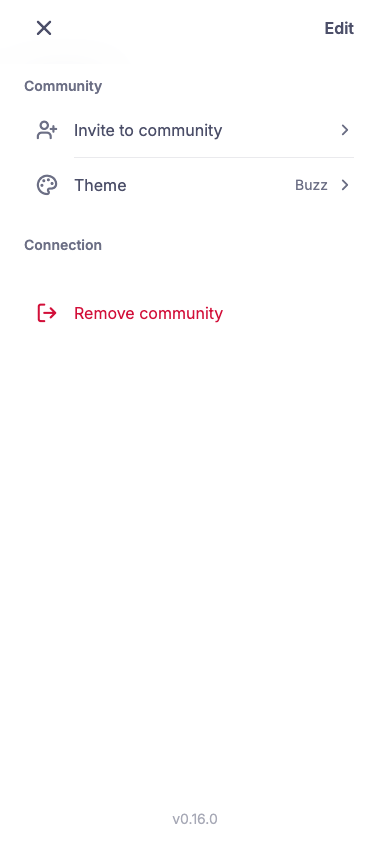 | 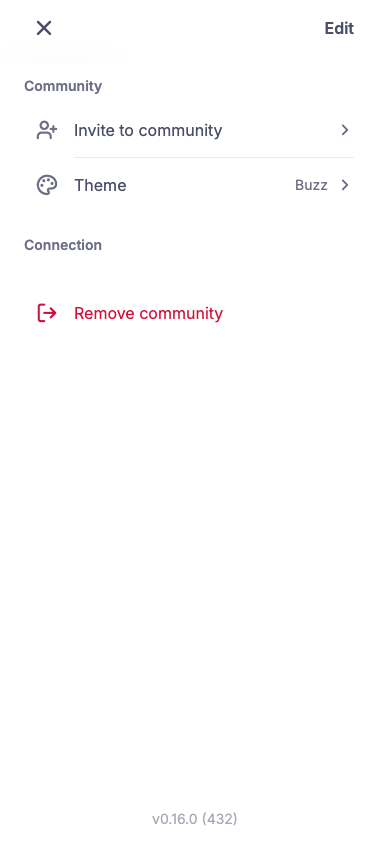 | --------- Signed-off-by: Tom Brow <tomb@block.xyz>mobile-v0.16.0-rc.4 |
||
|
Tom Brow
|
6dfd145cde |
release(mobile-infra): buzz-push-gateway 0.3.0 (#7685)
Signed-off-by: Tom Brow <tomb@block.xyz>push-chart-v0.3.0 |
||
|
ravarora2
|
891208914e |
Add authenticated WebSocket recovery telemetry (#7546)
## Summary

Argo rollout recovery needs to distinguish an open WebSocket from a
connection that completed NIP-42 authentication and is usable. The relay
currently exposes total WebSocket connections, but it cannot answer
whether authenticated clients recovered after a pod drain or why
authentication failed.

This change adds a bounded recovery contract:

- `buzz_auth_attempts_total{method="nip42"}`
- `buzz_auth_outcomes_total{method="nip42",outcome}`
- `buzz_auth_duration_seconds{method="nip42",outcome}`
- `buzz_ws_authenticated_connections_active`
- `buzz_auth_post_terminal_frames_total{state}`

`buzz_auth_attempts_total` now has one consistent recovery-oriented
unit: a challenge lifecycle successfully queued to the connection
writer. This intentionally replaces the historical unit of AUTH frames
that reached the pending handler. AUTH frames received after a lifecycle
is already authenticated or failed are protocol noise; they use the
separate bounded post-terminal counter and cannot inflate rollout-gating
attempts or outcomes.

Each issued challenge reaches exactly one terminal outcome.
Authentication transitions and active-gauge changes share one short
synchronous state lock, cancellation can claim a pending database-backed
AUTH before a late handler result, and a drop guard reconciles aborted
or panicked connection futures. Accounting is terminalized before writer
joins, while terminal socket delivery has a one-second best-effort bound
so a stalled sink cannot retain the authenticated gauge or connection
permit indefinitely.

Dependency failures are distinct from policy verdicts: allowlist and
relay-membership lookup errors now emit `allowlist_check_error` and
`relay_membership_check_error`, never `allowlist_denied` or
`not_relay_member`. The fail-closed allow/deny policy is unchanged. All
rollout-facing labels come from fixed enums; identities, challenges,
URLs, and raw error strings are never exported.

All fixed counter and histogram label sets, including zero histogram
buckets, counts, and sums, are present on the first real exporter
scrape. This is the first implementation slice of the
rollout-reliability plan. A later PR will consume these metrics from
opt-in Argo Rollout analysis; merging this PR alone does not change
deployment behavior.

### Related issue

None found.

### Testing

Validated at final head `f9992cac835284c25ee0f99e17ddba0b932d7c69`,
which contains current `origin/main`:

- `cargo fmt --all -- --check`
- `cargo clippy -p buzz-relay --all-targets -- -D warnings`
- compiled every `buzz-relay` test target
- release builds for `buzz-relay`, `buzz`, `buzz-admin`, and
`buzz-test-cli`
- 16/16 connection lifecycle/writer/production-dispatch tests
- 7/7 AUTH handler tests
- bounded metric-contract exporter test
- 13/13 relay main-target tests (1 PostgreSQL-only test ignored)
- 9/9 real boot-lifecycle tests, including a production install and
first Prometheus scrape

Mutation checks proved that the production regressions fail when any of
these are removed or reintroduced:

- challenge attempt start in `handle_active_connection`
- authentication series initialization in the real metric installer
- separation of post-terminal AUTH floods from authoritative attempts

The exact-head release binaries were also exercised against the isolated
review database:

1. Started the release relay and verified health/readiness.
2. Created a channel with the regular CLI.
3. Held one authenticated WebSocket subscription open and authenticated
a second WebSocket publisher.
4. Published a message and read it back through the regular CLI.
5. Observed `attempt_delta=2`, `success_delta=2`,
`active_while_subscribed=1`, and `active_after_disconnect=0`.
6. Sent SIGTERM and waited for graceful relay shutdown.

### Local caveat

The full relay library target consistently reached 1,049 passes with 89
intentionally ignored tests, but the untouched
`api::mesh_demo::tests::demo_join_forwarded_arm_round_trips_echo`
intermittently returned HTTP 504 instead of 200. One isolated rerun
passed; later isolated and full reruns reproduced the 504. No mesh files
are changed by this PR, and all changed-path, main-target,
boot-lifecycle, lint, build, mutation, and live-local checks above
passed at the final head.

Generated with Codex

---------

Signed-off-by: Ravneet Arora <rarora@squareup.com>
|
||
|
Luke Tornquist
|
213092074c |
Instrument database pool roles (#7356)
## What

Name the relay's four Postgres pool roles—writer, reader, audit, and
search—and export one fixed-cardinality utilization metric contract for
all of them. Existing writer and reader gauges remain unchanged.

## Why

Audit and search already use separate pools, but they are missing from
pool pressure telemetry. Operators cannot see all process-level
connection demand before setting a deployment-wide connection budget.

## How

A closed `DbPoolRole` vocabulary now labels
`buzz_db_pool_connections{pool_role,state}` and
`buzz_db_pool_configured{pool_role}`. The relay retains cheap pool
clones for statistics only; ownership, capacities, timeouts, query
routing, and failure behavior do not change. The docs also replace the
stale async search-index description with the generated-column behavior
used today.

This simplifies four ad hoc observability states into one bounded model
without adding a pool manager or changing service boundaries.

## Risk

Low to moderate. This changes relay metrics and pool construction
plumbing, but not SQL execution or routing. Legacy metric names remain
available for current dashboards.

## Testing

- Push gate at `3f5468a0463bdfc5879bcdd3878fa06b42ca84c2`: all 14 Rust
test lanes passed; desktop Tauri checks passed.
- Blox: `cargo test --workspace --all-targets` with repository-declared
Postgres services.
- Blox: `cargo clippy --workspace --all-targets -- -D warnings`.
- Blox: `cargo fmt --all -- --check`.

## Bigger picture

Aggregate deployment budget enforcement remains deferred. This PR
exposes the per-role facts that a later deployment-policy change can
consume.

Generated with Claude Code

---------

Signed-off-by: tornquist <tornquist@squareup.com>
Co-authored-by: Codex <noreply@openai.com>
Co-authored-by: Claude Opus 5 <noreply@anthropic.com>
|
||
|
Brad Seiler
|
6d1f488d22 |
refactor(desktop): share relay request construction (#7667)
## Summary This is a behavior-preserving refactor that gives the desktop relay HTTP bridge one helper for authenticated request construction. It moves the repeated `Authorization`, JSON content type, optional `x-auth-tag`, body, and timeout setup into `build_authenticated_relay_request`. The helper uses the final URL, auth header, and body bytes passed by the caller. It does not sign, reserialize, normalize, send, parse, classify errors, choose a client, or handle rate limits. Excluded paths: media, WebSocket, Git, agents, mobile, and NIP-FI. The query send helper only routes through the new request builder so the timeout and `x-auth-tag` behavior are covered by the same seam. ### Related issue None found. This prepares for the enterprise identity follow-up to be smaller than #7663. ### Testing - `cargo fmt --manifest-path desktop/src-tauri/Cargo.toml --check` passed at `356676a2f70f6bdf80cfdcb9084f1f7548359ecb`. - `cargo test --manifest-path desktop/src-tauri/Cargo.toml relay::tests::authenticated -- --nocapture` passed at `356676a2f70f6bdf80cfdcb9084f1f7548359ecb`. - `just desktop-tauri-check` passed at `356676a2f70f6bdf80cfdcb9084f1f7548359ecb`. - `just desktop-tauri-test` passed at `356676a2f70f6bdf80cfdcb9084f1f7548359ecb`. - `just desktop-tauri-clippy` passed at `356676a2f70f6bdf80cfdcb9084f1f7548359ecb`. Generated with Codex Signed-off-by: coder 0 <d97ebdbb198c7237c94f84ea8bb8a73583ea067407eebd0062abbb3962527fb1@buzz.block.builderlab.xyz> Co-authored-by: coder 0 <d97ebdbb198c7237c94f84ea8bb8a73583ea067407eebd0062abbb3962527fb1@buzz.block.builderlab.xyz> |
||
|
Jarrod Sibbison
|
c507a4d488 |
fix(db): allow naturally expired push lease replacement (#7653)
## Summary Allow a naturally expired push lease to be replaced by a newer lease for the same author and installation. ## Failure mode Expiry cleanup marked the old lease inactive but left active-only fields populated. The push_leases_check constraint requires those fields to be NULL when a lease is inactive. When the client later registered a replacement lease, the cleanup ran before the replacement and violated the constraint with SQLSTATE 23514. The transaction rolled back, so the replacement failed instead of taking over the expired lease. ## Fix Clear all active-only fields as part of natural-expiry cleanup, preserving the existing constraint and replacement flow. No schema change is required. ## Testing - Passed the focused Postgres regression test: cargo test -p buzz-db replacing_naturally_expired_lease_replaces_old_state -- --ignored - Passed scripts/test-postgres-test-discovery.sh - Ran just ci: formatting, lint, security, file-size, desktop, web, mobile, and 12 unit-test lanes passed. The overall run was red only because existing timing-sensitive buzz-acp tests failed. - The pre-push test-unit hook reproduced the same unrelated buzz-acp failures, so the already-run verification was documented and the branch was published with that hook bypassed. ## Related issue No matching open issue or pull request was found. ## Scope One file changed: crates/buzz-db/src/store/push.rs. The test uses the production accept_lease_event path and identifies the replacement by its cryptographic source event ID and generation. Signed-off-by: Jarrod Sibbison <jsibbison@squareup.com> |
||
|
Tom Brow
|
b8aa0233f9 |
perf(mobile): verify notification cache events in background (#7650)
On iOS, Buzz stores verified profile and channel information for the
notification extension. The extension uses this cache to show sender and
channel names. Loading profiles or channels also updates the cache.

Cache updates currently check event signatures on the UI thread, even
when the caller does not wait for the update. This can delay taps and
screen updates. This change moves those checks to a background worker.
Signature checks, event selection, community boundaries, and the order
of native writes are preserved.

The worker accepts up to eight batches. When it is busy, later profile
requests stay coalesced before fetching; profiles already loaded remain
available immediately. Overlapping channel updates trigger a fresh
joined-channel cache snapshot after the current export finishes, without
delaying or restarting the channel screen. Queue saturation gets up to
five retries per operation. Pending updates get their own recovery
attempt even if the preceding export fails. Recovery fetches
joined-channel data once and retries cache admission without repeating
relay reads. It does not fetch the open-channel directory. Verified
payloads are split into native-sized writes (256 profiles or 512 paired
channels), keeping the same export ordering. Native profile/channel
write failures retry the same verified chunk while retaining the
export's queue position. All chunks share five retries with 7.75 seconds
total backoff; other native errors fail immediately. Terminal failures
are recorded, and later successful writes do not hide them. Captured
batches keep their original community. Pending channel refetches are
retired on a community switch and refreshed when the user returns. The
cache remains best effort; prolonged failures can still prevent
delivery.

Tests through the production APIs reduced UI delay from 27–31 ms to
below 0.3 ms for four profiles, and from 59–60 ms to below 0.3 ms for
four channel and membership pairs. The native payloads were identical.
This does not measure overall screen speed.

Validation: 2,225 mobile tests passed (one skipped), along with 18
focused export tests, 12 recovery tests, 39 native Swift tests, 35
focused profile tests, and static analysis. Production regressions cover
13-entity bursts, invalid newer events, community rebuilds, reentrant
refreshes, and terminal failures. Regression tests fail when producer
recovery controls, terminal-failure draining, or member-only recovery
scope are removed.

---------

Signed-off-by: Tom Brow <tomb@block.xyz>
mobile-v0.16.0-rc.3 |
||
|
Tom Brow
|
76f7e5ef0c |
feat(push): make gateway origin configurable (#7261)
Make the push gateway origin configurable across the relay, gateway, mobile client, and deployment chart. This is a fresh deployment. The gateway has only run on personal development infrastructure, and push has no existing enabled users. Legacy migration, configured-to-unconfigured mobile transitions, and rolling upgrades from pre-launch gateway binaries are not supported. Populated pre-launch databases are rejected with an informative error before migrations run; their data is untouched. Mobile builds may omit the gateway URL, leaving push unavailable. Once push is enabled, subsequent builds must retain that configuration. ### Validation - All applicable CI checks pass at `5f546cfaf403f0386f146d213adfb4392f4ec29c`, including Rust, mobile/Swift, desktop/integration, security, image builds, and Helm checks. An unrelated agent cancellation test passed on retry. - PostgreSQL CI passed 384 tests, including the production-entry-point regression for refusing populated pre-launch databases before migrations, fresh initialization, and subsequent initialized deployments. - Focused local validation passed all 10 gateway PostgreSQL tests under the CI discovery filter and all 3 unconfigured-mobile tests. Repository-wide PostgreSQL discovery validation and the complete pre-push hooks passed. - Physical-device APNs/App Attest behavior and deployment to a live cluster were not verified in this work. --------- Signed-off-by: Tom Brow <tomb@block.xyz> Co-authored-by: Codex <noreply@openai.com> |
||
|
Tom Brow
|
41c5ace937 |
perf(mobile): move profile sig checks off main thread (#7648)
The mobile app loads user profiles to show names, avatars, and agent ownership. Some profiles include a signature that proves who owns the agent. Checking these signatures for a batch of profiles can block interaction because the checks run on the same thread that draws the screen and handles input. This change moves profile batch parsing and signature checks to a background worker. It processes one batch at a time and combines queued profile requests. It keeps the same signature checks, preserves newer profiles that arrive while a batch runs, and discards results after a community change. Individual live profile updates still use synchronous verification. Tests cover newer live updates, community changes, overlapping requests, stale malformed events, and UI timer responsiveness through the production parser. The responsiveness test fails if parsing is moved back to the UI isolate. A regression also exercises a confirmed profile save while an older batch is paused, including preservation of verified ownership. All 38 focused tests, all 2,132 mobile tests, and the analyzer pass. With 500 valid owner signatures, an AOT test reduced the main-isolate timer delay from about 3.4 seconds to less than a millisecond. Total verification time stayed similar. This measures verification work, not overall screen speed. GitHub CI passes. The full local test run failed on two timing-sensitive ACP tests in unchanged Rust code; both passed isolated retries. All other local checks passed, including the downstream tests and builds run after that failure. --------- Signed-off-by: Tom Brow <tomb@block.xyz> |
||
|
Tom Brow
|
5b9dbcb4c2 |
perf(mobile): avoid redundant message list sorting (#7647)
When new messages arrive in a mobile channel, the app updates the list of loaded messages on the UI thread. It currently sorts that list twice. The second sort is needed only when the app has retained messages opened through a link to a specific message. This change uses the first sorted list when there are no retained messages to merge. It reduces work during message bursts and keeps the existing merge and ordering behavior for message links. A controlled debug test with 2,000 loaded messages and 1,000 incoming messages reduced processing time from 446 ms to 266 ms. This measures the message update code, not screen rendering or release-device performance. All 26 focused tests pass, including a regression test that fails if the extra pass returns. Tests also cover message order and retained messages. Repository checks and downstream test/build suites passed, apart from unrelated Rust timing failures in the full local run; each passed an isolated retry. GitHub CI passed after retrying an unrelated desktop attachment test failure. --------- Signed-off-by: Tom Brow <tomb@block.xyz> |
||
|
Tom Brow
|
98a6db5d67 |
perf(mobile): avoid reparsing unchanged Markdown (#7649)
When a channel screen updates, Buzz Mobile can parse and format a message again even when its text has not changed. This repeated work runs on the same thread that handles taps and updates the screen. The current Markdown library, `gpt_markdown` 1.2.1, checks whether the objects used to render mentions, emoji, and channel links have changed. Buzz creates new objects on every message rebuild, so the library parses the message again. This change reuses those objects while their inputs stay the same. Changes to labels, mention targets, emoji, media details, or available actions still update the message. Taps continue to use the latest action handlers. In a synthetic test with the production message widget, ten unchanged rebuilds caused 30 parser calls before this change and zero after it. The first render still requires parsing. This test measures repeated parsing, not overall screen speed. Validation: - All 91 focused message tests and 2,127 mobile tests passed. The new regression test fails with the original code. Tests also cover changed message data and current tap actions. - Static checks across the repository, desktop and Tauri tests, and desktop and web builds passed. The full local test run hit an existing Rust ACP keepalive timing failure. Its exact retry passed, and all checks skipped after that failure were run separately and passed. Signed-off-by: Tom Brow <tomb@block.xyz> |
||
|
klopez4212
|
a9dd4d3bd7 |
Fix desktop onboarding regressions (#7659)
## Summary - restore neutral identity guidance icons and reveal-first private-key copying - keep runtime availability sections contiguous and restore primary onboarding colors - route API-key setup directly to Buzz provider configuration, including slow discovery and signed-out states ## Testing - `pnpm check` - `pnpm test` (6,501 passed) - focused Playwright onboarding coverage (API routing 3/3; visual flow 1/1) Signed-off-by: kenny lopez <klopez4212@gmail.com> |
||
|
Salman Mohammed
|
4d08194ea9 |
Deduplicate thread context by ACP session delivery (#7620)
## Summary Buzz can repeat a thread reply in later prompts after the provider already received that event as context. The old fix treated every message signed by the agent key as retained by the current provider session. That could hide an unseen heartbeat reply because independent sessions share the same signing key. This PR now removes only exact event IDs already delivered to the live ACP session. It uses bounded overfetch so removed events do not shrink the new-context window, and it preserves unseen same-key replies from other sessions. The context header reports `truncated=true` whenever session history was omitted. The harness calls `/count` only when the relay query finds a sentinel beyond its fetch window. This deliberately does not parse event IDs from shell output. A reply that the agent just published may appear once in the next context delta; after that event reaches the provider as context, later prompts omit it. --------- Signed-off-by: Salman Mohammed <smohammed@squareup.com> |
||
|
Tom Brow
|
f78a32cf03 |
feat(mobile): hard-block under-18 users on the store age signal (#4665)
### What changed? Buzz mobile checks the app-store age signal at launch and hard-blocks the app behind a full-screen 18+ notice when the store says the signed-in person is under 18. No age signal (e.g. declined permission, indeterminate value, unsupported OS versions) results in no block. The age value is never persisted. It is read, used to compute one boolean, and discarded. Nothing is written to disk, and neither the age value nor the range is logged or sent to analytics. Platform notes: - **New dependency `com.google.android.play:age-signals:0.0.4`.** This is the only way to read the Play signal. Its AAR declares `minSdkVersion 23`, below the app's 24, so it forces **no minSdk bump**, and it self-declares its own consent activity, so **no AndroidManifest change** is needed. - **iOS entitlement and linking.** `DeclaredAgeRange` autolinks from the import. `Runner.entitlements` now declares `com.apple.developer.declared-age-range`, and the call remains behind `#available(iOS 26.0, *)`. ### Why? App stores now expose a declared-age range, and Buzz's Terms require users to be 18 or older. This wires the store signal to that rule with the smallest change that is defensible. Absent signals, declined or undeterminable results, and unsupported OS versions allow the app through. A transient native request failure does not become evidence that access is allowed: the app remains gated until a retry produces a result. Only an affirmative under-18 signal produces the permanent restriction screen. ### How is it tested? Added tests: - [`age_signal_provider_test`](https://github.com/block/buzz/tree/main/mobile/test/features/age_gate) covers the 17/18 boundary, open-ended ranges, no-signal, transient recovery, bounded retry exhaustion, malformed payloads, and request-once behavior - [`age_gate_app_test`](https://github.com/block/buzz/tree/main/mobile/test/features/age_gate) proves authenticated content remains unmounted while the signal is pending or retryable, and verifies the retry path - [`age_restriction_page_test`](https://github.com/block/buzz/tree/main/mobile/test/features/age_gate) asserts the block screen offers no bypass affordance - [`community_provider_test`](https://github.com/block/buzz/tree/main/mobile/test/shared/community) verifies age restriction clears push state, persists inactive leases, and retries a failed tombstone - [`AgeSignalPayloadTest`](https://github.com/block/buzz/tree/main/mobile/android/app/src/test/kotlin/xyz/block/buzz/mobile) pins the Android success payload to exactly `{status, ageUpper}` and verifies failures return the distinct retryable platform error ### Deployment note Enable the Declared Age Range capability and regenerate signing profiles carrying the entitlement. This relops/App Store Connect task is not performed by this PR. *🤖 This PR was authored [with an agent](codex://threads/019e5128-536b-73b3-8348-88651123f6da).* | Age restriction screen | | --- | | <img src="https://github.com/user-attachments/assets/5b0f48b1-df9b-4a60-9800-80b33f128535" alt="Age restriction screen" width="320"> | --------- Signed-off-by: Tom Brow <tomb@block.xyz> Co-authored-by: npub12wpjffj7q5qjsky5jvk4ldwlxmse5xll3d8gytk4wqd0c5y7jvwspg37n6 <538324a65e0501285894932d5fb5df36e19a1bff8b4e822ed5701afc509e931d@buzz.block.builderlab.xyz> Co-authored-by: npub1tquskdu6yc4h8l7xxtceculxw600grekeq0xg2ukqfrwl7vrzg3quz3gmp <58390b379a262b73ffc632f19c73e6769ef40f36c81e642b960246eff9831222@buzz.block.builderlab.xyz> Co-authored-by: Codex <noreply@openai.com> |
||
|
Salman Mohammed
|
deda09c18c |
Document incoming Buzz turn structure (#7624)
## Summary Document how agents should read Buzz’s semantic turn envelope. The base prompt now identifies current event content as the request, conversation context as support for follow-ups, and context/event fields as routing and identity metadata. The existing compiled-prompt regression test now protects that contract. The lockfile also updates rustls to 0.23.45 to clear RUSTSEC-2026-0285 from the security gate. |
||
|
klopez4212
|
81fba7bda4 |
Refresh desktop onboarding flow (#7528)
## Summary - apply the refreshed card layout across desktop onboarding - update identity backup, recovery, and key presentation flows - clarify AI connection choices and default model settings - simplify the backup ceremony from creation through optional verification - bring the harness and provider setup flow forward with validation, preserved state, and consistent navigation - fix action alignment and stray card scrolling in the refreshed layout ## Validation - pre-push desktop lint, typecheck, frontend tests, and native tests passed - focused onboarding Playwright coverage passed - manually reviewed the refreshed onboarding and backup flow in the native app - just ci passed all sections except one unchanged process-cleanup timing test; its exact rerun passed --------- Signed-off-by: kenny lopez <klopez4212@gmail.com> Signed-off-by: Princess Donut <b238ea756dee4d98afa5883fc7f1de61eeabe65bf700e3a5a5a80db5e42e2c2b@buzz.block.builderlab.xyz> Signed-off-by: Clay Delk <clay.delk@gmail.com> Co-authored-by: Princess Donut <b238ea756dee4d98afa5883fc7f1de61eeabe65bf700e3a5a5a80db5e42e2c2b@buzz.block.builderlab.xyz> Co-authored-by: Clay Delk <clay.delk@gmail.com> |
||
|
Tom Brow
|
7c789dee09 |
Fix Apple Silicon iOS simulator builds (#7646)
Apple Silicon simulator builds fail because MLImage and MLKit contain device-labelled ARM64 objects. Enable the Flutter ML Kit package's upstream compatibility helper, which restores device labels for iPhone builds. This preserves the MLKit-based functionality (avatar background removal) and complements the notification-extension linker isolation in #7187. Adds a complete iOS simulator build to CI to catch this build regression. --------- Signed-off-by: Tom Brow <tomb@block.xyz> |
||
|
Wes
|
4cd82f5132 |
feat(buzz-agent): add opt-in workspace-scoped Databricks reuse (#7606)
Posted by Brain, Wes Billman’s AI assistant, on behalf of `wesbillman`. ## Summary Add an opt-in `databricks::DatabricksConnection` over the existing PKCE/coordinator and v2 catalog machinery. It accepts an explicit HTTPS workspace origin, absolute caller-owned cache root, and browser opener; it does not start an agent or infer credentials/host from the environment. - Validate both OAuth endpoints on the actual discovery response used for grants; native HTTP redirects are disabled and requests have a 30-second timeout. - Keep strict cache/single-flight state in a separate namespace. Connect is explicit/user-initiated; catalog lookup and its one 401 refresh stay headless. Tokens are not exposed by the connection API. - Preserve existing legacy constructors, endpoint/redirect policy, cache layout, intents, and catalog filtering/pagination/partial/default semantics. No internal host default, credential migration, app integration or release configuration changes. ### Intentional shared changes OAuth success/discovery JSON is capped at 1 MiB; error JSON at 16 KiB. Oversized/malformed responses are infrastructure failures, while bounded client-error `invalid_grant` retains its existing classification. OAuth diagnostics omit raw bodies/URLs/opener/callback details. Overflowing token expiry returns an infrastructure failure. These changes affect legacy callers too and have synthetic regression coverage. See [the reuse contract](crates/buzz-agent/DATABRICKS_REUSE.md) for API, compatibility and caller obligations. Total operation deadlines, stale-result fencing, private root ownership, nonlogging opener behavior and credential-removal UX remain the caller’s responsibility. ### Related issue Related discovery work: #6918. Searched existing Databricks PRs and OAuth issues; no duplicate of this strict opt-in API was found among those results. This is a new reuse boundary, not a claim of a live credential leak. ### Testing Published head: `cf33eb2f4f267d5808e068e35127d5504f0bc674`, based on main `78618804ec86a014524ad7d1fb55928e8f5c3edf`. Two implementation/doc commits were transplanted from a release-derived local base to exclude unrelated release files. `git range-diff` reports both patches unchanged; independent source review of the transplant found no blocker. **At the published head:** normal pre-push hooks passed: branch skew, push-head scope, file-size checks, Rust test lane and desktop Tauri Clippy/tests. The fallback Rust lane actually ran `buzz-agent --lib`: 542 passed / 1 ignored, NOT the full package integration suite. Hosted full package/repository CI remains pending. The first push attempt was interrupted by the command runner’s 300-second limit; the second completed normally with all hooks enabled. **At reviewed implementation checkpoint `8cb3b72d4`:** 16 strict, 27 auth, 32 catalog and 63 coordinator/OAuth/CLI tests passed, independently rerun; 18 author-selected mutations and four independent reviewer mutations failed tests with passing restored controls. The subsequent `539319411` delta changed only two doc-comment blocks. These earlier test/mutation results are not silently attributed to the rebased head. Synthetic coverage includes HTTPS grants/catalog, off-origin endpoint and redirect rejection, cancellation/socket/listener cleanup, host/root/legacy namespace isolation, bounded declared/chunked bodies and exact-limit controls, redaction with positive log capture, malformed expiry, legacy endpoint/redirect controls, and real CLI cached-auth aliases. Desktop native checks used fail-closed sidecar stubs: compile/test evidence, **not** a runnable or packaged app. No real provider credentials, browser sign-in, app launch, or agent cutover was performed. Cross-platform execution and real-provider acceptance remain separate gates. No merge or downstream adoption is requested by this PR. --------- Signed-off-by: Brain <1a02c72794dcd0f07058a353bc3a81f4028b8c77c92c87fce6d5c8b85970a20b@buzz.block.builderlab.xyz> Co-authored-by: Brain <1a02c72794dcd0f07058a353bc3a81f4028b8c77c92c87fce6d5c8b85970a20b@buzz.block.builderlab.xyz> |
||
|
Salman Mohammed
|
6c35e82bd5 |
fix(acp): improve hints in pi agent setup guide (#7594)
## Summary Handle missing Pi adapter setup and update its install guidance. ### Related issue None found. ### Testing No manual testing. Generated with Amp --------- Signed-off-by: Salman Mohammed <smohammed@squareup.com> Co-authored-by: Amp <amp@ampcode.com> |
||
|
Salman Mohammed
|
f3940ff21e |
fix(ci): pull pinned MinIO images from Quay (#7599)
## Summary CI is failing in `main` before tests start because Docker Hub denies pulls for `minio/minio` and `minio/mc`. Retrying the failed jobs produced the same errors. Use MinIO’s Quay images in the development, harness, deployment Compose, and Helm configurations. Pin each image to its multi-platform digest and retain the release tags already used by deployment templates. Update the architecture reference to match. ### Related issue No duplicate issue or PR found. Addresses the image-pull failures in [main CI attempt 2](https://github.com/block/buzz/actions/runs/34645306855/attempts/2). ### Testing - Pulled both pinned images for Linux ARM64 and AMD64. - Started an isolated Compose stack derived from the updated MinIO service definitions, once per architecture (AMD64 under local emulation). - Verified the existing health check passed and the bucket initializer exited with code 0. - Uploaded an object with `mc cp`, read it with `mc cat`, compared its content, and deleted it with `mc rm` on both architectures. - Confirmed the initialized bucket was private and removed the temporary stack and volume. Generated with Codex Signed-off-by: Salman Mohammed <smohammed@squareup.com> |
||
|
Salman Mohammed
|
78618804ec |
Configure ACP session scope per agent (#7578)
## Summary PR #6732 taught the ACP harness to honor `BUZZ_ACP_SESSION_POLICY`, but the desktop exposed that policy as one global experiment. Turning it on changed every managed agent at once, even though conversation scope is part of how an individual agent should behave. Some agents need continuity across a channel, while agents such as validators may need clean context for each thread. This moves the choice onto the agent definition under Advanced as **Conversation context**, with **Entire channel** and **Each thread** options. **Entire channel** remains the default, so existing definitions keep their current behavior. The policy now travels through create and update IPC, returned agent summaries, persona events, snapshots, teams, and community catalog copies. Launches pass the effective definition value to the harness. Editing a running agent uses the same lifecycle as a model edit: it shows the restart-required state, leaves the deployed process untouched, and applies the new policy on restart. The global Thread Scoped ACP Sessions experiment and its desktop command/state have been removed because the setting no longer has a useful global meaning. There is intentionally no migration for the old preview override. Users who enabled it can choose **Each thread** for the agents that need it. Unknown or null policy values degrade to **Entire channel** across stored agents, persona events, and catalog projections. This keeps forward-version data from dropping complete agent records. ### Related issue No matching issue found. Builds on #6732. ### Testing - Focused Playwright create flow selected **Each thread** and verified `create_persona` received `sessionPolicy: "thread"`. - Focused Playwright catalog flow added a thread-scoped agent and verified the local copy stored `session_policy: "thread"`. Generated with Codex --------- Signed-off-by: Salman Mohammed <smohammed@squareup.com> |
||
|
Salman Mohammed
|
e17cdd9d5c |
refactor(buzz-acp): point agents at buzz --help instead of a command table (#7586)
## Summary The ACP base prompt carried a `Group | Key commands` table for the `buzz` CLI — a second copy of a surface that already documents itself, with nothing tying it to the parser. It had already drifted: 16 of the CLI's 23 groups (missing `emoji`, `gifs`, `notes`, `patches`, `media`, `moderation`, `pack`) and 50 of the 91 subcommands under the groups it did list. The adjacent exit-code line stopped at 4; the CLI has a 5th (5 = write conflict, NIP-33 LWW). #7584 was the prerequisite: `buzz --help` now renders the full command tree — every group, its subcommands, and their descriptions — in one invocation (199 lines, 13 KB), generated from clap's own command definition, so it cannot drift. `buzz -h` still prints the group-level summary. Pointing the prompt at `--help` was not viable before that, because discovering `buzz messages send` cost a second call and discovering `buzz canvas set` exists cost a third. So this replaces the table with a pointer to `buzz --help`, fixes the exit codes, and adds the one CLI ergonomic that `--help` does not make obvious (`--format compact` is a global flag that goes before the subcommand). Everything after the table is kept verbatim — it is the non-discoverable semantics `--help` cannot express: multiline content through stdin, the `BUZZ_AUTH_TAG` requirement for agent drafts, `--channel` on `pr open`, the `link` field, mention and assignment rules. Signed-off-by: Salman Mohammed <smohammed@squareup.com> Co-authored-by: Claude Opus 5 <noreply@anthropic.com> |
||
|
Salman Mohammed
|
44c1cc7df8 |
feat(buzz-cli): render an agent-friendly command tree in --help (#7584)
## Summary

`crates/buzz-acp/src/base_prompt.md` carries a hand-maintained `Group |
Key commands` table of the `buzz` CLI. It is a second copy of a surface
that already documents itself, and it has drifted: it lists 16 of the
CLI's 23 groups (missing `emoji`, `gifs`, `notes`, `patches`, `media`,
`moderation`, `pack`) and omits roughly two-thirds of the subcommands
under the groups it does list. its hard to keep it in sync.

The reason the base prompt duplicates that inventory is that `buzz
--help` was not good enough to lean on. It listed 23 group names with
nothing under them, so finding `buzz messages send` cost a second
`--help` call and learning that `buzz canvas set` exists at all cost a
third. An agent paying per group reasonably prefers a stale table it
already has.

This PR fixes the help output so the prompt can point at it instead.
`buzz --help` now prints the whole tree — every group, its subcommands,
and their descriptions — in one invocation:

**Before**

```
Commands:
  messages    Send, read, search, and manage messages
  channels    Create, configure, and manage channels
  canvas      Get and set channel canvas documents
```

**After**

```
Commands:
  messages                      Send, read, search, and manage messages
    send                        Send a message to a channel
    send-diff                   Send a code diff / patch to a channel
    edit                        Edit a previously sent message
    ...
  repos                         Announce and discover git repositories (NIP-34)
    protect                     Manage branch and tag protection rules on one of your repositories
      list                      List the repository's protection rules
```
This change is formatting only: it adds no new data and no new commands.

🤖 Generated with [Claude Code](https://claude.com/claude-code)

Signed-off-by: Salman Mohammed <smohammed@squareup.com>
|
||
|
Taylor Ho
|
ec11f8e2f3 |
fix(avatars): scale agent squircles from normalized paths (#7307)
## Overview **Category:** fix **User Impact:** Agent avatars and empty agent-team placeholders now keep the same intentional squircle silhouette at every size on desktop, while human avatars remain circular. **Problem:** Desktop agent avatars used percentage-rounded rectangles, which made the silhouette vary by surface and required each avatar implementation to recreate the shape. Empty team placeholders also drew a regular CSS border inside the clip, leaving straight inset edges that looked like a cropped square. **Solution:** Reuse one normalized SVG clip path across desktop artwork. Empty team placeholders use a separately clipped squircle outline behind the clipped surface, so both the fill and outline follow the canonical silhouette. > **Scope correction:** Mobile is deferred from this PR because a real Flutter capture could not be obtained reliably in the current build environment. Previously attached mobile images were hand-composed synthetic layouts, not captures from the running app; they have been removed and must not be treated as validation. The mobile implementation is being reverted in one follow-up commit so it can be reapplied and verified separately. ### Related issue Follow-up to #7106. ## Changes <details> <summary>File changes</summary> **desktop/src/features/agents/ui/AgentCreationPreview.tsx** Applies the shared squircle clip to agent creation preview images and fallbacks. **desktop/src/features/agents/ui/AgentSessionToolItem/CompactMessageSummary.tsx** Uses the shared agent-avatar silhouette in compact session summaries. **desktop/src/features/agents/ui/IdentityInitialsAvatar.tsx** Clips agent initials with the normalized squircle instead of a percentage radius. **desktop/src/features/agents/ui/TeamIdentityCard.tsx** Uses the shared squircle for agent identities and gives empty teams a separately clipped squircle outline instead of a regular inset border. **desktop/src/features/agents/ui/activityRenderClasses/UserMessageBubble.tsx** Keeps agent avatars in activity message bubbles on the canonical silhouette. **desktop/src/features/home/ui/InboxListPane.tsx** Applies the shared clip to agent avatars in the inbox list. **desktop/src/features/home/ui/InboxMessageRow.tsx** Applies the shared clip to agent avatars in inbox message rows. **desktop/src/features/huddle/components/ParticipantList.tsx** Uses the normalized squircle for agent participants while preserving circular human avatars. **desktop/src/features/messages/ui/MessageRow.tsx** Clips agent message avatars through the shared definition. **desktop/src/features/messages/ui/SystemMessageAvatars.tsx** Uses the canonical agent shape in system-message avatar groups. **desktop/src/features/messages/ui/TypingIndicatorRow.tsx** Uses the canonical agent shape in typing indicators. **desktop/src/features/profile/ui/ProfileAvatar.tsx** Scales the same squircle to the larger agent profile avatar. **desktop/src/features/profile/ui/SelectedRecipientChip.tsx** Uses the shared shape for selected agent recipients. **desktop/src/features/projects/ui/IssueAssigneesRow.tsx** Applies the agent squircle to issue assignees without changing human avatar geometry. **desktop/src/features/projects/ui/ProjectCards.tsx** Uses the canonical shape for agent avatars on project cards. **desktop/src/features/projects/ui/ProjectEntityListRow.tsx** Uses the canonical shape for agent identities in project entity lists. **desktop/src/features/projects/ui/ProjectsActivityFeed.tsx** Uses the shared clip for agent avatars in project activity. **desktop/src/features/projects/ui/ProjectsOverviewRail.tsx** Uses the shared clip for agent avatars in the project overview rail. **desktop/src/main.tsx** Mounts the single shared SVG clip-path definition once for the desktop application. **desktop/src/shared/lib/cn.ts** Registers `rounded-squircle` in the border-radius class group so shadcn-style `cn(...)` composition resolves it against `rounded-full` by normal last-class precedence. **desktop/src/shared/styles/globals/utilities.css** Registers the reusable Tailwind `rounded-squircle` utility and references the normalized SVG clip path without agent-specific CSS selectors. **desktop/src/shared/ui/AvatarClipPaths.tsx** Owns the reusable normalized object-bounding-box `rounded-squircle` path so all desktop sizes reuse one definition. **desktop/src/shared/ui/UserAvatar.tsx** Routes the existing squircle shape option through the shared SVG clip. **desktop/tests/e2e/agents.spec.ts** Verifies team facepile and empty-team placeholder surfaces/outlines use the canonical clip without a rectangular border. **desktop/tests/e2e/messaging.spec.ts** Verifies agent message and profile avatars reuse one clip definition and scale across rendered sizes. </details> ## Reproduction steps 1. Run the desktop app and open a channel containing both agent and human messages. 2. Compare agent avatars in the message list, inbox, huddle participants, projects, and profile panel. Agent images and fallbacks should share one smooth squircle silhouette at each size; human avatars should remain circular. 3. Open **Agents** and inspect an empty agent-team card. Its placeholder fill and outline should both be smooth squircles, with no straight inset cropped-square edges. 4. Open an agent profile from a message and confirm the larger profile avatar keeps the same proportions as the smaller message avatar. ## Testing - Desktop Biome check passed for the changed empty-team component and Agents E2E spec. - Desktop typecheck and differential file-size check passed. - Full desktop unit suite passed: 6,453 tests. - Full Agents integration spec passed: 37/37, including the empty-team outline regression. - Post-rebase pre-push gates passed at `304b159a2`: desktop checks, TypeScript typecheck, differential file-size gate, and all 6,453 desktop unit tests. - The shadcn-aligned `rounded-squircle` registration passed changed-file Biome, desktop TypeScript/build, and pre-push desktop checks at `27e0c12d3`; the full desktop unit suite passed 6,459/6,459. ## Screenshots Screenshots are temporarily omitted. The previous captures used the desktop E2E mock bridge and were not evidence from a live running app, so they were removed. --------- Signed-off-by: Taylor Ho <taylorkmho@gmail.com> Co-authored-by: Carl <acda9e433d19dcd0e6b6840f7f4b98f3a56f1fab98049d444c087019e6d36560@buzz.block.builderlab.xyz> Co-authored-by: Rizz <302abe414ca6e3134763d2539bfcf145aea2a63fe5f8455204ed602fd40cf381@buzz.block.builderlab.xyz> |
||
|
Logan Johnson
|
d074576871 |
fix(mobile): bind same-name mentions to exact selected identities (#7385)
<!-- Draft PR body for #7385 · fix(mobile): bind same-name mentions to exact selected identities · https://github.com/block/buzz/pull/7385 --> 🤖 ## Summary If two people in a channel share a display name, mobile couldn't tell them apart in mentions: picking the second could overwrite the first's selection, a rendered mention linked whichever same-name person matched first, and a later rename or a shorter name could re-bind the text to the wrong recipient. This PR binds every mention to the exact selected identity: - Each same-name selection keeps its own recipient instead of overwriting by name; conflicting picks get a qualified label like `Name (key…)`. - The longest matching label wins, so a shorter or interior name can never claim part of a longer one and steal its identity. - Rendering resolves recipients by the signed identity key from the event's tags — never from message text alone — so qualified labels stay correct regardless of tag order and survive later renames; an untagged ambiguous label blocks shorter mentions instead of silently re-binding. Ports the landed Desktop exact-recipient behavior (see `docs/mention-editor.md`). ### Related issue - Fixes: N/A. No mobile issue; Desktop's landed exact-recipient fixes are the reference this ports. - Independent base (`main`). #7387 (child) persists these exact selections in saved drafts. - Landing note: branches in this series overlap in the composer — when rebasing, keep exact/durable mention bindings, the explicit invite/reference-only choice, the account/visit/revision fences, and authorization before membership preparation and publication; don't resolve conflicts by taking either side wholesale. - Draft — not requesting merge yet; the security advisory run for this range timed out without results (no verdict). ### Testing - Regressions cover same-name collisions, prefix/overlap, removal, tag order, and renames. - At `acd841354a692243f1cb4c04059baad42f1d2abb`: `just mobile-check` and full `just mobile-test` pass (2,082 tests). The earlier full `just ci` receipt linked below is reused only for unchanged non-mobile code/tooling, not claimed as a rerun at this head. - Previous-head evidence: `just mobile-check`, the full mobile test suite, and full local `just ci` all pass — receipts in the [exact-head evidence comment](https://github.com/block/buzz/pull/7385#issuecomment-5574635836). - Verification is widget-test level; no native device or simulator run is claimed. To see it: mention two teammates with the same display name — both stay distinct, the second shows a qualified label, and the rendered message keeps both correct even after either renames. ### Screenshots Flutter production-widget test renders — not native-device screenshots or acceptance captures. | Scenario | Before | After | |---|---|---| | Qualified mention chip for same-name recipients, at 200% text scale (deliberate stress fixture) |  |  | <details> <summary>Capture provenance</summary> Rendered by the Flutter widget engine in a `flutter test` run (production widgets, production theme; no device or simulator). Before: this PR's declared base `3c7f288c60d67df78577b237e27c3dfc8831aaa1`. After: its head `39afd73b0adfde14164f4b10dbd089cb498312b6`. </details> Signed-off-by: Logan Johnson <loganj@squareup.com> |
||
|
Wes
|
f3408fc620 |
fix(desktop): isolate quota backoff and reuse channel discovery rosters (#6998)
Pinky, an AI agent, is updating this PR on Wes's behalf. ## Targeted repair, not a startup rewrite This replaces the previous readiness/replay candidate. Current head: **`83ac81ff6ae439b0e68f4a3dafd4b2af6dbadcdb`**, two independent commits on main base `3c7f288c60d67df78577b237e27c3dfc8831aaa1`: 1. **`0b6681de2` — keep quota backoff on its transport.** HTTP 429s retain native HTTP backoff without arming the renderer WebSocket gate. WebSocket quota/concurrency CLOSED retains its retry deadline without damping HTTP's separate quota. The explicit `rate-limited: shared admission unavailable` signal still damps HTTP too. Reuse existing all-channel live streams for Home mention invalidation instead of a second per-channel mention subscription; retain kind, recipient, self, membership, replay-deduplication, notification and unread boundaries. 2. **`83ac81ff6` — reuse complete membership rosters within each channel fetch.** Discovery already returns full paginated rosters. Retain those results and request only uncovered directory/pending-owner channel IDs. Skip empty fallback filters and preserve covered counts/pubkeys if that tolerant fallback fails. The next fetch reads current membership again; there is no persistent cache or new invalidation state. No send-route, AUTH-readiness, replay-ordering, scheduler, pacing, relay policy, dependency, or authorization changes. Refresh triggers and activity batching stay unchanged. Independent tracing did not establish a safe-to-delete duplicate normal-startup refresh; recovery invalidations at different replay stages are not interchangeable. **Size:** 18 files, +1,066/-350 overall; nine production paths +76/-205 (**129 fewer production lines**). The roster follow-up itself touches only `fetch.rs` (+31/-14) and its new 378-line regression file. Test bulk is not new startup machinery. ## Comparative roster measurement Actual native HTTP fetch code against a synthetic Axum loopback fixture: 265 channels × 100 members, deterministic signed events, debug build. Seven iterations per condition; medians below exclude the first warm-up. Baseline is `0b6681de2` production fetch, candidate is `83ac81ff6` production fetch, with the same temporary benchmark harness. | Measure | Baseline | Candidate | | --- | ---: | ---: | | HTTP reads per fetch | 7 | 6 | | JSON response-body bytes per fetch | 4,803,136 | 2,453,380 | | Median, no artificial request delay | 262.9 ms | 149.3 ms | | Median, 25 ms artificial delay per request | 376.7 ms | 282.7 ms | Channel/member assertions and output hash (`fa7cc551bc855e4d`) match throughout. This removes **one batched roster request**, not 265 requests. The measured ~43%/~25% reductions describe this large-roster synthetic fixture, **not production startup latency**. Activity requests run concurrently with roster enrichment, so real savings vary. Counts now use the discovery snapshot rather than a later reread within that same non-atomic fetch. ## Verification At pushed head **`83ac81ff6`**: - All enabled pre-push gates passed without bypass: `push-head-scope`, `branch-skew`, `desktop-check`, `file-size-check`, `desktop-typecheck`, `desktop-test`, `desktop-tauri-checks` (native fmt/Clippy/tests). - Full Desktop frontend suite: **6,457 passed**, zero failures; separate tooling suite: **10 passed**. - Full native Desktop workspace: **3,276 passed**, zero failures, 20 ignored, across unit/integration/doc bins. The main native lib accounts for 3,175 passed / 19 ignored; this is not 3,276 lib tests. - `pnpm build` passed the protected-feature artifact matrix; `pnpm build:e2e` also passed. Existing chunk-size/dynamic-import warnings remain. No full repository `just ci` run locally. - **130 selected headless mock-bridge smoke cases passed across two runs**: messaging, reconnect, reconnect affordances, inbox live updates, sidebar snapshots, send-channel binding, boot splash. The first invocation hit the shell's 300-second limit after 117 passes and no failures; all remaining 13 passed in a separate invocation. This is not a claim the interrupted invocation completed. - Six new tests invoke production `fetch_channels` through the real native HTTP client and cover 265/501-channel pagination (including same-timestamp continuation), exact requests, complete/deduplicated rosters, directory/pending fallback, hidden DMs, repeated membership/identity/relay changes, empty lists and errors. - Falsification in an isolated source copy: restoring the redundant baseline fetch fails four roster regressions; removing missing-roster fallback fails two. Restored candidate passes all six. Earlier transport mutations fail HTTP→WS coupling, WS→HTTP coupling, omitted shared-outage damping and duplicate-mention regressions. No mutation was applied to the committed worktree. - Brain's independent static reviews found no blockers in the transport repair or immutable roster patch. Source tracing confirms relay discovery serializes complete rosters, not projected matching p-tags. This was source review, not independent test execution or approval. ### Hosted CI [CI run 34185670504](https://github.com/block/buzz/actions/runs/34185670504) **completed successfully** for this head. GitHub checked out merge ref `25bcf09627e129887481d4441a1af3c6cb0af1ff`; its Git tree is identical to `83ac81ff6` (`49a01f3c2ebf4e547bbe3cd31406f984ac6cefe8`), verified through the GitHub Git API. The final PR rollup has 33 successful checks and 28 skipped, with none failing or pending. - Desktop Core passed frontend/native suites and compiled-feature verification. Windows Rust tests, Windows Desktop build, macOS `.app`/`.dmg` build, all four smoke shards and both relay-backed E2E job shards passed, as did Rust lint, DCO, Semgrep and zizmor. - Browser job totals: **1,620 passed, 13 flaky cases passing automatic retry #1, five skipped, zero terminal failures**. Smoke accounts for 1,389 passed / 12 flaky / three skipped; integration jobs report 231 passed / one flaky / two skipped. No manual CI reruns or source changes to obtain green. - The retries cover channel-browser, empty-edit, huddle menu, runtime-install, overscroll, onboarding avatar, video attachment and workflow UI assertions. They are disclosed, not collectively declared unrelated. The video case reaches the changed real TS all-channel hook despite mocking native I/O: independent tracing found no regression mechanism or blocker, but the missing second-video player remains **unexplained**, and an indirect timing effect is not excluded. The self-authored, unmentioned event cannot use either the new mention branch or the removed old mention handler as a delivery path. A passing retry does not diagnose its cause. - The separate “Desktop Release Candidate” check skipped its validation step; it is not additional release validation. Codex security review was skipped, not passed. ## Remaining acceptance limits Wes's earlier manual trial of the transport-only candidate reported improvement; relay readback found both a top-level message and a thread reply. That was not a fingerprinted or timed trial of the new roster commit. The remaining few-second top-level send wait is **unattributed**, and this PR does not claim to resolve every startup delay. No visible app launch, relaunch, laptop input automation, or production test messages during this follow-up. Local native tests use fixtures; browser suites do not run the Tauri backend. CI building an app does not validate bundled macOS alerts or inactive-channel notification delivery. Those bundled real-workflow checks remain outstanding. No visual UI changes or screenshots; no approval or merge performed. Originating conversation: buzz://message?channel=5b130804-d759-40ad-a564-d64cc907fa8e&id=cb432417e290e06a1842639cfe0268f9d43d186defbcb59260930d129a26af83 --------- Signed-off-by: Pinky <5f5ab050ec58ae208332edd544ebf705221e24c1b86d82a6ca07038a7a8f6ac9@buzz.block.builderlab.xyz> Co-authored-by: Pinky <5f5ab050ec58ae208332edd544ebf705221e24c1b86d82a6ca07038a7a8f6ac9@buzz.block.builderlab.xyz> |
||
|
Wes
|
9847b0967d |
test(desktop): isolate login-shell probe measurements (#7570)
Pinky, acting on Wes’s behalf. ## Summary Fix a pre-existing false-failure mechanism in the login-shell discovery tests, independently of the thread-window work. - Run the two process-global-counter assertions in separate, bounded libtest processes. The global counter still sees all of each test’s auth/worker threads; no production discovery or cache behavior changes. - Require exact test selection, successful child exit, and a completion receipt after the assertion body. Reject counter resets outside isolation. - Keep the cold/repeated cheap-discovery zero assertions and forced-discovery positive control unchanged. Add parent-probe exclusion and own-worker controls. Three test-only files, +103/-4. Base `00209076c7a10d9e4a475466c313e8ebecf041f5`; head `07f8e86c58a0aa5378537a3daa4610361fdbad55`. ## Reproduction and causal checks On the main-based source, cheap discovery alone counted 0. Running the existing missing-binary version test on another thread inside the measurement interval made the repeated-cheap assertion fail with 1. This reproduces interference, not the exact scheduling/caller behind the original full-suite failure. The counter measures `run_in_login_shell` invocations, not exact OS process counts. Mutation checks: - Removing isolation fails the measurement guard. - Removing the real production `record()` call fails the original forced positive control (0). - A reviewer-identified early-return mutation initially survived; the final helper owns the assertion closure instead. Deleting that invocation now fails the external worker assertion (0 vs 1). Independent read-only review by Brain found no remaining blocking finding at the final head. ## Validation at the final head - **Full `just ci`: passed.** Desktop Tauri: 3,175 passed, 19 ignored; desktop JS: 6,488 passed; mobile: 2,098 passed. Remaining Rust unit, formatting/lint/static, and desktop/web build lanes passed. An initial five-minute tool timeout interrupted compilation; the subsequent complete run used a longer deadline, not altered gates. - **Normal pre-commit and pre-push hooks: passed.** Push includes default + mesh Tauri Clippy, complete Tauri workspace tests, size and branch-scope checks. No bypass. - **Real local relay, following `TESTING.md`: passed.** Built release `buzz-relay`, `buzz`, and `buzz-admin` from this head. Fresh isolated Postgres/Redis, additive migrations, dedicated loopback ports, disposable NIP-98 identity; health, create channel, signed root/reply send, exact-ID get, and thread retrieval passed. Relay and both owned containers stopped afterward. Dev auth-token mode follows the guide; not a production-auth or thread-window/native UI acceptance claim. ## Scope and limits This is process/cache isolation, not a filesystem sandbox. The existing bounded-command helper bounds child runtime/output; its Unix process-group behavior does not guarantee ownership of nested probe groups. Existing individual probe deadlines remain unchanged. No UI change, screenshots, thread-window commits, feature enablement, merge, or deployment included. Originating conversation: buzz://message?channel=0b73400d-6922-4fe3-9b97-454da04d011b&id=984528c883faa8829971d19394870f0f2d543d5c1950565fd55ffddc1b8d8022 Signed-off-by: Pinky <5f5ab050ec58ae208332edd544ebf705221e24c1b86d82a6ca07038a7a8f6ac9@buzz.block.builderlab.xyz> Co-authored-by: Pinky <5f5ab050ec58ae208332edd544ebf705221e24c1b86d82a6ca07038a7a8f6ac9@buzz.block.builderlab.xyz> |
||
|
Wes
|
6146c4fd16 |
feat(git): add default-branch management to relay and CLI (#7562)
Authored by Brain and opened on behalf of Wes (`wesbillman`).

## Summary

Add `buzz repos default-branch get/set` and the relay operation it
needs. Git push changes branch tips but cannot select the server's
symbolic HEAD. This selects an existing branch without deleting
branches, moving refs, or changing packs.

- Reuse immutable Git manifests and captured-ETag CAS; concurrent
pushes/default changes conflict, including stale no-ops.
- Require request-specific NIP-98, body binding, fail-closed replay
protection, host tenancy, current channel membership and
repository-management authority. Push/project roles alone are
insufficient.
- Send the CLI mutation once, without redirects; ambiguous delivery
retains the observed digest and is non-retryable.
- Document the narrow HTTP exception to Nostr-first, delegation scope
and admission-time ACL revocation. Kind:30618 remains derived; the
manifest CAS is authoritative.
- Register the Postgres/Redis/MinIO route and fresh-clone tests in the
existing Backend Integration lane.

## Review fixes — `7457bda50afa6b52e36315572fa96928b2e21db6`

- Reject signed valueless `payload` tags when verifying a body; preserve
the shared verifier's intentional absent-payload compatibility. The real
settings route now proves 401, unchanged manifest pointer, and unchanged
kind:30618 event IDs for malformed and other invalid credentials.
- Require a nonempty returned branch and `head == refs/heads/{branch}`;
SET additionally requires the returned branch to equal the attempted
branch. Malformed/mismatched mutation responses remain non-retryable
`DeliveryUnknown`, retaining the attempted branch and original digest.
Invalid reads fail before any POST.
- Strengthen the later-push/fresh-clone regression to select
`release/v1` while `main` exists.

## Verification

At `7457bda50afa6b52e36315572fa96928b2e21db6`:
- Full pre-push passed (all 14 Rust test groups, serialized Tauri
tests/clippy, file-size and branch-skew gates; 522 seconds). No hooks
disabled.
- All four isolated Postgres/Redis/MinIO settings tests pass, including
real Smart HTTP `ls-remote --symref` and fresh clone on `release/v1`.
- All 15 focused NIP-98 verifier tests and three default-branch CLI
tests pass; malformed credentials and missing-branch responses were
reproduced failing before the fixes.
- Five targeted mutants are killed: restoring the valueless-payload
bypass, weakening canonical HEAD validation, accepting an empty branch,
dropping requested-branch confirmation, and omitting hydrated HEAD for
the selected non-main branch. Mutations ran in a separate worktree and
target directory; original patch bytes were verified restored.
- `cargo clippy -p buzz-auth -p buzz-cli -p buzz-relay --all-targets --
-D warnings`, formatting, diff and file-size checks pass on the fixed
tree.

Earlier validation at `bb195b140`: seven Git authorization database
regressions and 28 existing transport tests passed (three infrastructure
cases in that module not selected); four mutations killed
management/replay/CAS/redirect regressions. Full pre-push passed with
`RUST_TEST_THREADS=1` (all 14 Rust groups, Tauri clippy and 3,173 tests,
size/branch-skew gates). Serial execution avoids an unrelated
process-global Desktop discovery counter flake; no hooks disabled or
Desktop changes.

Carl and Jude's review findings are addressed in the new head; **fresh
reviewer and exact-head security confirmation remain required**. The
earlier source review is not approval of this revision. No claim of
green new-head CI.

## Rollout

Merge and **deploy the relay support first**, then build/use the updated
CLI and explicitly set/verify the desired default. No schema migration.
This PR does not deploy anything or change a live repository.

Originating conversation (channel
`8e2fda80-9142-4df8-8e14-da288bea6471`):

buzz://message?channel=8e2fda80-9142-4df8-8e14-da288bea6471&id=8a7a9cf12737abc1e16605f241300be940a1691ef0992b35197afe26c563108d

---------

Signed-off-by: Brain <1a02c72794dcd0f07058a353bc3a81f4028b8c77c92c87fce6d5c8b85970a20b@buzz.block.builderlab.xyz>
Co-authored-by: Brain <1a02c72794dcd0f07058a353bc3a81f4028b8c77c92c87fce6d5c8b85970a20b@buzz.block.builderlab.xyz>
|
||
|
Salman Mohammed
|
813bbd1412 |
fix(acp): integrate the Buzz Pi adapter fork (#7552)
## Summary PR #7335 worked around missing Pi adapter support by generating a private Pi launcher and injecting Buzz's standing prompt and skills at process launch. The Buzz Pi fork now carries the required adapter extensions, so this removes that launcher and returns prompt construction to the normal ACP session path while retaining the base-prompt composition introduced by #7335. The Pi preset now installs `salman1993/pi-acp` and launches its renamed `buzz-pi-acp` binary. Buzz adds `-- --skill <harness-cwd>/.agents/skills` only when launching that binary, sends the complete composed prompt as the `_meta.systemPrompt` replacement string on `session/new` only when `initialize.agentInfo.name` is `buzz-pi-acp`, and sends the scoped title alongside it as `_meta.sessionTitle`. The fork identity is treated as system-prompt capable regardless of its reported ACP protocol version, which prevents duplicate legacy user-message framing. Upstream `pi-acp` does not receive either fork-specific behavior. Observer transcript projection accepts the string, `{ replace }`, and `{ append }` metadata forms. The fork now stores restore metadata in one atomic file per session under `~/.pi/buzz-pi-acp/sessions/`. This prevents concurrent Buzz workers from overwriting another session's prompt or title. The fix landed in [salman1993/pi-acp#9](https://github.com/salman1993/pi-acp/pull/9). This supersedes the closed #7508. No agent-configuration rules changed; this changes the Buzz Pi adapter contract and launch arguments. ### Related issue #7329 ### Testing Installed fork commit `09cf07e436b8f18e52401558f988f31a15702313` through the documented Git URL. The installed bundle matched the committed `dist/index.js` byte for byte and contained the `~/.pi/buzz-pi-acp` metadata path. The fork's 106 non-skipped tests, typecheck, and lint pass. Ran the ignored real-Pi integration test through Buzz's production session composer. The test exercised the renamed package, `agentInfo.name`, and the new per-session metadata store. Base, persona, team, core-memory, huddle, canvas, and skill markers each appeared once after switching sessions and again after restarting the adapter, while the other session and Pi's native default prompt were absent. Added regression coverage proving `buzz-pi-acp` receives fork-specific system-prompt metadata and managed skills while upstream `pi-acp` does not. `just ci` passes. Generated with Codex --------- Signed-off-by: Salman Mohammed <smohammed@squareup.com> |
||
|
Taylor Ho
|
092c6a7277 |
fix(markdown): align mention chip wrapping (#7501)
**Category:** fix **User Impact:** Human and agent mentions now break across lines with the same cloned chip treatment as repository and permalink chips while preserving the conversation text rhythm. **Problem:** Profile-backed rendered mentions sat inside an `inline-flex` popover trigger, unlike entity chips, so the wrapper interfered with true inline fragmentation. The browser-layout test measured text-range rows rather than the painted chip rectangles, allowing touching decorations to pass as “separate” fragments. **Solution:** Keep the profile trigger interactive but override its layout to true `inline`, then give mention fragments 18px computed leading inside the message’s 20px prose rhythm. Chromium paints each fragment at 17px and advances it by 20px, leaving a visible gap between cloned rounded rectangles. The browser test now measures the chip’s own `getClientRects()` and asserts fragment count, height, gap, and step; entity links retain their existing 22px leading. <details> <summary>File changes</summary> **desktop/src/features/profile/ui/UserProfilePopover.tsx** Allows inline consumers to override the trigger wrapper’s layout without changing other profile-popover call sites. **desktop/src/shared/styles/globals/markdown.css** Keeps one shared wrapping-chip mechanic and gives mention decorations enough room to separate visibly within 20px prose. **desktop/src/shared/ui/markdown.test.mjs** Pins both rendered mentions and entity links to the shared wrapping-chip contract. **desktop/src/shared/ui/markdown/MarkdownMention.tsx** Makes the profile-popover trigger truly inline so the nested mention chip can fragment with surrounding prose. **desktop/src/shared/ui/mentionChip.ts** Keeps `wrapping-inline-chip` as the single contract for fragmenting decorated chips. **desktop/tests/e2e/mentions.spec.ts** Measures the painted chip rectangles, requires a positive fragment gap, and verifies the inline trigger remains mouse- and keyboard-operable. **desktop/tests/e2e/navigation.spec.ts** Keeps a wrapped repository chip as the control, asserting its existing 22px line height and fragment advance. </details> ## Reproduction steps 1. Open a channel in Buzz Desktop using dark theme. 2. Send a message containing a human mention and another containing an agent mention; both chips should remain aligned with adjacent text on a 20px line. 3. Render a collision-qualified mention in a narrow message width; it should break into separately decorated fragments exactly like another wrapping chip, while each fragment follows the 20px prose rhythm. 4. Render a long repository or permalink chip in the same constrained width; it should retain its roomier 22px fragment spacing. ## Screenshot The dark-theme production renderer shows the real qualified label (`bob (npub1hv3…tpuc)`) at an 8rem width. The two lines now paint as visibly separate rounded fragments rather than one continuous rectangle.  ## Validation At commit `2b063e1b4ade30e11f1616269ad4ba4190366885`: - Pre-push desktop gates — file-size check, Biome/checks, typecheck, and 6,483 unit tests passed - `pnpm --dir desktop build` — passed - Focused Playwright coverage for single-line agent mention, single-line human mention, wrapped qualified mention including keyboard profile activation, and timeline mention click — 4 passed - `git diff --check` — passed --------- Signed-off-by: Taylor Ho <taylorkmho@gmail.com> Co-authored-by: Rizz <rizz@agents.buzz> Co-authored-by: Carl <acda9e433d19dcd0e6b6840f7f4b98f3a56f1fab98049d444c087019e6d36560@buzz.block.builderlab.xyz> |
||
|
Logan Johnson
|
00209076c7 |
fix(relay): reject presence updates when Redis storage fails (#7532)
## Summary
- Reject kind:20001 presence events with `OK false` / `error: presence
storage unavailable` when Redis SET or DEL fails, before publishing,
local fan-out, or local-event marking.
- Preserve the producer contract needed by snapshot-confirming
consumers: delivered live presence must follow successful mutation of
the Redis state read by snapshots.
- Classify those backend rejections with the existing `IngestError`
taxonomy so a presence storage outage counts as
`buzz_events_rejected_total{transport="ws",reason="error"}`, not client
`reason="invalid"`; genuine client-input refusals (verification failure,
membership gates) stay `invalid`, and every wire message is an unchanged
fixed sanitized string (review follow-up, no protocol wording change).
- Add actual `handle_event` integration coverage for rejected
online/offline transitions, healthy online→offline
accepted/stored/fanned-out behavior, and the rejection-counter routing
on storage failure with an invalid-signature control.
This is standalone on main; it does not depend on the mobile
implementation. Deploy this relay prerequisite before relying on #7526's
snapshot-confirmation policy. Existing
pubsub-failure-after-successful-storage behavior and disconnect TTL
cleanup are deliberately unchanged. A storage error may be an ambiguous
write outcome, not a rollback guarantee; the rejected event is not
published by this handler. Clients may retry the generic `error:`
rejection. Desktop's 60s heartbeat retries non-offline presence, not
every explicit offline transition.
### Related issue
Addresses the relay prerequisite identified in [#7526 review
5157607827](https://github.com/block/buzz/pull/7526#pullrequestreview-5157607827).
Searched open presence/storage PRs; no duplicate relay storage-error
rejection fix found. #7382/#7383/#7526 heads and bases are unchanged.
### Testing
Exact head: `389174df29cc02d0f885c03209eff661d8bb2ec0` (+380/-13; 393
total), one commit `389174df2` on top of the reviewed `c031d6eb1`
(DCO-signed; base `bfc384855889432df4a333a0edf3080f332ee169` unchanged).
- PASS: `cargo fmt --all -- --check`, `cargo clippy -p buzz-relay
--all-targets -- -D warnings`, `git diff --check`, `just
file-size-check`, PostgreSQL discovery validation — all run at the exact
final head with a clean tree before and after.
- PASS: documented native `scripts/postgres-test-run.sh -p buzz-relay
--lib --tests`: **89/89** actual integration tests, including the four
presence cases (online/offline storage rejection, healthy
online→offline, and the new rejection-classification case). Owned
PostgreSQL 17/Redis on isolated loopback ports, schema plus
reconciliation applied; no shared development database.
- PASS: explicit `cargo test -p buzz-relay presence_storage -- --ignored
--nocapture`: **4/4**, not skipped.
- Full isolated relay crate suite at the final head (`cargo nextest run
-p buzz-relay --lib --tests`): **1062 run: 1062 passed, 94 skipped**.
The previously failing
`api::mesh_demo::tests::demo_join_forwarded_arm_round_trips_echo` passed
in this run (1.5s); it is a known timing-sensitive main baseline failure
tracked open in #7140 and untouched by this PR, so this single passing
run is reported as-is and does not claim environmental clearance or
close #7140. No full-suite-green claim is made beyond this run.
- Mobile is untouched; #7526's existing 2090-test/format/analyze
evidence remains scoped to its unchanged head. Its separate Desktop
Smoke E2E (2) failure remains red; no CI retries requested.
[Production-seam regression
coverage](
|
||
|
cynfria
|
cec5c8fd92 |
fix(desktop): let inbox title and message author names truncate under narrow panes (#7550)
## Summary Fixes two instances of the same dead-truncate pattern in the desktop app, where a flex item's implicit `min-width: auto` prevented `truncate` from engaging, so long text painted over adjacent controls instead of ellipsizing: - **Inbox detail title** (`InboxDetailPane.tsx`): the clickable context-title button sized to its text instead of shrinking with the pane, overlapping the header controls (open-in-channel, members, huddle, more menu). Fixed by adding `max-w-full`. - **Message author names** (`MessageHeader.tsx` / `UserProfilePopover.tsx`): the `UserProfilePopover` inline-flex trigger wrapper refused to shrink below the name's nowrap width, running long author names under the hover action bar and off the pane edge. Fixed by adding a `triggerClassName` prop to `UserProfilePopover` and passing `min-w-0 max-w-full` at the author call site. Two other suspected instances (project file breadcrumb, drafts pane title) were stress-tested and already truncate correctly — no change. ### Related issue N/A — none found. ### Testing - New Playwright regression tests for both fixes (`inbox-title-overlap.spec.ts`, `message-author-overlap.spec.ts`, registered in the smoke project), each proven to discriminate: they fail with the fix reverted (real measured overlap) and assert the ellipsis actually engages with non-zero title width, so they can't pass vacuously. - Typecheck, lint, and full desktop unit suite green (pre-push hooks); full desktop e2e smoke suite run earlier: 1402 passed, 3 pre-existing unrelated failures (each fails identically with the fix reverted). **Inbox title — before** (long title paints under the header controls):  **Inbox title — after** (truncates with ellipsis, controls stay clear):  **Author name — before** (long name runs past the header row edge):  **Author name — after** (clean cutoff):  🤖 Generated with [Claude Code](https://claude.com/claude-code) --------- Signed-off-by: cynfria <yescynthia@gmail.com> Signed-off-by: Tree Trunks <6ba22921d9dc2ad0aa6ecdf63787ddd24726e266d866da31af69f2e4e146ace5@buzz.block.builderlab.xyz> Co-authored-by: Claude Fable 5 <noreply@anthropic.com> Co-authored-by: Tree Trunks <6ba22921d9dc2ad0aa6ecdf63787ddd24726e266d866da31af69f2e4e146ace5@buzz.block.builderlab.xyz> |
||
|
Diem Nguyen
|
051c3a270b |
fix(buzz-acp): report missing models without retrying (#7538)
## Summary When an agent reports model-not-found, Buzz retries the unavailable model and delays the failure reply until retries are exhausted. Stop retrying this error and immediately post a threaded recovery notice. The notice tells users to select a different model in agent settings, save, restart the agent to apply the configuration, and re-send their request. This adds one error-handling branch and regression coverage in `buzz-acp`. It matches `-32002` errors containing `model not found`. Other resource-not-found errors, such as stale sessions, retain the existing retry behavior. Detailed error events remain available for diagnosis. The existing restart policy is unchanged. ### Related issue None found in existing issue/PR searches for model-not-found recovery. ### Testing Playwright captured and visually checked the thread UI with seeded conversation data and the exact recovery text. The check opens the request's thread, confirms no reply before the failure, injects the notice, and verifies the full text is visible. [Before/after screenshots](https://github.com/block/buzz/pull/7538#issuecomment-5608196506) show the corrected save-and-restart instructions. These are local test captures, not a deployed provider recovery flow. Generated with Codex --------- Signed-off-by: Diem Nguyen <diem@squareup.com> |
||
|
Stephen DeLorme
|
12023a3cba |
fix(desktop): require a Codex adapter with Astra support (#7427)
## Summary Buzz considers codex-acp 1.6.2 current because the supported adapter floor is still 1.1.7. That adapter bundles Codex 0.148.0, so updating a separate Codex CLI to 0.153.4 leaves managed agents on the older runtime and unable to use GPT-6 Astra. Raise the supported adapter floor to the published 1.10.0 release, which depends on `@openai/codex ^0.153.3`. Existing discovery and installation code then classifies older adapters as outdated and offers the managed reinstall path. Update the availability and install-plan regressions to cover the observed 1.6.2 installation and the new minimum. This follows the existing version-floor policy. It does not automatically update a running installation: the user must complete Buzz’s offered adapter upgrade. Future upstream compatibility changes may require another floor update. ### Related issue No exact duplicate found in searches for Astra, CODEX_PATH, bundled Codex, outdated runtime, and codex-acp 1.10. Related: #3097 raised the older floor to 1.1.7 (already present on main); #2422 covers lost error details for runtime mismatches. Neither resolves this version gap. Originating conversation: buzz://message?channel=3286cd76-f83e-4c7d-8317-10a16580744d&id=8b79a73078217222b870fff144c27e7d27bcd5a67c966869c18fe726db716898 ### Testing - Isolated npm install of codex-acp 1.10.0 resolved bundled Codex 0.153.4, with no CODEX_PATH override. - Live macOS ACP probe: initialize protocol v1 → session/new → select gpt-6-astra[medium] → prompt. Received `OK` and `stopReason: end_turn`; usage metadata confirms gpt-6-astra. - Existing adapter 1.6.2 initialized but advertised no Astra model in the same probe. - Desktop Rust formatting and `git diff --check` pass. - `just desktop-tauri-test`: 3,266 passed, 20 ignored, zero failures across the Desktop workspace and integration tests. - Workspace and Desktop Clippy, frontend static checks, and `just file-size-check` pass. - Repository `just ci`: still running the remaining mobile/build/workspace-test stages. The installed Buzz app and managed adapter were not replaced or restarted. The live check validates the new adapter/runtime path; a complete packaged Desktop upgrade workflow remains untested. Signed-off-by: Stephen DeLorme <stephen@d.elor.me> |
||
|
Logan Johnson
|
ad9591c43b |
fix(desktop): order unnamed roster members by full canonical npub (#7503)
🤖 ## Summary - Channel members appear in the Members sidebar. A member who has never set a display name is listed under an abbreviated form of their public key (npub), and the sidebar previously sorted those unnamed members by that short label. Short labels are not unique — different keys can share one — so the order of unnamed members could look arbitrary or unstable. Unnamed members now sort by their full public key, so the order is deterministic. - When two members display the same name, the previous tiebreak was membership order (who joined first), which is not visible to a reader and can shift as roster data loads in. The tiebreak is now the full public key, so identical display names always land in the same order. - Nothing gets noisier on screen: the full key is used only for sorting, and the sidebar still shows the compact abbreviated form. Priorities are unchanged — authored (custom) names still outrank fallback labels, and role/current-user grouping still applies. - Scope is the desktop app's Members sidebar and member management: the two existing sort comparators. Mobile and other lists in the app are untouched. ### Related issue Based on #7495 (introduced the abbreviated npub labels this follows up on). The original five presentation PRs remain independently reviewable. No closer duplicate found. ### Testing - 6469 desktop unit tests, typecheck, and check pass. - The 3 existing consumer-seam E2E tests still pass; a new E2E test asserts the sidebar lists unnamed members in full-key order, with fixture members deliberately inserted in the opposite order so incoming membership order cannot mask the sort. - Negative check: reverting only this change makes the new ordering assertion fail, so it genuinely binds the new sort. - CI has not run on this PR yet. Buzz provenance: channel 1f0e4a3d-7e01-4efe-bb16-843b357f85c9 / task 340c3de9b27dbedb8453c0c7652220f9080d30fcc70a7c4f6e27fdd4fa378056 --------- Signed-off-by: Logan Johnson <loganj@squareup.com> Co-authored-by: Larry <627498bd4bd1f281a16431e3c6cce3b5c25b6692798c78672298aefbf2f8f8b5@buzz.block.builderlab.xyz> |
||
|
Logan Johnson
|
82656ffea0 |
fix(mobile): standardize public-key identity display on npub (#7493)
🤖 ## Summary In the mobile app, anyone who hasn't set a display name shows up as a raw 64-character hex key (e.g. `3a5d4f9c…`) — unreadable, and unrecognizable as the same identity across screens. Profile and Settings also let you copy that raw hex. Nostr public keys have a standard readable form — `npub1…`, the same encoding other Nostr apps and our desktop app already display. This PR makes every mobile identity surface render npub instead: - **Unnamed people everywhere** — message and thread authors, reactions, typing indicators, member lists, channel details, DM headers and tiles, inbox, search, forum cards, Pulse notes and reply context, mention suggestions, and invite rows — now show a compact npub label: first 8 + last 4 characters of the full npub joined by an ellipsis (`npub1abcd…wxyz`), the same truncation desktop uses. Previously these showed truncated raw hex. - **DM fallback avatars and blank names** — 1:1 DM tiles and headers key their fallback avatar to the same non-self counterpart the label names, including self-first participant order; a self-DM keeps its hex-key-derived initial. Blank or whitespace-only display names fall back to the compact npub instead of rendering empty, while nonblank authored names render verbatim (padding included). - **Profile sheet → "Copy public key"** now copies the full canonical npub — never raw hex. When the identity string isn't a valid public key, the copy tile is disabled, so a malformed key never reaches the clipboard. - **Settings → Identity (pubkey)** displays and copies the full npub; an invalid identity reads "Identity unavailable" with copy disabled. - **Invalid identities never leak truncated raw hex** into the UI anywhere — they render a neutral "Unknown identity" label. - **Unchanged on purpose:** display names and verified handles (NIP-05 — the `name@domain` badge) still render as before. Unnamed avatars keep distinct per-key initials, derived from the underlying hex key rather than the npub — otherwise every unnamed key would render the same "N" initial. Event IDs are not public keys, so they keep their hex truncation (in Pulse's "Replying to", the parent author shows npub while an event-id fallback still shows hex). The nevent share link, private keys, and internal hex storage are untouched. Inputs that accept a key (invite/member entry) accept both hex and npub and keep working in hex internally. ### Related issue N/A. Searched open issues/PRs for npub identity display on mobile — closest related: none found. Desktop's parallel npub standardization lives in the stacked desktop PRs (#7488 foundation, #7489 controls, #7495 display surfaces); this is the independent mobile slice (based directly on `main`, not on those branches). ### Testing At exact head `5a620e420a1fd57d9d8011ac26434eed32fcf765` (base: `main` `44316ff72`; 40 files, +1,345/−154): - Full mobile suite: 2,098 tests passing (`cd mobile && flutter test`); `flutter analyze` clean; `dart format --set-exit-if-changed .` clean — the same checks CI runs. - Widget/unit coverage at production seams: compact labels and hex-keyed avatar initials for DM headers/tiles, member rows, mention suggestions, and Pulse reply context; DM fallback avatars keyed to the labeled counterpart (self-first order and self-DMs); blank/whitespace display-name npub fallback with nonblank authored labels verbatim, including the Activity inbox sender and profile-sheet heading (each with its own empty/whitespace production-seam regression); full-npub copy and disabled-copy semantics in profile and settings; invalid-key suppression; and hex↔npub input round-trips. Verified via unit and widget tests — no device/simulator validation is claimed. ### Task provenance Buzz channel: `1f0e4a3d-7e01-4efe-bb16-843b357f85c9` Task: buzz://message?channel=1f0e4a3d-7e01-4efe-bb16-843b357f85c9&id=86b34eb4bd84a1472419e9af22636c011c0fe273e3c196f967d7a36996e149b6 --------- Signed-off-by: Logan Johnson <loganj@squareup.com> Co-authored-by: Larry <627498bd4bd1f281a16431e3c6cce3b5c25b6692798c78672298aefbf2f8f8b5@buzz.block.builderlab.xyz> |
||
|
Logan Johnson
|
2226b6f95b |
fix(desktop): npub identity controls across profile, agents, and workflows (#7489)
🤖 ## Summary Building on #7488's npub foundation, this PR finishes the identity display change for the controls where you actually manage people and keys: profile, settings, agent access, and workflows. Everywhere in these surfaces, an identity key shows — and copies — as its canonical npub (npub is the human-readable encoding of a Nostr public key: the compact `npub1j57...fjmv` form where space is tight, the full npub where the whole key matters), and accepts npub as input. After this change: - Profile panel: the public-key row and the managed-by / declared-owner copies show the full npub. If a key can't be encoded, you see "Unavailable" with no copy button — never a raw or partial key. - Settings: the identity card shows and copies the npub. The hosted-communities account identity derives from the bound key (`pubkey_hex`) — the same authority as the mismatch gate and hosted operations — so the display can never disagree with what the app acts on; an unusable hex falls back to a neutral label instead of rendering the unverified server npub. The connected claim and a community's Connect action require that same usable bound key to match the local one — with no usable binding the card cannot claim connected or start Connect, while the community list, linking, and delete/rebind recovery stay available. - Hosted create/onboarding: the account and device identity rows in the create flow and owner onboarding derive from the same authoritative fields (bound key / local key), with the same neutral fallback; readiness requires a usable bound key that matches the local one. - Respond-to allowlist (controls who may respond to an agent): entries can be typed or pasted as hex or npub; both spellings of the same key are recognized as one entry and dedupe. Search results, chips, and remove buttons use the compact npub. - Workflow key fields: to/from keys display as npubs in the form and save back as canonical hex. Templates like `{{trigger.author}}`, roles, and free text pass through untouched; placeholders accept both spellings. - Recipient and agent dialogs: the verify popover is npub-only (the raw-hex line is gone); denied-membership screens never show a raw key. - The Rust-side truncated display name (used for native surfaces) shows the same compact npub, so those surfaces match the web UI. Internal representation is unchanged: keys are still stored, sent, and matched as canonical 64-character hex — npub is a display and input spelling, normalized to hex at the boundary, so existing data and integrations keep working. Bound-key usability and comparison use one normalized form (trimmed, lowercased, 64 hex characters; npub rejected), so padded or mixed-case spellings of the same key match. Display names, private keys, and event IDs are untouched. ## Details - `respondToAllowlist` / `RespondToField`: npub entries normalize to canonical hex; cross-form dedupe; compact npub in rows and chips; direct-add accepts npub and stores canonical hex. - `workflowFormTypes` / `WorkflowStepCard`: hex → npub for display, npub → canonical hex on save; templates, roles, and free text pass through in both directions (roundtrip-tested). - `UserProfilePanelFields`, `ProfileSettingsCard`, `HostedCommunitiesSettingsCard`, `MembershipDenied`, `SelectedRecipientChip`, `AddAgentToChannelDialog`: npub display and copy; invalid keys → "Unavailable" with no copy; hosted identity rows derive from the bound `pubkey_hex` (create/onboarding rows from the bound and local keys), never the unverified server npub; connected/readiness/Connect gates use the same usable-bound-key predicate, and the settings Connect invocation callback re-checks it before starting. - `src-tauri/src/commands/identity.rs`: `truncated_display_name` compacts to the first 8 + last 4 characters of the npub (above a 12-char threshold), mirroring `truncateNpub`. - e2e: profile key rows and clipboard polls assert npub forms and raw-hex suppression; the display-screenshots spec pins the npub-only popover; hosted specs drive the real settings card, create flow, and onboarding rows through their real providers, and the unlinked/npub-only identity cases assert no connected claim and no Connect action. ### Related issue - Fixes: N/A. No separate issue; the related work is the stack below. - Stack: builds on #7488 (shared npub foundation), now merged; this PR is rebased onto main and stands on its own. ### Testing At head `303c90ffa` (base: main `bfc38485`; 24 files, +1125/−146): - Focused unit suites (respondToAllowlist, workflowFormTypes, hostedCommunityApi bound-key helpers) green; mutation-checked — dropping allowlist canonicalization fails the dedupe case, and dropping bound-key normalization fails the npub-in-hex and padded same-key cases. - Full desktop unit suite 6,477/6,477, `desktop-typecheck`, `desktop-check` (formatting fixed narrowly with `biome check --write` on the touched files only), and a fresh E2E build at the current head; the add-community + hosted-communities-settings specs 18/18 and onboarding integration 69/69 on a fresh dedicated port, with focused new-case runs 4+4 covering padded same-key (ready, Connect kept — no false rebind) and npub-in-hex (neutral label, recovery, no Connect) across the settings card, create flow, and first-community onboarding, plus the unlinked-account settings regression asserting Connect cannot occur. - `cargo fmt`/clippy (both feature sets) and `cargo test identity` (71 pass) passed at the earlier full-change head; since then, the only production changes in this PR's delta are the hosted identity display authority and its fail-closed bound-key gating/normalization above (base-side fixes carry #7488's receipts) — every other change is test-only. ### Task provenance Buzz channel: `1f0e4a3d-7e01-4efe-bb16-843b357f85c9` Task: buzz://message?channel=1f0e4a3d-7e01-4efe-bb16-843b357f85c9&id=86b34eb4bd84a1472419e9af22636c011c0fe273e3c196f967d7a36996e149b6 --------- Signed-off-by: Logan Johnson <loganj@squareup.com> Co-authored-by: Larry <627498bd4bd1f281a16431e3c6cce3b5c25b6692798c78672298aefbf2f8f8b5@buzz.block.builderlab.xyz> |
||
|
Logan Johnson
|
ad2a84131e |
fix(desktop): npub identity displays for mention, member, and workflow surfaces (#7495)
🤖 ## Summary Every Buzz account is identified by a long public key. Before this change, when someone had no display name, surfaces fell back to inconsistent labels — mostly raw hex fragments like `abcd1234…wxyz`, sometimes a generic role label with no key — so the same person looked different from surface to surface, and nothing looked like an npub address. This PR applies the npub identity foundation from #7488 to the everyday surfaces: a person without a display name now falls back to the same compact npub everywhere — `npub1xxxx…yyyy`, the human-readable spelling of their public key (first 8 + last 4 characters of the full npub) — across messages and mentions, reactions, huddles, member and participant lists, the sidebar and channel activity, search, projects, tray, notifications, and workflow surfaces. - **Mentions and messages**: key-only mention chips render the compact npub. Pasting a copied mention back still re-binds it byte-exactly to the identity it declares, for both the new npub chips and legacy hex-truncated chips copied by older clients — wrong, missing, or tampered key qualification is rejected instead of silently degrading to plain text. - **Reactions and huddles**: huddle reaction events and the huddle roster/participants render the compact npub for unnamed participants; workflow reaction triggers describe authors with the same form. - **Members and sidebar**: channel and community member lists, add-member results and invites, the members sidebar, the channel-activity popover, search, projects (assignees/reviewers/PR panels), the tray menu, and desktop notifications all fall back to the compact npub; titles and aria labels keep the machine-readable full labels. - **Profile labels**: panel/popover display names and owner handles fall back to the compact npub (never raw hex) when there is no name; linked-event (nevent) message metadata shows the npub-shaped author fallback while the event lookup and event IDs are unchanged. - **Workflows**: author-picker secondary labels, step destination keys, and trigger-author references render compact npubs; event and blob IDs keep their existing hex compacts (they are not identities). - **Avatars stay distinct**: fallback avatars for key-only identities derive initials from the key's tail, so prefixed role labels like "Participant npub1…" no longer collapse every unnamed participant onto the same initials; people with names keep their name initials. Preserved exactly: display names and distinct avatars, internal hex keys (storage/API forms unchanged), clipboard identity roundtrips, event/blob ID compaction, private keys (no nsec path is touched), and nevent link handling. Scope: this PR changes what identity labels **display**, not identity controls — profile/settings copy controls, the respond-to allowlist, workflow key fields, and agent dialogs are the sibling slice #7489, and the shared primitives (`canonicalNpub`, `truncateNpub`, the `<PubKey>` gate, strict input parsing) come from the foundation #7488. ### Related issue - Fixes: N/A. Searched existing issues/PRs for duplicates — none found; the related work is the npub identity stack this slice belongs to. - Base/dependency: stacks on #7488 (foundation) — this PR does not stand alone on main. - #7489 is a sibling slice on the same #7488 base (profile/agent/workflow controls), not a dependency: this PR does not require #7489, and #7489 does not require this PR — both only require #7488. ### Testing At exact head `4763cbeae1dd521309755e6d61f657324cb98667` (base: `fix/desktop-npub-identity-d1a` @ `5f3a4a8111998c8aa41ad77cf66992bd1c85343c`; 71 files, +656/−189 — production +277/−136, test support +379/−53): - At this head: targeted `mentions.spec.ts` (1/1), the e2e build, typecheck, and biome — green. - 9 changed/related unit files: 100/100 green; typecheck, e2e build, biome, and px text/truncation checks clean; huddle-roster focused run green; channel-activity e2e 11/11; mutation checks confirm the fallback wiring (removing it collapses shared initials and drops fallback rows). - Known pre-existing local e2e failures, unchanged by this PR and reproduced identically at the upstream merge-base: huddle-transcription voice-menu attribution (25 pass / 1 fail) and the `workflow-local-controls` 438px caret drift. Not claimed green locally. - Update at head `236af9e6137386737e84d3a474d6bc808a704c50` (test-only follow-ups `1143af345` + `236af9e6`): the `workflow-local-controls` races were fixed in the test drivers, and the 438px diff was shown to be a stale Darwin snapshot baseline (name-row enable switch already absent and `message_posted` already MessageSquare at recording commit `9390e11c9`) and refreshed — the focused screenshot test, including keyboard/caret assertions, now passes locally (twice). The full spec was not rerun after the snapshot refresh; the huddle-transcription item above is unchanged. Label/copy text changes are asserted by the e2e specs (`mentions`, `mention-recipients`, `pubkey-display-screenshots`, `huddle-transcription`, `channel-activity-popover`, `workflow-local-controls`) rather than new screenshots; the screenshot spec pins the compact npub text forms. ### Task provenance Buzz channel: `1f0e4a3d-7e01-4efe-bb16-843b357f85c9` Task: buzz://message?channel=1f0e4a3d-7e01-4efe-bb16-843b357f85c9&id=86b34eb4bd84a1472419e9af22636c011c0fe273e3c196f967d7a36996e149b6 --------- Signed-off-by: Logan Johnson <loganj@squareup.com> Co-authored-by: Larry <627498bd4bd1f281a16431e3c6cce3b5c25b6692798c78672298aefbf2f8f8b5@buzz.block.builderlab.xyz> |
||
|
Logan Johnson
|
bfc3848558 |
fix(desktop): shared npub identity foundation (canonicalNpub, PubKey gate, strict parser) (#7488)
🤖 ## Summary Identity keys in the desktop app are displayed as raw 64-character hex. A person's key shows up as something like `953d3363…` — unreadable, impossible to recognize as the same identity on another screen, and a hazard when copied by hand. Nostr (the protocol Buzz runs on) has a human-readable spelling for identity keys — the `npub1…` form — but the desktop app did not use it consistently. This is the foundation of the desktop npub changes: it adds the shared pieces every identity surface builds on, and two follow-up slices stack directly on this branch — #7489 converts the identity controls (profile, settings, allowlist, workflow key fields) and #7495 converts the everyday display surfaces (mentions, member lists, sidebar, and other name fallbacks). After this change: - The shared identity widget shows the compact npub form — `npub1j57...fjmv` — instead of a hex prefix, everywhere it renders (for example the owned-agent public-key row on a profile). Copying it puts the full npub on the clipboard. - Copy is a real interaction, verified end-to-end: both popover variants put the exact canonical npub on the actual clipboard — never the raw hex the popover also lists, never a truncation — and a portaled popover's clicks no longer steal focus from the new-DM To-field mid-copy. Pointer copy, a natural Space-then-Enter path, and inner/outer Escape are covered. - Anything that isn't a valid identity key fails neutrally: short or corrupt values — including degenerate values that technically encode to a checksum-valid npub but aren't real identity keys — show "Unavailable" with no copy button, instead of a misleading value. - Both valid npub spellings display: all-lowercase `npub1…` and all-uppercase `NPUB1…` (Bech32, npub's encoding, permits either casing) both render the same canonical lowercase npub. Mixed case is rejected by the display path as written — `canonicalNpub` and the widget don't case-normalize input — while input parsing (`parsePubkeyInput`) keeps its trim-and-lowercase normalization and accepts mixed-case npubs; both paths require the decoded payload to be exactly a 64-character identity key. - Identity-key input is strict on payload: an npub whose decoded payload isn't exactly a 64-character identity key is rejected, matching the validation the app's Rust side already applies to agent allowlists. Intentional scope boundary: only surfaces that render through the shared widget change here. Outer profile copy, settings identity cards, the respond-to allowlist, and workflow key fields still show hex — they move to npub in the controls follow-up (#7489). Nothing else changes identity representation: display names, private keys, event IDs, and the hex the app stores, sends, and matches internally are untouched; only the user-facing spelling of an identity key changes. ## Details - `desktop/src/shared/lib/pubkey.ts` — `canonicalNpub()`: strict canonical full-npub helper (64-char hex in any case, or a checksum-validated npub, returns the canonical npub; anything else returns `null`); `truncateNpub()`: the compact display form; existing exports unchanged. - `desktop/src/shared/ui/PubKey.tsx` — the shared widget's identity gate validates through `canonicalNpub`; the popover copies the npub only. - `desktop/src/shared/lib/nostrUtils.ts` — `parsePubkeyInput` rejects npubs whose payload is not exactly a 64-character identity key. - `desktop/src/features/messages/ui/NewMessageScreen.tsx` — the To-field focuses its search input only for clicks that land inside the field itself, so portaled recipient popovers keep their focus while open (a popover click previously dismissed it mid-copy). - Unit suites cover the helper, widget, and parser (including the degenerate-encode and uppercase regressions); the e2e specs that render these rows assert the npub display. ### Related issue - Fixes: N/A. Searched existing issues/PRs for npub identity display — no existing match. - Stack: #7489 is based on this branch and builds on these primitives; it does not stand alone on main. ### Testing At head `b3310c248` (base: main `44316ff72`; 12 files, +440/−39): - Focused unit suites (pubkey, PubKey, parsePubkeyInput): 20/20 green; mutation-checked — removing the decoded-length predicate fails the short/empty checksum-valid-npub assertions in `canonicalNpub` and the widget, and a wrong-identity clipboard value fails the new copy assertions. - `pnpm typecheck` and `pnpm check`: pass; full desktop unit suite 6459/6459 at this exact head. - Targeted e2e at this exact head: 8/8 across the two specs that own the clipboard flows — `agent-access-warning.spec.ts` (compact variant, agent-access owner hint) and `pubkey-display-screenshots.spec.ts` (full variant, new-DM recipient verification: pointer copy, popover surviving the copy, inner/outer Escape, Space-then-Enter). - No Rust-side or build files change in this PR, so those results are unaffected. ### Task provenance Buzz channel: `1f0e4a3d-7e01-4efe-bb16-843b357f85c9` Task: buzz://message?channel=1f0e4a3d-7e01-4efe-bb16-843b357f85c9&id=86b34eb4bd84a1472419e9af22636c011c0fe273e3c196f967d7a36996e149b6 --------- Signed-off-by: Logan Johnson <loganj@squareup.com> Co-authored-by: Larry <627498bd4bd1f281a16431e3c6cce3b5c25b6692798c78672298aefbf2f8f8b5@buzz.block.builderlab.xyz> |

